UAE emphasizes return of hope to Palestinians and Israelis to work for two-state solution

Tue, 2020-10-06 21:45

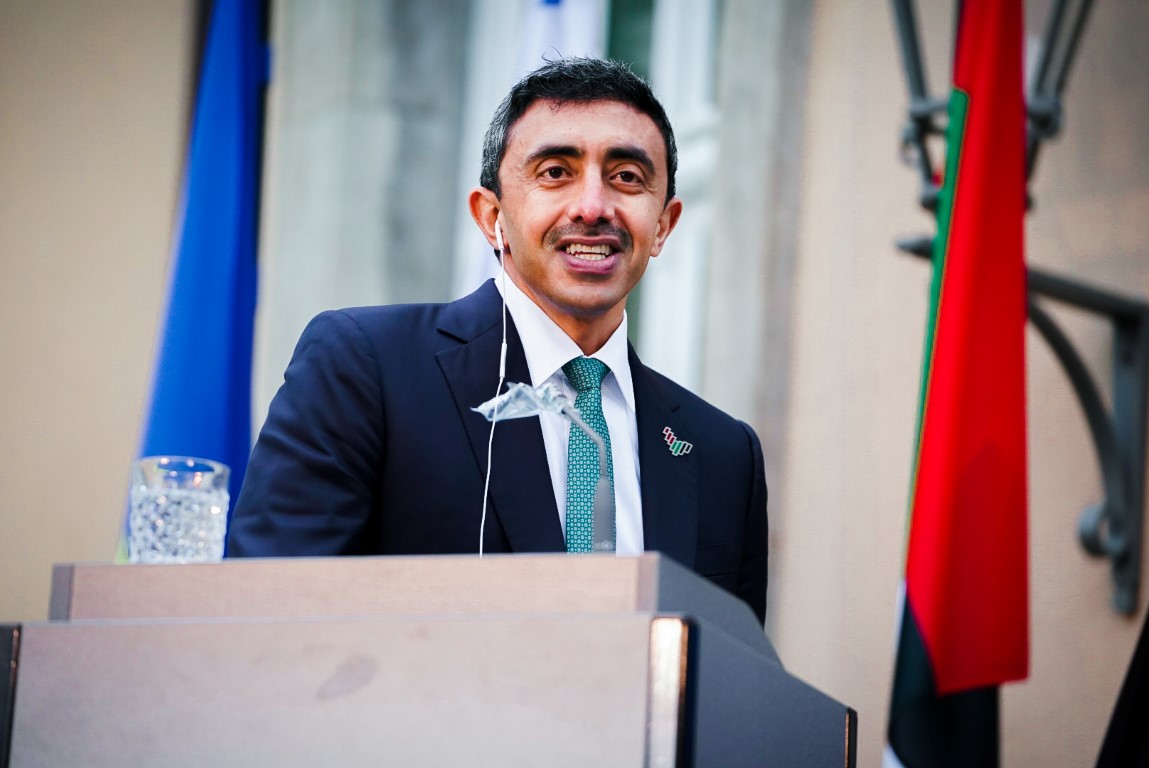
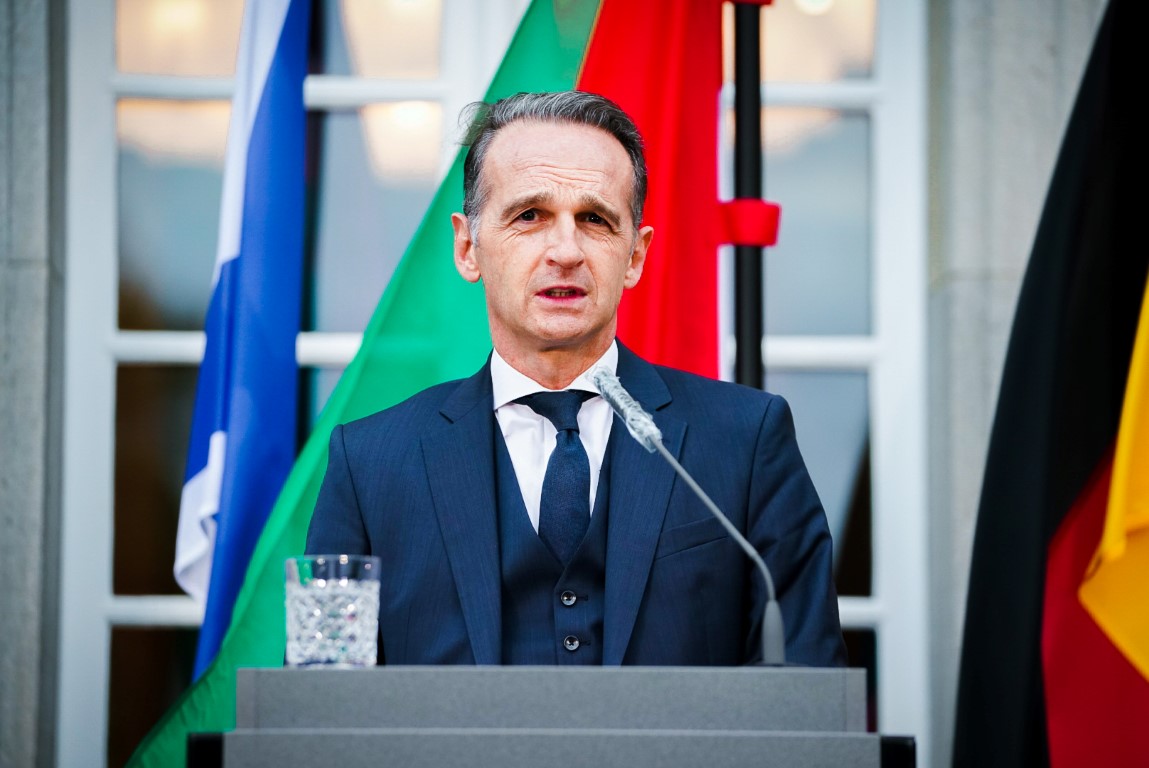
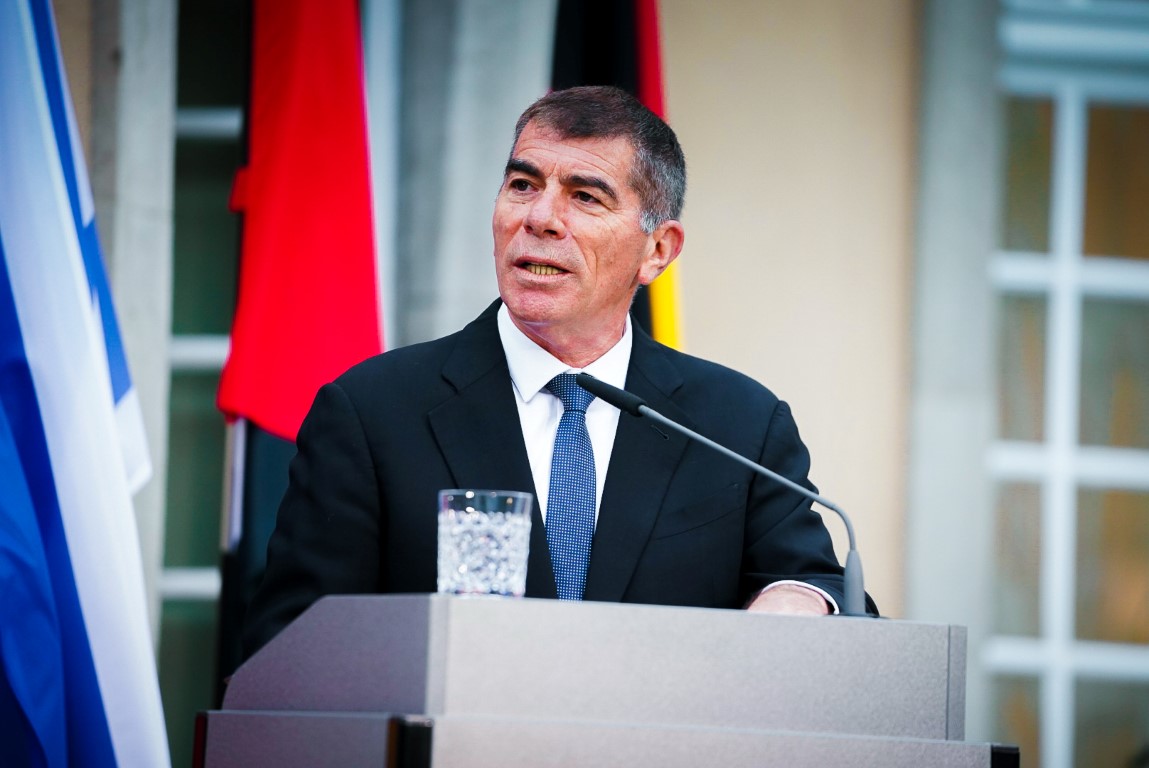
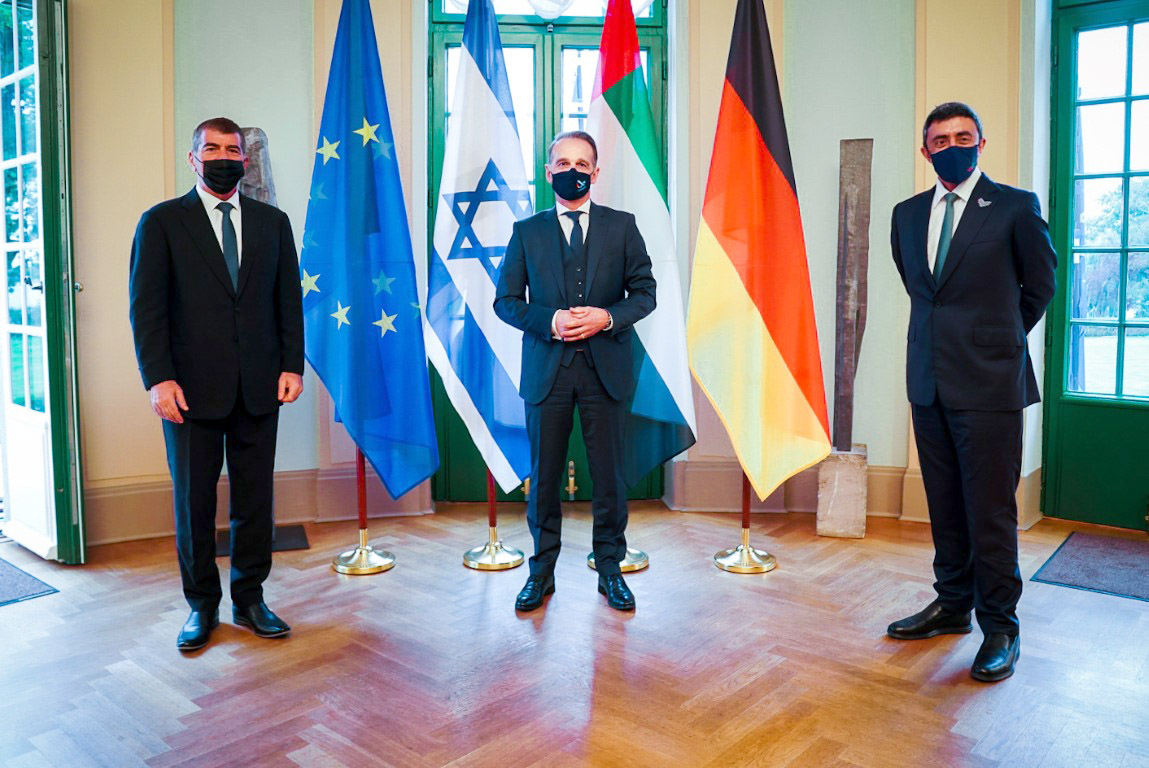
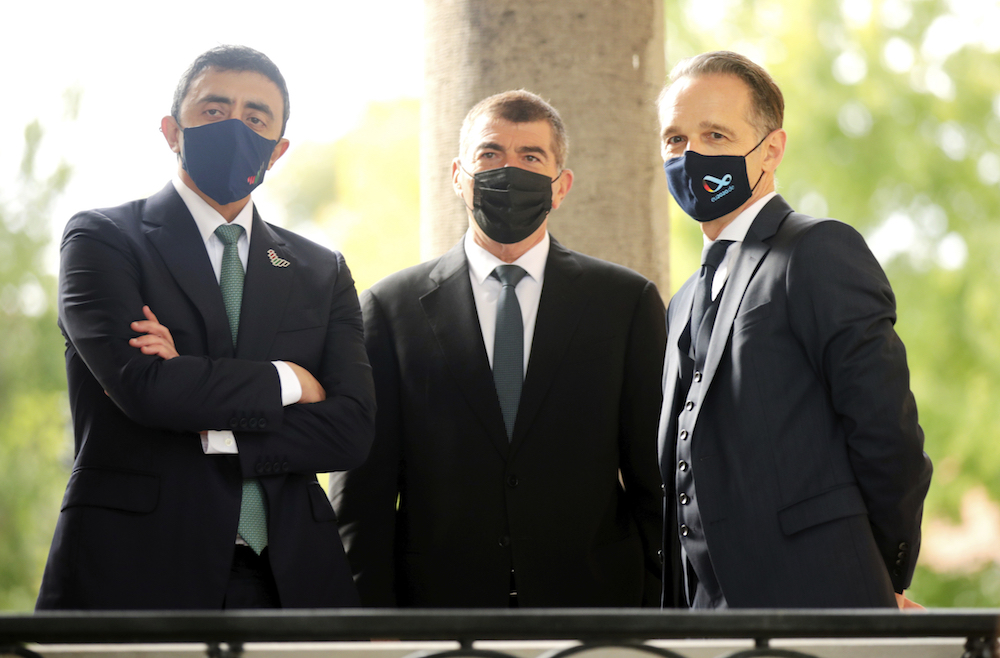
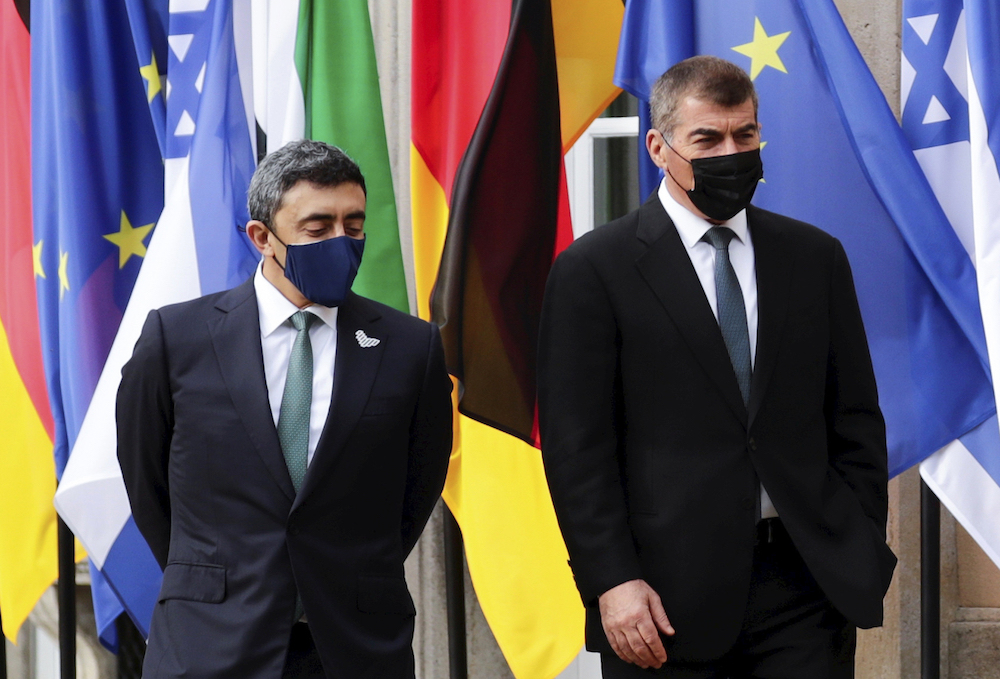
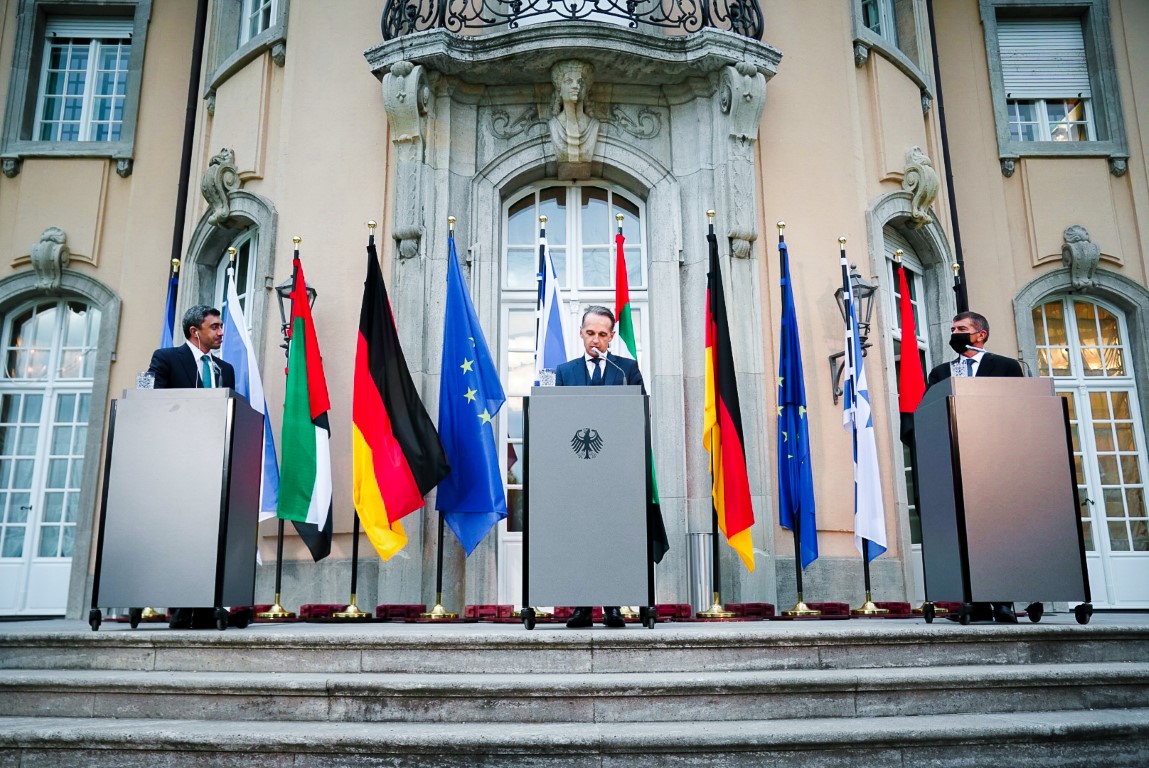
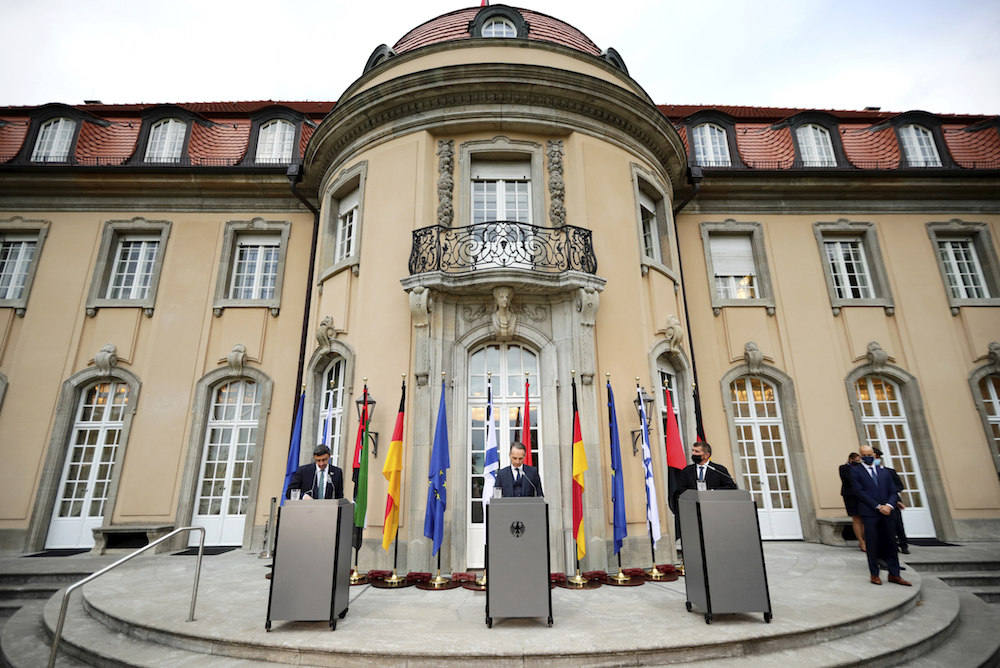
CAIRO: The UAE’ foreign minister said on Tuesday, in a joint statement with Israeli and German counterparts, that the most important thing that must be emphasized today is the return of hope to Palestinians and Israelis to work for a two-state solution, UAE state news agency (WAM) reported.
Minister Abdullah bin Zayed Al-Nahyan said he also discussed with Israeli Foreign Minister Gabi Ashkenazi in Berlin cooperation in the energy field, WAM said.
The foreign ministers met in Germany on Tuesday to discuss further steps in normalizing relations after signing an agreement last month in Washington to normalize diplomatic ties and forge a broad new relationship.

Developing…

Main category: 

UAE and Israel join forces on venture capital investmentsUS push for Arab-Israel ties divides Sudanese leaders


Turkey tests the controversial S-400 defense system next week. What next?

Tue, 2020-10-06 21:32

ANKARA: The visit of NATO chief Jens Stoltenberg coinciding with the emergence of footage showing the transit the Russian-made S-400 missile defense system through the Black Sea city of Samsun on Tuesday points to the tension between Turkey’s defense priorities and the security of the transatlantic alliance.

A notice was released the same day to close northern airspace for 10 days due to the S-400 and drone exercises in Sinop, the final destination of the Russian system, right across Russian territories.

The footage came a day after Stoltenberg warned that Ankara’s controversial purchase of the S-400 surface-to air-missile system posed a real risk to allied aircraft and can result in US sanctions.

The US has not yet commented on Turkey’s plan, but excluded it last year from its fifth generation F-35 joint strike fighter program after the country received the first batch of the Russian defense system.

“Turkey’s decision to test the S-400 missile system immediately after NATO Secretary-General Jens Stoltenberg’s visit was, of course, very displeasing to its NATO allies,” Turkey expert Matthew Goldman, from the Swedish Research Institute in Istanbul, told Arab News.

“Stoltenberg was in Turkey to try to calm Turkish-Greek tensions, but also to urge Turkey to refrain from activating the S-400 system, warning that this could trigger American sanctions on Turkey. Proceeding with a test of the system today, when Stoltenberg was in Athens, sent a strong signal that Turkey is doubling down and in no mood to succumb to pressure from its NATO allies.”

According to a Bloomberg report, Turkey plans to test the S-400 next week at a site on the Black Sea coast. While the move does not mean that Turkey is immediately activating the Russian system, reports in Ankara suggest that the activation card may be used as leverage.

The exercises, where 10 British-made Banshee target drones will also be used to test the S-400s, are set to last until Oct. 16. The engagement capability of the S-400 weapons, as well as the detection and tracking ability of the system’s radars and communications system potential, will be tested.

“The timing of the testing simply pushes us to the conclusion that this may be an instrument of messaging toward Russia and Armenia,” Karol Wasilewski, an analyst at the Warsaw-based Polish Institute of International Affairs, told Arab News.

According to Wasilewski, Turkey may want to show its resolve on the Nagorno-Karabakh issue and talk Russia into negotiations about the conflict.

“This is not the first test. The first one happened in November 2019. Turkey tried it once and endured no consequences, so I think now decision-makers are also sure there will be no consequences,” he said.

Opinion

This section contains relevant reference points, placed in (Opinion field)

However Aaron Stein, a Turkey expert and director of research at the Foreign Policy Research Institute, said that the timing of the S-400 testing was more geared around the US political calendar and the upcoming elections.

“As we enter that lame duck period from November to January, where there is the possibility of a delay in reporting electoral results because of the large number of mail-in ballots, now would seem to be a good time to test the S-400 and delay the imposition of sanctions,” he told Arab News.

As NATO does not have a mandate to discuss the S-400 issue, Stein regards the subject first and foremost as a bilateral dispute between Washington and Ankara.

Ankara’s potential activation of the $2.5 billion Russian system is believed to be a game-changer in the region with all the major risks that its connection to other NATO radar systems could bring in terms of cyberthreats.

“This is just going to harden anti-Turkey sentiment. Ankara is already under a de facto arms embargo and it may soon face sanctions under Section 231 of the 2017 Countering America’s Adversaries Through Sanctions Act (CAATSA). It has also lost the F-35. Things are already bad and they may get worse,” Stein said.

Washington considers countries having “significant” financial transactions with Russia’s military sector as eligible for CAATSA sanctions.

Goldman said that the recent US move to station a ship in Crete, in response to Turkey using its S-400 system to lock onto Greek F-16 fighter planes, was fuel added to the fire.

“Turkey, rather than seeking to douse the flames, is taking the dispute up a notch,” he added.

Goldman said the testing move was destined to aggravate tensions with its Western partners just when Turkey needed them the most – for balancing against Russia, for diplomacy with Greece, and most importantly, for financial help amid Turkey’s worst economic crisis in a generation.

“This move is in line with Ankara’s increasing tendency to escalate when confronted with a challenge,” he said.

He agreed that the timing of the S-400 test was also a response to recent events in the US, as Turkey may be trying to take advantage of the Washington power vacuum.

“As Turkish Foreign Minister Mevlut Cavusoglu said back in September 2019, Turkey did not buy the S-400 missiles just as a prop, and it makes sense for them to want to deploy the system given the recent saber rattling with Greece, France, and other countries. Perhaps Ankara thinks that once the S-400 system is in place, it will then still be able to get Western financial help, like a swap line from the US Fed, once these tensions pass,” he said.
 

Main category: 

Turkey postpones S-400 missile activation datePompeo says US ‘deeply concerned’ over Turkey actions in east Med


Libya split is ‘most likely outcome’ of civil war: Expert

Author: 
Tue, 2020-10-06 21:08

LONDON: Foreign powers have become the true power brokers in Libya, whose split into two is “the most likely outcome” of the conflict, said Ulf Laessing, bureau chief of Egypt and Sudan for Reuters.

In an online briefing on Tuesday hosted by the Council for Arab-British Understanding and attended by Arab News, Laessing said developments in Libya since long-time dictator Muammar Gaddafi’s fall have been widely misunderstood by the outside world.

“Various armed groups took over the country (after Gaddafi’s fall), and they became police forces or called themselves the army. Then you had ministers, who were just figureheads sitting in ministries, who weren’t even as powerful as the men guarding them,” Laessing said.

“The main question now is: Who speaks for the state? Many people in Libya have access to a government letterhead or a title of minister, but their real power is limited,” he added.

“It’s very difficult, when you have two governments based in Tripoli and Benghazi, to get to the bottom of who represents the real state.”

Libyan militias, he said, are often backed by foreign powers that have entered the conflict in pursuit of their own strategic goals

One such power is Turkey, whose involvement in the conflict in support of the Tripoli-based Government of National Accord (GNA) has transformed the war, Laessing said.

“On the ground, the Libyan players have limited skills — they know how to run Kalashnikovs and old tanks,” he added.

“But now you have drones operated by foreign countries such as Turkey and Russia, and the Libyans have become side players. Their fate is being decided by foreign powers.”

As well as providing drone support, Turkey has sent advanced weaponry and artillery, as well as hundreds if not thousands of mercenaries from Islamist militias in northern Syria, to assist the GNA in its fight against Gen. Khalifa Haftar’s Libyan National Army.

The result of this outside intervention, Laessing said, is an intractable conflict. “Diplomatic talks are going on but there’s no sign of any breakthrough. The UN has tried several times to solve the crisis, but the UN’s delegation never stood a chance,” he added.

“It’s hard to see how Libya can come out of this together. Since 2014 the country has been divided between east and west, and at this stage it doesn’t look like there will be a unity government anytime soon. Effectively now, Libya splitting in two, or a de-facto split, is the most likely outcome.”

Main category: 

UN, Germany host summit to capitalize on glimmers of hope for peace in LibyaKey players to meet virtually to push for Libya cease-fire


Release of Syrians from Al-Hol camp sparks concern for regional security

Author: 
Mon, 2020-10-05 22:59

ANKARA: The Kurdish-led Syrian Democratic Council administration of Raqqa announced on Monday its decision to release all Syrians from the northeastern Al-Hol detention camp, where thousands of Daesh families, including wives and children of Daesh fighters, are being kept.

The move is likely to further undermine the regional security, with rising fears that a significant number of Daesh-affiliated detainees may infiltrate the borders of neighboring countries.

The looming specter of Daesh has emerged in Turkey recently, and the country began the week with a massive anti-terror operation in capital Ankara.

Twenty-four Iraqi nationals and one Finnish suspect were arrested over supposed links to Daesh members in conflict zones.

Since August, dozens of Daesh suspects have been arrested in different cities across Turkey, showing that the group is still active in the country, with reported plans to attack on tourists, politicians and prominent figures.

Dareen Khalifa, a senior analyst at the International Crisis Group, said that a blanket amnesty for all Syrian residents of Al-Hol could be detrimental to the security of the area.

“Their release will require the kind of support the Syrian Democratic Forces (SDF) simply cannot and should not bear on its own. The SDF’s capacity to detain or manage the reintegration of thousands of detainees is waning,” she told Arab News.

“Both the ideologues and the victims require currently unavailable social or mental health support, and labour market integration,” Khalifa added.

Two weeks ago, Turkish police detained 16 foreign nationals in Ankara and five others in the southern province of Adana, some of them Iraqi nationals, under another counter-terrorism operation against Daesh.

These operations followed others during previous weeks in several other cities.

According to the testimony of those arrested in Adana, they were planning to kidnap prosecutors, judges and tourist groups to trade in return for Daesh captives in Iraq and Syria.

Turkey also captured the group’s “Turkish emir,” Mahmut Ozden, in August before he could carry out attacks on Hagia Sophia, in Istanbul, and prominent figures in Turkey, including politicians and civil society activists. Daesh’s head in Turkey’s southeastern Diyarbakir province was also caught in early September.

Turkey foiled 152 Daesh terror attacks in 2020, according to Interior Ministry data.

Mehmet Emin Cengiz, a research assistant at Al-Sharq Strategic Research, said Al-Hol served as a radicalization school for many families of Daesh members, where women in particular play a role in indoctrinating other inmates.

These fanatical women, known as “Daesh enforcers,” have killed and wounded others in the camp by throwing rocks or setting their tents on fire for turning their backs on Daesh. The climate of fear is believed to have resulted in psychological trauma among the many children of Daesh members being kept there.

“Around 70,000 people are believed to live in this camp. The administration of the Syrian Democratic Council might have taken this decision to broker a deal with the Arab tribes in the region because the tribes were asking for the release of some captives, and such a move could earn the support of the tribes for the Syrian Kurds in the region,” Cengiz told Arab News.

He also noted that Daesh had been trying to re-establish itself in Syria and Iraq ever since the loss of its territorial gains.

Vyacheslav Gladkikh, a Russian major general, was killed, reportedly by Daesh, in late August in a roadside bomb in the Syrian city of Deir Ez-Zor.

“It is also likely that they (Daesh) are planning to act within Turkey’s territories to show that they are still alive and robust,” he said.

Research published in July by Kings College London’s Defence Studies Department cautioned that Daesh fighters, once freed, were regrouping in other parts of the world, posing a major security risk.

Main category: 

Morocco says arrests four Daesh-linked militant suspectsTrial opens for failed Daesh attack on French church‘Daesh brides’ look to escape Syria camps with help of UK crowdfundersItalian who joined Daesh in Syria says she made ‘big mistake’


Arab coalition in Yemen foils Houthi attack in Red Sea

Mon, 2020-10-05 21:35

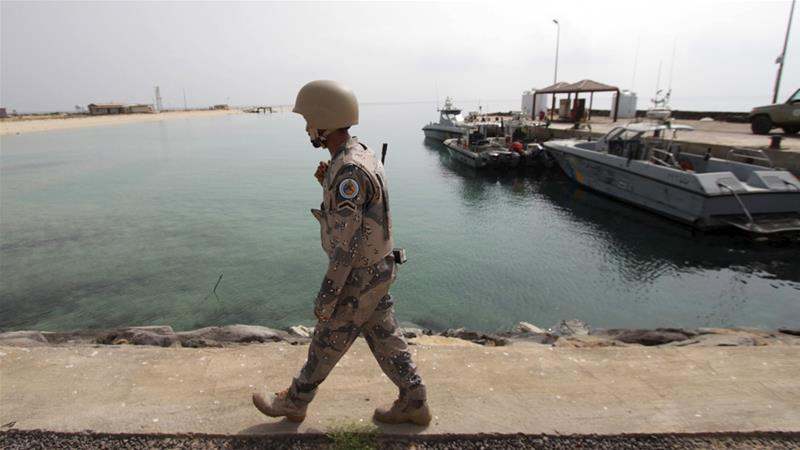
CAIRO: The Arab coalition fighting in Yemen foiled an “imminent terrorist attack” by Iran-aligned Houthis in the south of the Red Sea, Al Arabiya TV said on Monday.
The coalition discovered and destroyed a remotely-controlled explosive-laden Houthi boat near Yemen’s port district As-Salif, Al-Arabiya TV added. 

Main category: 

Arab coalition destroys armed Houthi drone targeting Saudi Arabia Arab coalition destroys Houthi armed drones, ballistic missiles