Seizure of ancient seed collection in Turkey sign of ‘hyper-nationalist’ atmosphere under Erdogan

Fri, 2020-10-09 23:01

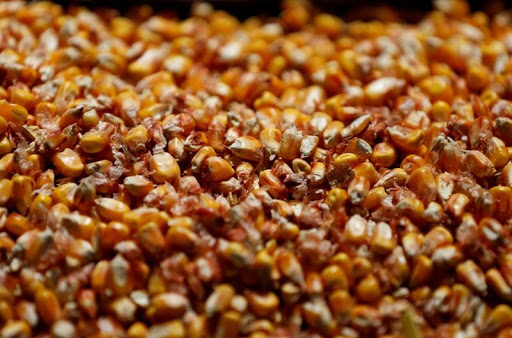
LONDON: A large collection of seeds held by the British Institute at Ankara have been seized by Turkish authorities, according to reports.
Specimens of ancient and modern seeds were taken by the Ministry of Culture and Tourism, which claimed the collections “belonged to Turkey,” The Times newspaper reported.
The seizure was revealed by the institute’s Chairman Stephen Mitchell in a letter to board members leaked to Middle Eastern news website Al-Monitor.
The seeds were donated to the institute by Gordon Hillman, a well-known and pioneering UK archaeobotanist who passed away in 2018.
Mitchell said Turkish officials took “108 boxes of archaeobotanical specimens and four cupboards comprising the modern seed reference collections” to the headquarters of government-run museums in Ankara, and requests for more time to minimize damage were refused.
The collection was the work of Hillman, who worked for the UCL Institute of Archaeology, and comprises seeds and botanical specimens from ancient sites from across the region that date back thousands of years.
There are also modern specimens in the collection, which is used by experts as a reference tool.
The Turkish authorities have “removed this research resource from the wider Turkish and international community of researchers. It was a nice, small research facility, open to anyone who wanted to use it. Now it’s all gone,” said Dorian Fuller, an archaeobotanist at the UCL Institute of Archaeology.
It is not the first time the Turkish government has been criticized for over-zealous action with regard to the country’s cultural and historical sites.
Earlier this year, the former Byzantine cathedral Hagia Sophia was reopened as a mosque after many years functioning as a museum.
Analysts say the seed seizure is another example of the “hyper-nationalist atmosphere” prevalent under President Recep Tayyip Erdogan.
“For over a decade now Turkish nationalists have been mulling over a ‘seed conspiracy’ — based on the idea that ‘Israeli seeds’ are pushed upon Turkish farmers in order for them to produce tomatoes, onions or eggplants of a lesser quality, with no smell or taste but bright colours,”Asli Aydintasbas, a senior fellow at the European Council on Foreign Relations, told The Times.
“The theory has now expanded to cover a vast western conspiracy to deprive Turkey of seeds — and is now apparently shared by Erdogan, who has reinvented himself as a super-nationalist. This has more to do with the hyper-nationalist atmosphere in Turkey today than anything else.”
Main category: 

Turkey ‘re-conquers’ Hagia Sophia amid international disapprovalDefying social media rules could see end of Facebook in Turkey: Industry expert


Libya capital’s mosques open after 7-month virus closure

Author: 
AFP
ID: 
1602270068741992800
Fri, 2020-10-09 18:57

TRIPOLI: Mosques reopened in and around the Libyan capital Friday almost seven months after they were ordered to close as part of strict curbs to rein in the Covid-19 pandemic.
Libya, ravaged by a complex web of conflicts since the ouster of longtime dictator Muammar Qaddafi in a 2011 uprising, has seen a surge in contaminations since its first coronavirus case in March.
According to the latest official figures, there have been more than 41,000 confirmed cases of the virus and 621 deaths in Libya, a country of less than seven million people.
The Government of National Accord (GNA) based in the capital Tripoli authorized the reopening of mosques, but with conditions.
Mosques in Tripoli and nearby towns reopened for prayers, with the faithful wearing face masks and observing social distancing.
They also brought their own prayer mats.
The imam of Jaafar bin Abi Talib mosque in the western suburb of Janzour told AFP an “awareness” campaign was launched ahead of the reopening.
“We distributed leaflets explaining the conditions under which prayers can resume in the mosques in line with the government’s guidelines,” Abdel Monem Al-Rayani said.
The guidelines restrict numbers in mosques for prayers to half pre-coronavirus levels, he said.
Mosques which fail to comply with government restrictions would be shut.
The closure of mosques was ordered nationwide when the first cases of coronavirus emerged in mid-March, although in some towns and districts the ban was ignored.
The call to prayers still rang out but with the faithful urged to “pray at home.”

Main category: 

Libya split is ‘most likely outcome’ of civil war: ExpertEgypt hosts talks over Libyan reconciliation process


Lebanon’s caretaker PM says lifting subsidies would cause ‘social explosion’

Fri, 2020-10-09 20:29

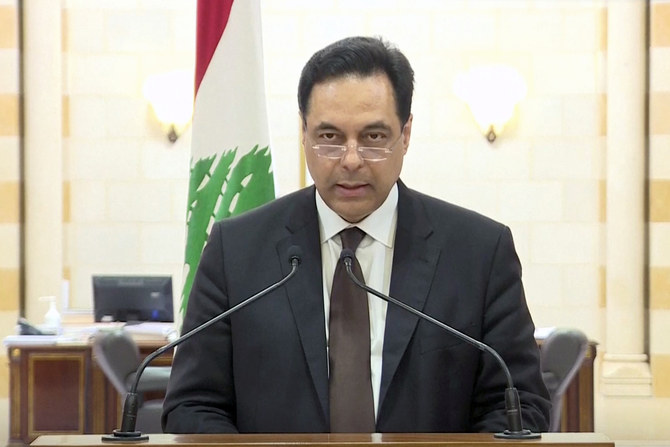
BEIRUT: Lebanon’s caretaker Prime Minister Hassan Diab said on Friday any step to lift subsidies now on vital goods would be unacceptable and would cause a “social explosion.”
In a televised address, Diab, who resigned two months ago after a huge explosion damaged much of Beirut and worsened the country’s economic crisis, said $4 billion had been spent so far in 2020 on subsidizing food, medicine, flour and wheat imports.
He warned that the country’s central bank and “all those who support such a decision” on subsidies would be responsible for the ensuing chaos in the country, already gripped by a financial meltdown.
Crushed by a mountain of debt, Lebanon is facing its worst economic crisis since its 1975-1990 civil war. As prices soar, many Lebanese have been plunged into poverty and are increasingly reliant on subsidised food, medicine and fuel.
Lebanon has $1.8 billion of foreign exchange reserves left for subsidising food and other imports but could make this last for six more months by scrapping support for some goods, an official source told Reuters on Thursday.
Diab said the subsidies should not be completely removed, but suggested targeting them to support those most in need.
Parliamentary consultations to choose a new prime minister will begin on October 15, in an effort to push Lebanon’s fractious political class to move on forming the country’s next government.
Recent efforts faltered amid bickering over cabinet posts among the country’s various political factions, dealing a blow to a French plan aimed at rallying politicians to tackle the country’s woes.
Diab said it was incumbent upon the country’s feuding sectarian political leaders to revive the French road map and form a government swiftly because the country “cannot wait another two months.”

Main category: 

Lebanon’s Sunni leader Hariri urges revival of French planLebanon registers sharp rise in number of COVID-19 cases


Defying social media rules could see end of Facebook in Turkey: Industry expert

Author: 
Thu, 2020-10-08 23:00

ANKARA: Social media giant Facebook’s decision not to appoint a company representative in Turkey could mark the beginning of the end for the platform in the country, according to an industry expert.  

New Turkish government regulations, which went into effect on Oct. 1, require all social media firms to open an office or face a hefty fine, an advertising ban, and data restrictions.

Representatives must also be a Turkish citizen, and user data on the networks has to be stored in Turkey.

At 37 million, statistics show Facebook to have more users in Turkey than in any other European country.

But Suleyman Irvan, a professor of journalism at Uskudar University, told Arab News that if Facebook stuck to its reported stance, Turkish users could eventually see the platform’s demise.

Analysts believe that Facebook’s move could also influence the decisions of other social media companies, including Twitter, over whether or not to have legal representation in Turkey.

Under the new Turkish rules, firms not having opened an office in Turkey by Oct. 1 will have to pay a fine of 10 million Turkish liras ($1.26 million) by November, which if unpaid will triple in December. Further refusal to comply would result in an advertisement ban in January next year, and bandwidth being gradually slashed by up to 90 percent until May (which would lead to a post taking about 15 minutes to open).

In a tweet, cyber rights expert Yaman Akdeniz, said: “Although it is a matter of curiosity about how the government will react, if you put a stick on the table without taking the opinions of the stakeholders and pass a very problematic law in terms of fundamental rights and freedoms just in 10 days, the result will be as such.”

The regulation also provides social media users with the opportunity to report content, obliging social media representatives to investigate claims within two days and either remove “unacceptable” items or face a 5 million lira fine.

“Social media giants may have been concerned over this clause because they will have to remove all dissident content if they open a representation office,” Irvan said.

In a country where censorship and the absence of impartial media have become the norm, this clause is believed to have influenced the decision of Facebook. However, the Turkish government said the requirements were aimed at “establishing commercial and legal ties” with the social media platforms.

Turkey’s media watchdog RTUK recently imposed a fine on broadcaster Halk TV over a program in which a journalist went beyond “the boundaries of criticism” with remarks on Azerbaijan’s state of democracy.

RTUK said the penalty was also to show to the world Turkey’s support for Azerbaijan in its conflict with Armenia over the Nagorno-Karabakh region.

“If social media giants end their operations in Turkey, it will also deal a major blow to the media sector, as Turkish people more and more use social media platforms to follow up objective news,” Irvan said.

Isik Mater, a digital rights activist and research director at the NetBlocks monitoring group, told Arab News: “The administrative fees are relatively insignificant in the eyes of these social media giants.

“However, although they risk being deprived from advertisement revenues and bandwidth, Facebook seems to be determined in this decision and I expect that it will be followed by other social media giants as well.”

Turkey ranked among the top 10 countries for users of the social media networks Facebook, Twitter, and Instagram, a survey by London-based We Are Social revealed in February.

Dr. Sarphan Uzunoglu, editor-in-chief of NewsLabTurkey, a digital journalism academy, said Facebook’s decision was not just about the company itself but the future of already oppressed communities and professional groups in Turkey.

“Having a representative here would make Facebook more responsible about user-generated content, which is a problematic content type big technology companies love but try to avoid the responsibility about the most.”

He noted that Facebook’s move could trigger a broader debate on the taxation of media actors and professionals.
 

Main category: 
Tags: 

YouTube and Facebook could be banned, warns Turkey PMTurkey tightens control on social media platforms


Fire at Al-Azhar Mosque contained and under control

Thu, 2020-10-08 22:51

CAIRO: A fire that broke out inside Al-Azhar Mosque, in Al-Gamaleya area, has been brought under control without any fatalities.

Grand Imam Ahmed El-Tayeb called for an urgent and comprehensive report on the damage caused.

The Civil Protection used four fire engines to control the fire, a result of a short circuit in a lamp in a storage room, before it spread to the prayer square.

Hani Odeh, director of Al-Azhar Mosque, said that the fire was limited to one of the back rooms of the third floor.

Osama Talaat, head of the Islamic, Coptic and Judaic antiquities sector, confirmed that the building was safe, adding that a committee, headed by Ahmed Abu Bakr, vice president of the sector, immediately went to the site to ascertain the damage.

Upon visual inspection they found no damage to the building, its inscriptions, decorations or wooden items where the fire started, he said.
 

Main category: 

Grand Imam of Al-Azhar welcomes Pope Francis ‘Fratelli Tutti’ encyclicalEgypt’s Al-Azhar and Coptic Church send two aid planes to Lebanon