Ankara shifting towards EU amid sanction fears

Author: 
Tue, 2020-11-24 01:13

ANKARA: Turkey is attempting to mend its fragile relationship with Brussels as the threat of imminent EU sanctions looms over the country, experts have said.

Ankara’s shift started when Turkish presidential spokesperson Ibrahim Kalin met EU officials in Brussels on Friday, days after EU foreign policy chief Josep Borrell said no “positive signals” were coming from Turkey over the Mediterranean dispute.

It took one day for Turkish President Recep Tayyip Erdogan, who said earlier that “Turkey’s place is in Europe,” to call on the EU to keep its promises on Turkey’s EU membership process and the refugee issue.

In recent weeks, Erdogan drafted a democratic reform agenda in order to win the hearts and minds of those in Brussels.

However, experts have warned that “Ankara’s actions matter more than words.”

Sinem Adar, an associate at the Center for Applied Turkey Studies in the German Institute for International and Security Affairs, said there are four simultaneous factors motivating the recent statements by the Turkish government.

“The first has to do with the domestic situation. Here, it is necessary to think of Finance Minister Berat Albayrak’s resignation and the ensuing emphasis on upcoming reforms, mainly in economy and law, together with the conflict within the ruling alliance that appears to be over the limits of potential reforms, but in reality, is about political power,” she told Arab News.

Adar said that Erdogan’s space to maneuver is narrowing as the influence of MHP leader Devlet Bahceli becomes more pronounced within the ruling alliance.

“Secondly, these calls are definitely connected to the incoming Biden administration, during which resolving issues through personal relations between the two leaders will not be as easy as it was under the Trump administration,” she said.

Thirdly, Adar added, Ankara is trying to prevent possible sanctions by the US and EU. US sanctions will likely come in the form of the Countering America’s Adversaries Through Sanctions Act (CAATSA) and Halkbank trial on evasion of US sanctions on Iran.

Karol Wasilewski, an analyst with the Polish Institute of International Affairs, said there are two interconnected motives behind Turkey’s recent moves, the first being related to protecting the Turkish economy and the second about changing US leadership.

“With Trump gone and Biden in, the Turks are aware that the ‘free ride’ period — where Turkey’s actions were not met with proper consequences — is over,” he told Arab News.

“Biden will not be as willing to shield Turkey from CAATSA sanctions or the fallout from the Halkbank issue by obstructing the US judiciary as Trump supposedly was, and these two issues could sink Turkey’s economy, while also having a negative impact on Erdogan’s power,” Wasilewski added.

He added that the sudden Turkish “U-turn” is an attempt to “buy some more time” and convince Western partners that Turkey is “ready for a reset.”

Meanwhile, Turkey sent its seismic research vessel Oruc Reis back into EU waters on Nov. 21 for another eight days ahead of the EU leaders’ summit on Dec. 10 and 11, where the possibility of further sanctions against Turkey over its Mediterranean activities will be discussed.

“Given the depth of the economic crisis today in Turkey, sanctions would make an already bad situation worse. These signals both to the US and the EU also have to do with the poor balancing act that Ankara has been trying to play for a while now between Russia and the transatlantic alliance,” Adar said.

From that perspective, Adar added, it is no coincidence that Turkish messages to the US propose that Ankara “could be a partner” with the US in containing Russia.

“On the one hand, Turkey is signaling its willingness to restore relations with the US and EU, and, at the same, it keeps emphasizing the autonomy of Turkish foreign policy and seems to expect understanding from the US on its efforts to pull itself up by its bootstraps,” Adar said.

Wasilewski said that re-energizing the accession process is not possible as it would require a “deep democratization of Turkey,” including rebuilding institutions, modifying the presidential system and reintroducing a free media and judicial independence.

“And this runs counter to the basic interest of the Erdogan regime, which is survival,” he added.

“The furthest the EU and Turkey can go in the these circumstances is to find a new formula of relations, like modernizing the customs union. But even this would be uneasy, as it would require changes in Turkey’s foreign and domestic policies.”

Main category: 
Tags: 

Turkey blasts ‘unauthorized’ German search of Libya-bound shipCOVID-19 cases soar to record levels in Turkey


Egypt joins major Arab military training exercise with KSA, UAE

Mon, 2020-11-23 23:36

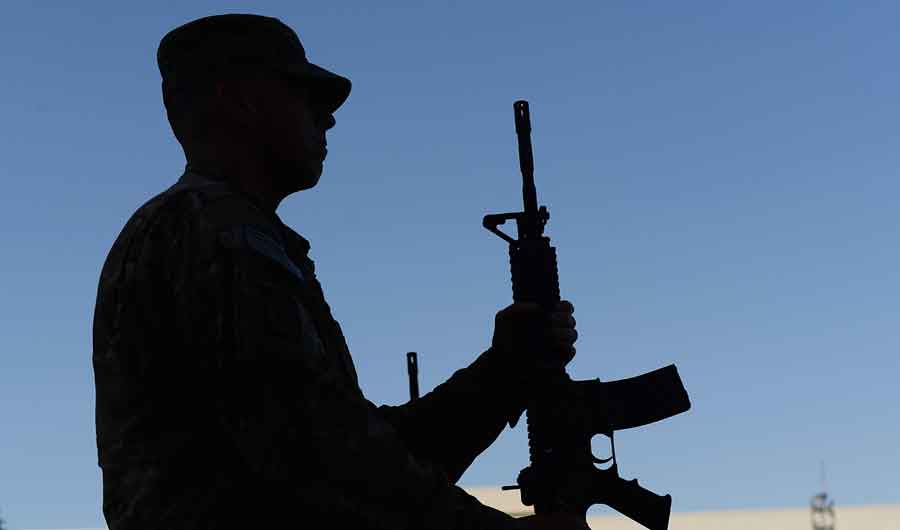
CAIRO: Egypt has joined a major military training exercise involving Saudi Arabia, the UAE, Jordan, Bahrain, and Sudan.

The Saif Al-Arab combat activities will continue until Nov. 26 at the Mohammed Najeeb military base, and sea training areas in the northern military region.

Over recent days, forces and equipment of the participating countries have been arriving at airbases and seaports under strict precautionary measures taken to stop the spread of the coronavirus disease (COVID-19).

The training is aimed at bringing the joint forces together to meet the necessary operational standards required to manage hostilities in coordination between the various naval, air, and land weapons.

Saif Al-Arab training is one of the most sophisticated exercises in the Arab world, and works on developing and consolidating the foundations of military cooperation while honing joint work between the Egyptian armed forces and those of Arab countries in using technologically advanced weapons and equipment.

The first stages of training include holding a coordination conference between the forces of the participating countries to unify concepts and transfer training expertise, as well as theoretical and practical lectures to implement planned tasks to achieve maximum benefit for the forces taking part.

Strategic expert, Maj. Gen. Samir Farag, said that the joint training activities would act as a “deterrent message” to those who sought to harm Egyptian and Arab national security.

He added that it was the first time that Sudan had participated in joint Arab military training of this kind.

“The (Mohammed Najeeb) base is the largest military base in the Middle East, and it includes all types of weapons and new, advanced training fields,” Farag said.

He added that most of the countries partnering with Egypt were focused on desert fighting and that the training in the northern region showed a readiness for combat action if necessary.

He noted that the training was taking place as Libya was engaged in political negotiations to end its internal conflict.

Egypt also recently joined Russia in maritime training in Russian territorial waters. Units of the Egyptian naval forces arrived at the port of Novorossiysk to an official reception before combat skills exercises got underway.


Main category: 

Saudi armed forces participate in the joint exercise ‘Saif Al-Arab 2020’ in EgyptMajor naval festival marks work of Saudi armed forces


Egyptian authorities confirm second wave of COVID-19

Tue, 2020-11-24 01:28

CAIRO: Egypt’s Minister of Health and Population Hala Zayed on Monday confirmed that the country is experiencing the start of a second wave of coronavirus infections.

The official confirmation came during her meeting with Bahaa El-Din Zidan, the head of the Unified Medical Procurement Authority, and Tamer Essam, head of the Egyptian Drug Authority, to discuss the availability of drugs and medical supplies required to treat infected patients. Essam said the authority is prepared to meet the increasing demand for COVID-19 treatments.

Khaled Mujahid, an adviser to the minister of health and population for media affairs, said that the participants in the meeting reviewed the inventory of medicines and other medical equipment.

“The minister emphasized the importance of providing medicines and medical supplies that Egypt (distributes) to various countries to support them in facing crises, in accordance with the directives of the political leadership,” he added.

Mujahid said the minister also discussed ways to address online sales of medications, which can put people’s health at risk. The public was urged only to obtain drugs and medical supplies from pharmacies or official healthcare providers.

Egyptian Prime Minister Mostafa Madbouly has ordered ongoing assessments of the readiness of hospitals across the country to receive coronavirus patients, and the availability of the drugs and equipment needed to treat them.

Ahmed El-Ezaby, chairman of Pharmaceutical Industry Chamber, said all medicines are available as usual in pharmacies and there have been no complaints of any shortages. Manufacturers have altered production schedules to meet current demands and have built up enough inventory of completed items, or the ingredients to make them, to last for between six and nine months, he added.

The Egyptian Ministry of Health on Sunday announced 351 new confirmed cases of infection and 13 additional deaths. The total number of coronavirus cases in the country stands at 113,027. Of those, 101,881 patients have recovered and 6,548 died. The remaining cases remain active.


Main category: 
Tags: 

Egypt joins major Arab military training exercise with KSA, UAEEgypt sets shop opening hours as second coronavirus wave approaches


Turkey blasts ‘unauthorized’ German search of Libya-bound ship

Author: 
AFP
ID: 
1606152616860338900
Mon, 2020-11-23 17:25

ISTANBUL: Turkey accused the German navy on Monday of conducting an “unauthorized” search on a Turkish-flagged cargo vessel in a bid to enforce a United Nations arms embargo on Libya.
But the European Union’s Operation Irini — tasked with halting arms shipments to the strife-torn north African country — said it had made a “good faith” effort to get Turkey’s consent for the inspection and aborted it as soon as Ankara made its objections clear.
The Turkish foreign ministry said Germany’s Hamburg frigate stopped and searched the Roseline A commercial vessel without permission on Sunday evening off the coast of Greece’s Peloponnesus peninsula.
Footage filmed by the vessel’s crew and aired repeatedly on Turkish television showed a quarrel between crew members and armed German soldiers who landed on the ship from a helicopter.
The Turkish foreign ministry said the vessel was carrying paint and humanitarian supplies headed to the Libyan port of Misrata.
“This intervention was carried out with the consent of neither our country as the flag state nor the ship’s captain,” the Turkish ministry said.
“I am strongly condemning this unlawful intervention,” Turkish Vice President Fuat Oktay added.
Ankara on Monday summoned the EU and Italian ambassadors as well as the German embassy’s charge d’affaires to the foreign ministry, conveying a diplomatic note protesting the “unauthorized” inspection, the foreign ministry said.
The action was “against international law,” the ministry said in the note, adding that Turkey reserved its right to compensation.
But both the operation’s European command and officials in Berlin said Turkey raised its objections only after the German soldiers had boarded the vessel.
“Everything went exactly according to protocol,” a German foreign ministry spokeswoman said.
Operation Irini said in statement that it had “made good faith efforts to seek (Turkey’s) consent.”
“When (Turkey) made it clear that it denied the permission to inspect the vessel, Operation Irini suspended the activities during which no evidence of illicit material was found,” it said.
Operation Irini’s official website says the mission reserves the right to board ships without permission when conducting so-called “friendly approaches.”
Libya has endured almost a decade of violence since the 2011 NATO-backed uprising that toppled and killed dictator Muammar Qaddafi.
Turkey backs the UN-recognized Government of National Accord (GNA) in western Libya and views the EU mission as biased in favor of the eastern command — backed by the United Arab Emirates as well as Russia and France.
The warring sides agreed a cease-fire deal last month that paves the way for national elections on December 24.
But the process remains fragile and four EU powers involved in efforts to end the conflict issued a joint statement Monday threatening sanctions against “all Libyan and international parties” standing in the way of peace.
Operation Irini said the aborted inspection of the Turkish vessel was the fifth since the mission was officially launched on March 31.
Turkey last sparred with EU powers over inspections when a French frigate under NATO command sought in June to search a Tanzanian-flagged cargo ship.
Paris then complained that one of its ships was subjected to radar targeting by Turkish frigates while trying to inspect the cargo.
Ankara denied the charge.

Main category: 

German frigate and 250 soldiers join EU mission to enforce Libya arms embargoLibya’s rivals meet to discuss transitional government


Iraq in mourning after deadly new Daesh attack north of Baghdad

Mon, 2020-11-23 00:31

SAMARRA/IRAQ: Iraq’s Salahaddin province declared three days of mourning from Sunday over a deadly attack blamed on Daesh, as some criticized authorities for failing to fight back militants.
Late Saturday, a roadside bomb hit a civilian car on an open road near Mt. Makhoul, about 200 km north of Baghdad, police and a local official said.
When security forces arrived at the scene, militants opened fire on them, police said.
The attack killed at least six Iraqi security personnel and four civilians, including one who died of his wounds overnight, according to local medics.
There was no claim by Daesh, but both the local mayor and police blamed the group, which Iraq’s government said in late 2017 it had defeated.
That victory came after three years of brutal fighting to wrench back the one-third of Iraqi territory that had been captured by Daesh.
Although the militants no longer hold territory, sleeper cells wage hit-and-run attacks on state infrastructure, particularly in desert areas north of the capital.
Two weeks ago, 11 people were killed in a Daesh attack on a lookout post at Al-Radwaniyah on Baghdad’s outskirts.
According to a study published this month by the International Center for Counter-Terrorism in the Hague, the extremist group has claimed more attacks in Iraq than in any other country where it is active over the period December 2018 to May this year.
The study said that Daesh activity in Iraq “accelerated precipitously from February 2020 onwards,” reaching levels that are “worryingly close” to those preceding its sweep across a third of Iraq in 2014. Still, death tolls remain low. Daesh in Iraq “generally appears to be moving from a (re) building phase into one that is characterised by brazen guerrilla-style attacks,” the study noted.
The attacks have coincided with a new campaign by Iraq’s security forces to arrest jihadists hiding out in rugged terrain in the country’s north and west.
In fact, just a day before the attack, the head of Iraq’s federal police Jaafar Al-Batat told state media that the area around Mt. Makhoul had been cleared.
“The incidents carried out by IS (Daesh) in some remote areas are isolated cases and now under control,” he said.
That outraged local figures. “Iraqi security forces just assured us this area had been cleaned,” wrote Mashaan Al-Jaboury, a lawmaker representing Salahaddin, on Twitter after the violence late on Saturday.

FASTFACT

The extremist group has claimed more attacks in Iraq than in any other country where it is active over the period December 2018 to May this year, according to a study published this month by the International Center for Counter-Terrorism in The Hague.

For Jamal Al-Dhari, another Sunni figure writing on Twitter, the latest ambush “sheds light on the repeated failures in the fight against terrorism.”
“The government of (Prime Minister) Mustafa Al-Kadhemi must seriously put in place a national strategy … and stop being satisfied with ‘investigative committees,’” said Dhari.
Iraqis regularly mock their government for establishing investigative bodies that do not produce results.
The tensions come as the US-led coalition, which helped Iraq fight Daesh starting in 2014, is drawing down its troops.
This year, the US has already shrunk its contribution to the coalition from 5,200 to some 3,000 troops, as other countries have reduced their numbers as well.
The US announced last week it would withdraw another 500 troops by mid-January, which Iraqi officials say is the fourth and final phase of the coalition’s drawdown.
The top US commander for the Middle East, Gen. Kenneth McKenzie, said the progress made by Iraqi security forces in recent years had allowed the US to draw down.
Troops remaining in Iraq would focus on training local forces, carrying out air strikes in support of their operations and running drone surveillance over the country.
The US military presence remains a source of controversy.
Iraq’s parliament voted in January to oust all foreign troops, following a US drone strike on Baghdad that killed top Iranian general Qassem Soleimani and a leading Iraqi paramilitary commander.
Al-Kadhemi, whose government is seen as US-leaning, has slow-walked the implementation.
Pro-Iran factions have organized a series of rallies in recent months to demand Al-Kadhemi implement the decision.
“If you don’t leave on your own, our rockets will force you out!” one sign at a recent protest read.
It was in reference to dozens of rocket attacks on Western diplomatic and military installations since October 2019.
The US has threatened to close its embassy in Baghdad unless rocket attacks stop.

Main category: 
Tags: 

Iraq to re-issue entry visas for tourists to bolster coronavirus-hit economyIran vows to crush any Israeli attempt to hit its ‘advisory’ role in Syria