Court orders authorities to reveal Israeli citizenship criteria to Palestinian Jerusalemites

Author: 
Thu, 2020-11-26 22:08

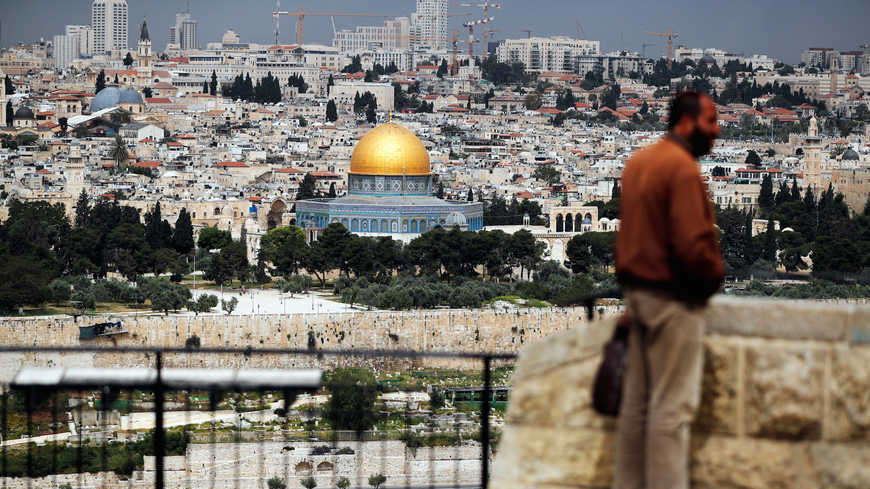
AMMAN: An Israeli court has forced state authorities to reveal the criteria that need to be met for Palestinian Jerusalem youth to become citizens of Israel.

The judicial order will mean that approximately 20,000 Palestinians aged between 18 and 21 living in East Jerusalem will now know the requirements when petitioning for Israeli citizenship, which is not automatically granted to them as residents of the city.

The vast majority of Jerusalem’s 330,000 stateless Palestinians have not applied, nor have the desire, to become Israelis. But the court decision should in future make the application process easier for those interested in carrying an Israeli passport and having the protection of the Israeli government regarding their legal status.

Jerusalem attorney, Mohammed Dahdal, who has practiced civil and human rights law for more than 30 years, noted that without Israeli citizenship, residents of East Jerusalem could not obtain an Israeli passport, vote in national elections, or work in state government jobs, among other things.

However, they did pay taxes to Israel and received social benefits such as national insurance, unemployment payments, and healthcare coverage.

Dahdal told Arab News that after 1988, when Jordan disengaged from the West Bank, which included East Jerusalem, Jerusalemites became stateless citizens. He said the ruling had come about after a Palestinian from Jerusalem had appealed to the court after revealing a loophole in the law.

He noted that the court decision, published by the Israeli Ministry of the Interior, made four conditions to ensure receipt of an Israeli passport. “That the applicant has no other citizenship, that they were born in Israel (for Israel, East and West Jerusalem are both parts of Israel), that the applicant is between 18 and 21 years old, and has lived continuously in Israel during the five years preceding applying for citizenship.”

The lawyer added that the Israeli government had fought in court to have the criteria for citizenship kept under wraps.

Former Jordanian member of parliament, Audeh Kawwas, who was on Wednesday appointed as a member of the Jordanian Senate, told Arab News: “If the aim is to solve the statelessness issue of Jerusalemites, I am for it and I have spoken about it (as a committee member) in the World Council of Churches.

“However, if this is an attempt to disenfranchise Palestinians and to make the city more Israeli, then I am totally opposed.”

Hazem Kawasmi, a community activist in Jerusalem, told Arab News that many young Palestinian Jerusalemites were in a desperate situation, as no government or institution was taking care of them and their needs.

He said: “They are living under occupation with daily harassment from the police and Israeli intelligence and face all kinds of racism and enmity.

“Israeli citizenship helps them get high-skilled jobs and it is a prerequisite for many jobs. It helps them travel for tourism or work to Europe and the US without the cumbersome, complicated procedures of getting visas, that is if they get it at all.

“Finally, Israeli citizenship makes the youth feel safe not to lose their residency in Jerusalem and movement and work in Israel,” he added.

Khalil Assali, a member of the Jerusalem Waqf and an observer of Jerusalem affairs, told Arab News that he was doubtful that Israel would speed up the process for granting Israeli citizenship. “They have made this move to show their newly established Arab friends that they are acting democratically.”

Hijazi Risheq, head of the Jerusalem Merchants’ committee, told Arab News that the Israelis were looking for ways to turn the city into a Jewish one. By giving citizenship to youth between the ages of 18 and 21, Israel was aiming to deter them from carrying out hostile acts against Israel and keep them away from the Palestinian National Authority and its security forces, he said.

Jerusalem-based human rights activist, Rifaat Kassis, said: “The idea that Jerusalem is Arab has become an empty slogan. Meanwhile, Israeli racism has become the overriding power that forces Jerusalemites trying to have a dignified life with their families to live under difficult conditions.”
Main category: 

Palestinians slam Pompeo over pro-settlement effortsSaudi Arabia condemns Israeli settlement plans near East Jerusalem


North Yemen fighting forces thousands to flee since January

Author: 
Thu, 2020-11-26 21:38

AL-MUKALLA: More than 19,000 families have fled their homes in northern Yemen since January due to fighting between government forces and the Houthis, according to official figures.

The Iran-backed militia has increased its attacks on government-controlled areas in the provinces of Marib, Jouf and Sanaa since early this year, leading people to desert their homes and settle in camps and makeshift houses in and around the densely populated city of Marib.

In November alone around 200 displaced families were forced to escape from their camps in Raghwan district, outside Marib city, as the Houthis increased their missile attacks and shelling to weaken government forces, the internationally recognized government’s Executive Unit for IDPs Camps said in a report released on Nov. 20.

“Some of the displaced people were forced into running away from homes and displacement camps three or four times,” Najeeb Al-Saadi, the unit’s head, told Arab News on Thursday.

The latest fighting outside Marib has pushed the number of displaced people in the city to 1.2 million since early 2015, representing almost 45 percent of the displaced people in Yemen.

Al-Saadi said 8,000 people, who had previously lived in Majazer district in northern Marib and Al-Khaneq camp in Sanaa’s Nehim after fleeing Houthi-controlled territories in 2015, were forced to seek refuge after the Houthis made major territorial gains in Marib and Sanaa.

Those families were forced again into heading to Marib’s downtown area as fighting and shelling rocked camps.

“Humanitarian interventions are inadequate compared to the big number of displaced people,” Al-Saadi added, urging the UN to pressure the warring factions to stop fighting in Marib.

If the Houthis invaded Marib, he warned, more than a million people would be displaced from the city, causing a major humanitarian crisis. “We should all work on preventing the war from getting closer to displacement camps which could trigger a huge displacement and no one would be able to help them.”

Marib has enjoyed peace and stability since the beginning of the war, attracting tens of thousands of people who have fled Houthi repression. The Houthis have increased their attacks on the city through drones, ballistic missiles and mortar rounds.

Local army commanders believe that hundreds of Houthis, including field commanders, have been killed in fighting with army troops and allied tribesmen during the last couple of months.

During his visit to Marib in March, the UN Yemen envoy Martin Griffiths called for attacks on Marib to stop and to keep the city as an oasis for peace and stability. “Marib must be insulated from conflict, remain a haven for Yemenis and continue its path to development and prosperity,” Griffiths said.

On Thursday the governor of Marib, Sultan Al-Arada, told Vice President Ali Mohsen Al-Ahmer that the army and local tribesmen had scored victories on the battlefield and foiled Houthi “terrorist” attacks on the city, the official Saba news agency reported.

In Sanaa the Houthis held funeral processions for their fighters, including senior field commanders, who were killed in fighting with government forces or by Arab coalition warplanes.

Also in Sanaa, a Houthi-controlled court on Wednesday sentenced 91 people to death and ordered their properties to be confiscated, accusing them of supporting the coalition’s military operations.

The convicted include: Nadia Al-Sakkaf, the former information minister and editor of the Sanaa-based Yemen Times, Ahmed Lamlis, the governor of Aden, Rajeh Badi, a government spokesperson, Jamel Aiz Addin, Yemen state TV director, senior military and security officers, journalists, activists and ambassadors.
 

Main category: 
Tags: 

KSrelief launches training programs for YemenisSaudi deputy defense chief receives Yemeni president


Events in Beirut expose public distrust of Lebanese authorities

Author: 
Thu, 2020-11-26 21:32

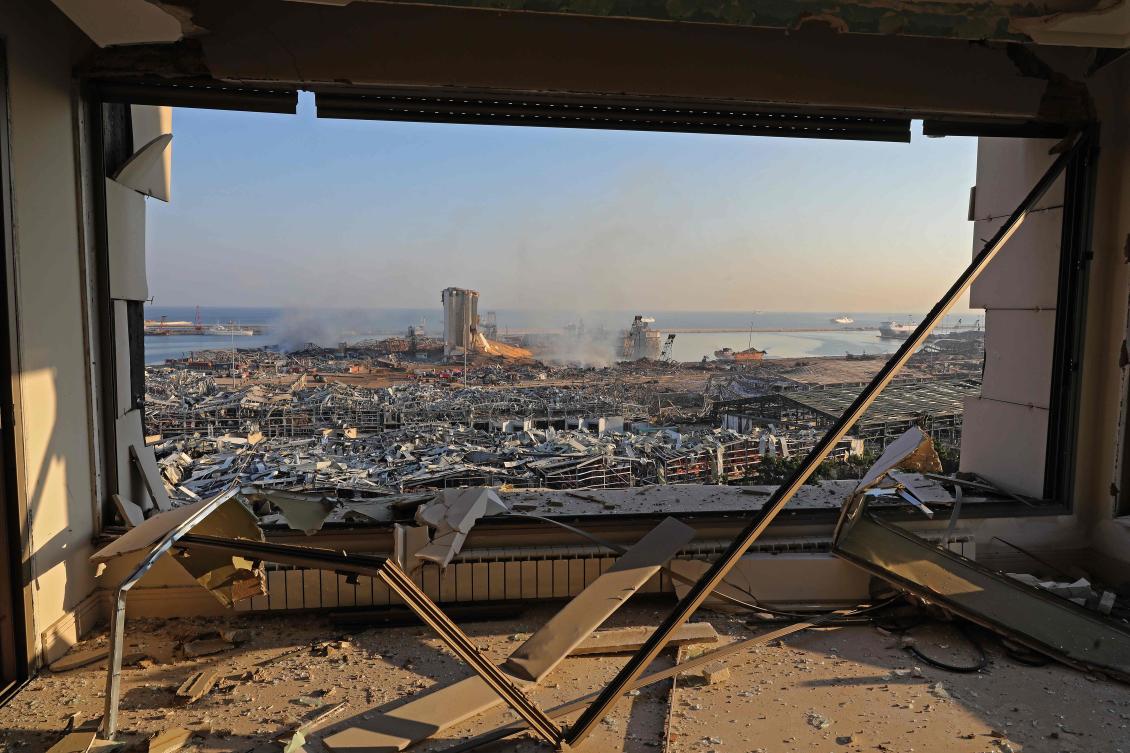
BEIRUT: Two events in 24 hours in Beirut this week highlighted the troubled state of Lebanon. On Wednesday evening, members of the Internal Security Forces assaulted a lawyer who had violated lockdown rules, while on Thursday afternoon families of the victims of August’s Beirut Port explosion took to the streets again to protest the judiciary’s handling of the investigation into the disaster that left 202 people dead and around 6,500 wounded.

The lawyer Rachid Derbas, an activist and former minister, told Arab News: “These are signs of the state’s rupture. We expected the judiciary and security to be the last systems to collapse in Lebanon, but they clearly weren’t.”

The families of the port explosion’s victims demanded that those responsible for the explosion be “hanged in nooses.” They proceeded to the house of Judge Fadi Sawan, who is in charge of the investigation but has yet to issue any reports explaining how the incident occurred, although he has asked parliament to investigate some ministers.

The protestors raised banners saying, “We will not remain silent anymore,” and stating that they will not accept “a ruling of negligence or misadventure.” They carried pictures of various prime ministers and other ministers who have held office since 2013, when ammonium nitrate is believed to first have been stored at the port.

They also demanded “bold decisions and the prosecution of all administrative, political and security officials, regardless of their status,” adding that they believe the crime was not a result of negligence, but was “committed intentionally.”

In a statement, the victims’ families said: “A judge becomes an accomplice to a crime when he covers (for) the main perpetrators and manipulates the causes of the crime by ridiculing it and ruling it as negligence. We will not settle for the conviction of junior officials. Senior officials must be punished as well, regardless of their position in the state.”

Derbas criticized Sawan for “resorting to parliament to request the prosecution of current and former ministers for failing to deal with the storage of thousands of tons of ammonium nitrate in the port.”

While Derbas expressed his fear of politicizing the issue, he said he believes that the investigation requires “a large workshop of experts and specialized cadres, for one person cannot do this job on their own.”

Meanwhile, the arrest of lawyer Afram Al-Halabi on Wednesday — for violating the odd and even license plate ruling which allows people to drive on alternate days, depending on their license plate number — sparked anger from some, including the Beirut Bar Association, which condemned the violence of the security forces who made the arrest. Al-Halabi was reportedly thrown to the ground and knelt on before being handcuffed and taken to a police station.

Secretary-General of the Beirut Bar Association Saadeddine Al-Khatib, told Arab News: “We filed a criminal complaint in the name of the bar and the lawyer Al-Halabi, because the violence inflicted on him could have led to his death. He did not utter a word during his exposure to unjustified violence. Lawyers have the right to work during lockdown, for military courts are still operating, which requires the presence of lawyers to file complaints or secure releases. This violence is unacceptable, whether inflicted on lawyers or any ordinary citizen. As unionists, we took a stand. We will not communicate with the Interior Ministry. We have adopted legal procedures instead.”

“Whoever is leading the ship in this country is not concerned with human lives or saving people. He is only interested in himself and is subject to foreign policies,” Derbas told Arab News. “When choosing between bad and worse, he chooses the worst.

“This country is not a place to protect foreign interests. It is not a barracks or a platform. Hezbollah cannot keep the country hostage to Iran’s strategy,” he continued. “If a lawyer becomes subject to the mood of the military and the judge, then this system that is leading our country’s ship is not worthy of even riding a bike.”

Main category: 
Tags: 

France to arrange aid conference for Lebanon by video on Dec. 2Charges filed against customs officials over Lebanon port blast


Turkey hits record COVID-19 cases after change in reporting

Author: 
Zaynab Khojji
ID: 
1606414583041646100
Thu, 2020-11-26 21:38

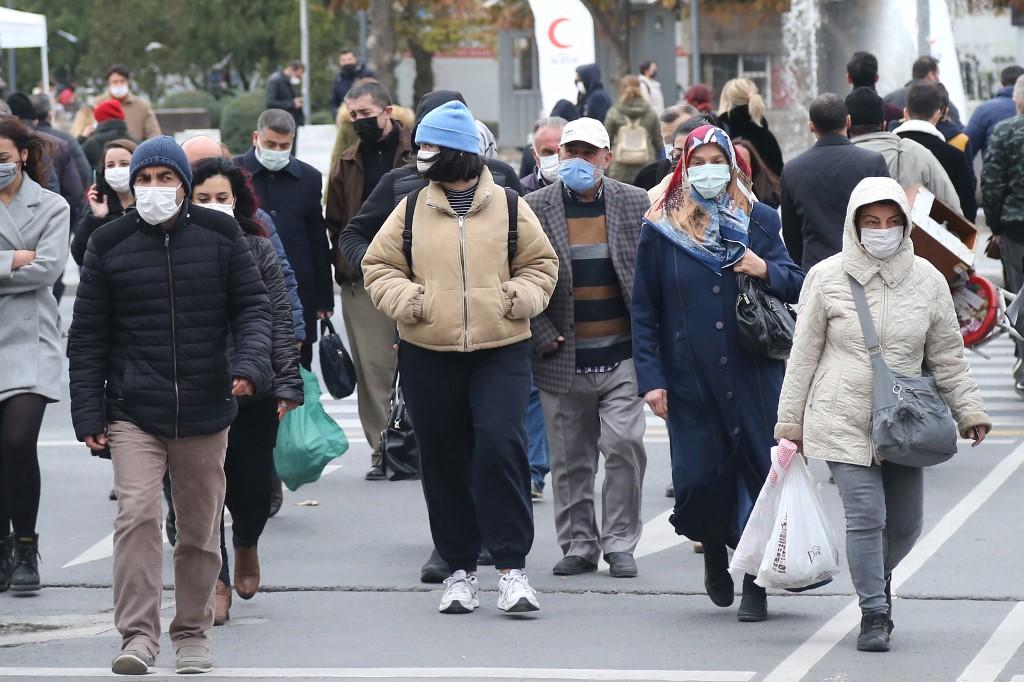
ANKARA: Turkey became the country with the third highest number of daily new COVID-19 cases globally on Nov. 25 — behind the US and India — after changing the way it reports figures.
Turkish Health Ministry has begun publishing all positive cases, including asymptomatic ones, in its daily count following months-long harsh criticisms from the scientific world, including the World Health Organization, and opposition figures claiming that the measuring method used was hiding the true scale of the outbreak.
Up till Wednesday — since March — Turkey’s asymptomatic cases were not included in the number of daily reported cases.
The country recorded 28,351 new COVID-19 cases in the past 24 hours, including 6,814 with symptoms; 168 people had died on Nov. 25 due to COVID-19, raising the death toll to 12,840.
Health Minister Fahrettin Koca has warned that the country may need to take “radical measures” as the number of daily COVID-19 deaths has climbed to record levels.
However, Caghan Kizil, a specialist in neuroscience and genetics at Dresden University’s Faculty of Medicine, tweeted: “We have reminded you of your responsibility for months. You did not take it into account. You created this situation by yourself. Being together would be by listening to scientists. Building trust was most important. You failed it, Mr. Koca.”
The government only introduced partial curfews for weekends, and limitations on restaurants and cafes.
However, these measures remain disputed by medical groups and local governors.
Istanbul metropolitan mayor, Ekrem Imamoglu, has criticized government efforts that did not curb the pandemic. On the discrepancy in the Ministry of Health’s daily COVID-19 data, he recently announced that “even only in Istanbul the daily death toll is 50-60 higher than the announced national number.”
The officially announced death rates are also controversial, as the ministry announced 168 COVID-linked deaths on Wednesday, while the Istanbul municipality’s cemeteries department recorded 203 deaths alone on the same day due to “infectious diseases.”
The occupancy rates in the intensive care units of hospitals in the three biggest cities of Turkey exceed 70 percent. The number was by far the highest reported by the Turkish government since the beginning of the outbreak.
The Turkish Health Minister announced that about 80 percent of people who tested positive were either asymptomatic or showed slight symptoms — highlighting the importance of including asymptomatic cases in the total tally. 
The Turkish Medical Association, the largest doctors’ group in the country, estimated that the average daily number of non-hospitalized cases was above 47,000. Many provinces in the country are also facing a third peak.
Meanwhile, due to the sharp decline in tourism figures, Turkey’s flagship air carrier Turkish Airlines needs $2.5 billion of bank loans and is seeking state assistance, Bloomberg reported on Thursday. Over the first nine months of 2020, the airline recorded a 5.2 billion Turkish lira ($0.66 billion) loss.

Main category: 

Greece: Turkey still risks EU sanctions over sea disputeTurkey announces asymptomatic coronavirus case numbers for first time since July


End the political deadlock, support group tells Beirut

Author: 
Zaynab Khojji
ID: 
1606333938794315500
Wed, 2020-11-25 23:15

BEIRUT: The International Support Group for Lebanon (ISG) has voiced its dismay over delays in the formation of a government in the crisis-racked country and called on Lebanese authorities to implement urgent reforms.
In a statement on Wednesday directed at Lebanon’s leaders, the group warned that as the political stalemate in the country drags on, “the social and economic crisis is getting worse.”
The ISG called on Hassan Diab’s caretaker government to “fully implement its immediate responsibilities,” adding that the “overriding need is for Lebanon’s political leaders to agree to form a government with the capacity and will to implement necessary reforms without further delay.”
Pragmatic legislative steps are needed to alleviate the “economic stress faced by Lebanese families and businesses,” it said.
The ISG was launched in 2013, and includes the UN, along with China, France, Germany, Italy, Russia, Britain and the US, the EU and the Arab League.
In its statement, the group welcomed France’s plan to hold an international conference in support of the Lebanese people by the early December. The forum will be co-chaired by the UN.
However, the summit “did not detract from the urgent need for government formation and reforms,” it said.
On Wednesday, Reuters quoted “an official source” who claimed that Lebanon’s central bank is considering reducing the level of mandatory foreign exchange reserves in order to continue supporting basic imports next year, with the already low reserves dwindling.
According to the source, Riad Salameh, the central bank governor, met with ministers in the caretaker government on Tuesday to discuss cutting the mandatory reserve ratio from 15 percent to 12 percent or even 10 percent. Foreign exchange reserves are currently about $17.9 billion, leaving only $800 million to support imports of fuel, wheat and medicine until the end of the year.
Meanwhile, Lebanese political leaders are seeking to shift blame for the parliamentary deadlock in a dispute illustrated by the exchange of accusatory letters between Nabih Berri’s parliamentary bloc and President Michel Aoun.
Walid Jumblatt, leader of the Progressive Socialist Party, tweeted on Wednesday: “We are in a vicious circle under the slogan of conditions, counter-conditions, names and counter-names, electoral and presidential bids, and flimsy regional bets, amid a tremendous change in the region.”
At a meeting of the joint parliamentary committees on Wednesday to discuss a draft law for the parliamentary elections, representatives of the Free Patriotic Movement and the Lebanese Forces party voiced their objections, claiming the project presented by the Berri parliamentary bloc “fuels the political, sectarian and doctrinal divide because it is based on the idea that Lebanon is one electoral constituency.”
Lebanese Forces MP George Adwan said that “what is being discussed today is a change in the political system, not just an electoral law.”
The Lebanese Parliament is due to hold a plenary session on Friday to discuss a letter sent by Aoun “to enable the state to conduct a forensic accounting audit of the Bank of Lebanon’s accounts.”
Alvarez & Marsal, which was carrying out a forensic audit of the central bank’s accounts, said last week it was halting the investigation because it was not being given the information needed to carry out the task.
The company’s decision came after the central bank invoked a banking secrecy law to prevent disclosure of information.
Aoun had insisted on the forensic audit “so that Lebanon is not seen as a rogue or failed state in the eyes of the international community.”
Families of the victims of the Aug. 4 Beirut port explosion staging a sit-in near the parliament building demanded “a decree equating our martyrs with the martyrs of the army.”
Bereaved mothers, some carrying pictures of children killed in the blast, accused former and current heads of state of being responsible for the explosion.
Mohammed Choucair, head of the Lebanese Economic Organizations, said that Lebanese authorities “are dealing with this devastating event as if it were a normal accident.”
He said that “the only way to save Lebanon and rebuild Beirut is to form a capable and productive government that responds to the aspirations of the citizens.”

Main category: 

Charges filed against customs officials over Lebanon port blastLebanon on borrowed time not addressing Hezbollah’s weapons