Palestinian refugees benefit from revival of embroidery technique of tatreez

Fri, 2020-11-27 23:12

DUBAI: When you think of the ancient embroidery technique of tatreez, what usually springs to mind is decorative clothing and elegant patterns on items like cushions. But for 81 Designs — a family-run social enterprise — it is an opportunity for a more comfortable and prosperous future for the female Palestinian refugee community in southern Lebanon.

Nadine Maalouf, alongside her mother Nesrine El-Tibi, is providing a group of refugee artists with a monthly salary by employing them and selling their artwork at fairs across the Middle East and North Africa (MENA) region.

“The work is quite detailed and it’s unconventional so it takes a lot of time,” Maalouf said. “Some pieces take four months for one item. We work towards the fair every year because it takes about six months to launch the project from its beginning to its end.”


Maalouf believes more social enterprises like hers could be created to help others. (Supplied)

Starting the company in 2015, then launching two years later at the annual UAE-based fair Art Dubai, Maalouf and El-Tibi set out to re-establish tatreez as an art form while making a positive humanitarian impact.

Three years later and the company employs 20 Palestinian refugee artists creating unique pieces that have preserved and modernized the ancient art of tatreez.

The inspiration for launching 81 Designs came to Maalouf following the birth of her first son. Having studied art direction and art history in her younger years, she worked at various jobs after graduation, but none incorporated the artistic elements she loved.

THENUMBER

20

Palestinian artists employed by 81 Designs to create pieces that preserve and modernize tatreez.

“I developed this idea because I was doing a lot of research about traditional textiles and artistry,” she said. “I kept on asking myself, ‘Why are we only seeing a one-dimensional form of tatreez?’

“It is an art form, so I wanted to figure out a way to recreate or give a stronger platform to these ladies to be able to sustain what they do as individuals.”

The COVID-19 pandemic has dealt a blow to businesses throughout the Middle East and has caused social and economic problems for many. For 81 Designs, however, it provided an opportunity to work on a non-profit collaboration with Abu Dhabi Health Services on the project “I Am Committed” to help tackle the coronavirus.

“We created wristbands for people to receive at every testing site at the UAE and they were sponsored by different companies throughout the community,” said Maalouf. “The wristbands were encouraging people to get tested.”


Maalouf and El-Tibi set out to re-establish tatreez as an art form while making a positive humanitarian impact. (Supplied)

Maalouf believes more social enterprises like hers could be created to help others. “When you create a social enterprise where you use someone’s skill set to provide a job for them, I think that alone in itself inspires others to do the same,” she said.

“You see a lot of different social enterprises sprouting up from the region and that impact in itself is important to create a hub of opportunities for those who are less fortunate, but not treating them as a charity case because these people are amazing.”

However, 81 Designs was not always destined to be a success. Having contacted several NGOs around Lebanon for initial funding, some of them found the idea to be too abstract and something that would not work, while others were not able to visualize the end product. But none of these hurdles held back Maalouf’s eventual success.

“When you set up as a business, you do face challenges and you just need to keep on going. Believe in yourself. Believe that what you’re actually creating can impact others in a positive way.”

——————-

This report is being published by Arab News as a partner of the Middle East Exchange, which was launched by the Mohammed bin Rashid Al Maktoum Global Initiatives to reflect the vision of the UAE prime minister and ruler of Dubai to explore the possibility of changing the status of the Arab region.

Main category: 

She’s weaving home: Helping refugees keep the tradition of tatreez aliveStartup of the Week: The art of weaving masterpieces with yarn


European Parliament resolution urges sanctions on Turkey 

Author: 
Zaynab Khojji
ID: 
1606506805999309700
Fri, 2020-11-27 23:16

ANKARA: The European Parliament has called for sanctions on Turkey following President Recep Tayyip Erdogan’s controversial visit to Northern Cyprus on Nov. 15.
Members of the European Parliament (MEPs), agreeing on a resolution in support of Cyprus, urged EU leaders to “take action and impose tough sanctions in response to Turkey’s illegal actions.”
The parliament’s non-binding resolution on Nov. 26 emphasized that Turkey’s gas exploration activities in the eastern Mediterranean were illegal. EU leaders are due to meet in Brussels between Dec. 10-11.
MEPs also found that Turkey’s decision to partially reopen the fenced-off suburb of Varosha, in the city of Famagusta, weakened prospects of a far-reaching solution to the decades-long Cypriot conflict.
The Turkish army fenced off Varosha in 1974 after its military intervention, while Greek Cypriots who fled from the resort town could not return to their homes.
“MEPs call on Turkey to transfer Varosha to its lawful inhabitants under the temporary administration of the UN (in accordance with UN Security Council Resolution 550 (1984) and to refrain from any actions that alter the demographic balance on the island through a policy of illegal settlement,” the resolution said.
Ankara’s move has been criticized by the US, Greece as well as Greek Cypriots.
The resolution was denounced by Turkey’s Foreign Ministry, which criticized the European Parliament for “being prejudiced and disconnected from the realities” on Cyprus. 
During the EU summit some sanctions, on sectors such as shipping, energy and banking, are expected to be adopted, depending on Germany’s mediation efforts as the current holder of the EU’s six-month presidency.
Laura Batalla Adam, a political analyst and the secretary general of the EU-Turkey Forum, said that even if EU leaders were divided, the possibility of sanctions remained on the table.
“The decision to reopen Varosha just adds to an already extremely tense situation between Turkey and the EU,” she told Arab News. “The next days are going to be decisive as to what kind of sanctions could be imposed, depending on Ankara’s moves in the Eastern Mediterranean.”
According to Batalla Adam, a moratorium on drilling activities until the two sides can enter into negotiations to settle their dispute would be a way to ease tensions and start working on a more positive agenda.
Turkey will continue its seismic studies near Greek islands in the eastern Mediterranean until Nov. 29 with its Oruc Reis research vessel.
Ankara pulled the vessel back in September to allow more room for diplomacy and negotiations with Greece, but sent it back to the disputed area, provoking a harsh reaction from EU members Cyprus, Greece, Germany and France.

Main category: 

Qatar comes to Turkey’s ‘rescue’ amid public outcryTurkey announces record coronavirus death toll for fifth consecutive day


Lebanese Parliament recommends forensic audit of all state institutions

Fri, 2020-11-27 22:45

BEIRUT: The Lebanese Parliament discussed on Friday a letter from President Michel Aoun requesting assistance in the forensic audit of the Banque du Liban’s accounts.

The request overthrew the contract that the Lebanese government signed with the restructuring consultancy Alvarez & Marsal to conduct an audit of the central bank’s accounts. This is because the Banque du Liban is reluctant to provide information to the firm as it contradicts the Monetary and Credit Law and banking secrecy law.

At the end of the session, members of Parliament endorsed a recommendation that “the accounts of the Banque du Liban, ministries, independent interests, councils, financial institutions, municipalities and all funds undergo a forensic audit in parallel without any hindrances and without invoking banking secrecy or anything else.”

The debate in the UNESCO hall reflected a division between the parliamentary blocs. The Progressive Socialist Party, the Amal Movement, and the Future blocs supported “a comprehensive audit of all institutions,” while the MPs of the Free Patriotic Movement and the Lebanese Forces insisted on “auditing the accounts of the Banque du Liban first.”

The division was reflected in two bills, one of which was submitted by the Lebanese Forces bloc, suspending the banking secrecy law for one year, to be effective from the date of publication of this law in all matters related to financial audits and/or criminal investigations decided by the government on the accounts of the Banque du Liban. The bill of the Amal Movement MPs expands the scope of the forensic audit to include “all ministries, institutions, departments, funds, and councils without exception, discretion, changeability or maliciousness.”

The Hezbollah bloc appeared to be the most embarrassed bloc among its two allies, the Amal Movement and the Free Patriotic Movement. The head of the bloc, MP Mohammad Raad, said during the session: “We support the forensic audit of the Banque du Liban, and we agree that the audit will be conducted in all public institutions, and we propose to endorse the temporary suspension of banking secrecy.”

FASTFACT

The Hezbollah bloc appeared to be the most embarrassed bloc among its two allies, the Amal Movement and the Free Patriotic Movement

MP Wael Abou Faour said after the session: “President Aoun tried to hold Parliament responsible for the failure to conduct a criminal investigation, and Parliament responded by endorsing the recommendation to audit all state departments without exception.”

The Free Patriotic Movement opposed auditing the accounts of the Energy Ministry, which bears half of the country’s public debt. It insisted on auditing the accounts of the central bank. Secretary of the Strong Lebanon bloc, MP Ibrahim Kanaan, said: “The people of Lebanon have the right to know the fate of their deposits.”

Future MP Samir Al-Jisr said: “Hassan Diab’s Cabinet had endorsed the forensic audit and limited it to the central bank’s budget, profit and loss account, and the level of reserves available in foreign currencies. It was not possible to automatically apply the audit to all the state’s ministries, departments, institutions and agencies. However, with Parliament’s endorsement of the recommendation to include in the audit all the state’s ministries, departments, agencies, and institutions, in addition to the Banque du Liban, and turning the recommendation into a law, a financial and forensic audit becomes mandatory.”

Activists from the civil movement lobbied MPs to find out the fate of the money deposited in Lebanese banks. They distributed leaflets to passersby and cars, demanding the right to know the truth about the accounts of the Banque du Liban.

The security forces and a number of protesters clashed, injuring a number of those involved, and the Red Cross transferred them to a hospital in the capital.

Another group of the civil movement staged a sit-in outside the office of the UN Special Coordinator for Lebanon, Jan Kubis, in Baabda. The group delivered a message to Kubis declaring the civil society’s rejection of “a state within the state and illegal weapons” and calling for “the possession of weapons and decision of war and peace to be under the control of the Lebanese state alone.”

The group said: “Hezbollah, which controls the functions of the state, is the main reason for the political, financial, economic, health, and education collapse as well as the isolation of Lebanon from its Arab and international surroundings.”

Main category: 

Hundreds of Syrians exit Lebanese town over tensions: UNMaradona of Aabdine, Lebanon? Looking back at the TV show that revealed it


Qatar comes to Turkey’s ‘rescue’ amid public outcry

Author: 
Zaynab Khojji
ID: 
1606504174029126700
Fri, 2020-11-27 22:31

ANKARA: Turkey and Qatar on Thursday signed investment deals worth millions of dollars, as part of the developing relationship between the two countries.
The external funding will help to alleviate Turkey’s currency crisis, which has seen the lira lose about 40 percent of its value this year due to depleted foreign reserves.
But the bilateral ties have sparked a public outcry, with people criticizing the sale of strategic assets to the Gulf nation. 
Turkey transferred 10 percent of shares in the Istanbul stock exchange to the Qatar Investment Authority, and the Turkish Wealth Fund’s stake in the stock exchange dropped to 80.6 percent as a result.
Qatar, having already poured $15 billion into currency swap deals, has also bought the transfer of 42 percent of shares in one of Turkey’s biggest shopping malls, Istinye Park on Qatar Street in Istanbul, for $1 billion. It has also pledged to invest in the Istanbul Golden Horn marina project.
Kemal Kilicdaroglu, the leader of the main opposition Republican People’s Party, criticized the government for signing the deals with Qatar, saying that even the sale of the presidential palace to the Gulf country would come as no surprise.
“Where does your love for Qatar come from? Everything is being sold,” he said during a TV program on Friday.
Critics see the Qatari investment money as an alarming trend for the Turkish economy, dubbing the agreements as the “best Black Friday deal.”
According to Hakan Kara, an economics professor at Bilkent University in Ankara and former chief economist at the Central Bank of Turkey, concentrated funding from a single source mostly driven by personal relationships was at odds with the Turkish government’s previous emphasis on “the need to reduce the dependence on foreign capital.”
“History shows that such reliance on personal ties may bring compromises in many other areas,” he told Arab News.
The agreements will bring $300 million of capital flows to Turkey. Total investments from Qatar to Turkey have reached $22 billion.
Dr. Robert C. Mogielnicki, a resident scholar at the Arab Gulf States Institute in Washington D.C., said while Qatari economic support for Turkey had been forthcoming in recent years, there were also political dimensions to these initiatives.
“A substantial increase in Qatari equity capital in Turkey has offset declining Saudi and Emirati investments over the years,” he told Arab News. “Qatari investments into Turkey spiked from 2015-2016, suggesting that the strengthening of this economic partnership preceded the 2017 Gulf rift and likely had its roots in the earlier 2014 regional dispute.”
Although securing new investment deals with Qatar is important for coping with the difficult economic times that Turkey is experiencing, experts have noted the need for economic diversification.
“Turkey still needs to expand and deepen its economic ties with other countries. Qatari-Turkish ties are but one of many linkages needed to support Turkey’s massive economy. A big risk for Turkey is that the politicization of its trade and investment deals today limits future opportunities,” Mogielnicki added.
According to Timothy Ash, a London-based senior emerging markets strategist at Bluebay Asset Management, the recent deals are part of the long-running strong ties between President Recep Tayyip Erdogan’s administration and Qatar.
“Although Qatar has proved to be an active and dynamic investor in Turkey, I think that the $15 billion in financing is not a game changer,” he told Arab News. “They are useful but still pale into insignificance compared to Turkey’s annual $200 billion external financing needs. Doha pledged $15 billion in support to Turkey in 2018. That was supposed to comprise $5 billion in swaps, $5 billion in loans and $5 billion in investments. In the end, the loans were converted to a total of $10 billion in swaps and I think what we are seeing this week is the investment angle rolled out. I don’t think this is new money.”

Main category: 

Turkey announces record coronavirus death toll for fifth consecutive dayAmnesty International urges Qatar to crack down on abusive employers


Turkish president denies country has a ‘Kurdish issue’

Author: 
Thu, 2020-11-26 22:14

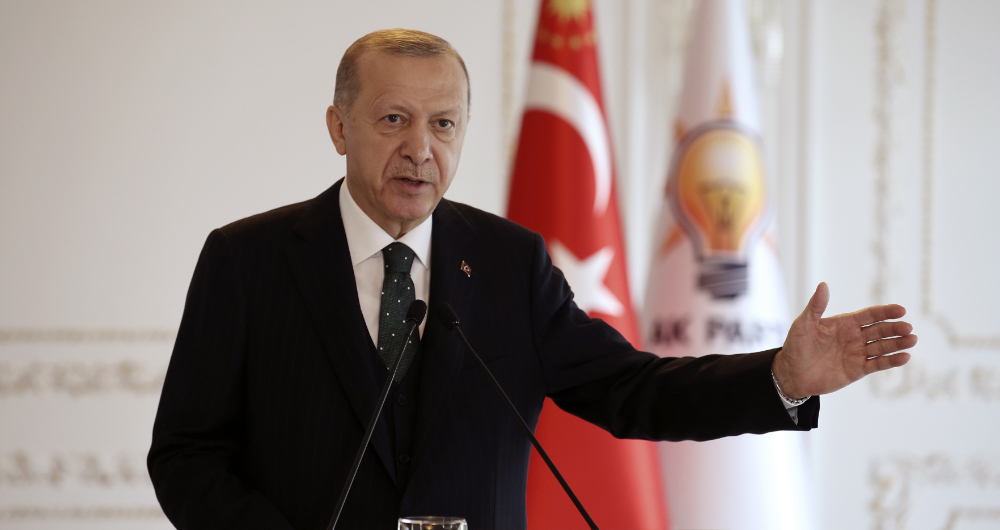
ANKARA: Turkish President Recep Tayyip Erdogan denied the country has a “Kurdish issue,” even as he doubled down on his anti-Kurdish stance and accused a politician of being a “terrorist who has blood on his hands.”

Erdogan was addressing members of his ruling Justice and Development Party (AKP) on Nov. 25 when he made the remarks.

The Kurdistan Workers Party (PKK) launched an insurgency against the state in 1984, and is designated a terrorist group by Turkey, the European Union and US. Erdogan accuses the pro-Kurdish Peoples’ Democratic Party (HDP) of links to the PKK, which it denies.

Erdogan told AKP members that Selahattin Demirtas, the HDP’s former co-chair who challenged him in the 2015 presidential elections, was a “terrorist who has blood on his hands.”

Demirtas has been behind bars since Nov. 4, 2016, despite court orders calling for his release and faces hundreds of years in prison over charges related to the outlawed PKK.

The president defended the removal of 59 out of 65 elected Kurdish mayors from their posts in the country’s Kurdish-majority southeast region since local elections in March 2019.

He also said the AKP would design and implement democratization reforms with its nationalistic coalition partner, which is known for its anti-Kurdish credentials.  

His words are likely to disrupt the peace efforts that Turkey has been making with its Kurdish community for years, although they have been baby steps. They could also hint at a tougher policy shift against Kurds in Syria and Iraq.

According to Oxford University Middle East analyst Samuel Ramani, Erdogan’s comments should be read as a reaction to Tuesday’s resignation of top presidential aide Bulent Arinc, who urged for Demirtas to be released and insisted that the Kurds were repressed within Turkey.

“This gained widespread coverage in the Kurdish media, including in Iraqi Kurdistan’s outlet Rudaw which has international viewership,” he told Arab News. “Erdogan wanted to stop speculation on this issue.”

Ramani said that Erdogan’s lack of sensitivity to the Kurdish issue could inflame tensions with Kurds in Syria and Iraq.

“It is also an oblique warning to US President-elect Joe Biden not to try to interfere in Turkish politics by raising the treatment of Kurds within Turkey.”

But Erdogan’s comments would matter little in the long run, he added.

“Much more will depend on whether Turkey mounts another Operation Peace Spring-style offensive in northern Syria, which is a growing possibility. If that occurs during the Trump to Biden transition period, the incoming Biden administration could be more critical of Turkey and convert its rhetoric on solidarity with the Kurds into action.”

The Kurdish-led Syrian Democratic Forces have been a key partner for the US in its fight against Daesh. During a campaign speech in Oct. 2019, Biden criticized the US decision to withdraw from Syria as a “complete failure” that would leave Syrian Kurds open to aggression from Turkey.

“It’s more insidious than the betrayal of our brave Kurdish partners, it’s more dangerous than taking the boot off the neck of ISIS,” Biden said at the time.

UK-based analyst Bill Park said that Erdogan was increasingly influenced by his coalition partners, the Nationalist Movement Party (MHP).

“He might also believe that both the PKK and the HDP have been so weakened that he doesn’t have to take them into consideration,” he told Arab News. “The Western world will not respond dramatically to this announcement but they are tired of Erdogan. There is little hope that Turkey’s relations with the US or the EU can be much improved. The Syrian Kurdish PYD militia are seeking an accommodation with Damascus, while the Kurdistan Democratic Party, the largest party in Iraqi Kurdistan, is indifferent to the fate of Turkey’s Kurds and has problems of its own.”

The HDP, meanwhile, is skeptical about Erdogan’s reform pledges and sees them as “politicking.”

“This reform narrative is not sincere,” said HDP lawmaker Meral Danis Bestas, according to a Reuters news agency report. “This is a party which has been in power for 18 years and which has until now totally trampled on the law. It has one aim: To win back the support which has been lost.”

Turkey’s next election is scheduled for 2023, unless there is a snap election in a year.
 

Main category: 
Tags: 

Erdogan slammed after visiting N. Cyprus and calling for ‘two-state solution’Cyprus condemns ‘provocation’ of Erdogan ghost town picnic