Security around Istanbul mayor beefed up after claims of Daesh-linked assassination plot

Author: 
Wed, 2020-12-02 23:45

ANKARA: Personal security measures have been beefed up around Istanbul Mayor Ekrem Imamoglu following “unconfirmed” reports of a foiled Daesh-linked assassination plot against him.

Municipality sources revealed that Turkish police had issued a warning last month about a possible terror attack on the city leader, but the country’s General Directorate of Security has denied there being any specific threat.

However, the directorate did accept that there had been “unverified information or notices against public officials from time to time.”

Imamoglu, 50, from the main opposition Republican People’s Party (CHP), is a relatively new arrival on the Turkish political scene after securing the mayoralty in March 2019 local elections.

But the politician has quickly emerged as a challenger to Turkish President Recep Tayyip Erdogan with his local projects that touch on people’s daily needs and his pleas for national unity over a number of issues.

Ismail Saymaz, an investigative journalist from dissident Turkish daily newspaper Sozcu, said confirmation of a threat to kill the mayor had come from Interior Ministry contacts who claimed to have received an intelligence report also containing the names of other targets.

However, the ministry did not consider it to be “a tangible or up-to-date assassination threat, but only an unconfirmed information.”

But an Istanbul municipality spokesperson said police had warned authorities on Nov. 23 about a security threat against Imamoglu.

The risks posed to high-profile politicians by Daesh militants in Turkey are increasing but are not new for a country that has witnessed several political assassinations and unresolved murders in the past.

A day after the Imamoglu assassination plot claims, Interior Minister Suleyman Soylu on Wednesday revealed Turkey’s counterterrorism operations during a parliamentary session and listed Hayat Tahrir Al-Sham as a terror organization the country was currently combatting. On the same day, 18 Iraqi nationals were detained in Ankara after an anti-Daesh operation led by counterterrorism police.

In mid-November, the Istanbul Chief Public Prosecutor’s office led an investigation that resulted in the arrest of four Daesh suspects.

Recently, Fuat Ugur, a pro-government journalist, made claims of an imminent assassination attempt against Kemal Kilicdaroglu, the 71-year-old leader of the CHP. He said threats indicated that Kilicdaroglu would be killed in a similar way to Russian Ambassador to Turkey Andrei Karlov who was shot dead four years ago in Ankara during an art exhibition.

Kilicdaroglu has of late been harshly criticized by the nationalistic ally of the ruling government and especially its leader Devlet Bahceli.

Bahceli recently branded the CHP “a national security issue” following remarks by a party deputy about the army “being sold to Qataris” in recent controversial deals between Ankara and Doha.

Turkey’s notorious mafia boss Alaattin Cakici, politically affiliated to the far-right Turkish MHP, on Nov. 17 publicly threatened Kilicdaroglu with a “watch your step” warning over the main opposition leader’s criticism of the government on the amnesty law that led to the release of thousands of criminals but excluded journalists and dissident politicians.

Ugur said: “Alaattin Cakici will be held responsible for such an unidentified murder. Therefore, a perception that the government ordered the assassination will be generated.” He added that Imamoglu would replace Kilicdaroglu, creating an even greater atmosphere of chaos. 

Another investigative journalist, Nedim Sener, said some “proxy groups” were likely to be engaged in provocative assassination attempts in Turkey against dissidents on the same lines as the recent killing of Iranian nuclear scientist Mohsen Fakhrizadeh.

Main category: 

Turkey’s coronavirus death toll hits record for tenth consecutive dayTurkey probes Istanbul mayor in fight over ‘crazy’ canal


Egypt sets new shop hours amid second virus wave fears

Author: 
Zaynab Khojji
ID: 
1606941504242958400
Wed, 2020-12-02 23:37

CAIRO: Egypt’s government has set limited working hours for shops amid growing coronavirus cases and fears over a second virus wave.
The decision means that, starting from Dec. 1, commercial shops, public restaurants, cafes, workshops, handicrafts and malls will be forced to follow the government’s new opening and closing times.
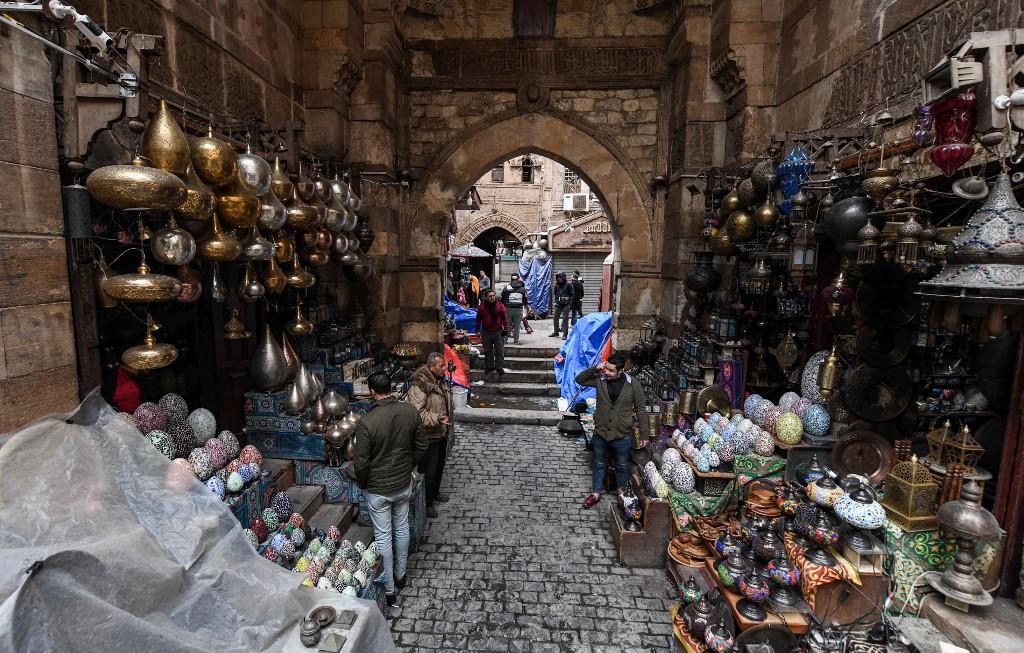
On Tuesday evening, Egyptian newspapers and channels shared pictures of closed shops following the new decision.
Under the new regulations, shops and malls will start operating at 7 a.m. until 11 p.m. in the summer and from 7 a.m. until 10 p.m. in the winter.
As for bazaars and restaurants, they will begin operating at 5 a.m. until 1 a.m. in the summer and from 5 a.m. until 12 a.m. in the winter.
Workshops are to operate from 8 a.m. until 7 p.m. in the summer and from 8 a.m. until 6 p.m. in the winter.
On Thursdays and Fridays, shops and malls will operate from 7 a.m. until 12 p.m. in the summer and from 7 a.m. to 11 p.m. in the winter.
Restaurants, cafes and bazaars will open from 5 a.m. until 1 a.m. in the summer and winter on Thursdays and Fridays.
Supermarkets, grocery stores, bakeries and pharmacies are excluded from the regulations, and takeaway and home delivery services will continue to operate 24 hours a day throughout the year.
Khaled Abdel Aal, the governor of Cairo, conducted a tour on Tuesday in a number of areas and neighborhoods, including the downtown area and Nasr City, to ensure that shops abide by the closing times set by the Egyptian Cabinet.
During the tour, Abdel Aal warned that neighborhood chiefs should intensify measures to monitor the implementation of measures and take necessary legal measures against potential violations.
Minister of Local Development Mahmoud Shaarawy directed governors to apply the new closing times and called on all stores, restaurants and malls to adhere to the instructions.
Shaarawy warned Egyptian governorates of the necessity of coordination with security directorates and executive bodies to ensure compliance with the new regulations.

Main category: 

Egyptian tourism records 21.6% decline, halting reform effortsEgypt plans big rail expansion, nears agreement with Bechtel


Israeli navy welcomes new generation of German-made warships

Author: 
Associated Press
ID: 
1606938708532710500
Wed, 2020-12-02 19:37

HAIFA: Israel’s navy on Wednesday welcomed the first of four German-made warships that will be at the vanguard of the country’s efforts to protect its coastline and growing natural-gas industry.
The first missile boat of “Project Magen” docked at Israel’s Haifa port, with three more of the corvettes scheduled to arrive over the next two years.
“The Israel Navy has proved it can initiate, plan, lead and implement a serious force build-up program for the long term that will answer the state of Israel’s strategic needs — from maintaining our naval superiority in the area to protecting the gas rigs and securing the trade and import routes to Israel,” President Reuven Rivlin told the welcoming ceremony.
The vessels, commonly known as the “Saar 6,” will lead Israeli efforts to protect its 200-mile (320-kilometer) exclusive economic zone. The natural gas industry, seen as a national asset, is at the heart of those efforts.
Over a decade after finding sizeable reserves off its Mediterranean coast, Israel now generates some 60% of its electricity from natural gas, according to the national electric company, and has begun to export gas to its Arab neighbors Jordan and Egypt. Israel is also pursuing a project with Greece and Cyprus in hopes of creating an Eastern Mediterranean gas pipeline to Europe.
With so much at stake, Lebanon’s militant Hezbollah group has identified Israeli gas installations as high-priority targets. Israel takes such threats seriously. During a monthlong war in 2006, a Hezbollah cruise-missile strike on an Israeli “Saar 5” warship killed four soldiers.
The new ships are to be equipped with newer and more powerful radar and other electronic systems, and handle rough seas much better than their predecessors. The 90-meter (295-foot) vessels are equipped with rocket and missile defense systems, anti-aircraft and anti-ship missiles, torpedoes and an upgraded launching pad for Israel’s newest attack helicopters.
“Behind me is one of the most advanced war machines in the world, which poses a significant leap forward in the Israeli military’s ability to ensure our strength at sea and in naval operations,” said the military’s chief, Lt. Gen. Aviv Kohavi.
Israel agreed to buy the vessels in a 2015 deal valued at roughly 430 million euros ($480 million at the time), with the German government covering about one quarter of the cost.
Several Israeli businessmen, including confidants of Israel’s Prime Minister Benjamin Netanyahu and a former commander of the navy, are suspects in a graft scandal connected to the purchase of the warships and submarines from German conglomerate ThyssenKrupp.
Netanyahu, who is on trial in three other corruption cases, was not named as a suspect in the scandal and no one active in the Israeli navy has been connected. But critics, including his defense minister at the time, have claimed Netanyahu behaved improperly and may have had a conflict of interest. Netanyahu’s rival and governing partner, Defense Minister Benny Gantz, recently opened an investigation into the affair.

Main category: 
Tags: 

Israel expects $220 million in non-defense trade with Bahrain in 2021Israel sends Palestinians over $1 billion in withheld funds


More than 900 Syrian fighters return home from Karabakh

Author: 
AFP
ID: 
1606930731252112300
Wed, 2020-12-02 09:54

BEIRUT: More than 900 pro-Turkish Syrian fighters have returned to Syria after the end of fighting in the disputed area of Nagorno-Karabakh, a Britain-based Syrian war monitor said Wednesday.
A November 9 truce ended more than a month of fighting between Azerbaijan and Armenia over the ethnic Armenian enclave that broke away from Baku’s control in a war in the 1990s.
Turkey has been accused of sending hundreds of Syrian mercenaries to fight alongside Azeri forces in the conflict, though Ankara has denied this.
More than 2,580 Syrian combatants have been sent to back Baku in total, of whom 293 have died, according to the Syrian Observatory for Human Rights monitoring group.
“More than 900 fighters from pro-Ankara factions have returned to Syria in several waves,” the latest on November 27, Observatory head Rami Abdel Rahman said.
The rest of the fighters were expected home in the coming days.
Returning fighters went back to northern parts of war-torn Syria under control of pro-Turkey rebels, including Afrin, Jarabulus and Al-Bab, Abdel Rahman said.
France in mid-November called on Russia, which brokered the cease-fire deal between Armenia and Azerbaijan, to clear up related “ambiguities,” including over the return of foreign fighters.
A French diplomatic source, who asked not to be named, at the time called the departure of foreign fighters deployed in the conflict “a fundamental element for stability in the region.”

Main category: 

Turkey to send soldiers for Karabakh ‘peacekeeping center’US: Turkey-sent Syrian fighters generate backlash in Libya


Yemenis suffer as UN bodies cut aid

Author: 
Wed, 2020-12-02 01:55

AL-MUKALLA: Thousands of Yemenis, African migrants and internally displaced people have been deprived of vital healthcare services as UN organizations cut their programs throughout the war-torn country because of a shortage of funds, local Yemeni officials told Arab News.

The World Health Organization announced on Saturday that it was cutting support to thousands of health workers and health facilities across the country, which threatened to aggravate the country’s humanitarian crisis.

“Due to an unprecedented financial gap, @WHO & health partners have been unable to continue their financial support to the health care workforce in #Yemen. Up to 10K health workers are affected. More funds are needed now more than ever to enable the continuation of this support,” the WHO Yemen office said on Twitter.

The International Organization for Migration (IOM) office in Yemen made a similar announcement about reducing their operations on the ground, including monitoring the flow of African migrants, due to a lack of funds and a sharp drop in the number of African migrants to the country this year.

“IOM is adapting its programming to the realities on the ground and available funding. As a result of the COVID-19 pandemic, migration to Yemen has greatly reduced since March,” said Olivia Headon, IOM spokeswoman in Yemen, adding that the number of African migrants has decreased by 90 per cent over the past several months compared to last year, another reason for reducing the organization’s activities at the entry points for the migrants in southern Yemen provinces.

“IOM’s health assistance in Yemen is severely underfunded and, with such financial constraints, we have had to refocus our health programming. Unfortunately, this has affected assistance for both migrants and displaced people,” Headon said.

Local Yemenis have felt the effects of UN humanitarian assistance cuts. Yemeni officials told Arab News that dozens of health workers at UN-funded facilities have been laid off, forcing many patients to travel hundreds of miles to get treatment.

In the densely populated central province of Marib, health officials said that slashed health assistance by WHO Yemen has had a huge impact on their ability to deliver services to thousands of internally displaced people and the war wounded.

Dr. Abdul Aziz Al-Shadadi, the director of Marib’s Ministry of Health office, said on Tuesday that at least a dozen medical specialists in Marib were laid off, leading to the closure of many sections at three facilities in the province.

“The cut of the meager support from the UN body has placed unprecedented pressure on us,” Al-Shadadi said, adding that surgery and mother and child departments at Marib’s Harib district had been closed due to lack of funding. “We are facing huge pressure. We receive thousands of patients from Al-Bayda and Jouf after Houthis seized control of health facilities there,” Al-Shadadi said, urging WHO to resume activities and financial support mainly to medical specialists.

Employees at IOM told Arab News that the organization informed them that it would end their contracts by the end of this month, even as the country is bracing for a new wave of migrants from Ethiopia fleeing violence at home.

IOM’s spokeswoman said the organization would reduce its field teams in the southern province of Shabwa, a key arrival entry for migrants, from three to one due to the sharp decrease in the number of African migrants and funds. According to IOM figures, the total number of migrants who arrived in Yemen in August, September and October this year is 1,703, compared to 27,260 migrants during the last three months last year.

However, residents in Shabwa talk about a continuing flow of migrants to the coasts of the province. One resident said migrants told him that a large number of Ethiopians who fled fighting at home were gathering in Bosaso in Somlia and were due to sail to Yemen.

Local officials in Shabwa said that they had been left to deal to the influx of migrants as the IOM reduces operations in the province. “The flow of African migrants has never stopped for the past 20 years. We want the UN to build camps for the migrants, feed them and arrange repatriation trip to them,” said a government official.

Main category: 

Saudi aid agency continues health projects in YemenArab coalition transfers 18 Yemenis to Socotra after receiving treatment in Saudi Arabia