Arab Coalition destroys two booby-trapped boats launched by Houthis south of Red Sea

Wed, 2020-12-09 23:55

RIYADH: The Arab Coalition said it has destroyed and intercepted two booby-trapped boats south of the Red Sea that were launched by the Houthi militia.

The coalition, which is fighting to restore legitimacy in Yemen, said the boats took off from Hodeidah, Yemen’s principal port on the Red Sea.

In remarks over the incident, the coalition said the militia continues to threaten regional and international security. 

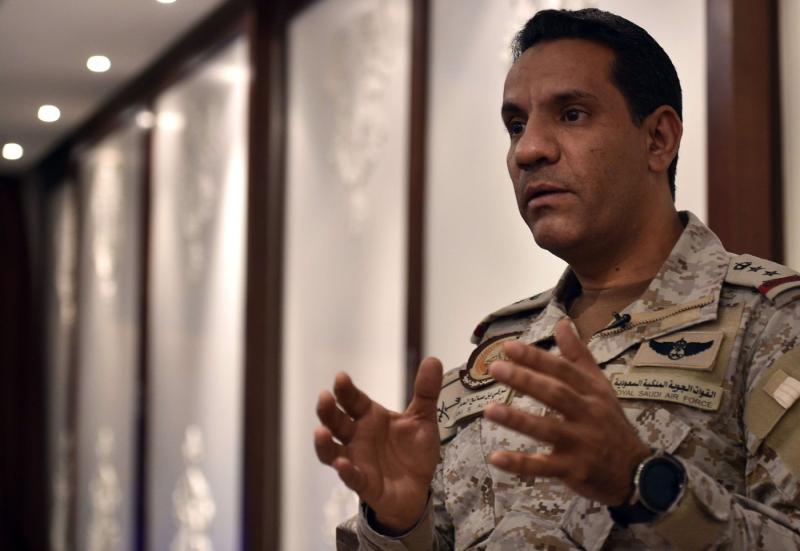
Spokesman of the Arab Coalition Colonel Turki Al-Malik. (AFP)
Main category: 
Tags: 

Saudi Cabinet stresses importance of implementing Riyadh Agreement for Yemen peaceSaudi project clears 1,385 more mines in Yemen


Netanyahu: Israel’s vaccination campaign to begin Dec. 27

Author: 
By JON GAMBRELL and JOSEF FEDERMAN | AP
ID: 
1607541815593583200
Wed, 2020-12-09 19:22

TEL AVIV: Israel will start COVID-19 vaccinations from Dec. 27, Prime Minister Benjamin Netanyahu said on Wednesday, as the country received its first batch of Pfizer’s coronavirus vaccine.
Netanyahu, who was on hand as an air freighter carrying the vaccines landed at Ben Gurion airport, near Tel Aviv, vowed to be the first Israeli to get the jab.
The shipment was the first of eight million doses Israel ordered from pharmaceutical giant Pfizer and its partner BioNTech.
“This is a great celebration for Israel,” Netanyahu said as a fork-lift truck started unloading the cargo.
“The first vaccinations will be given on December 27,” he said later, noting the public health service would be capable of administering 60,000 inoculations a day.
“Tomorrow another shipment is arriving, a much larger one,” Netanyahu said.
“I’m asking that every Israeli citizen be vaccinated, and to do so, requested to set an example and be the first person being vaccinated in Israel,” he added, without saying when.
It came ahead of Hanukkah, the Jewish Festival of Lights, which begins on Thursday.
“We’ve brought great light to Israel,” he said.
The Pfizer vaccine has yet to receive the necessary regulatory approvals for use in Israel, but Netanyahu said he would be meeting with the health minister and heads of the public health system on Thursday to prepare “the massive national undertaking” of vaccinations.
The results of third-phase clinical trials showed the vaccine was 90 percent effective in preventing COVID-19 symptoms and did not produce adverse side effects among thousands of volunteers.
Britain started inoculating its citizens with the same vaccine on Tuesday.
Israel has also contracted to buy six million COVID-19 vaccine doses from US biotech firm Moderna which are expected to be delivered in 2021, giving a total of 14 million shots for its population of nine million.
Both medications require two doses to be administered for optimal protection.
The Pfizer vaccine needs to be stored at the ultra-low temperature of -70 degrees Celsius (-94 Fahrenheit), posing handling and storage challenges.
Speaking at the airport, Netanyahu praised “our amazing logistical storage center, which is a few minutes from here, with refrigeration and the highest medical standards in the world.”
Israel imposed a second nationwide lockdown in September, when the country had one of the world’s highest per capita infection rates.
Restrictions have since been gradually eased in the country but infection rates are again on the rise.
The virus has infected 349,916 Israelis, 2,934 of them fatally, according to Wednesday’s official figures.
While reiterating the need to keep up with “masks, distancing, hygiene and preventing gatherings,” Netanyahu was nonetheless upbeat.
“We’re bringing an end to the plague,” he said in his Wednesday evening address.
On Monday, Netanyahu’s office announced a sweeping night-time curfew but it has so far not received the cabinet approval required for its implementation and no details have been published.
On Wednesday evening, Netanyahu said the government would meeting the next day to finalize the restrictions set to be issued.
“We decided on taking the gatherings expected on the holidays, Hannukah, Christmas and the New Year, and limiting them to save lives,” he said.
Foreign Minister Gabi Ashkenazi meanwhile suggested Israel might provide vaccinations for Palestinians in the occupied West Bank or the Gaza Strip.
“We don’t rule out this opportunity once we will have the amount that we need for our first responders, health community and others, and as far as I know they have already engaged with some of the companies,” he said.
The Palestinian Authority says over 75,500 people have so far been infected with coronavirus in the West Bank and 712 have died.
In the Israeli-blockaded Gaza Strip there have been about 25,500 infections and 155 fatalities.
On Monday, the enclave’s Hamas rulers said Gaza had received 20,000 test kits from the World Health Organization, after warning it could no longer perform testing due to a shortage of equipment.
Facing a surge in cases, Hamas has also announced a lockdown on weekends lasting from December 11 to the end of the month. It also closed schools, universities, kindergartens and mosques.
Main category: 

Israel to receive initial shipment of Pfizer coronavirus vaccineUAE says Sinopharm vaccine has 86% efficacy against COVID-19


Kurdish leader blames Baghdad over wages as protests rage

Author: 
By SAMYA KULLAB | AP
ID: 
1607543875943766900
Wed, 2020-12-09 18:06

BAGHDAD: The prime minister of Iraq’s northern Kurdish-run region on Wednesday blamed the federal government in Baghdad for delaying crucial budget transfers as violent protests over salary payments left eight dead in the past week.
Also on Wednesday, two explosions targeted an oil field in northern Kirkuk province in what the Oil Ministry called a terrorist attack. No casualties were immediately reported in the blasts. The area is disputed between Baghdad and the Kurdish region, and Daesh militants routinely exploit security gaps there.
Karim Hattab, the undersecretary for extraction at the ministry, said two wells were targeted in the Khabbaz oil field and caused a fire. Firefighting teams from state-run North Oil Company and security forces were dispatched to the scene, the ministry added. The field produces 2,000 barrels per day.
In the province of Sulimaniyah in recent days, hundreds have been protesting in multiple towns against two main Kurdish political blocs over public salary payment delays and perceived corruption. Iraq’s semi-official High Commission for Human Rights says a total of eight protesters were killed in the areas of Chamchamal, Kefri Darbendikan, Khormal and Saidsadiq. Demonstrators burned down party headquarters and other public offices.
Masrour Barzani, prime minister of the semi-autonomous Kurdish-controlled region, said the right to peaceful protest was “vital” and condemned the violence as “unacceptable,” in a statement.
“It is our shared responsibility to maintain the safety and security of everyone, including protesters and public and private property,” he said.
The protests are largely driven by angry unemployed youth and public sector workers who have not been paid because of a severe fiscal crisis. The Kurdish administration has only paid four months of wages since the start of 2020, and has deducted 21% from the monthly pay to public workers.
Barzani’s statement blamed the federal government, saying it has not made budget transfers needed to make wage payments.
“For many months now we have worked hard to reach a fair constitutional settlement with the federal government,” he said. “We have not left any excuses for Baghdad to fail to deliver it’s obligations to Kurdistan.”
Previous governments in Baghdad have withheld budget allocations to the Kurdish region as punishment for its independent oil export policy. Apart from the federal transfers, the region’s oil exports are its main source of revenue. Under a new agreement inked earlier this year, the Kurdish region was to receive a share of the state budget, in exchange for half its customs revenues.
The federal government, meanwhile, has been crippled by a severe liquidity crisis in the wake of spiraling oil prices that have slashed state coffers. Iraqi lawmakers passed a second emergency internal borrowing bill last month, enabling Baghdad to access $10 billion indirectly from the country’s foreign currency reserves.
But the law’s adoption sparked a political crisis between Baghdad and Irbil, where the Kurdish regional government is based. Kurdish lawmakers nearly boycotted the vote after some of the other lawmakers sought to halt allocations to the northern region’s administration.
“We have shown our willingness in practice to work with the budget deficit law despite reservations on its content and the way in which it was passed,” Barzani said. “We expect reciprocal steps from Baghdad to reach and implement an agreement.”
The UN on Tuesday condemned the violence in Sulimaniyah, calling for an investigation and urging Kurdish leaders to “safeguard the freedoms of assembly and expression.”

Main category: 

Iraqis slowly rebuild Mosul, with little aid from governmentSix protesters killed amid unrest in Iraq’s Kurdistan region


Netanyahu rival breaks from Israel’s Likud to challenge premier

Thu, 2020-12-10 02:00

JERUSALEM: A leading rival of Israeli Prime Minister Benjamin Netanyahu in the right-wing Likud party announced his resignation from parliament on Wednesday as he launches a new party to challenge the premier.
Gideon Saar, an influential figure in conservative Israeli politics, had challenged Netanyahu in a Likud leadership race in December but decisively lost the primary.
With a Netanyahu-led coalition edging toward collapse, risking a fourth Israeli election in less than two years, Saar announced his break with Likud.
“I will create a new movement with the goal of replacing Netanyahu,” Saar said in a virtual press conference late on Tuesday.
In a statement on Wednesday, Saar announced his formal resignation from Israel’s parliament, the Knesset, freeing him to embark on his “candidacy for prime minister.”
It is not yet clear if Israelis will again head to the polls in 2021.
Netanyahu’s key coalition partner, Defense Minister Benny Gantz, in a preliminary vote last week backed an opposition proposal to dissolve the Knesset.
Gantz charges that Netanyahu has acted only in his own political self-interest and placed his upcoming corruption trial above the needs of ordinary Israelis.
Under the coalition agreement, Gantz — who is also the alternate prime minister — is to take over as premier in November 2021.
Gantz has said that the only way for Netanyahu to avoid another election is to agree on a 2021 budget. Netanyahu’s critics say the veteran leader is refusing to agree on a 2021 budget to ensure the government collapses before he has to hand power to Gantz.
Saar, who is seen as close to ultra-Orthodox Jewish parties, is a former Netanyahu loyalist who served in his previous governments.
On several key issues, he stands to the right of Netanyahu, who has been in power since 2009.
Saar backs Israeli annexation of Jewish settlements in the occupied West Bank, a move Netanyahu agreed to freeze in exchange for diplomatic normalization deals with the UAE and Bahrain.
Leading political columnist Ben Caspit, writing in the Ma’ariv newspaper, said there was “fully justified” panic within Netanyahu’s ranks over Saar’s defection.
Saar will be well positioned to peel votes away from Likud in an upcoming election, Caspit argued.
“Saar is offering the right-wingers who are fed up with Netanyahu an alternative for whom they’ll have an easier time voting,” he wrote.

 Israeli Prime Minister Benjamin Netanyahu. (AFP)
Main category: 

Netanyahu: Israel’s vaccination campaign to begin Dec. 27Netanyahu greets 316 Ethiopian immigrants as they land in Israel


Algeria PM slams reported ransoms to ‘terror groups’

Author: 
Wed, 2020-12-09 01:40

ALGIERS: Algeria’s prime minister has sounded the alarm over reported ransoms paid to “terrorist groups” for the freeing of hostages, weeks after the liberation of a French aid worker in Mali.
“Algeria notes, with great concern, continued transfers to terrorist groups of huge sums of money as ransoms to free hostages,” Abdelaziz Djerad told African leaders at a summit of African Union heads of government.
This approach “undermines our counterterrorism efforts,” he said, quoted by Algerian media.
His comments came after Mali released some 200 prisoners in October ahead of the release of four hostages including French aid worker Sophie Petronin.
One of the released prisoners, a terror suspect later arrested in Algeria, said in a video broadcast on Algerian TV that France had been involved in talks with Bamako and a key Malian extremist leader linked with Al-Qaeda.
Mustapha Derrar said he had heard that 207 prisoners would be released along with the payment of a ransom, adding that he had heard the figures €10 million and €30 million.
It was not possible to verify his claims or the conditions under which he made the statement.
In November, Algeria’s defense minister said a “large ransom” had been paid to “terrorist groups in exchange for the release of three hostages,” adding that such payments violated UN resolutions.
Djerad on Monday called for “concerted action to eradicate violent extremism, combat terrorism and dry up the sources of its funding.”
France has consistently denied involvement in negotiations for the release of the hostages or having paid a ransom for Petronin’s freedom.
On Oct. 12, French Prime Minister Jean Castex said the terrorists’ release of Petronin was a “humanitarian gesture,” saying “we were not part of these negotiations.”
Rumors of ransoms paid for the release of western hostages in the Sahel region are common but rarely confirmed.
Djerad’s statement comes amid Algeria’s latest diplomatic fallout with its former colonial occupier, which has said it is considering reducing the number of visas it grants to countries that refuse to take back nationals illegally in the country or suspected of being radicalized.

Algerian Prime Minister Abdelaziz Djerad. (AFP)
Main category: 
Tags: 

Algeria president to return ‘within days’ from German hospitalFrench minister in Algeria praises ‘cooperation’ against extremism