Iraq ‘shrine factions’ look to peel away from Hashd

Author: 
Sat, 2020-12-12 23:57

NAJAF: Around the corner from Iraq’s holiest shrines, a years-long struggle over allegiances and resources is coming to a head — threatening a dangerous schism within a powerful state-sponsored security force.
The growing fissure pits the vast Iran-aligned wing of the Hashd Al-Shaabi network against four factions linked to the shrines of Iraq’s twin holy cities, Karbala and Najaf.
Those factions, dubbed “the Shrine Hashd” and comprising around 20,000 active fighters, held their first strategic planning meeting earlier this month.
Throughout the packed three days, spokesmen for the shrine groups leaned on two sources of legitimacy: A patriotic, “Iraq-only” discourse, and the blessing of the “marjaiyah,” Iraq’s Shiite spiritual leadership.
“The Shrine Hashd are the origin of the broader Hashd,” Hazem Sakhr, a spokesman for the four factions, told AFP.
“We are committed to Iraqi law and the marjaiyah’s orders.”
Maytham Al-Zaidi, the prominent commander of the largest shrine group known as the Abbas Combat Division, struck a nationalistic, reformist tone.
“The main reasons for establishing the Shrine Hashd is to serve our country, and to correct both its track record and trajectory,” he said.
Ali Al-Hamdani, who heads the 3,000-member Ali Al-Akbar Brigade, said the meeting — held in Najaf and Karbala — was “exclusively” for the Shrine Hashd, setting their future apart from the rest.
Hamdi Malik, a London-based expert on Shiite factions, said the shrine groups were now publicly insisting on a separation.
“They are escalating with this new conference, and want to accelerate that process,” Malik told AFP.
The Hashd Al-Shaabi network was formed in 2014 when Iraq’s top Shiite cleric, Grand Ayatollah Ali Sistani, issued an edict urging citizens to fight the advancing Sunni extremists of Daesh.
His call brought together already-existing paramilitary factions and new formations, including the Shrine Hashd.
But internal disputes emerged as early as 2016, with Malik pointing to three main fault lines.

SPEEDREAD

The growing fissure pits the vast Iran-aligned wing of the Hashd Al-Shaabi network against four factions linked to the shrines of Iraq’s twin holy cities, Karbala and Najaf.

Shrine factions began complaining that they were being starved of resources by Abu Mahdi Al-Muhandis, the umbrella group’s deputy head.
Muhandis died in a US strike in January this year that also killed his friend, top Iranian general, Qasem Soleimani.
The Shrine Hashd had accused Muhandis of prioritizing factions closer to Tehran in the distribution of military equipment and state-allocated salaries.
Malik said the tug-of-war was linked to a second, more profound split: a “real ideological divide” over ties to neighboring Iran, which had long provided support to armed groups in Iraq.
Those factions are even dubbed “the loyalist Hashd” for their perceived allegiance to Tehran over Baghdad.
At the meeting, spokesmen were careful not to specifically criticize Iran but repeatedly rejected what they characterised as external meddling.
“Foreign intervention is dangerous. The Shrine Hashd rejects all shapes and sizes it may come in,” Sakhr said.
The 90-year-old Sistani, known to be wary of Iran’s influence, has not commented publicly on the meeting — but it would not have gone ahead without his tacit approval, said Malik.
“It’s important for Sistani, while he is alive and capable, that he puts his house in order,” said Sajad Jiyad, a fellow at US think tank The Century Foundation.
Thirdly, shrine-linked groups have looked disdainfully at the Hashd’s dabbling in politics.
“Sistani had given clear instructions that no Hashd member should participate in politics. But pro-Iran factions in the Hashd created the Fatah alliance and took part in the 2018 parliamentary elections,” Malik said.
Fatah won the second-largest number of seats and wields significant influence in both parliament and several government ministries.
With new elections set to be held in June 2021, shrine factions have said they will stick to Sistani’s orders.
“Our members are free to participate as voters but not as candidates,” said Mushtaq Abbas Maan, the media head for Karbala’s Abbas shrine, which sponsors the factions.
While The Century Foundation’s Jiyad said he doubted armed conflict would erupt between the two wings, he said a divorce would likely be messy.
The Shrine f still lack a legal or administrative framework to govern their forces outside the broader network’s by-laws, and government decrees linking them to the prime minister’s office have been slow to take hold.
At the conference, Maan appealed to the premier, who is Iraq’s commander-in-chief, to “urgently” bring shrine factions under his wing, thereby finalizing their split from the wider network.
But shrine factions also fear that if they peel away, “loyalist” groups could monopolize the Hashd’s budget, fighting force and political influence, Malik said.
Their moves have already irked the Iran-linked Hashd, whose commanders declined AFP’s requests for comment.
But the sharp-tongued Qais Al-Khazali, who heads a powerful Hashd faction known as Asaib Ahl Al-Haq, told state media last month that a secession by shrine groups could prompt other wings to strike out on their own, too.
“The Hashd will be divided into three. That means the end of the Hashd,” he warned.

Main category: 
Tags: 

Hundreds protest against Kurdish authorities in northeast Iraq Iraqi filmmaker Mohamed Al-Daradji discusses ‘Mosul’


US adopts map of Morocco that includes Western Sahara

Author: 
AFP
ID: 
1607802376457071300
Sat, 2020-12-12 19:44

RABAT: The United States adopted Saturday a “new official” map of Morocco that includes the disputed territory of Western Sahara, the ambassador to Rabat said.
“This map is a tangible representation of President Trump’s bold proclamation two days ago — recognizing Morocco’s sovereignty over Western Sahara,” Ambassador David Fischer said according to a statement seen by AFP.
He then signed the “new official US government map of the kingdom of Morocco” at a ceremony at the US embassy in the capital Rabat.
The map will be presented to Morocco’s King Mohammed VI, he added.
Western Sahara is a disputed and divided former Spanish colony, mostly under Morocco’s control, where tensions with the pro-independence Polisario Front have simmered since the 1970s.
Morocco on Thursday became the fourth Arab state this year, after the United Arab Emirates, Bahrain and Sudan, to announce it had agreed to normalize relations with Israel.
US President Donald Trump in turn fulfilled a decades-old goal of Morocco by backing its contested sovereignty in Western Sahara.
The Polisario condemned “in the strongest terms the fact that outgoing American President Donald Trump attributes to Morocco something which does not belong” to the country, namely sovereignty over Western Sahara.
The movement dismissed the announcement and vowed to fight on until Moroccan forces withdraw from all of Western Sahara.
The prime minister of Algeria — Morocco’s neighbor and regional rival, and the key foreign backer of the Polisario Front — on Saturday criticized “foreign maneuvers” that he said aimed to “destabilize Algeria.”

Main category: 

Trump announces Morocco and Israel will normalize relationsLeaders react to Morocco-Israel agreement to establish ties


Secular Lebanese student groups see political success amid national crisis

Author: 
Zaynab Khojji
ID: 
1607800911036880100
Sat, 2020-12-12 22:21

BEIRUT: Student movements at Lebanese universities and independent civic groups are reorganizing themselves with the goal of changing the ruling authority in Lebanon.
Secular and independent clubs affiliated with the Mada network in Lebanon’s universities launched the “Declaration of Lebanese Students” on Saturday, in light of “the unprecedented risks threatening students, especially the crisis of the dollarization of tuition fees.”
That dollarization has seen tuition fees start to massively increase at institutions across the country, following decisions to adopt the Lebanese Central Bank’s new exchange rate of 3,900 Lebanese pounds to the dollar. The American University of Beirut (AUB) saw its tuition costs increase 160 percent alone as a result.
Lebanon has been in the grip of a currency crisis ever since the pound, previously pegged at 1,500 to the dollar, began to devalue rapidly as a consequence of political and economic mismanagement, blamed by many on the country’s elite.
Student elections at a number of private universities in Lebanon resulted in a series of unprecedented victories for independents, especially secular representatives, on representative councils this year, after decades of being held by students from the country’s ruling parties.
The representative of the Secular Club at Saint Joseph University, student Charbel Shaya, said: “The independent, unified student movement has turned the tables after student representation was confiscated by parties in power. I believe that networking between us has led to achievement, and the time has come to fight the battle of refusing the dollarization of tuition fees as a prelude to rejecting what the parties committed against us as people.”
Qamar Suleiman, a medical student at the University of Balamand, said: “Political awareness in universities is one of the means for change. Politics controls the corners of our lives, and engaging in student elections is a step toward creating independent secular groups that believe in social justice to improve student life and protect their rights.
“We want to impose a truly progressive and clear political discourse that establishes grounds for individuals capable of practicing political life in a sound manner after graduation,” he added. “The parties in power make us pay for things that we did not commit, but rather they did.”
Manal Suleiman, an engineering student at Notre Dame University, said: “Universities are the ones that should fear their students, just as governments should fear their people. Students today are reclaiming their role through independent student movements that aim for change.”
And Jad Al-Hani, from the AUB, said: “The retreat of the (main) parties in the student elections at the university was a declaration of defeat. The first battle we will fight is the battle against dollarizing tuition fees. We are headed toward an escalation in the coming days.”
On Saturday, the opposition member of Parliament, Brig. Gen. Chamel Roukoz, called on the Lebanese youth not to leave their homeland “in the custody of those who betrayed the land and the people.”
Roukoz, the son-in-law of President Michel Aoun, said: “The victory of student elections in universities is the best evidence of the failure of this authority, which today, more than ever, feels at risk of removal.”
Roukoz said during a meeting with his supporters, many of whom have participated in protests that have lasted months: “Two years after my entering the political arena, I see that the logic of obstruction overrides the logic of legislation — or legislation in the interest of profiteers … at the people’s expense. There is no intention in the foreseeable future to adopt any correct anti-corruption policy, nor any real financial, economic, social, and rescue strategy to address the crisis from which the Lebanese people are suffering.”
He described the leaders in Lebanon as failures, and said: “Building the homeland cannot be carried out by militias, that were the reason for the nation’s entry into a bloody civil war, nor by tailoring departments and institutions to suit the sects and their leaders.”
Meanwhile, the Lebanese Army was deployed near the residence of Parliament Speaker Nabih Berri over fears he could be targeted by protesters.
In recent days, groups have tracked down political and economic figures, following them to restaurants and cafes to protest, accusing them of theft, including former minister Adnan Kassar, the wife of the governor of the Banque du Liban, Nada Riad Salameh, and the secretary-general of the Future Movement, Ahmad Hariri.
Elsewhere, trade unions affiliated with the General Labor Union are set to go on strike next Wednesday in rejection of any move to cut subsidies for basic goods.
Union leader, Bechara Al-Asmar, said on Saturday that “political conflicts do not bode well, but rather increase the tragedies of the Lebanese people. A minimum level of understanding is required to form a government that can handle the crises.”
In a report issued earlier this month, the World Bank warned in a report that “Lebanon is suffering from a dangerous depletion of resources, including human capital.”
The report highlighted that “a contraction of Lebanese GDP per capita in real terms and high inflation in 2020 will undoubtedly result in a substantial increase in poverty rates and will affect the population through different channels such as the loss of productive employment, decline in real purchasing power, and stalled international remittance.”

Main category: 
Tags: 

Lebanon’s PM-designate Hariri gives president new government line-upLebanon health crisis looms with drug stocks under threat


New party seeks to divide Kurdish votes in Turkey, say experts

Author: 
Sat, 2020-12-12 21:46

ANKARA: Following the formation of breakaway parties from the ruling Justice and Development Party (AKP), a new political party has appeared on the Turkish domestic scene with pro-Kurdish credentials.

However, experts think the move is a ruse to take votes from the pro-minority Peoples’ Democratic Party (HDP) – which will benefit the ruling government.

The newly formed Kurdish Democratic Party (KDP), whose chair is Resit Akinci, will be the 92nd political party in Turkey.

The party is still waiting for the official approval of its registration, since having the word “Kurdish” in its name has always been contentious.

However, Turkish opposition figures are skeptical about the motives for founding a new Kurdish movement in Turkey when HDP continuously faces police crackdowns, with its former chairs and elected mayors still behind bars.

Kemal Kilicdaroglu, the leader of Turkey’s main opposition Republican People’s Party (CHP), said in an interview on Dec. 4: “The government is trying to found a second party and divide the HDP, since they could not lure the latter to their side.” The KDP has denied this.

A Kurdish expert in Diyarbakir, who asked to remain anonymous, said the party is founded to support the electoral People’s Alliance between the AKP and the right-wing Nationalist Movement Party (MHP) ahead of 2023, when the presidential and parliamentary elections will be held.

Savci Sayan, the AKP mayor of the eastern city of Agri, recently said that Kurds are set to establish a new party and will support People’s Alliance.

“Those who stand against the HDP, those who reject terror, those who are conservative and support the unity of the country will establish a new party and will give their backing to People’s Alliance. It is a fresh and certain information. Let’s hope for the best,” he tweeted on Nov. 18.

The party’s chair claimed that KDP will appeal to the Kurdish conservative youth and will try to preserve a young profile. The party is set to open its first branch in the Kurdish-majority southeastern province of Diyarbakir on Dec. 14, opening further branches before the new year.

They hope to stand in elections in the near future.

“KDP will be politically in line with Mustafa al-Barzani’s political thought. They don’t have so many influential people in their ranks and they won’t be able to break into the HDP electorate in key places in south-eastern region, such as Hakkari and Sirnak,” the anonymous expert said.

Barzani was the great Kurdish military leader of the last century who tried to create an independent nation for the Kurds living on the borders of Iran, Iraq, and the Soviet Union.

Rojda Sahin, 32, a young Kurdish voter in Diyarbakir, confirms experts’ assessments about the possible effect of such political formations.

“I think this party, like similar ones which were established in the past, will remain marginal in the eyes of Kurdish youth. We are smart enough to see the underlying motives of such moves,” she told Arab News. “We had never heard the name of the KDP chair until recently. No one knew him in local politics.”

Main category: 

Turkey to launch massive COVID-19 vaccination campaignUS set to sanction Turkey over Russian defense system


Intelligence experts say Iranian regime hackers targeted dissidents during online rally

Sat, 2020-12-12 00:09

CHICAGO: The Iranian regime orchestrated a massive social-media campaign in an attempt to disrupt and discredit an online conference of dissidents, according to a report published on Friday.

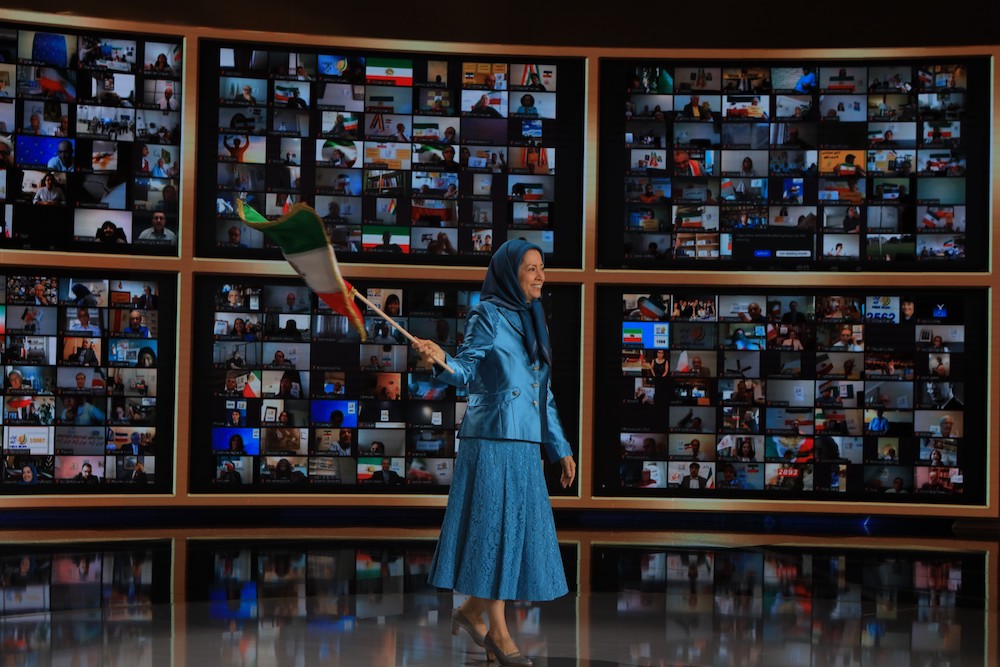
The July 17 event, thought to be the largest of its kind, called on the US, UN and EU to impose tougher sanctions on Tehran. It was organized by opposition groups the People’s Mojahedin Organization of Iran (PMOI/MEK) and the National Council of Resistance of Iran.

The participants included more than 1,000 politicians and government officials, including heads of state and foreign ministers. Prominent US political figures included former New York Mayor Rudy Giuliani, and US Senator Joseph Lieberman.

The report was compiled by Treadstone 71, a cyber and threat intelligence consultancy. It said that hackers known as Basij Cyber Units (BCU), a paramilitary wing of the Islamic Revolutionary Guard Corps (IRGC) and Iran’s Ministry of Intelligence and Security (MOIS), aimed to “drown out” the voices on social media calling for regime change in Iran by creating thousands of fake accounts.

Experts at the company, which specializes in monitoring Iranian cyber and influence operations and researches hacker groups, said that during the conference they spotted “highly unusual spikes in social-media activity that, at first glance, seemed random.”

Analysis showed “that at least 35 to 45 percent of accounts participated in this campaign from inside Iran, non-inclusive of the likely Iranian participants using VPNs (virtual private networks) and proxies.” VPNs and proxies are commonly used to disguise a user’s geographic location.

The report continued: “The Revolutionary Guards Cyber Unit (RGCU) led the well-organized influence operations. According to the data, nearly 46 percent of accounts engaged in the campaign were fake and spam accounts.”

The authors stated that 26,431 social-media accounts were used in the campaign, of which 11,294 were fake or “low-follower” accounts that had been newly created or were previously dormant.


The July 17 event, thought to be the largest of its kind, called on the US, UN and EU to impose tougher sanctions on Tehran. It was organized by opposition groups the People’s Mojahedin Organization of Iran (PMOI/MEK) and the National Council of Resistance of Iran. (Supplied/NCRI)

“The RGCU enrolled 1,622 Twitter accounts in June and July, within one month of the online conference,” according to the report. Immediately after the conference, 3,453 of the accounts were deleted and 1,168 became inactive. The campaign also used “bots,” automated programs that can automatically search the internet for specific data.

The BCU is known to have created hundreds of thousands of fake Twitter accounts, hacked social-media accounts, disrupted and vandalized websites, and stolen information from anti-regime activists.

PMOI/MEK spokesman Shahin Gobadi, who is based in Paris, said the report is proof that Iran’s leaders fear the organization and shows why the regime must be sanctioned.

“Since its inception, Iran’s clerical regime has been engaged in a massive demonization and disinformation campaign against its opponents, particularly the main resistance group: the People’s Mojahedin Organization of Iran, the MEK,” he said.

“The demonization campaign has been part and parcel of its terror machine inside and outside of Iran. As such, the mullahs have devoted massive amounts of resources and manpower to the dissemination of lies and slander against the MEK in the cybersphere over the years.”

Gobadi said the report confirms what the world already knows: “The main source of lies and allegations against the MEK is the clerical regime — and specifically the MOIS and the IRGC, both of which have elaborate sections devoted to cyber activities.”

The dissident conference prompted condemnations of the brutality of the Iranian regime and its acts of terrorism. The speakers included human rights activists Ingrid Betancourt and Linda Chavez, along with representatives from the European, German, French and Italian parliaments.

The Iranian regime orchestrated a massive social-media campaign in an attempt to disrupt and discredit an online conference of dissidents, according to a report published on Friday. (Supplied/NCRI)
Main category: 

Two years after failed bomb plot, Iranian opposition rallies backers onlineIran opposition group calls for regime change in Paris march