Survey reveals alienation of Kurdish youth in Turkey

Author: 
Sun, 2020-12-20 21:48

ANKARA: A survey conducted by YADA Foundation, Kurdish Studies Center and Rawest Research Company reveals the growing alienation of the Kurdish youth in Turkey.

The survey, which was carried out with support of the British Embassy and the Heinrich Boll Stiftung, was conducted in Istanbul, Izmir, southern Mersin and Adana, southeastern Diyarbakir, Mardin, Sanliurfa and eastern Van provinces with more than 1,500 young people between 15 to 29 ages.

Kurdish youth appeared pessimistic, with a lower rate of happiness and life satisfaction compared to the rest of the society. Those who live in the western half of Turkey feel much more pessimistic due to the discrimination they face.

Besides supporting the national team, they feel strongly attached to Amedspor, the football team of Kurdish-majority Diyarbakir province, as a symbol of their identity.

Over half of Kurdish youth have been internally displaced in Turkey generally with their families whether in search of employment, fleeing fighting between the state and the outlawed Kurdistan Workers’ Party (PKK) and/or for education purposes.

Almost 70 percent of the Kurdish respondents say they have been subject to occasional or frequent discrimination because of their Kurdish identity. Those who are voters of the pro-Kurdish Peoples’ Democratic Party (HDP) experienced more discrimination than supporters of other political parties.

Some of the respondents said that they were prevented from renting a house when they were asked about their city of origin, or they couldn’t buy even a bottle of water when they attended an Amedspor match in a western province of the country.

In a similar pattern, players of Amedspor have been frequently exposed to harassment by rival fans, while the team’s Kurdish supporters were occasionally banned from attending matches.

Kurdish youth increasingly use Turkish in their daily communication with friends and family members after years of crackdown on cultural rights and after failed attempts to make Kurdish language as part of the educational system.

Kurdish respondents say they cannot even dream in Kurdish.

According to another survey, only about 18 percent of the 600 young Kurds surveyed could speak, read and write in Kurdish.

Kurds make up about 20 percent of Turkey’s population of 82 million. But the survey found that only a third of Kurdish youth are employed, while a quarter are working as unskilled labourers and the rest are unemployed.

Their mother tongue is the top priority issue (38.4 percent) among Kurdish youth, followed by discrimination (24 percent), education (12.5 percent), unemployment (9.8 percent), freedom of speech (7.4 percent), injustice (5.5. percent) and identity (2.4 percent).

Regarding the failure of the short-lived “Kurdish peace talks” between the Turkish state and the PKK in 2015, Kurdish youth who are pro-HDP blame both their party and the PKK for the failed peace attempts, while 65 percent think that the infighting will never end.

The survey also found that the majority of Kurdish youth is inclined to de-radicalize while they consolidate their cultural identities as Kurds.

Roj Girasun, director of Diyarbakir-based Rawest Research, thinks that Kurdish youth is being de-radicalized because they are satisfied with the increased visibility of the HDP on the political arena as a legal actor.

“However, they mostly think that the current government is not able to resolve the decades-long Kurdish conflict in the country,” he told Arab News.

A new party looking to appeal to Kurdish conservative youth is launching soon, although the opposition claims it intends to divide Kurdish votes in Turkey.

The survey also found that, given the chance, the majority of Kurdish youth would emigrate to Western countries out of pessimism over both freedom of expression and employment.

While Twitter is a source of information for about 30 percent nationally, it increases to 44 percent among Kurdish youth.

“It shows that Kurdish youth feels disappointed by the mainstream media which doesn’t give enough space and visibility to their problems, and they refer to the alternative news channels to fill this gap,” Girasun said.

Although the use of Kurdish is on the decrease among Kurdish youth, they are still holding on to their political identity and demanding more cultural rights from the state authorities to keep their mother tongue alive because those living in the western provinces are increasingly forgetting their Kurdish.

Kurdish culture has generally been demonized over the years, with Kurdish language being categorized as “unknown language” in the judicial system.

“This atmosphere affects their romantic relationships. 44 percent of Kurdish respondents do not want to marry a Turkish girl. They are building very high walls around their Kurdishness vis-à-vis Turks,” Girasun said.

Apart from such social distancing, the restriction of academia and arts in Kurdish fuels disappointment among Kurdish youth. In July, Turkey’s Council of Higher Education banned students studying Kurdish language and literature at Turkish universities from writing their dissertations in Kurdish, and obliged all dissertations at Kurdish language departments to be written in Turkish.

In October, the Turkish authorities banned a play performed in Kurdish in Istanbul by the Nobel prize-winning Italian writer Dario Fo over the allegations of terror propaganda.

Turkish President Recep Tayyip Erdogan recently claimed that “Turkey has no Kurdish issue.”
 

Main category: 

Turkey conducts exercises in eastern MediterraneanRights groups: YouTube’s Turkey move threatens free expression


Egypt cancels New Year’s Eve celebrations due to coronavirus

Author: 
Sun, 2020-12-20 21:29

CAIRO: Egypt’s Ministry of Tourism and Antiquities has canceled New Year’s celebrations to avoid mass gatherings.

The decision came in response to Prime Minister Mostafa Madbouly’s directions, which were taken during the meeting of the Supreme Committee for the Management of the Coronavirus Crisis.

Assistant Minister of Tourism and Antiquities Abdel Fattah Al-Assy underlined the need to ban all “cultural” and “touristic” events or any celebrations on New Year’s Eve to avoid mass gatherings.

He also called for “the strict implementation of the precautionary measures previously taken in the past period, while taking punitive measures against restaurants, cafes and hotels that do not adhere to implementing such measures.”

Prime Minister Dr. Mostafa Madbouly earlier headed the meeting, during which ministers and officials discussed efforts to counter the coronavirus as well as ways of providing the vaccine.

The Ministry of Tourism and Antiquities renewed its warnings to the Chamber of Tourist Establishments to adhere to the opening and closing of tourist restaurants and cafes in accordance with the times set by the Cabinet. The ministry said that nightclubs would remain closed until a decision was made by Minister of Tourism and Antiquities Dr. Khaled El-Anany in light of the measures taken by the state to control the spread of the coronavirus.

Singing stars had already announced when they would be performing on New Year’s Eve so the latest decision put organizers and singers in a difficult position. Many organizers called for refunds for people who had reserved tables for New Year’s Eve parties.

Singers had set almost impossible conditions to perform at parties. Such conditions included a 50 percent deposit of their fees — often as much as half a million Egyptian pounds — non-refundable if the party was canceled.

Al-Assy said that the ministry had issued recommendations for tourist establishments to ban gatherings on New Year’s Eve. “We do not want to disturb people, but the whole world is implementing measures to prevent the spread of the coronavirus. Such measures include banning gatherings and shutting down hotels,” he said.

“The ministry had issued recommendations for tourist establishments by banning gatherings on New Year’s Eve. The ministry’s teams are following-up on the implementation of the measures in such establishments.”

Al-Assy confirmed that nightclubs would remain closed until further a decision by the ministry in light of the measures taken by the state to counter the spread of the coronavirus.

The ministry stressed that weddings, parties, special occasions and gatherings would continue to be banned from being held in closed halls until a decision to reopen the halls was issued.


Main category: 
Tags: 

Al-Azhar decrees prohibition of joining Muslim BrotherhoodEgyptian government denies privatizing spinning and weaving factories


Al-Azhar decrees prohibition of joining Muslim Brotherhood

Author: 
Sun, 2020-12-20 21:17

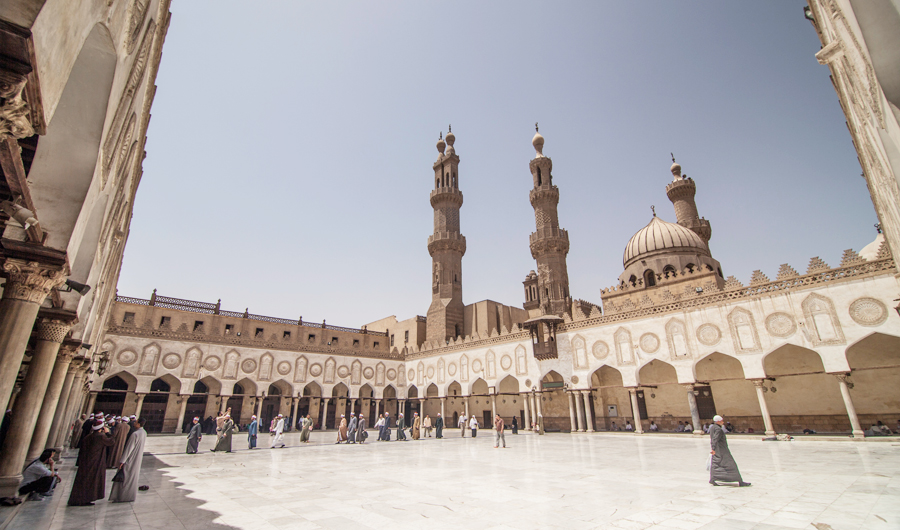
CAIRO: Al-Azhar Fatwa Global Center has said that joining the Muslim Brotherhood and other terrorist groups is forbidden according to Shariah and that God has forbidden division and disagreement.

The Egyptian newspaper Al-Watan quoted Al-Azhar as saying in its announcement that God forbids people from pursuing any path that distracts them from following the truth, explaining that keeping to the Qur’an and the Sunnah, in accordance with Shariah, was the only way to please God.

“It is clear to the public what these groups have done in distorting some texts, cutting them out of their context, and using them to achieve personal goals or interests and corrupting the land,” the center said in the fatwa.

“Membership in these extremist groups is considered forbidden by Shariah.”

“Joining the terrorist Brotherhood is forbidden by law [and is considered] cooperating in immorality and aggression, for that group violates the law of God and is involved in terrorism,” said Abdullah Al-Najjar, a member of the Islamic Research Academy.

Hussein Al-Qadi, a researcher in religious affairs and Islamic movements, said that the fatwa is the first of its kind in the history of Al-Azhar.

“This fatwa has never been issued from Al-Azhar before. Various statements were issued by Al-Azhar describing the Brotherhood as being outdated. In fact, Imam Muhammad Mustafa Al-Maraghi, reformer and rector of Al-Azhar, demanded the dissolution of the Brotherhood,” Al-Qadi said.

“Al-Azhar Al-Sharif published in 1965 a report refuting Sayed Qutb’s thought and showing that it is perverse. Qutb was a leading member of the Egyptian Muslim Brotherhood in the 1950s and 1960s. The fatwa issued today that prohibits joining the Muslim Brotherhood is consistent with Al-Azhar’s march in this direction,” he added.

“I think that this fatwa is an important step that deserves praise…and greater efforts should be based on this move,” he said.


Main category: 

Egypt’s Al-Azhar calls on international community to criminalize ‘anti-Muslim’ actionsAl-Azhar grand imam threatens legal action against those who insult prophet


No reason for delay in forming Lebanese government, says leading Christian cleric

Author: 
Zaynab Khojji
ID: 
1608487214034616900
Sun, 2020-12-20 21:00

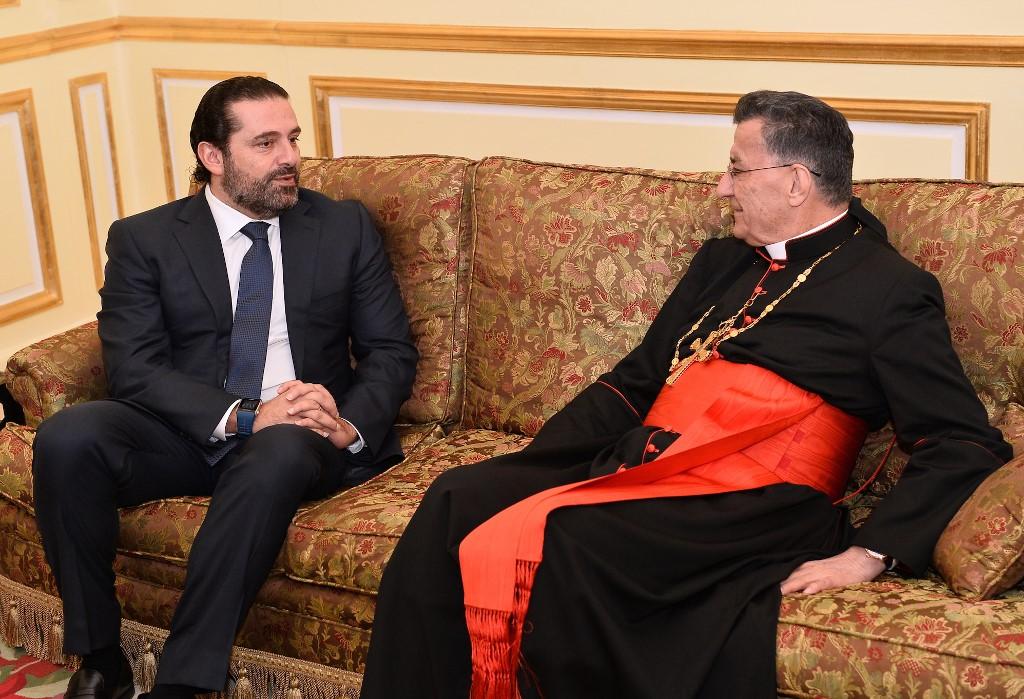
BEIRUT: There is no reason for delaying the formation of a new Lebanese government, the country’s leading Christian cleric said on Sunday.
Efforts to form a new government have been blocked by political factions, with Maronite Patriarch Bechara Boutros Al-Rai making a personal intervention to dissolve the stalemate. 
Mustapha Adib quit as prime minister in September, less than a month after he was nominated to replace Hassan Diab, who took over from Saad Hariri at the end of January this year.
The cleric said that in all his communications during the past few days with President Michel Aoun, Prime Minister-designate Hariri and the head of the Free Patriotic Movement (FPM) Gebran Bassil, he had found “no reason for the delay in forming the government – not for a single day.”
He stressed the need for a government that was free of quotas, counter-conditions, and obstructions that paralyzed its decisions.
“This government must be non-political and non-partisan, with ministers who are known to civil society for their competence, achievements, and expertise, provided this government is formed in accordance with the provisions of the constitution and through consultation and pure intentions between the PM-designate and the president within the framework of an agreement, partnership, and rotating portfolios.”
Al-Rai said that the job of the new government was to “devote itself to implementing reforms, receive the planned and promised international aid, and prioritize rebuilding Beirut, which was destroyed by the (Aug. 4) explosion.”
On Dec. 9 Hariri suggested to Aoun a cabinet lineup of 18 ministers but, since that date, there has been no progress in forming a new government.
The past 48 hours have seen increased tensions between the FPM and the Future Movement, giving the impression that the process of forming a government was becoming more complicated and that the patriarch’s mediation would not lead to a breakthrough.
The FPM issued a statement accusing Hariri of “attempting to bypass the constitutional authority of the president as an equal partner in the process of forming the government and as the head of the country, in addition to insisting on heeding the covenant, not adopting clear and unified standards for dealing with all Lebanese people, having an intention to look right through national balances, and returning to a time of marginalization and eroding rights.” 
Its statement added: “This cannot be tolerated.”
Information leaked to the media said the FPM would agree to the formation of a government in exchange for three major ministries –  interior, defense and justice – that would put it in charge of Lebanon’s security portfolio.
The Future Movement accused the FMP leadership of “insisting on overthrowing the constitutional standard for forming governments.”
FPM lawmaker Ibrahim Kanaan announced after his meeting with Al-Rai on Sunday that the debates should not continue and that Aoun was ready to settle the government matter in accordance with the constitution and a French initiative aimed at rebuilding the country and salvaging the economy. But he did not give details.
He expected a meeting between Aoun and Hariri early next week in light of the clarifications and communication taking place, especially since the president was “determined to resolve the government formation issue” in accordance with the constitution and the French initiative.
Mustafa Alloush, the vice president of the Future Movement, addressed Aoun and his son-in-law Bassil on social media: “If the intention is to destroy the structure over everyone, then you have succeeded. But what is the point of passing the presidency down to the president’s son-in-law on the ruins of a homeland? All that deception of the constitution will not work. A government with a mission is the only way to stop the collapse and protect Lebanon – if you have a conscience.”
The squabbling and stalemate led Samir Geagea, who heads the Lebanese Forces party, to call for the president’s resignation.
After a meeting of his parliamentary bloc he said: “The ruling group is not fit to rule. It is corrupt, and this is what brought the country to where it is. If I were the president of the republic, I would have resigned. This applies to the whole group in power.”

Main category: 

Lebanon police scuffle with students protesting tuition hikesLebanon to get first batch of COVID-19 vaccines in two months, minister says


Palestinian foreign minister urges Israel to return to talks

Author: 
AP
ID: 
1608410183848383500
Sat, 2020-12-19 23:27

CAIRO: The Palestinian foreign minister on Saturday urged Israel to return to talks based on a two-state solution for the Israeli-Palestinian conflict, ahead of the transition to a new US administration.
Palestinian Foreign Minister Riyad Al-Malki’s comments came in a joint statement with Egypt’s Foreign Minister Sameh Shukry and Jordan’s Foreign Minister Ayman Safadi.
In a news conference after their meeting, Al-Malki said that the Palestinian Authority is ready to cooperate with US President-elect Joe Biden, on the basis of achieving a Palestinian state with east Jerusalem as its capital on territory Israel captured in the 1967 Mideast war.
“We are ready for cooperation and dealing with the new US administration, and we are expecting that it would re-draw its ties with the state of Palestine,” he said.
The Palestinian diplomat said coordination with Cairo and Amman is a “center point” that would establish a “starting point” in dealing with the incoming Biden administration. Egypt and Jordan are close US allies.
In September, Palestinian President Mahmoud Abbas called for an international conference early next year to launch a “genuine peace process,” based on the UN resolutions and past agreements with Israel. The Palestinians urged that the conference be multilateral, since they contend the United States is no longer an honest broker.
Palestinian negotiators have suffered numerous setbacks under the Trump administration, and complained about what they say are biased pro-Israel steps from Washington.
Trump has sidelined the Palestinian Authority, recognized Jerusalem as Israel’s capital, moved the US Embassy from Tel Aviv, slashed financial assistance for the Palestinians, and reversed course on the illegitimacy of Israeli settlements on land claimed by the Palestinians.
Israel captured east Jerusalem and the West Bank in the 1967 war. The international community considers both areas to be occupied territory, and the Palestinians seek them as parts of a future independent state.
Israel annexed east Jerusalem and considers it part of its capital — a step that is not internationally recognized.
Israel has built a far-flung network of settlements that house nearly 700,000 Jewish settlers in the West Bank and Jerusalem since their capture in 1967.
The Palestinians want both territories for their future state and view the settlements as a violation of international law and an obstacle to peace — a position with wide international support.
Al-Malki also said they have returned to security coordination with Israel, after Israeli authorities sent a “message, for the first time, that they are abiding to all agreements” made with the Palestinians.
In May, the Palestinian president announced that the PA would cut ties with Israel, including security coordination, following Israel’s pledge to annex large parts of the occupied West Bank.
In a statement following their meeting, the three ministers said they would work to rally international support against Israel’s “illegitimate measures” that include settlements’ expansion, demolishing dozens of Palestinian homes and seizing their land.
“These are illegitimate Israeli actions on the ground that affect all chances to reach a comprehensive peace process that can only happen by the two-state solution,” said Safadi, Jordan’s top diplomat, at the news conference.
The ministers said in their statement that Jerusalem’s status should be resolved in the negotiations, calling for Israel “as the occupying power, to stop all violations that target the Arab, Islamic and Christian identity of Jerusalem and its sanctuaries.”
President Abdel-Fattah El-Sisi also met with the Jordanian and Palestinian ministers, according to the Egyptian leader’s office.
He said in a statement that Egypt has been working toward a two-state solution to the Israeli-Palestinian conflict, “taking into account the regional and international changes.”
He was apparently referring to the election of Biden as the US president, and the normalization deals between Israel and four Arab countries including the United Arab Emirates, Bahrain, Sudan and Morocco.
That deals, crafted by the Trump administration, dealt another heavy setback for the Palestinians.

Main category: 

Armenian church leasing land to Israelis causes Palestinian worryIsraeli soldiers who kill Palestinian kids must be held accountable, say UN watchdogs