Waste and recycling company fined after worker injured cleaning machinery


  • Supervisor turned machine on in devastating mix-up
  • Employee suffered fractured shoulder, torn ligaments, and a broken finger
  • HSE guidance highlights the importance of isolating machinery during cleaning

A North East waste and recycling company has been fined £270,000 after an employee was injured while cleaning a waste picking line.

On 24 March 2023, during cleaning of a waste picking line, an employee became trapped in a section of machinery when the line was accidentally switched on.

An investigation by the Health and Safety Executive (HSE) found the company failed to ensure an isolation procedure was correctly implemented while employees were cleaning machinery at its site at Aycliffe Quarry, Aycliffe Village, County Durham.

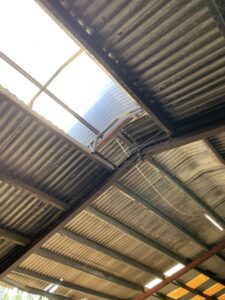
Machinery at the site at Aycliffe Quarry

The incident occurred when a senior supervisor, restarted the machinery after mistaking the worker in question for a colleague in similar clothing nearby.

The employee suffered a fractured shoulder, torn ligaments, and a broken finger.

This was not the first serious incident at the site. In December 2015, one worker was killed and another suffered life-changing injuries on a separate waste sorting line due to similar failures to follow proper isolation and lock-off procedures.

Waste sorting line machinery

HSE guidance highlights the importance of following safe isolation and lock-off procedures before any maintenance or cleaning work is carried out. Employers must ensure all machinery is properly isolated from power sources, and that systems are regularly monitored and reviewed to prevent inadvertent start-up. Further guidance is available here: The safe isolation of plant and equipment – HSE

Stonegrave Aggregates Limited, part of the Ashcourt Group, of Halifax Way, Pocklington, pleaded guilty to breaching Section 2(1) of the Health and Safety at Work etc. Act 1974. The company was fined £270,000 and ordered to pay full costs of £15,637 at Teesside Crown Court.

Following the hearing, HSE inspector Darian Dundas said:

“Effective monitoring, auditing and review of isolation systems is essential to demonstrate that they are working and controlling risk. Incidents like this can and should be prevented by following robust lock-off procedures.”

This prosecution was brought by HSE Enforcement Lawyer Karen Park, supported by Paralegal Officer Rebecca Foreman.


Further information:

  1. The Health and Safety Executive (HSE) is Britain’s national regulator for workplace health and safety. We are dedicated to protecting people and places, and helping everyone lead safer and healthier lives.
  2. HSE guidance can be found here: The safe isolation of plant and equipment – HSE
  3. Further details on the latest HSE news releases are available at press.hse.gov.uk.
  4. HSE does not pass sentences, set guidelines or collect any fines imposed. Relevant sentencing guidelines must be followed unless the court is satisfied that it would be contrary to the interests of justice to do so. The sentencing guidelines for health and safety offences can be found here.


Fine for firm after worker fell from ladder

A horticultural company has been fined after an employee suffered serious injuries after falling from a ladder.

The employee had been tasked to check irrigation that was watering plants contained in hanging baskets at the site in Banbury on 7 June 2023.

As the man climbed the ladder, it fell and collapsed under him, resulting in five broken ribs and a partially collapsed lung.

An investigation by the Health and Safety Executive (HSE) found that Ball Colegrave Ltd failed to ensure so far as is reasonably practicable the health, safety and welfare at work of all their employees. In this instance, there was a failure to ensure that work at height was planned and carried out in a manner which was so far as is reasonably practicable safe.

Working at height remains one of the leading causes of workplace injury and death and HSE has detailed guidance on working safely at height.

Ball Colegrave Limited of Milton Road, West Adderbury, Banbury pleaded guilty to contravening a requirement of section 2(1) of the Health and Safety at Work etc Act 1974. The company was fined £80,000 and was ordered to pay £7,061 costs at a hearing at Oxford Magistrates’ Court on 14 October 2025.

After the hearing, HSE inspector Rebecca Gibson said:” This incident highlights the duty on employers to ensure that should do all they can to minimise the risk from working at height.

“If work at height isn’t properly planned and unsuitable work equipment is used, people can fall and sustain serious injuries.

“Falls from height remains a leading cause of workplace injury and death.”

This prosecution was supported by HSE enforcement lawyer Arafq Nabi and paralegal officer Gabrielle O’Sullivan.


Further Information: 

  1. The Health and Safety Executive (HSE) is Britain’s national regulator for workplace health and safety. We are dedicated to protecting people and places and helping everyone lead safer and healthier lives.
  2. More information about the legislation referred to in this case is available.
  3. Further details on the latest HSE news releases is available.
  4. HSE does not pass sentences, set guidelines or collect any fines imposed. Relevant sentencing guidelines must be followed unless the court is satisfied that it would be contrary to the interests of justice to do so.  The sentencing guidelines for health and safety offences can be found here.


Unregistered gas installer sentenced for carrying out illegal gas work

An unregistered gas installer has been sentenced after carrying out illegal gas work at two houses in Cheshire.

The work was undertaken on several occasions between 2021 and 2023, resulting in a gas leak inside one of the properties, leaving one of the homeowners without a working appliance for an extended period.

The Health and Safety Executive (HSE) was alerted to Mr Williams by the Gas Safe Register following an inspection of the work carried out at one of the properties, which identified an installation was at risk. It soon became clear that the installer had also carried out work at another property, and that he had issued a Gas Safety Certificate using a false registration number.

The Gas Safety (Installation and Use) Regulations 1998 require those undertaking gas work to be Gas Safe registered and hold the relevant qualifications to demonstrate their competence. It is an offence under these regulations to falsely claim to be a Gas Safe registered engineer.

Members of the public are reminded that all gas work must be carried out by a Gas Safe registered engineer. The Gas Safe Register is the official list of gas businesses legally permitted to work on gas appliances in the UK. Anyone can check whether an engineer is registered by visiting www.gassaferegister.co.uk or calling 0800 408 5500.

Carrying out gas work without registration is illegal and potentially dangerous, as unqualified work can lead to gas leaks, fires, explosions, and carbon monoxide poisoning.

The sentencing hearing for Scott Anthony Williams was at Chester Magistrates’ Court on the 24 October 2025. Scott Anthony Williams of Galbraith Close, Congleton, pleaded guilty to seven separate breaches of the Gas Safety (Installation and Use) Regulations 1998. He was sentenced to a 12-month community order, requiring 240 hours of unpaid work. Costs of £2,000 were awarded along with a victim surcharge of £144.

HSE inspector Nicola Willcox said:

“This was a deliberate breach of gas safety legislation that put people at risk.

“All gas work must be undertaken by Gas Safe registered engineers. The public should always ask to see the gas engineer’s identification and check the registration number online to ensure it is valid.”

Gas engineers and consumers can contact the Gas Safe Register in any of these ways:

  • Website: Gas Safe Register
  • Phone – Consumers: 0800 408 5500; Engineers: 0800 408 5577
  • Email – enquiries@gassaferegister.co.uk

This prosecution was brought by HSE enforcement lawyer Julian White and paralegal officer Sarah Thomas. The investigation was supported by Sarah Ough and Natalka Heath, HSE Visiting Officers.


Further information:

  1. The Health and Safety Executive (HSE) is Britain’s national regulator for workplace health and safety. We are dedicated to protecting people and places, and helping everyone lead safer and healthier lives.
  2. Guidance is available: The Gas Safety (Installation and Use) Regulations 1998. Relevant guidance can be found at Managing risks and risk assessment at work – HSE.
  3. Further details on the latest HSE news releases are available at press.hse.gov.uk.
  4. HSE does not pass sentences, set guidelines or collect any fines imposed. Relevant sentencing guidelines must be followed unless the court is satisfied that it would be contrary to the interests of justice to do so. The sentencing guidelines for health and safety offences can be found here.


Protecting workers from workplace transport: getting the basics right

Every year, families across Great Britain face the devastating loss of a loved one killed by a reversing vehicle at work. These are not just statistics. They are family members, friends and colleagues whose lives were cut short by entirely preventable accidents.

The stark reality is that being struck by a moving vehicle accounts for 16% of all fatal work-related injuries, claiming an average of 21 lives annually over the past 5 years, making it one of the leading causes of work-related fatalities in Great Britain.

Looking at these incidents we see that many feature the same pattern – reversing vehicles.

Recent months have brought this issue into sharp focus, with fines reaching £2.5 million as case after case reveals the same preventable failures.

“What strikes me most about these cases is not the complexity of the failures, but their simplicity,” says John Rowe, Deputy Director for Technical Support and Engagement at the Health and Safety Executive (HSE). “Time and again, we see deaths that could have been prevented by basic measures that cost far less than the fines that are ultimately imposed.”

The pattern is clear across multiple industries including agriculture (27% of vehicle deaths), construction and transportation and storage (17% each). But the solutions are equally clear, if employers are willing to implement them properly.

Why these incidents happen

Workplace transport fatalities follow predictable patterns. Workers are struck by reversing vehicles in yards where pedestrians and vehicles share space. Drivers cannot see properly because reversing aids are broken or missing. Sites lack traffic management. There are no designated safe routes for people on foot.

These incidents occur when safety is treated as optional. Delivery schedules take priority over having a banksman present. Reversing cameras stay broken because fixing them seems expensive. Pedestrian walkways are never created because “we’ve always managed without them.” Or they are created but their use is not enforced – potentially creating an even more dangerous situation on site.

Preventing vehicle-related deaths means making safety fundamental to how sites operate. This must happen before any vehicle moves. It requires understanding risks and committing to control them properly.

How to prevent these incidents

Safe site design separates people from vehicles wherever possible. This means creating dedicated walkways with physical barriers, using one-way traffic systems to reduce reversing, and designating loading areas away from where people work. Sites need proper lighting so drivers can see clearly throughout the day. Pedestrian routes must be visible and obvious to everyone.

Vehicles must be maintained and fit for purpose. Reversing aids are essential safety equipment, not extras. CCTV systems, audible alarms and sensors help drivers detect hazards they cannot see directly. These systems only protect workers when they are working properly. Regular vehicle checks must be standard practice. Any vehicle with defects must be taken out of service until repairs are completed.

People remain central to safe operations. Sites need drivers who understand the specific risks they face, know when to request a banksman, and feel able to stop work if conditions become unsafe. This applies to regular staff, visiting drivers and contractors who may not be familiar with the site. Training must go beyond basic vehicle operation to cover the realities of working safely in each specific environment.

It is not enough to just implement the necessary precautions, it is just as important to ensure that employees, and drivers, maintain standards or follow safe working practices.  Managers and supervisors should routinely challenge and investigate unsafe behaviours they come across.

Moving forward

The £1 million and £2.5 million fines making headlines represent more than financial penalties. They mark families destroyed by entirely preventable failures. Agriculture, forestry and fishing loses six workers annually to vehicle strikes, construction and transportation and storage each lose four, but every sector sees deaths that proper management could eliminate.

Preventing workplace transport deaths requires organisations to implement proven control measures consistently. This means conducting thorough risk assessments, maintaining equipment rigorously, and empowering workers to identify hazards before incidents occur.

You can find comprehensive guidance on workplace transport on our website.

Notes to editors

  • The Health and Safety Executive (HSE) is Britain’s national regulator for workplace health and safety. We are dedicated to protecting people and places, and helping everyone lead safer and healthier lives.


Aluminium manufacturer fined £300,000 after worker crushed

  • Worker trapped for more than 20 minutes before he was freed
  • The man, in his 40s, has been unable to return to work
  • HSE guidance on managing risks is available

A manufacturer of rolled aluminium products has been fined £300,000 after a worker was crushed under a 1.5-tonne hydraulic arm at its site in Bridgnorth.

The man, in his early 40s, was working underneath the arm when it failed, resulting in life-changing crush injuries. He had been working for Bridgnorth Aluminium Limited at its site in the town when the incident happened on 10 May 2023.

He had been carrying out preparation work for the casting of aluminium blocks from molten aluminium. He was kneeling inside a casting mould, wearing heat resistant clothing, to insert ceramic string around its edges. The hydraulic launder arm above the mould, which is used to transport molten metal around the foundry, suddenly fell onto him. It is believed the exterior temperature of the launder arm was around 100°C.

The hydraulic arm post incident

The falling arm crushed him and narrowly missed another worker.

The man was trapped for three minutes before the floor of the mould was lowered to release the pressure. However, it was a further 19 minutes before the hydraulic arm could be lifted to allow recovery.

The incident and the injuries sustained by the individual have had a dramatic impact on his day-to-day life and he has not been able to return to work.

An investigation by the Health and Safety Executive (HSE) found that the arm fell as a result of hydraulic failure. While there was a safety bar intended to prevent the arm from falling, it was not fit for purpose. Bridgnorth Aluminium Limited had not assessed the risks of the hydraulic arm falling and therefore failed to implement a suitable safe system of work to prevent employees from working beneath it.

The law requires employers to assess the risks to which their employees are exposed at work, and to implement suitable control measures to reduce the risk of harm. This includes ensuring that work equipment is fit for purpose and adequately maintained. HSE guidance explains – Managing risks and risk assessment at work – Overview -HSE.

Bridgnorth Aluminium Limited of Stourbridge Road, Bridgnorth, pleaded guilty breaching Section 2(1) of the Health and Safety at Work etc Act 1974. The company was fined £300,000 and ordered to pay £8,301 in costs at Cannock Magistrates’ Court on 13 October 2025.

HSE inspector Nicola Willcox said: “This was a serious incident that should never have happened.

“The company subsequently implemented simple control measures to prevent it from re-occurring. The process of placing the ceramic string in the moulds is now carried out with the hydraulic arm in the lowered position, and people are restricted from walking under the it when it is raised.

“If these measures had been in place at the time, then this incident would not have happened.”

This prosecution was brought by HSE enforcement lawyer Edward Parton and paralegal officer Jason Dix. The investigation was supported by Natalka Heath, HSE Visiting Officer.


Further information:

  1. The Health and Safety Executive (HSE) is Britain’s national regulator for workplace health and safety. We are dedicated to protecting people and places, and helping everyone lead safer and healthier lives.
  2. More information about the legislation referred to in this case is available.
  3. Further details on the latest HSE news releases is available.
  4. Relevant guidance can be found here: Safe use of work equipment. Provision and Use of Work Equipment Regulations 1998. Approved Code of Practice and guidance L22
  5. HSE does not pass sentences, set guidelines or collect any fines imposed. Relevant sentencing guidelines must be followed unless the court is satisfied that it would be contrary to the interests of justice to do so.  The sentencing guidelines for health and safety offences can be found here.