Manufacturer fined after employee’s fingers severed

  • South Kirby firm fined £24,395 after employee suffered partial severing of two fingers
  • Worker was cleaning printing machine when fingers were drawn into unguarded rollers
  • HSE investigation found company failed to prevent access to dangerous machinery parts

A wooden cable drum manufacturer based in South Kirkby has been fined £24,395 after an employee’s fingers were severed in a printing machine.

A 57-year-old woman was working for Askern UK Limited at its site in South Kirkby, Pontefract on 8 March 2024 when she was able to raise the guard and easily override an interlock to run the rollers of a machine which prints logos. The employee was cleaning the rollers with a paper towel when her fingers were drawn into the nip point, leaving two of her fingers partially severed.

An investigation by the Health and Safety Executive (HSE) found that Askern UK Limited failed to prevent access to dangerous parts of machinery, namely the moving rollers of the printing machine. The investigation also found that the company had failed to adequately maintain the machine or provide employees with suitable training for the printer.

Image from site

HSE guidance states employers must take effective measures to prevent access to dangerous parts of machinery. This includes ensuring protection devices, such as interlocks, are not easily bypassed or disabled. Further guidance on the Provision and Use of Work Equipment Regulations 1998 (PUWER) is available.

Askern UK Limited, of 28 Lidgate Crescent, Langthwaite Business Park, South Kirkby, Pontefract, WF9 3NR, pleaded guilty to breaching Section 2(1) of the Health and Safety at Work etc. Act 1974. The company was fined £24,395, ordered to pay £5000 in costs and a victim surcharge of £2,000 in costs at Leeds Magistrates’ Court on 4 February 2026.

HSE inspector Shauna Halstead said: “This case demonstrated multiple failures by the company in respect of the printing machine.

“An employee was tasked with cleaning the printer without provision of suitable information, instruction or training, particularly in relation to the safety devices intended to protect them.

“A suitable interlock and employee training would have prevented this incident”

This HSE prosecution was brought by HSE enforcement lawyer Samantha Crockett, paralegal officer Benjamin Stobbart, and HSE legal team.

Notes to Editors

  1. The Health and Safety Executive (HSE) is Britain’s national regulator for workplace health and safety. We are dedicated to protecting people and places, and helping everyone lead safer and healthier lives.
  2. More information about the legislation referred to in this case is available.
  3. Further details on the latest HSE news releases are available.
  4. Relevant guidance can be found here Provision and Use of Work Equipment Regulations 1998 (PUWER) – HSE
  5. HSE does not pass sentences, set guidelines or collect any fines imposed. Relevant sentencing guidelines must be followed unless the court is satisfied that it would be contrary to the interests of justice to do so.  The sentencing guidelines for health and safety offences can be found here.


Plant hire company fined £10,000 after employee struck by falling JCB bucket

  • A mechanic suffered multiple fractures and a crushed foot when a one-tonne JCB bucket fell on him
  • HSE investigation found appropriate equipment had not been used
  • Guidance states elevated vehicle load areas should be effectively propped if access is needed below

A plant hire company has been fined after a mechanic suffered life-changing injuries when a JCB bucket fell on him while he was helping to repair a tipper truck.

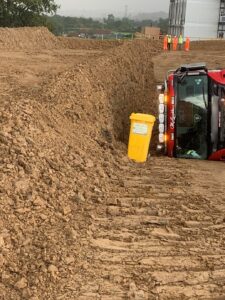
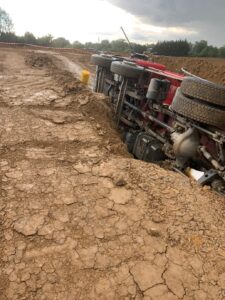
On the 24 October 2023, the employee of Salford Grab Hire Limited was assisting a colleague in repairing a broken lifting mechanism on a tipper truck body. A JCB was being used to prop up the tipper body in the raised position when the one-tonne bucket became dislodged and fell.

The worker suffered multiple fractures to his hand, shoulder blade, ribs, shin and thigh, as well as a crushed ankle and foot. He also developed a blood clot in his lungs as a result of the incident.

An investigation by the Health and Safety Executive (HSE) found that Salford Grab Hire Limited had not used appropriate equipment to support the tipper body during repairs. The bucket being used to prop up the body did not have a quick hitch or retaining pin, causing it to become dislodged and fall.

Image from site
Image from site
Image from site

HSE guidance on health and safety in motor vehicle repair and associated industries   states that elevated vehicle load areas, such as those on tipper lorries, should be effectively propped if access is needed below them. Props should only be used on firm, level ground and must be designed to adequately carry the loads placed on them.

Salford Grab Hire Limited of Fairacre Astley Moss, Tyldesley, Manchester pleaded guilty to breaching Section 2(1) of the Health and Safety at Work etc. Act 1974. The company was fined £10,000 and ordered to pay costs of £3,475.90 at Warrington Magistrates’ Court on 27 January 2026.

HSE Inspector Rose Leese-Weller said: “Every year we see serious and sometimes fatal injuries to people working under a poorly propped vehicle body. Employers must not underestimate the risks involved and must ensure that appropriate equipment and systems of work are used when undertaking such work.”

This HSE prosecution was brought by HSE enforcement lawyers Julian White and Nathan Cook, and paralegal officer Rebecca Withell.

Notes to Editors

  1. The Health and Safety Executive (HSE) is Britain’s national regulator for workplace health and safety. We are dedicated to protecting people and places and helping everyone lead safer and healthier lives.
  2. More information about the legislation referred to in this case is available.
  3. Further details on the latest HSE news releases are available.
  4. Relevant guidance can be found here Health and safety in motor vehicle repair and associated industries
  5. HSE does not pass sentences, set guidelines or collect any fines imposed. Relevant sentencing guidelines must be followed unless the court is satisfied that it would be contrary to the interests of justice to do so.  The sentencing guidelines for health and safety offences can be found here.


Hartlepool chemical manufacturer fined £50,000 after two serious incidents within three months

  • An employee had four fingers severed when a rotary valve had not been properly isolated from the power supply
  • A second employee was struck by a forklift truck when the driver’s view was obscured by the load
  • Exwold Technology fined over £50,000 for two breaches of Health and Safety at Work act

A Hartlepool chemical manufacturer has been fined after two employees were injured in separate incidents at two of its sites within just three months.

On 3 September 2021, an employee at Exwold Technology Limited’s Haverton Hill site in Billingham sustained serious injuries when four fingers on his left hand were severed during machinery start-up. The blades of a rotary valve had not been effectively isolated from the power supply while part of the production line was being prepared between cleaning operations. As the employee checked for air flow, his fingers became caught between the blades and the valve’s internal casing, resulting in the amputation.

Less than three months later, on 24 November 2021, a second incident occurred at the company’s Brenda Road site in Hartlepool. An employee was struck by a forklift truck after the driver’s view was obscured by the load being carried. The driver was unaware that a pedestrian was walking in front of the vehicle at the time of the collision.

An investigation by the Health and Safety Executive (HSE) found that at the Billingham site the company had failed to put suitable procedures in place to effectively isolate dangerous machinery between cleaning operations.

A separate investigation found that at the Hartlepool site the company had failed to effectively manage forklift truck operations and designated pedestrian routes.

HSE provides guidance to help prevent incidents of this kind. For chemical manufacturing sites with machinery related risks, including the safe isolation of equipment during cleaning and maintenance, HSE’s guidance on the safe isolation of plant and equipment  outlines the standards and procedures duty holders should follow to ensure hazardous machinery is securely isolated before work takes place.

For workplace transport risks, including the management of forklift operations and separation of pedestrians and vehicles, HSE’s guide to workplace transport safety sets out clear expectations for safe site design, traffic routes, vehicle visibility and segregation measures to prevent collisions.

Exwold Technology Limited of Brenda Road, Hartlepool, pleaded guilty to two breaches of Section 2(1) of the Health and Safety at Work etc. Act 1974. The company was fined £50,000 and ordered to pay £10,492.19 in costs with a victim surcharge of £190 at Teesside Magistrates’ Court on 29 January 2026.

In court, the judge referenced the genuine improvement the company had made to improve health and safety following the incidents.

HSE Inspector Jonathan Wills said: “Workplace transport and machinery guarding incidents continue to have lifechanging consequences for those who are simply  carrying out their day-to-day jobs.

“The safe isolation of dangerous moving parts must be considered for routine maintenance activities such as this.

“Businesses must also ensure that precautions are in place to protect workers in areas where forklift trucks operate.

For two such serious incidents to occur at the same company in such a short space of time is particularly troubling, and Exwold Technology Limited’s work to improve health and safety at their sites is necessary and urgent.”

This HSE prosecution was brought by HSE enforcement lawyer Jonathan Bambro and paralegal officer Rebecca Withell.

Further Information

  1. The Health and Safety Executive (HSE) is Britain’s national regulator for workplace health and safety. We are dedicated to protecting people and places, and helping everyone lead safer and healthier lives.
  2. More information about the legislation referred to in this case is available.
  3. Further details on the latest HSE news releases is available.
  4. Relevant guidance can be found at The safe isolation of plant and equipment – HSE and A guide to workplace transport safety – HSE
  5. HSE does not pass sentences, set guidelines or collect any fines imposed. Relevant sentencing guidelines must be followed unless the court is satisfied that it would be contrary to the interests of justice to do so.  The sentencing guidelines for health and safety offences can be found here


Contractor jailed after ‘kind hearted’ teen fell to death during demolition works

  • 19-year-old worker died after falling through garage roof
  • HSE investigation found there were no measures in place to prevent or mitigate a fall.
  • Jason Hill jailed for 12 months as teen’s family warn ignoring health and safety ‘has irreversible consequences’

A self‑employed contractor has been jailed after a teenager fell to his death during demolition works on a property in Surrey.

Jason Hill had hired 19-year-old Thomas Neate, known as Tom, to help demolish a garage at a domestic property in preparation for an extension, at an address on Glebe Road in Staines-upon-Thames.

On 16 August 2023, Tom, who was local to the area, was on the garage roof removing tiles and other materials when he fell through an opening and suffered severe head injuries. He was taken to hospital but he died several weeks later on 23 September.

Thomas Neate was just 19 at time of the incident

An investigation by the Health and Safety Executive (HSE) found that Hill, 59, of Ashford in Middlesex, had put no measures in place to prevent a fall from height, despite the clear risk. Work was being carried out directly from the roof with no scaffolding, decking, or other protective systems to prevent a person falling through or from the structure.

Working at height remains one of the leading causes of workplace injury and death. HSE has detailed guidance available on working safely at height and managing construction activities employers should follow to prevent incidents.

In a statement provided to HSE, Tom’s family spoke of their devastation at his untimely death.

“Tom was a kind hearted and hard working young man who was such a huge part of so many people’s lives,” they said.

“His loss has devastated us and knowing it could have been avoided makes that loss even harder to bear. His death should never have happened and while we acknowledge the court’s decision, no sentence can reflect what we have lost.

“We can only hope that this case serves as a warning to others that ignoring health and safety has irreversible consequences.”

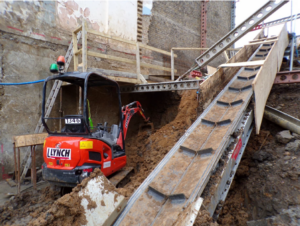
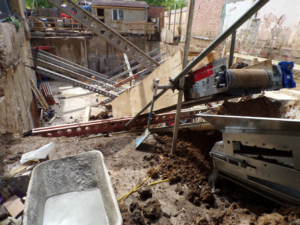
During the course of the HSE investigation, other concerns were identified, including unsafe mini-digger use and a failure to stop members of the public entering the site, indicating broader failings in Hill’s approach to managing health and safety.

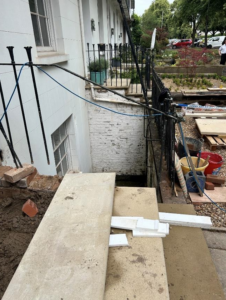
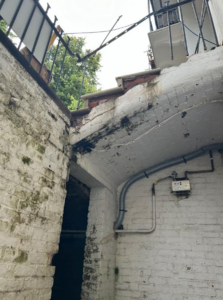
Thomas fell through the roof of this garage as it was being demolished

The investigation also found no assessment to determine whether asbestos was present. Corrugated concrete sheets being snapped and removed by hand were later found to be made from asbestos cement – a material commonly found in buildings constructed before 2000. There were three other workers were on site who were at risk of exposure to fibres as the sheets were handed down to them, as well as the family whose garage was being worked on.

Before any demolition or refurbishment work begins, dutyholders must assess whether asbestos is present and plan how work will be carried out safely. See Asbestos Essentials Task sheets for step-by-step instructions.

Jason Hill, of Ashford, Middlesex, pleaded guilty to breaching Section 3(2) of the Health and Safety at Work etc. Act 1974 at Staines Magistrates Court on 30 January 2026. He was immediately jailed for a period of 12 months. No costs were awarded.

HSE Inspector Jennifer Lester said: “Jason Hill’s failure to put in place basic safety measures has cost a young man his life.

“The fact he has been sent to prison demonstrates just how seriously this has been taken.

“Working at height remains one of the most well‑known and significant causes of death and injury in construction, and simple, recognised precautions would have protected Thomas Neate from harm.

“Even small contractors and individuals working on domestic projects have a legal duty to ensure the safety of workers and members of the public.

“Failing to take these precautions can have devasting consequences, as this tragic incident starkly demonstrates. Our thoughts are with Tom’s family and friends as they mourn their loss”

This HSE prosecution was brought by enforcement lawyer Julian White and paralegal officer Lynne Thomas.


Further information:

  1. The Health and Safety Executive (HSE) is Britain’s national regulator for workplace health and safety. We are dedicated to protecting people and places, and helping everyone lead safer and healthier lives.
  2. More information about the legislation referred to in this case is available.
  3. Further details on the latest HSE news releases is available.
  4. HSE does not pass sentences, set guidelines or collect any fines imposed. Relevant sentencing guidelines must be followed unless the court is satisfied that it would be contrary to the interests of justice to do so.  The sentencing guidelines for health and safety offences can be found here.


Building materials manufacturer fined over £600,000 after worker suffers life-changing injuries at Tarmac plant

  • Worker’s legs crushed between metal frames weighing over a tonne
  • HSE investigation uncovers failure of firm to act after previous incidents
  • Guidance states employers must ensure dangerous machinery is effectively guarded

A national manufacturer of building materials has been fined £633,300 after an employee’s legs were crushed between one-tonne metal frames moving on a production line.

Richard Ogunleye, a father of three from South Woodham Ferrers in Essex, was working for Tarmac Building Products Limited at its manufacturing plant in Linford, Essex, on 22 July 2022 when he entered a fenced area to manually clean and inspect frames. The frames, which carry large blocks through the manufacturing process, move around the factory on a trackway.

Richard entered the fenced area through an interlocked gate which, when opened, was supposed to prevent frames from moving on that section of the track. As he was working on the stationary frame, another frame moved along the trackway into the section and struck him. Richard’s legs were crushed and pinned between the two frames.

He was trapped as the frames continued to move along the track, pushing him towards machinery on the next section. Richard’s right leg was broken and the other severely bruised as the frames moved over axles on the track. His colleague saw the incident from a distance and ran to help, pressing the emergency stop button in time to prevent further injury.

Richard spent two weeks in hospital, where a metal rod and screws were used to repair the injuries to his right leg. He was unable to return to work for over a year and underwent extensive physiotherapy.

An investigation by the Health and Safety Executive (HSE) found that Tarmac Building Products Limited failed to prevent access to dangerous parts of machinery, namely the moving frames on the track, or prevent the frames from moving when employees entered the danger zone. The interlocked gate which employees used to enter the frame cleaning area did not stop the power on the preceding sections of track and would therefore not prevent a frame from moving into this area when employees were working.

Images from site

The HSE investigation also revealed that the company had failed to act following several near misses which had occurred on this section of the track in similar circumstances. The investigation also found that a risk assessment had been carried out by the company several years before the incident which identified “additional control measures required to reduce risk to an acceptable level”, but these were not put in place until after Richard was injured.

HSE guidance on safe use of work equipment states that employers must take effective measures to prevent access to dangerous parts of machinery.

Employers should also be investigating accidents and incidents of near misses as part of their monitoring process to identify why the existing risk control measures failed and what improvements or additional measures are needed.

Tarmac Building Products Limited, of Interchange 10 Railway Drive, Wolverhampton, WV1 1LH, pleaded guilty to failing to discharge their duty under Section 2(1) of the Health and Safety at Work etc. Act 1974. The company was fined £633,300, ordered to pay £5,583 in costs and a victim surcharge of £2,000 at Chelmsford Magistrates’ Court on 29 January 2026.

HSE Inspector Connor Stowers said:

“This was a serious and entirely avoidable incident, which has had profound consequences for Mr. Ogunleye, and were it not for the quick action of a fellow worker, the injuries he sustained could have been worse.

“Employers need to ensure that dangerous machinery is guarded effectively, and this goes beyond the initial installation. Employers should frequently monitor how effective their measures are and make changes as needed. Monitoring arrangements should include properly investigating near misses and previous incidents.

“In this case, had the previous near misses on the block production line at Tarmac Linford been fully investigated and sufficient action taken, this life-changing injury would never have occurred.”

This HSE prosecution was brought by HSE enforcement lawyer Julian White and paralegal officer Farhat Basir.

Further Information

  1. The Health and Safety Executive (HSE) is Britain’s national regulator for workplace health and safety. We are dedicated to protecting people and places, and helping everyone lead safer and healthier lives.
  2. More information about the legislation referred to in this case is available.
  3. Further details on the latest HSE news releases is available.
  4. Relevant guidance on machinery guarding can be found here https://www.hse.gov.uk/pubns/books/l22.htm (Provision and Use of Work Equipment Regulations 1998: Approved Code of Practice and guidance). Further guidance on monitoring for safety and investigating workplace accidents can be found here: https://www.hse.gov.uk/pubns/books/hsg65.htm (Managing for health and safety); https://www.hse.gov.uk/pubns/books/hsg245.htm (Investigating accidents and incidents: A workbook for employers, unions, safety representatives and safety professionals).
  5. HSE does not pass sentences, set guidelines or collect any fines imposed. Relevant sentencing guidelines must be followed unless the court is satisfied that it would be contrary to the interests of justice to do so.  The sentencing guidelines for health and safety offences can be found here