How to Keep Pools Safe & Childproof

It’s the right time to brush up on how to childproof your pool, maintain a safe swimming environment and ward off tragic accidents. Pools are meant to be enjoyed, so take these steps to keep them safe and fun. To better understand the nature of pool safety, keep a few things in mind:

  • Sadly, the possibility of pool injuries and fatalities is very real. Drowning is the leading cause of unintentional death for young children aged one to four. In 2018, between Memorial Day and Labor Day, at least 148 children under 15 years old fatally drowned in swimming pools or spas. For every death, twice as many children are hospitalized for injuries. 4-6 minutes underwater is enough to cause irreversible brain damage.
  • Portable “toy” pools require security measures just like their permanent in-ground and above-ground counterparts. Portable pools account for 10% of drowning fatalities of children under 15.
  • There’s no single safety device or protective measure that will completely childproof your pool or spa, or prevent every possible accident. Incorporate several types of the safeguards listed here into your pool safety plan.
  • Devices and barricades aren’t a substitute for an adult with a watchful eye. Never allow a child near water unsupervised, even if they can swim.

Step 1. Set Up Pool & Spa Barriers

Physical barricades (walls, fences and
covers) are the first line of defense. In some places, they are mandated
by state or municipal law. At a minimum, home insurance policies
typically require compliance with all local laws. Your policy most
likely dictates that you’re responsible for any accidents that happen to
pool visitors, even uninvited ones so it’s wise to block access.

What to Look for in Pool Fences

Children should not be able to get over, under or through the pool
wall or fence by themselves. Exact recommendations depend on the style
of barrier and the type of pool you have. Since local regulations vary
or may not exist, these pool barrier guidelines from the U.S. Consumer Product Safety Commission are a good place to start:

  • Fences around pools should be a minimum of four feet high; 5 feet or higher is preferable.
  • Spaces
    in the fence should not be wide enough for a small child to fit
    through. If a fence has vertical bars, they should be no more than four
    inches apart.
  • Holes, cutouts or stones in a wall or fence should
    not be big enough to provide hand and footholds. If there are cutouts
    in the fence (such as decorative shapes or lattice holes) make sure the
    openings are less than 1 ¾ inches wide.
  • Chain link fences should not exceed 1 ¼ inches square. If the fence mesh is too large, attach vertical slats to close off the openings.
  • Don’t put structures (like benches or large stones) nearby. These objects can help a child hop the fence.
  • Gates
    to the pool area should have self-closing latches that are beyond the
    reach of children. No fence is secure if the gate isn’t closed.

It’s not always necessary to install a permanent, hardscaped fence. Relatively inexpensive mesh pool barriers
may fit requirements when they are installed correctly. Every home is
different, so hire a pool safety professional or a childproofing expert
certified by the International Association for Child Safety (IAFCS) if you have any questions.

Choosing the Safest Pool & Spa Covers

Another way to prevent accidents is to keep the water covered. For
smaller hot tubs and spas, rigid folding covers are better than soft
floating covers because they block water access more completely.
Consider using locking straps to secure the cover.

For pools, both manual and automatic covers are available. Manually
laid covers stretch across the top of the pool (either by hand or a
crank mechanism) and anchor into the pool deck. Automatically retracting
covers tend to be easier to use, but also more expensive. If you have
an automatic cover, keep the controls out of reach of children.

Another option is a pool safety net,
which stretches over the surface of the pool and anchors down around
its perimeter. When installed correctly, their strong synthetic
materials catch and support kids that tumble in.

Step 2. Secure the Gates & Doors

Children trying to get through pool gate

Consider all the pathways that children could follow from inside the
house to the water. Add security devices that make it harder to pass
through unsupervised.

If you’re still concerned about kids getting into the pool after
you’ve secured the area, you can also consider getting a pool alarm, an
in-water motion detector that sounds alerts when activity is detected.
There are even wearable alarms for little escape artists.

Step 3. Inspect Pool Drains & Drain Covers

Pool and spa drains can create underwater suction with enough force
to trap even strong swimmers below the surface. Several tragic accidents
have occurred where children pulled into the drain did not only drown
or nearly drown, they also suffered physical injuries from the drain
itself.

In 2008, the Virginia Graeme Baker (VGB) Act passed,
requiring all public pools to have anti-entrapment drain covers. Home
pools are not bound by this law, but drain safety should be considered a
requirement nevertheless. Make sure all drain covers are clean,
VGB-compliant, and not broken or missing.

Pool drain

Step 4. Maintain the Pool & Cleaning Chemicals

Cleaning the pool

When used properly, chlorine kills waterborne bacteria and parasites
in a way that’s harmless to humans. But less-than-clean pools and
mishandled chemicals can lead to irritation, illness and even fires or
explosions.

Keep chemicals completely out of reach of children, preferably locked
up. They should be stored separately from other household cleaners due
to the potential for chemical reactions that can cause combustions,  The
storage area should be kept clean from leaves, dirt and other debris;
chemical spills should be cleaned up immediately. Request material
safety data sheets (MSDS) from your pool chemical dealer and keep them
nearby in case you have any questions about how to use, handle or store
the cleaning agents.

Step 5. Enforce Pool Safety Rules & Skills

This pool safety step is never truly finished. Parents must remain
vigilant about monitoring kids in and around the pool. Kids should be
taught not to run around the pool, to never enter it alone and to never
play near pool drains or jets.

Be mindful about which toys and floatation devices you allow and
enforce responsible play. Many experts suggest bypassing slides and
diving boards completely. Remember that life jackets and floats are only
secondary safety items, and they’re not enough protection on their own.

Family swimming lessons are also highly recommended, but they don’t
guarantee safety. To be as prepared as possible, parents and caretakers
should also learn the signs of drowning (you won’t usually see splashing or flailing) and consider becoming CPR/First Aid Certified.

Pool Rules

Emily Ferron
More by:
Emily Ferron

Go to Safety.com to read the original article https://www.safety.com/pool-safety-tips/


Grain store company fined after worker fatally struck by lorry

A grain store company has been fined following the death of a worker at its site in Linton, Cambridgeshire.

Peterborough Crown Court heard how on 27 July 2016 an employee of Camgrain Stores Ltd suffered fatal injuries after being struck by a lorry at the site. Mr. Edward Orlopp had left the control room to walk across the site and on leaving the building he walked in front of a moving lorry. The driver had checked his mirrors but he did not see the employee and moved forward fatally injuring the employee.

Image showing no barrier segregating personnel from vehicles

An investigation by the Health and Safety Executive (HSE) found that Camgrain Stores Ltd had failed to ensure that pedestrians and vehicles could move safely around the site and that they had not provided measures to prevent employees walking into areas where large vehicles are moving.

Camgrain Stores Ltd of London Road, Balsham pleaded guilty to breaching Section 2 (1) of the Health and Safety at Work Act 1974. The company has been fined £180,000 and ordered to pay costs of £20,000.

After the hearing HSE inspector Stephen Faulkner said: “Being struck by vehicles is one of the most common causes of workplace fatal accidents. This was a tragic and wholly avoidable incident caused by failure of the host company to undertake a number of simple measures.”


Notes to Editors:

  1. The Health and Safety Executive (HSE) is Britain’s national regulator for workplace health and safety. We prevent work-related death, injury and ill health through regulatory actions that range from influencing behaviours across whole industry sectors through to targeted interventions on individual businesses. These activities are supported by globally recognised scientific expertise. www.hse.gov.uk
  2. More about the legislation referred to in this case can be found at: www.legislation.gov.uk/
  3. HSE news releases are available at http://press.hse.gov.uk

The post Grain store company fined after worker fatally struck by lorry appeared first on HSE Media Centre.


Roofing company fined after worker falls from height

A London based roofing company, McDonald Roofing Contractors Limited, has been fined after a worker fell a distance of nine metres from a flat roof he was working on.

Westminster Magistrates court head how McDonald Roofing Contractors Limited were carrying out re-roofing works at 12 Glebe Road, SW13 0DR. Work began at the end of February 2018. On 12 March 2018 an employee of McDonald Roofing Contractors Limited was carrying out work on a flat roof. Whilst carrying out this work he stepped backwards from the flat roof. As a result of the fall the worker suffered a broken right shoulder blade, a broken right collar bone, and a fracture to the left side of his face.

An investigation by the Health and Safety Executive (HSE) found that the company had failed to ensure that the work at height was properly planned; appropriately supervised; and carried out in a manner which is so far as is reasonably practicable safe.

McDonald Roofing Contractors Limited of 6 Colville Road, London W3 8BL pleaded guilty to breach Regulation 4(1) of the Work at Height Regulations 2005 and fined £30,000 with full costs of £1483.00.

Speaking after the hearing, HSE inspector Adam Thompson said: “The case highlights the importance of ensuring that work at height is properly planned and appropriately supervised.”

“The incident could so easily have been avoided by having suitable and sufficient edge protection around the flat roof.”

Notes to Editors:

  1. The Health and Safety Executive (HSE) is Britain’s national regulator for workplace health and safety. We prevent work-related death, injury and ill health through regulatory actions that range from influencing behaviours across whole industry sectors through to targeted interventions on individual businesses. These activities are supported by globally recognised scientific expertise. www.hse.gov.uk
  2. More about the legislation referred to in this case can be found at: www.legislation.gov.uk/
  3. HSE news releases are available at http://press.hse.gov.uk

The post Roofing company fined after worker falls from height appeared first on HSE Media Centre.


Ferry company fined after worker suffers multiple fractures

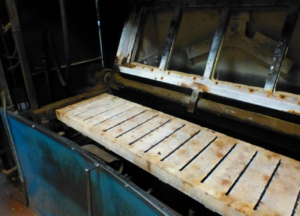
Red Funnel Ferries has been fined after a worker fell from the unprotected edge of its Red Falcon ship’s mezzanine car deck.

Southampton Crown Court heard how, on 24 September 2015, a worker was uncoiling a reel of electrical cable on a mezzanine deck at Southampton docks, when he inadvertently stepped off a raised edge and fell 2.5m to the lower deck, sustaining multiple fractures to his foot and wrist.

An investigation by the Health and Safety Executive (HSE) found that Red Funnel should have taken steps such as lowering the mezzanine deck or raising the edge protection barriers on the deck in order to eliminate the risk of falling from height.

The Southampton, Isle of Wight and South of England Royal Mail Steam Packet Company Ltd (trading as Red Funnel Ferries), of 12 Bugle Street, Southampton, Hampshire, SO14 2JY pleaded guilty for failing to discharge the duty imposed upon them by Section 3(1) of Health and Safety at Work etc. Act 1974 and has been fined £30,000 and ordered to pay costs of £ 10,800.

Speaking after the case, HSE inspector Andrew Johnson said: “Companies have a duty to ensure the risks from working at height are properly controlled. Simple steps to eliminate the risk of falling or prevent it (through barriers etc.) were not taken and a serious injury occurred.”

Notes to Editors:
1. The Health and Safety Executive (HSE) is Britain’s national regulator for workplace health and safety. We prevent work-related death, injury and ill health through regulatory actions that range from influencing behaviours across whole industry sectors through to targeted interventions on individual businesses. These activities are supported by globally recognised scientific expertise. www.hse.gov.uk
2. More about the legislation referred to in this case can be found at: www.legislation.gov.uk/
3. HSE news releases are available at http://press.hse.gov.uk

The post Ferry company fined after worker suffers multiple fractures appeared first on HSE Media Centre.



Roofing contractor sentenced for unsafe work at height

A roofing contractor has been sentenced for failing to take adequate precautions to prevent his workers falling from height and for breaching a prohibition notice.

Llandudno Magistrates’ Court heard how in April 2018 workers were observed working on the roof of a domestic two-storey house in Wrexham with no edge protection. A prohibition notice was issued preventing further work until control measures were put in place, but the contractor chose to ignore it and carried on working.

An investigation by the Health and Safety Executive (HSE), found that Asa Hamilton allowed his workers to be exposed to a continuing risk of falling from the roof, with potential for fatal or major injury.

Asa Hamilton of Linthorpe Road, Buckley, Flintshire pleaded guilty to breaching Regulation 6 (3) of the Work at Height Regulations 2005 for failing to provide precautions to prevent falls from height and Sections 33 (1) (e) and 33 (1) g of the Health and Safety at Work etc Act 1974 for failing to comply with a prohibition notice.

Mr Hamilton was sentenced to 12 months imprisonment, suspended for 12 months, plus 200 hours unpaid work. He was also ordered to pay a contribution of £4,000 towards the costs.

Speaking after the case HSE principal inspector Paul Harvey said “This was a serious incident and it is fortunate nobody was injured as a result of it. There are well known standards in the construction industry for controlling risks from falls from height. Even when the dutyholder was served a prohibition notice to stop the activity they failed to take the appropriate action.

“HSE will not hesitate to take enforcement action against those that disregard enforcement notices when served or fail to take appropriate measures to control well known risks”


Notes to Editors:

  1. The Health and Safety Executive (HSE) is Britain’s national regulator for workplace health and safety. We prevent work-related death, injury and ill health through regulatory actions that range from influencing behaviours across whole industry sectors through to targeted interventions on individual businesses. These activities are supported by globally recognised scientific expertise. www.hse.gov.uk
  2. More about the legislation referred to in this case can be found at: www.legislation.gov.uk/
  3. HSE news releases are available at http://press.hse.gov.uk


The post Roofing contractor sentenced for unsafe work at height appeared first on HSE Media Centre.