Construction company fined after three contractors fell from height

A construction company has been fined following an incident where three contractors fell from height suffering serious injuries.

North Somerset Magistrates’ Court heard how, on 18 July 2018, three bricklayers fell approximately 2.5 metres onto a concrete floor sustaining serious injuries ranging from a broken back, a broken sternum to a swollen knee. The three workers fell through a temporary stairwell cover, which gave way underneath them because it had not been correctly fitted.

An investigation by the Health and Safety Executive (HSE) found that St Modwen Homes Limited did not have a robust system in place to ensure that the temporary stairwell cover was identified as a temporary working platform and treated as such. It failed to coordinate matters relating to the safe use of the temporary platform and it failed to plan, manage and monitor the installation, inspection, maintenance and use of the temporary working platform.

St Modwen Homes Limited of Park Point, High Street, Longbridge, Birmingham pleaded guilty to breaching the Construction (Design and Management) Regulations 2015, contravening Regulation 13(1). The company has been fined £200,000 and ordered to pay costs of £13,332.

Speaking after the hearing, HSE inspector Stephan Axt-Simmonds said: “Falls from height remain one of the most common causes of work-related fatalities in this country and the risks associated with working at height are well known. This incident could so easily have been avoided by simply carrying out correct control measures and safe working practices. Temporary stairwell covers need to be inspected the same as any other working platforms.

“Companies should be aware that HSE will not hesitate to take appropriate enforcement action against those that fall below the required standards.”


Temporary stairwell cover gave way injuring three bricklayers

Notes to Editors:
1. The Health and Safety Executive (HSE) is Britain’s national regulator for workplace health and safety. We prevent work-related death, injury and ill health through regulatory actions that range from influencing behaviours across whole industry sectors through to targeted interventions on individual businesses. These activities are supported by globally recognised scientific expertise www.hse.gov.uk
2. More about the legislation referred to in this case can be found at:
www.legislation.gov.uk/
3. HSE news releases are available at http://press.hse.gov.uk


Contractor prosecuted after spot check reveals multiple breaches

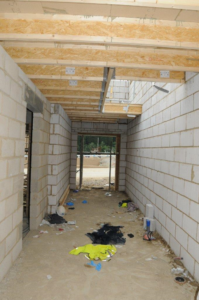
A construction contractor has been fined after multiple health and safety issues were identified during a proactive Covid spot check at a site in Manchester.

Manchester Magistrates’ Court heard that on 9 July 2020, a HSE inspector performed a proactive Covid-19 spot check at a construction site in the city.

During the inspection, a host of safety issues were identified including working at height, welfare, Covid-19, site security, and electricity. The principal contractor was served with a Prohibition Notice and two Improvement Notices.

A return inspection was made on the 17 August 2020, after very little communication from the principal contractor. Little or no improvements had been made regarding the issues and additional enforcement action was required, including a further Prohibition Notice regarding an unsupported excavation.

It was subsequently established that the contractor had failed to comply with any of the Improvement Notices HSE had served.

Principal contractor Umar Akram Khatab, now resident in Hollingwood Lane, Bradford, pleaded guilty to breaches of Section 21 of the Health & Safety at Work etc. Act 1974 and Regulation 13(1) of the Construction (Design and Management) Regulations 2015. He was sentenced to a 12-month community order. He was also ordered to pay £3,000 towards costs and a victim surcharge of £95.

Speaking after the hearing, HSE inspector Rebecca Vaudrey said: “HSE prides itself on being a proportionate and evidence-based regulator. Since the beginning of the pandemic HSE has carried out more than 316,000 Covid spot checks, with the priority to urgently make workplaces safe from transmission risks, rather than heavy-handed enforcement.

“These checks have demonstrated that the majority of employers want to do the right thing to ensure their workers go home safe and well.

“This is the first prosecution to arise from the Spot Check programme. We’ve repeatedly stressed that prosecution is a last resort, but this case clearly illustrates that where there is consistent disregard to Covid or other risks to employees’ health and safety, HSE will use its powers to take action.”

Notes to Editors:

  1. The Health and Safety Executive (HSE) is Britain’s national regulator for workplace health and safety. We prevent work-related death, injury and ill health through regulatory actions that range from influencing behaviours across whole industry sectors through to targeted interventions on individual businesses. These activities are supported by globally recognised scientific expertise. hse.gov.uk
  2. More about the legislation referred to in this case can be found at: Construction – Health and safety for the construction industry (hse.gov.uk)
  3. HSE news releases are available at http://press.hse.gov.uk


Recycling company fined for poor health and safety management

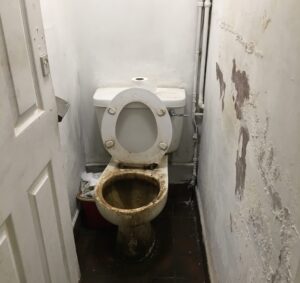
A waste and recycling company has been fined after HSE inspectors discovered widespread poor management of health and safety risks at their site in West Drayton, London.

Westminster Magistrates Court heard that, on 21 March 2019, inspectors attended Iver Recycling (UK) Limited, Holloway Lane, West Drayton, to carry out a routine inspection, where they discovered widespread risk to employees and poor health and safety management of the site.

HSE revisited the site on 1 April 2019 with electrical engineering, mechanical engineering and civil engineering specialists to assess the site. In total, HSE issued nine Prohibition Notices and seven Improvement Notices. Conditions were so bad that an investigation was conducted to help understand the underlying causes of the conditions seen. The investigation concluded that a lack of competent advice, risk assessment and poor management had led to deterioration of conditions on site, despite previous enforcement being issued by HSE.

Iver Recycling (UK) Limited failed to appear at the hearing on 16 September 2021, and the case was heard in their absence. The court found that HSE’s case, a breach of Health and Safety at Work etc. Act 1974 Section 2(1) had been proved. The company were issued with a £200,000 fine and order to pay cost of £7,125.72 and the victim surcharge of £170.

Following the hearing, HSE inspector Sarah Pearce said: “Companies should be aware that if they fail to operate their businesses in a manner which protects the health and safety of those who work there, HSE will pursue those responsible to the highest possible level. The conditions seen at this site should not occur in 21st-century Britain.”Poor welfare conditions at the site

Notes to Editors:

  1. The Health and Safety Executive (HSE) is Britain’s national regulator for workplace health and safety. We prevent work-related death, injury and ill health through regulatory actions that range from influencing behaviours across whole industry sectors through to targeted interventions on individual businesses. These activities are supported by globally recognised scientific expertise. hse.gov.uk[1]
  2. More about the legislation referred to in this case can be found at: legislation.gov.uk/ [2]
  3. HSE news releases are available at http://press.hse.gov.uk[3


Chemical company fined £1million for fatal explosion

Chemical company, Briar Chemicals Ltd, has been fined £1million after a man died in an explosion at its site in Sweet Briar Road, Norwich.

Chelmsford Magistrates Court heard how on the 27 July 2018, maintenance contractor, Rob Cranston, aged 46, was carrying out repair work on a mixing vessel during a planned period of shutdown maintenance.  It is thought that his welding torch or grinder accidentally ignited flammable Toluene vapour inside the vessel which should not have been present when the work commenced. Mr Cranston’s son Owen, aged 22, was working alongside his father when Mr Cranston was killed in the blast.

The HSE investigation found that a quantity of Toluene residue had been left inside the vessel after shutdown cleaning at the beginning of June 2018. Two damaged valves situated above the vessel in the Toluene supply pipe, were also found to be leaking.  Operatives had been instructed to transfer a large quantity of Toluene from one storage tank to another via this pipe which allowed additional flammable liquid to leak into the vessel which was supposed to be empty and clean.

In a Victim Impact Statement read out in court, Mr Cranston’s widow, Claire, said:

“We married on 16 August 2003; he would have been 50 years old this year. He was so well-known and liked. I had his funeral at the Norwich Cathedral, there were over 750 people in attendance.

“This has obviously been horrendous for both our sons, particularly Owen having to deal with actually being there at the time. Our lives changed forever that day. We will never forget him and are only left wondering what the future would have held for us all together. We were still young enough to have had years of happiness ahead. He will miss seeing our sons’ lives develop and grandchildren in years to come.”

Briar Chemicals Ltd failed to take all necessary measures to prevent the explosion and pleaded guilty to a breach of Regulation 5 of the COMAH Regulations 2015. The company was fined £1million and ordered to pay costs of £10,967.20.

Speaking after the hearing, HSE inspector Mrs F Bailey, who led the three-year investigation, commented:

“This was a complex and highly technical investigation, due to the chemical hazards on site and the number of underlying issues which combined to cause the explosion.   HSE hope that this case helps to communicate important safety messages to wider industry so that other fires and explosions are prevented in future.

“Any company handling or storing flammables should consider the potential risk of fire and explosion and ensure they have robust procedures in place to minimise and control risk at all times, including during planned maintenance work.”

Notes to editors 

  1. The Health and Safety Executive (HSE) is Britain’s national regulator for workplace health and safety. We prevent work-related death, injury and ill health. It does so through research, information and advice, promoting training; new or revised regulations and codes of practice, and working with local authority partners by inspection, investigation and enforcement. gov.uk[1]
  2. The Control of Major Accident Hazards Regulations 2015 (‘COMAH’) main aims are to prevent and mitigate the effects of major accidents involving dangerous substances which can cause serious damage/harm to people and/or the environment. COMAH mainly affects the chemical industry, but also some storage activities, explosives sites, nuclear sites and other industries, where threshold (and above) quantities of dangerous substances identified in the regulations are kept or used.
  3. COMAH Regulation 5(1) Every employer must take all measures necessary to prevent major accidents and limit their consequences to human health and the environment.
  4. More about the legislation referred to in this case can be found at: legislation.gov.uk[2]
  5. HSE news releases are available at http://press.hse.gov.uk


Food processing company fined after worker suffered thumb amputation   

Troy Foods Ltd has been sentenced for safety breaches after a production supervisor suffered a serious injury when his hand came into contact with dangerous parts of a potato processing machine.

Leeds Magistrates’ Court heard that, on 2 September 2019 at the site at Royds Farm Industrial Estate, Farm Road Leeds, the supervisor was cleaning out machinery between product runs when his hand came into contact with a rotating auger which was not adequately guarded. He sustained injuries which resulted in a thumb amputation and a broken finger.

An investigation by the Health and Safety Executive (HSE) found that access to the dangerous rotating auger was possible because the bagging unit conveyor and auger were not adequately guarded, and the machine did not comply with safety reach distances set out in BS EN 13857.

Troy Foods Ltd of Unit 1 Intermezzo Drive Leeds West Yorkshire pleaded guilty to breaching Regulation 11 (1) of the Provision and Use of work Equipment Regulations 1998. The company has been fined £33,333 and ordered to pay £670.53 in costs and a victim surcharge of £180.

After the hearing, HSE inspector Julian Franklin commented: “Employers should make sure they properly assess and apply effective control measures to minimise the risk from dangerous parts of machinery.

“This incident could so easily have been avoided by simply carrying out correct control measures and safe working practices”

Notes to Editors:

  1. The Health and Safety Executive (HSE) is Britain’s national regulator for workplace health and safety. We prevent work-related death, injury and ill health through regulatory actions that range from influencing behaviours across whole industry sectors through to targeted interventions on individual businesses. These activities are supported by globally recognised scientific expertise. hse.gov.uk[1]
  2. More about the legislation referred to in this case can be found at: legislation.gov.uk/ [2]
  3. HSE news releases are available at http://press.hse.gov.uk[3]
  4. Please see the link below to the page on HSE’s website that is the best guide to doing it the right way https://www.hse.gov.uk/work-equipment-machinery/puwer.htm