Construction client sentenced after worker found dead on site

  • HSE inspectors called in after man’s body found on site.
  • Multiple failings found at site risking workers to falls from height.
  • HSE guidance is available.

A construction client has been handed a suspended prison sentence after a worker was found dead on a building site in London.

Moses Meisels received a 12-week prison sentence, suspended for one year, and was ordered to pay £10,000 in costs City of London Magistrates Court due to his role in the incident.

The Metropolitan Police discovered the man’s body at the site of a synagogue development at Upper Clapton Road, in Hackney, in December 2018.

Although the worker had died as a result of natural causes, subsequent inspections by the Health and Safety Executive (HSE) revealed multiple life-threatening safety failures at the site.

Moses Meisels was overseeing major structural work to enlarge the synagogue, but he repeatedly ignored warnings about dangerous practices – putting construction workers at serious risk of fatal falls.

Following the discovery of the man’s body, HSE inspectors conducted four separate visits in a five-month period, where they uncovered a catalogue of serious failures including:

  • Workers operating on the roof beyond the protection of scaffolding edge barriers
  • Large, unprotected holes in the ground floor creating fall risks into the basement below
  • A single unsecured ladder as the only access to the first floor, which didn’t extend far enough to provide a safe handhold
  • Construction waste dangerously stacked in the front garden

The Construction (Design and Management) Regulations 2015 Regulation 2 defines a client as “any person for whom a project is carried out”. HSE guidance states that commercial clients have a crucial influence over how projects are run, including the management of health and safety risks. Commercial clients must make suitable arrangements for managing their project, enabling those carrying it out to manage health and safety risks in a proportionate way.

At City of London Magistrates Court, Meisels of Gilda Crescent, Stoke Newington, pleaded guilty to breaching Construction (Design and Management) Regulations 2015. He received a 12-week prison sentence, suspended for one year, and was ordered to pay £10,000 in costs.

HSE inspector David King said: “It is essential that clients must make suitable arrangements for managing a project, including the allocation of sufficient time and other resources.

“Clients should be aware that HSE will not hesitate to take appropriate enforcement action them if fail to ensure their construction projects meet the required standards.”

Further information:

  1. The Health and Safety Executive (HSE) is Britain’s national regulator for workplace health and safety. We are dedicated to protecting people and places, and helping everyone lead safer and healthier lives.
  2. More information about the legislation referred to in this case is available.
  3. Further details on the latest HSE news releases is available.
  4. Relevant guidance can be found here Commercial clients: roles and responsibilities – HSE
  5. HSE does not pass sentences, set guidelines or collect any fines imposed. Relevant sentencing guidelines must be followed unless the court is satisfied that it would be contrary to the interests of justice to do so.  The sentencing guidelines for health and safety offences can be found here.


Construction company fined £33,500 after man dies following fall from height

  • Worker died after falling through unprotected skylight opening at domestic property.
  • Company failed to take measures to prevent falls from height.
  • HSE reminds employers of guidance for safe working at height.

Skyladder Construction Limited has been fined £33,500 after a man died when he fell through a skylight opening at a domestic property.

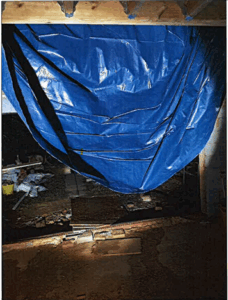
The company was constructing a single-storey extension with a flat roof at a property in Farnborough. On the evening of 20 July 2022, it began to rain, and the company director and an employee returned to the site at approximately 11pm to cover the new roof with a blue plastic tarpaulin, securing it with logs of wood.

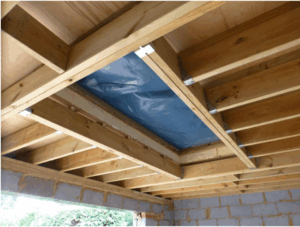
Bhakta Rai accompanied the employee to the site that evening. At some point, Mr Rai went onto the roof to assist and fell through a hole intended for a skylight, falling approximately 2.5 metres onto the concrete floor below.

In an attempt to recover Mr Rai, he was lifted back through the roof opening, carried across the roof, and then brought down a ladder at the front of the property. No ambulance was called, and Mr Rai was transported to hospital in a van. He died a few days later after sustaining significant injuries, including a spinal fracture, fractured skull, possible bleed on the brain, and swelling to the head.

The Health and Safety Executive (HSE) attended the scene on 21 July 2022. Between the police leaving the site (at around 4am) and the HSE’s arrival later that day, the tarpaulin had been replaced, covering the roof.

Tarp following the fall when police attended

An HSE investigation found that Skyladder Construction Limited failed to take suitable and sufficient measures to prevent, so far as was reasonably practicable, any person from falling a distance liable to cause personal injury. There were no physical measures in place at the edges of the building or around the skylight openings to prevent a fall, and no measures to mitigate the distance or impact of a fall.

Tarp covering roof/hole when HSE attended

Skyladder Construction Limited also contravened a requirement imposed by an HSE inspector. During the investigation, HSE requested information from the company under Section 20 of the Health and Safety at Work etc. Act 1974, which it is an offence not to provide. No response was received.

HSE guidance sets out measures for planning and carrying out work at height safely. It includes practical controls that can be implemented to remove or reduce the risk of a fall. Following this guidance would have identified the risks from the unprotected roof and shown that the risk could have been eliminated entirely by changing how the work was undertaken. Further guidance can be found here: Work at height – HSE.

Skyladder Construction Limited, of 8 Harbour Close, Farnborough, GU14 8HT, pleaded guilty to breaching Regulation 6(3) of the Work at Height Regulations 2005 and Section 33(1)(e) of the Health and Safety at Work etc. Act 1974 for failing to provide information requested under Section 20 of the Act.

The company was fined £33,500, ordered to pay £8,472 in costs, and a £2,000 victim surcharge at Basingstoke Magistrates’ Court on 31 October 2025.

Following the hearing, HSE Inspector Jenny Morris said:

“Falls when working at height remain the most common kind of workplace fatality, accounting for around a quarter of all worker deaths. In this case, this was a wholly avoidable incident — Mr Rai died in a fall which should never have been able to happen.”

This prosecution was brought by HSE Enforcement Lawyer Rebecca Schwartz and Paralegal Officer Helen Hugo.


Further information:

  1. The Health and Safety Executive (HSE) is Britain’s national regulator for workplace health and safety. We are dedicated to protecting people and places, and helping everyone lead safer and healthier lives.
  2. More information about the legislation referred to in this case is available.
  3. Further details on the latest HSE news releases is available.
  4. Relevant guidance can be found here Work at height – HSE https://www.hse.gov.uk/work-at-height/index.htm
  5. HSE does not pass sentences, set guidelines or collect any fines imposed. Relevant sentencing guidelines must be followed unless the court is satisfied that it would be contrary to the interests of justice to do so.  The sentencing guidelines for health and safety offences can be found here.


HSE seeks views on proposals to enhance worker and public protection from asbestos exposure

The Health and Safety Executive (HSE) has today launched a consultation on proposals to improve the application of the Control of Asbestos Regulations and guidance around asbestos management to help protect workers and building users.

Great Britain already has one of the best workplace health and safety performances globally, with some of the lowest rates of occupational injury and fatality in Europe. These proposals build on this strong foundation to enhance protections in areas where asbestos remains a significant health risk.

The consultation aims to seek stakeholders’ views on three proposals:

  1. To ensure the independence and impartiality of roles in the four-stage clearance process to further minimise the risk of exposure from asbestos to workers and building users after the removal of asbestos
  2. To drive up the standard of asbestos surveys to ensure dutyholders have the information they need to safely manage asbestos risks
  3. To clarify the type of work that constitutes work with asbestos known as Notifiable Non-Licensed Work (NNLW)

The consultation is particularly relevant to dutyholders, asbestos analysts, asbestos removal contractors, asbestos surveyors, and associated professions including facilities management and construction.

Rick Brunt, Director of Engagement and Policy at HSE, said:

“Asbestos continues to be a significant risk to workers in Great Britain. While we have made significant progress in managing asbestos risks, these proposals represent an important step towards further strengthening protections for workers and the public.

“We want to hear from all stakeholders involved in the asbestos regulatory system to ensure our approach is both effective and proportionate, supporting HSE’s commitment to protecting people and places whilst enabling innovation and economic growth.”

Minister for Social Security and Disability, Sir Stephen Timms, said:

“The dangers of exposure to asbestos are well known. Its legacy is that it remains the biggest cause of work-related deaths in the UK — responsible for 5,000-plus deaths per year, with many more people living with the impact of asbestos-related disease.

“In Britain we have a mature and well-established approach to the management of asbestos in buildings: the Control of Asbestos Regulations 2012, enforced by the Health and Safety Executive and other regulators.

“This consultation aims to improve these regulations and enhance worker and public protection from asbestos exposure.”

The consultation runs until 9 January 2026. The full consultation document, including detailed proposals, background information and how to respond, is available on the HSE website at:

https://consultations.hse.gov.uk/hse/proposals-control-of-asbestos-regs-2012.


Social housing management firm fined for failing to protect workers

  • Multiple workers exposed to vibration-related ill-health.
  • Hand-Arm Vibration Syndrome can make everyday tasks impossible.
  • HSE guidance is available.

An East Midlands social housing provider has been fined £32,000 after multiple workers were diagnosed with vibration related ill-health conditions such as Hand-Arm Vibration Syndrome (HAVS).

The Health and Safety Executive (HSE) launched an investigation after it received more than ten reports of vibration related ill-health in a short period of time. The workers affected had until recently been employed by Nottingham City Homes Limited, an arms-length management organisation that managed social housing on behalf of Nottingham City Council between 2005 and 2023.

The HSE investigation found a large number of the company’s employees were exposed to vibration in their day to day work.  These included bricklayers, joiners, electricians, plasterers, caretakers and others – while their work was varied, all included extensive use of power tools, ranging from drills and impact drivers to vibrating plates and road breakers, over an extended period of time.  Despite this, and the dangers exposure can cause, the company had not properly assessed or controlled worker’s exposure to vibration.

Prolonged and regular exposure to vibration can affect a worker’s health resulting in disorders of the nerves, blood supply, joints and muscles of the hands and arms. These disorders are collectively known as HAVS and symptoms can include pain, tingling, numbness and loss of strength.  HAVS can make everyday tasks such as fastening buttons or holding utensils difficult or impossible.

HSE guidance, available here, and in the HSE publication Hand-arm vibration – The Control of Vibration at Work Regulations 2005 (L140) (PDF), sets out practical guidance to help employers protect their employees and fulfil their legal obligation to control vibration risks. The guidance includes advice on the assessment of risk, ways to control exposure, and in-depth information about health surveillance.

The HSE investigation also found that the company had not undertaken a suitable and sufficient assessment of the risks posed by vibration. Control measures, such as removing the need to use vibrating tools, using lower vibration alternatives, or limiting exposure times, had not been properly implemented. Tool maintenance and health surveillance arrangements were inadequate, and employees had not received sufficient training on the risks that they faced.

Nottingham City Homes Limited, of Loxley House, Station Street, Nottingham, pleaded guilty to breaching Section 2(1) of the Health and Safety at Work etc. Act 1974. The company was fined £32,000 and ordered to pay £6,226 in costs at Nottingham Magistrates’ Court on 3 November 2025.

HSE inspector Tim Nicholson said: “Nottingham City Homes Limited exposed its employees to vibration through the use of power tools for a long period of time.

“The company failed to properly manage this risk which led to employees suffering ill-health – the effects of exposure to vibration can be debilitating and, once damage is done, it is irreversible.

“There is extensive guidance available that is straightforward to follow and includes calculation tools to assist in deciding what is needed to protect employees.

“Employers should take this case as a reminder that HSE will not hesitate to act against companies which do not do all that they should to keep employees safe.”

The prosecution was brought by HSE enforcement lawyer Neenu Bains, and paralegal officer Jorge Kemp.


Further information:

  1. The Health and Safety Executive (HSE) is Britain’s national regulator for workplace health and safety. We are dedicated to protecting people and places, and helping everyone lead safer and healthier lives.
  2. More information about the legislation referred to in this case is available.
  3. Further details on the latest HSE news releases is available.
  4. Guidance on assessing and controlling vibration risks can be found here.
  5. HSE does not pass sentences, set guidelines or collect any fines imposed. Relevant sentencing guidelines must be followed unless the court is satisfied that it would be contrary to the interests of justice to do so. The sentencing guidelines for health and safety offences in England can be found here and those for Scotland here.


Haulage company fined £250,000 following death of employee

  • Man died due to company’s failures
  • Company had never carried out the tasked before.
  • HSE guidance is available.

A Middlesbrough road haulage company has been fined £250,000 after a man died while working inside a shipping container.

Gary Lee James, 30 was working for Ward Bros (Malton) Ltd at its yard at South Bank, in the early hours of 8 January 2019, when he suffered a fatal injury.

Mr James and a colleague had been standing up metal frames, each weighing approximately 120kg, within a shipping container, part of what is known as a “devanning” activity.

As the two men lifted the sixth frame, the fifth one fell back towards them, followed by the four others. Mr James was pinned by the neck between the container wall and the fallen frames. Although he was transported to James Cook University Hospital after suffering a cardiac arrest, he was sadly pronounced dead on three days later.

An investigation by the Health and Safety Executive (HSE) found the frames had not been secured to the container wall. It found that Ward Bros (Malton) Ltd failed to ensure, so far is reasonably practicable, the health, safety and welfare of its employees, including Gary James, at work in connection with the devanning of containers.

Despite the company having never undertaken devanning work before, it failed to create a suitable and sufficient written risk assessment. There was no clear and properly planned safe system of work for its employees.

Instead, the company embarked upon an ad-hoc and ultimately unsafe system of work, which was not effectively communicated to the employees who were left largely unsupervised to determine their own methods of devanning the containers.

HSE guidance states that employers must identify hazards, assess risk, and take action to eliminate or control those risks. Employers are not expected to eliminate all risks but they need to do everything ‘reasonably practicable’ to protect people from harm. This means balancing the level of risk against the measures needed to control the real risk in terms of money, time or trouble. Further guidance can be found here: https://www.hse.gov.uk/simple-health-safety/risk/steps-needed-to-manage-risk.htm

Ward Bros (Malton) Ltd, of Dormor Way, South Bank, Middlesbrough, pleaded guilty to breaching Section 2(1) of the Health and Safety at Work etc. Act 1974. The company was fined £250,000 with costs to be determined at a later date at Teesside Crown Court on 31 October 2025.

HSE Inspector Joy Craighead said: “This was a tragic and preventable incident, that cost a young man his life.

“Every year, a significant proportion of accidents, many of them serious and sometimes fatal, occur as a result of poorly planned work activity.

“In this case there was a complete failure to risk assess and implement control measures. Had the company done so, Mr James would still be alive.”

This HSE prosecution was brought by HSE enforcement lawyer Jonathan Bambro and law clerk Rebecca Forman.

Further information:

  1. The Health and Safety Executive (HSE) is Britain’s national regulator for workplace health and safety. We are dedicated to protecting people and places, and helping everyone lead safer and healthier lives.
  2. More information about the legislation referred to in this case is available.
  3. Further details on the latest HSE news releases is available.
  4. Relevant guidance can be found here: https://www.hse.gov.uk/simple-health-safety/risk/steps-needed-to-manage-risk.htm
  5. HSE does not pass sentences, set guidelines or collect any fines imposed. Relevant sentencing guidelines must be followed unless the court is satisfied that it would be contrary to the interests of justice to do so.  The sentencing guidelines for health and safety offences can be found here.