Manufacturing firm fined after apprentice suffers serious injuries

  • 18-year-old was still learning how to operate machinery when incident occurred
  • Harry now has to live with permanent scarring and a loss of feeling on the side of his chest.
  • HSE guidance on preventing access to dangerous parts of machinery is available.

A manufacturing company in Newbury has been fined £187,600 after the shirt of an apprentice got caught in machinery.

Harry Pullen, who was 18 years old at the time, was pulled into a radial-arm drill resulting in three broken ribs and needing skin grafts.
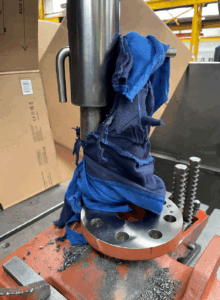
The radial-arm drill

He had been working as a machinist for Power and Energy International, manufacturing industrial valves and filters, for less than a year when the incident occurred on 10 July 2023.

The apprentice was still learning how to operate the different machines involved in manufacturing. He was left with a large piece of skin removed from his chest, hospitalised for five days and unable to work for six months.

An investigation by the Health and Safety Executive (HSE) found that Power and Energy International had failed to take appropriate measures to ensure the safety of their employees. The company’s radial-arm drills did not have adequate guarding. Machine operators, including Harry, had not been properly trained on using the safety features. The company was also found to have made modifications to the radial-arm drill which increased the risk of operators getting caught and pulled into the machine.

HSE guidance states employers must properly assess risks and take effective measures to prevent access to dangerous parts of machinery. This is normally achieved with fixed or adjustable guards but where this is not practicable other protective devices may be needed that stop the movement of dangerous parts. Employers must also ensure that they provide their employees with the necessary level of information, instruction, training, and supervision to enable them to work safety with the equipment they use. Guidance on health and safety in engineering workshops can be found on the HSE website: Health and safety in engineering workshops – HSE

Power and Energy International Ltd of Stanley Street, Salford, pleaded guilty to breaching Section 2(1) of the Health and Safety at Work etc. Act 1974. The company was fined £187,600 and was ordered to pay £7,464 in costs at a hearing at High Wycombe Magistrates Court on 8 December 2025.

After the hearing HSE inspector, Peter Crees, said: “The fine imposed on Power and Energy International underlines the importance of having effective controls to protect workers who operate radial-arm drills and other potentially dangerous machines.

“Harry’s injuries and the suffering it caused both him, and his family, could have easily been avoided.”

Harry now has to live with permanent scarring and a loss of feeling on the side of his chest. He said: “I would not go back on a radial arm drill… it’s not something I ever want to do again.”

This HSE prosecution was brought by HSE enforcement lawyer Iain Jordan and paralegal officer Melissa Wardle.


Further information:

  • The Health and Safety Executive (HSE) is Britain’s national regulator for workplace health and safety. We are dedicated to protecting people and places and helping everyone lead safer and healthier lives.
  • More about the legislation referred to in this case is available.
  • Further details on the latest HSE news releases is available.
  • Guidance on the use of work equipment is available.
  • HSE does not pass sentences, set guidelines or collect any fines imposed. Relevant sentencing guidelines must be followed unless the court is satisfied that it would be contrary to the interests of justice to do so.  The sentencing guidelines for health and safety offences in Scotland can be found here.


A matter of life and death: why businesses must check their bins

Every winter, as temperatures drop, some of Britain’s most vulnerable citizens seek shelter wherever they can find it. For rough sleepers, a large commercial waste bin might seem like temporary refuge from the cold. But this desperate act of survival can quickly become a death trap.

In May 2024, Vitalij Maceljuch, 36, climbed into a cardboard recycling bin behind a kitchen store in Chester seeking shelter. Hours later, the bin was collected and tipped into a waste lorry. Despite the driver following proper checking procedures (looking into the bin, calling out, and shaking it on the lorry’s forks), Mr Maceljuch was not discovered until his body was found on a conveyor belt at a recycling depot in Flintshire. The coroner concluded he died from severe head and neck injuries, likely caused by being crushed.

This tragedy serves as a stark reminder that this is not a theoretical risk. It is a real and present danger that demands continued vigilance from businesses and waste collection services alike.

This video from the Environmental Services Association gives waste operatives an overview of how to check if someone may be sleeping inside or around a waste container and what to do if you do find someone:

The Health and Safety Executive (HSE) has published comprehensive guidance on preventing people getting into large waste and recycling bins, developed in partnership with the Waste Industry Safety and Health (WISH) Forum. This guidance sets out simple, practical measures that can save lives.

Tim Small, HM Principal Inspector of Health and Safety for Waste and Recycling, said: “No one should die because they sought shelter from the cold. Businesses and waste collectors have a clear responsibility to implement simple checks that can prevent these entirely avoidable tragedies.”

The solution lies in two fundamental approaches: preventing access to bins in the first place and checking bins before they are emptied. Neither of these measures requires significant investment or complex procedures. What they require is vigilance, particularly during the colder months when rough sleepers are most likely to seek shelter.

Businesses managing bin storage areas should review their waste-storage arrangements. These are the risk factors that increase the likelihood of tragedy:

  • Bin areas that are isolated, dark, and easily accessible
  • Bin lids that are unsecured and easy to open
  • Storage containing dry materials like cardboard and textiles that might attract those seeking comfortable shelter
  • Areas stored for long periods, unemptied and undisturbed

The Waste Industry Safety and Health Forum’s guidance makes clear that waste producers and businesses managing bin storage areas have the primary responsibility for ensuring people do not get into bins. Where practicable, this means locating bins in secure areas, ensuring proper lighting, and training staff to watch for and report signs of people attempting to access bins.

Where there are signs of people getting or trying to get into bins, businesses should use appropriate bin types to minimise risks. Those with lid locks, lid-opening restrictors, fixed or lockable grilles, or other access-restrictors. These security devices must be properly maintained and used at all times. During periods of cold or wet weather, these checks become even more critical.

Employees who discover someone in a bin need to understand how people in such vulnerable circumstances are likely to behave and how to manage the situation and their own safety. There is potential for aggression or violence, and workers should not attempt to restrain anyone, especially if they try to flee. The priority is helping people get out safely and reporting the incident appropriately (including under RIDDOR regulations if there are fatalities or serious injuries requiring hospital treatment).

As we approach the coldest time of the year, every business that manages commercial waste bins should review their procedures. Recording incidents where people are found in or near bins (even when no injury occurs) and sharing this information between waste producers and collectors can help all parties assess whether their control measures are adequate and identify where improvements are needed.

These are simple measures. They cost little. But they could save a life.

Notes to editors:


Metal polishing company fined after employee’s hand crushed in machinery

A metal polishing company in Oldbury has been fined following an incident in which an employee’s hand became entangled in an unguarded tube polishing machine, resulting in the amputation of one finger and severe crushing injuries to two others.

Nathan Watkins was working for FMP West Midlands Limited in Oldbury, West Midlands, on 8 July 2024, when he was loading a tube polishing machine. The machine had faulty rollers, which required Mr Watkins to lean over and straighten the metal tubes. As he did so, his left hand became entangled in the machine’s unguarded cogs and chains.

Mr Watkins’ left ring finger was severed to the first knuckle, his middle finger was crushed requiring an operation to have a metal rod inserted, and his index finger was crushed, requiring multiple surgeries. The 35-year-old has undergone eight surgeries and requires further operations. He has been unable to return to work since the incident.

Mr Watkins said: “I have gained some strength back in my hand, but it is very tender and painful.”

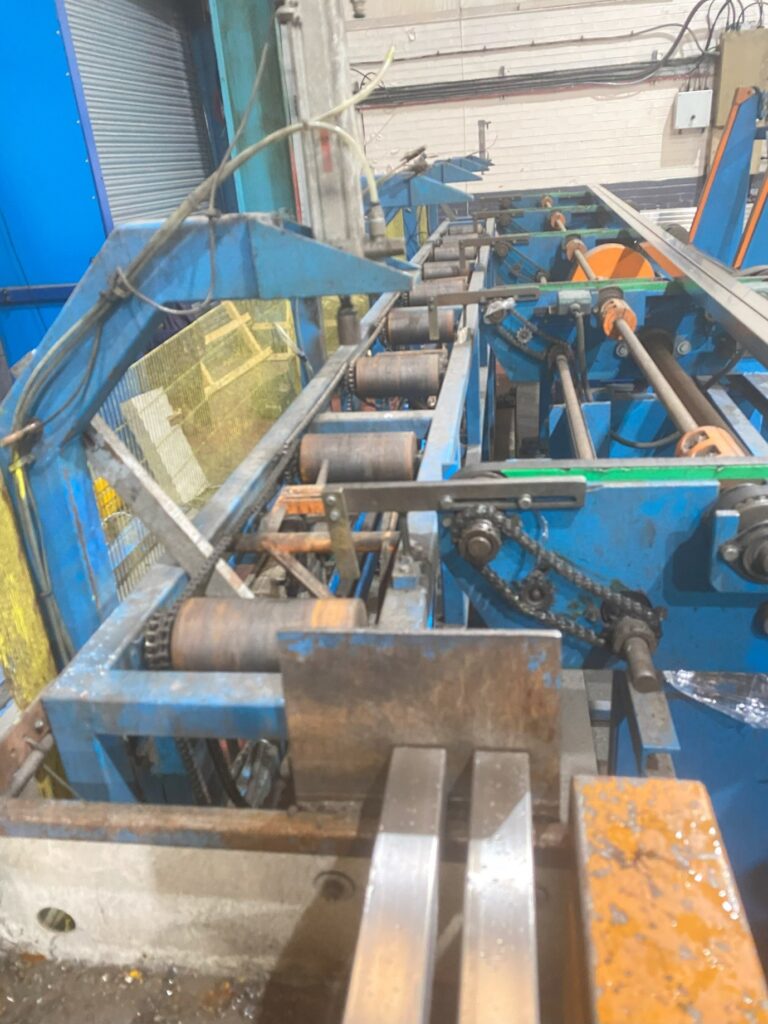
An investigation by the Health and Safety Executive (HSE) found that FMP West Midlands Limited failed to prevent access to dangerous parts of machinery, namely the rotating cogs and chains on the rollers.

Tube polishing machine

HSE provides clear guidance under the Provision and Use of Work Equipment Regulations 1998 on preventing access to dangerous parts of machinery. The first consideration should be physically enclosing the dangerous part with fixed guards to prevent access, which should be securely attached and not easily removed. Further guidance can be found at HSE’s website: Safe use of work equipment. Provision and Use of Work Equipment Regulations 1998. Approved Code of Practice and guidance L22)

FMP West Midlands Limited, of Rood End Road, Oldbury, West Midlands, pleaded guilty to breaching regulation 11(1) of the Provision and Use of Work Equipment Regulations 1998. The company was fined £24,000 and ordered to pay a £2000 victim surcharge and £4,073.10 in costs at Birmingham Magistrates’ Court on Friday 5 December.

HSE inspector, Taila Phelan, said: “This incident was entirely preventable. There is clear and long-standing guidance on machinery guarding to prevent access to dangerous parts. The failure to maintain proper guarding standards is not acceptable and too many workers are still being injured by machinery due to employers not taking the necessary steps to protect their employees.

“The tube polishing machine was not up to safety standards. Had FMP West Midlands Limited installed suitable guarding, this life-changing injury would not have occurred.

“The fine imposed should send a clear message to industry that HSE will not hesitate to take enforcement action against those who fail to comply with health and safety regulations.”

This prosecution was brought by HSE enforcement lawyer Edward Parton and paralegal officer Jorge Kemp.

Further information

  1. The Health and Safety Executive(HSE) is Britain’s national regulator for workplace health and safety. We are dedicated to protecting people and places and helping everyone lead safer and healthier lives.
  2. More information about the legislationreferred to in this case is available.
  3. Further details on the latest HSE news releasesis available.
  4. Relevant guidance can be found here Safe use of work equipment. Provision and Use of Work Equipment Regulations 1998. Approved Code of Practice and guidance L22)
  5. HSE does not pass sentences, set guidelines or collect any fines imposed. Relevant sentencing guidelines must be followed unless the court is satisfied that it would be contrary to the interests of justice to do so.  The sentencing guidelines for health and safety offences can be found here.


Company and director sentenced after worker fell 15 feet

  • Company cut corners to speed up roof repair work.
  • Man fell through fragile skylight.
  • Despite incident, company carried on with the job the day after.

A construction company in Hampshire has been fined £80,000 after a man fell more than 15 feet through a fragile skylight during roof repair work.

The 29-year-old sub-contractor sustained multiple fractures as a result of his fall at The Tanneries Industrial Estate in January 2024.  As a result, he was unable to work for months, and has not regained full use of one leg.

J Smith Construction Services Limited had started the roof repairs at the site in Titchfield in December 2023, but the work had been progressing slowly.  In an attempt to speed up the project, the company planned to work over the weekend of 13-14 January 2024 and took on extra workers to help, including the sub-contractor.

Skylight and area below

The company did not arrange for scaffolding to be erected at the open edges of the roof, nor make adequate arrangements to prevent or mitigate falls through fragile areas of the roof.  As there was nothing to prevent or reduce his fall through the skylight, the man fell from the height of the roof to the solid floor below.

Despite this serious incident, J Smith Construction Services and the remaining sub-contractors returned to complete the work the following day, with no additional safety measures in place.

Working at height remains one of the leading causes of workplace injury and death and HSE has detailed guidance on working safely at height, working safely at height including roof work. Health and safety in roof work

An investigation by the Health and Safety Executive (HSE) found that the company had failed to take appropriate precautions to ensure the safety of the workers on the roof.

J Smith Construction Services Limited of Southampton, pleaded guilty to breaching The Work at Height Regulations 2005, Regulation 6(3).  The company was fined £80,000 and ordered to pay costs of £2,630 at a hearing at Southampton Magistrates Court on 4 December 2025.

Company director, Mr Joseph Smith, who had been present throughout the works, pleaded guilty to Health and Safety at Work etc Act 1974, s.37(1). At the same court hearing, he was given a three-month prison sentence, suspended for 12 months, and ordered to pay costs of £2,630.

After the hearing, a HSE spokesperson said: “These sentences should send a clear message to employers that HSE and the courts take a failure to comply with health and safety legislation extremely seriously.

“Too many workers are injured or killed every year as a result of falls from height during construction work. These incidents can be prevented if reasonably practicable measures such as scaffolding or netting are put in place to protect workers.”

This HSE prosecution was brought by HSE enforcement lawyer Karen Park and paralegal Helen Hugo.


Further information:

  1. The Health and Safety Executive (HSE) is Britain’s national regulator for workplace health and safety. We are dedicated to protecting people and places, and helping everyone lead safer and healthier lives.
  2. More information about the legislation referred to in this case is available.
  3. Further details on the latest HSE news releases is available.
  4. HSE does not pass sentences, set guidelines or collect any fines imposed. Relevant sentencing guidelines must be followed unless the court is satisfied that it would be contrary to the interests of justice to do so.  The sentencing guidelines for health and safety offences in Scotland can be found here.


Construction company and roofing contractor fined thousands after worker sustained life-changing injuries in fall

A London based property refurbishment company, and an Essex roofing contractor have been fined after a worker fell from scaffolding and suffered life-changing injuries.

The worker was contracted as a general labourer for Premier Property and Construction Limited on a project managed by Axis Europe Limited at Cathcart Hill, London on 15 April 2024. During an unplanned lifting operation, the load became trapped. When the worker attempted to free it, the released load caused him to be pulled over the edge of the scaffold.


Image of scene

An investigation by the Health and Safety Executive (HSE) found that Premier Property and Construction Limited failed to adequately plan, manage and monitor the work, particularly regarding routine lifting operations and the use of appropriate lifting equipment and accessories.

HSE also found that Axis Europe Limited failed to properly manage and monitor the works being carried out by Premier Property and Construction Limited on its site. The principal contractor did not recognise insufficient detail on lifting operations and did not adequately challenge or prevent the use of untested lifting accessories on site.

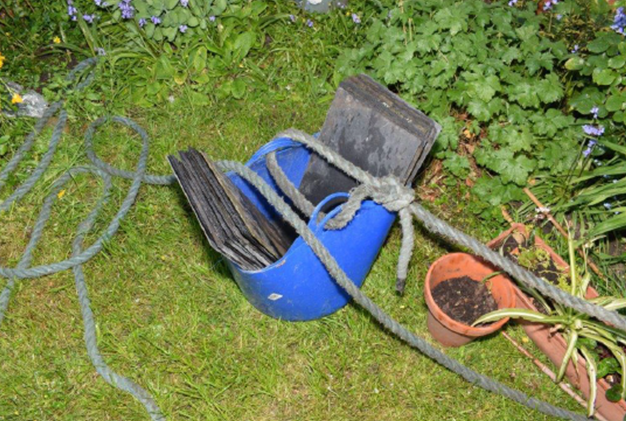
Image of unsuitable and untested lifting accessory

HSE guidance states that contractors must plan, manage and monitor construction work under their control to ensure risks to health and safety are controlled, with effort proportionate to the project’s size, complexity and risks involved. Further guidance can be found at HSE’s website: Managing health and safety in construction – Guidance on the Construction (Design and Management) Regulations 2015 – L153.

Axis Europe Limited, of Tramway Avenue, London, pleaded guilty to breaching regulation 13(1) of the Construction (Design and Management) Regulations 2015. The company was fined £640,000 and ordered to pay £4787.59 in costs and a £2000 victim surcharge at Highbury Corner Magistrates’ Court on 5 December 2025.

Premier Property and Construction Limited, of Kings Lodge, London Road, Sevenoaks, Kent – trading from Thames Industrial Park, Princess Margaret Road, East Tilbury, Essex – pleaded guilty to breaching regulation 15(2) of the Construction (Design and Management) Regulations 2015. The company was fined £160,000 and ordered to pay £4787.59 in costs and a £2000 victim surcharge at Highbury Corner Magistrates’ Court on 5 December 2025.

Following the hearing HSE inspector, Andrew Pipe, said: “Every year, a significant proportion of construction-related accidents, many of them serious and sometimes fatal, occur as a result of inadequately planned, managed or monitored work. This was a wholly avoidable incident. Had both companies taken appropriate measures to ensure workers’ health and safety, the life-changing injuries would not have occurred.”

“The fines imposed on Axis Europe Limited and Premier Property and Construction Limited should underline to everyone in the construction industry that the courts, and HSE, take failures to follow the regulations extremely seriously. HSE will not hesitate to take action against companies which do not do all that they should to keep people safe.”

This prosecution was brought by HSE enforcement lawyer Arfaq Nabi and paralegal officer Mellisa Wardle.

Notes to editors

  1. The Health and Safety Executive(HSE) is Britain’s national regulator for workplace health and safety. We are dedicated to protecting people and places, and helping everyone lead safer and healthier lives.
  2. More information about the legislation referred to in this case is available.
  3. Further details on the latest HSE news releases is available.
  4. Relevant guidance can be found here Managing health and safety in construction – Guidance on the Construction (Design and Management) Regulations 2015 – L153
  5. HSE does not pass sentences, set guidelines or collect any fines imposed. Relevant sentencing guidelines must be followed unless the court is satisfied that it would be contrary to the interests of justice to do so.  The sentencing guidelines for health and safety offences can be found here.