Packaging company fined after worker suffers life-changing head injuries

A manufacturer of paper packaging has been fined after a worker suffered a severe skull fracture and permanent injuries when a 4.5-ton machine fell on him.

Matthew King was working for Multi Packaging Solutions UK Limited at its East Kilbride site on 31 October 2023 when he was struck on the head whilst working underneath the machine.

The 39-year-old sustained a severe skull fracture, bruising to his head and nerve damage to the left side of his face. He has been left with permanent double vision, loss of peripheral vision, facial palsy and hearing loss. He is unable to drive and has required multiple surgeries and ongoing mental health support.

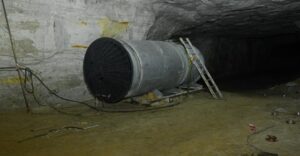
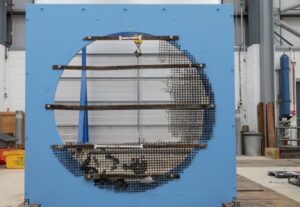
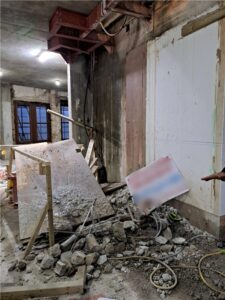
Mr King was part of a team relocating the machine from a warehouse to a storage area approximately 160 metres away. The machine, which weighed approximately 4.5 tons and measured 1.56 by 4.15 metres, had no lifting or anchoring points.

Image from scene

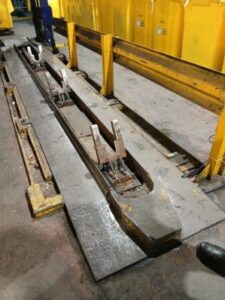
Workers had improvised a system involving lifting the machine with a forklift, placing skates underneath, and pulling it forward. The machine had already slid off the forks on at least two occasions before the incident.

At the time of the accident, Mr King was positioned underneath the suspended machine to secure a wheel on its underside when it slid from the forks and struck him on the head.

Image from scene

An investigation by the Health and Safety Executive (HSE) found that the lifting operation had not been properly planned by a competent person. The characteristics of the load, including its weight, size, centre of gravity and lifting points, had not been adequately assessed, and no safe system of work had been put in place.

Moving a machine of this size and weight was not a regular task at the site and there was no established system of work for it.

HSE guidance on planning and organising lifting operations  states that it is important to properly resource, plan and organise lifting operations so they are carried out in a safe manner.

Multi Packaging Solutions UK Limited of Phoenix Centre, 1 Westrock Millennium Way West, Nottingham, NG8 6AW pleaded guilty to breaching Regulation 8(1)(a) and (c) of the Lifting Operations and Lifting Equipment Regulations 1998. The company was fined £433,333 and ordered to pay a victim surcharge of £32,500 at Hamilton Sheriff Court on 20 January 2026.

Image from scene

HSE inspector, Ingrid Grueso, said: “This incident was entirely preventable. The company failed to properly plan the lifting operation or implement a safe system of work.

“Mr King has been left with life-changing injuries including permanent damage to his eyesight, hearing and facial movement. He has had to sell his car as he can no longer drive safely and now relies on his wife to transport him and their three children.

“Employers must ensure that lifting operations are properly planned by a competent person and carried out safely. This is especially important for non-routine tasks involving heavy or awkward loads.”

Further Information

  1. The Health and Safety Executive (HSE) is Britain’s national regulator for workplace health and safety. We are dedicated to protecting people and places, and helping everyone lead safer and healthier lives.
  2. More information about the legislation referred to in this case is available.
  3. Further details on the latest HSE news releases is available.
  4. Relevant guidance can be found here Planning and organising lifting operations – HSE
  5. HSE does not pass sentences, set guidelines or collect any fines imposed.


Derbyshire Police prosecuted for failing to protect officers

Derbyshire Police has been fined £60,000 after several of its officers were injured when a riot training exercise went wrong.

Four serving police officers suffered burns after petrol bombs were thrown at them during the simulated exercise at a training facility in Rotherham on 2 February 2021.

An investigation into the incident by the Health and Safety Executive (HSE) found that the officers had been exposed to significant and avoidable risks during the exercise.

A burnt item of PPE being worn by officers at the time

Officers wearing flame-retardant personal protective equipment (PPE) had been required to face petrol bombs thrown by other officers as part of a training drill intended to replicate a public disorder situation.

However, it resulted in four of the 13 officers taking part sustaining burns to their lower bodies, three of whom required hospital treatment. All four have since returned to work, but the incident resulted in permanent scarring, and psychological harm which will have a lasting effect.

One of the petrol bombs used during the training exercise

The HSE investigation found that Derbyshire Constabulary had failed to properly plan and risk assess the exercise. Key failings included:

  • Failing to give officers adequate information on the lifespan, care, and inspection of the flame retardant PPE to ensure it provided adequate protection.
  • Failing to carry out a suitable and sufficient risk assessment for both the production and deployment of petrol bombs during the training.
  • Failing to implement safe systems of work to control the foreseeable risks created in the course of petrol reception training.

Derbyshire Constabulary of Butterley Hall, Ripley, Derby, pleaded guilty to breaching Section 2(1) of The Health and Safety at Work etc. Act 1974. They were fined £60,000 and ordered to pay £9,470 in costs at Sheffield Magistrates Court on 19 January 2026

After the hearing, HSE Inspector Jennifer Elsegood, said: “Being a serving police officer is a job that carries with it levels of risk, however while preparing officers for dangerous situations is important, it must never come at the expense of their safety.

“High‑risk training activities must be planned and controlled with the same care and professionalism expected in any other workplace.

“The risks created by the training should have been identified as part of the Constabulary’s risk assessments and appropriately controlled.

“We hope this case reinforces the importance of thorough risk assessment, robust equipment assurance, and safeguarding those who put themselves forward to protect the public.”

This HSE prosecution was brought by senior enforcement lawyer Robert James and paralegal officer Rebecca Withell.


Further information:

  1. The Health and Safety Executive (HSE) is Britain’s national regulator for workplace health and safety. We are dedicated to protecting people and places, and helping everyone lead safer and healthier lives.
  2. More information about the legislation referred to in this case is available.
  3. Further details on the latest HSE news releases is available.
  4. HSE does not pass sentences, set guidelines or collect any fines imposed. Relevant sentencing guidelines must be followed unless the court is satisfied that it would be contrary to the interests of justice to do so.  The sentencing guidelines for health and safety offences can be found here.


NHS Trust fined after it failed to manage hand-arm vibration risks

  • NHS Trust fined £40,000 after several employees developed serious and irreversible hand-arm vibration-related conditions.
  • The court heard how failures to assess and control vibration exposure left staff at risk of lifelong ill health.
  • One long-serving employee described losing her career, independence and financial security as a result.

An NHS Trust has been fined £40,000 after several employees were diagnosed with Hand Arm Vibration Syndrome (HAVS) and Carpal Tunnel Syndrome (CTS), following prolonged exposure to vibration from work equipment.

The Health and Safety Executive (HSE) began an investigation into Chesterfield Royal Hospital NHS Foundation Trust after an employee was diagnosed with HAVS – a serious, lifelong condition characterised by persistent numbness and tingling in the fingers, reduced sensory perception and impaired manual dexterity.

The investigation found the Trust failed to carry out a suitable and sufficient assessment of the risks posed by the use of vibrating tools. There were no records to demonstrate the level of vibration exposure employees faced, and the Trust also failed to eliminate exposure or reduce it to as low as reasonably practicable.

also, It became clear that employees had not been provided with suitable and sufficient information, instruction or training about the risks associated with vibration exposure.

HSE also identified that the Trust had failed to report that two other employees had been diagnosed with HAVS and that one employee had been diagnosed with Carpal Tunnel Syndrome (CTS).

Sally Elliott worked in the plaster-cast department for more than 25 years

One affected employee, Sally Elliott, who worked in the plaster-cast department for more than 25 years, described how she was never warned about the risks of vibration exposure.

“I never, for one minute, suspected that the issues I was experiencing were being caused by the tools I used in my workplace,” she said.

“I was never given any information on the risks of HAVS and I knew nothing about the potential symptoms.”

She went on to explain how her symptoms gradually worsened, affecting both her work and everyday life:

“Every aspect of daily life is impacted due to the numbness, weakness, pins-and-needles in my fingers and hands. From getting up to going to bed anything that I need to do with my hands is affected.”

After being diagnosed with advanced stage 3 vascular and sensorineural HAVS, she was no longer able to continue in her role and has remained off work since October 2023.

“I gave my all to Chesterfield Royal Hospital and enjoyed my job,” she added.

“I took seriously my duty of care to patients, and I feel the Trust failed in their duty of care to me. I feel let down and I am suffering the consequences through no fault of my own.”

The HSE investigation concluded that Chesterfield Royal Hospital NHS Foundation Trust failed to properly assess the risks associated with hand-arm vibration and failed to adequately control employees’ exposure.

HSE guidance clearly sets out the measures employers must take to assess and control vibration risks. Exposure should be eliminated where reasonably practicable or otherwise reduced to as low as reasonably practicable. Further guidance is available on the HSE website found here: Hand arm vibration – Control the risks

Chesterfield Royal Hospital NHS Foundation Trust, of Chesterfield Road, Calow, Chesterfield, Derbyshire, pleaded guilty to breaching Section 2(1) of the Health and Safety at Work etc. Act 1974. The Trust was fined £40,000 and ordered to pay full prosecution costs of £4,911 at Chesterfield Magistrates’ Court on 12 January 2026

HSE Inspector Muir Finlay said: “The fine imposed on the Trust should underline to all employers that expose their workers to vibration that the courts and HSE take failures to follow the regulations extremely seriously.

“HSE will not hesitate to take action against those that do not do all that they should to keep people safe and healthy at work.”

The HSE prosecution was brought by HSE enforcement lawyer Samantha Crockett and paralegal officer Stephen Grabe.


Further information

  1. The Health and Safety Executive (HSE) is Britain’s national regulator for workplace health and safety. We are dedicated to protecting people and places, and helping everyone lead safer and healthier lives.
  2. More information about the legislation referred to in this case is available.
  3. Further details on the latest HSE news releases is available.
  4. Relevant guidance can be found here.
  5. HSE does not pass sentences, set guidelines or collect any fines imposed. Relevant sentencing guidelines must be followed unless the court is satisfied that it would be contrary to the interests of justice to do so.  The sentencing guidelines for health and safety offences can be found here.


Bristol landlord fined after member of the public falls from staircase

• Bristol landlord fined under Health and Safety at Work act
• Member of the public fell from a staircase which was found to have fundamental flaws in design
• HSE investigation found lack the staircase was not fit for purpose

A Bristol landlord has been fined after a member of the public sustained significant injuries when they fell from the first-floor landing of an external wooden staircase at a converted property in Bishopston.

Roger Blessitt of Dyers Lane, Iron Acton, was fined £20,000 following an investigation by the Health and Safety Executive (HSE).

The incident happened in the early hours of 2 October 2023, when a group attended Unit 4 Merton Road for a social event hosted by one of Mr Blessitt’s tenants. A 28-year-old man stepped outside and fell when a section of the wooden handrail failed as he leant against it. He fell from a height of around 11 feet, landing on the concrete-paved surface at ground level, and sustained significant injuries, including to the head.

The HSE investigation found fundamental flaws in the design of the staircase, including that it was notably rotten, deteriorated and weakened. The investigation also found a distinct lack of inspection and maintenance, determining that the staircase was not fit for purpose.

Image of staircase
Image of staircase

Roger Blessitt of Dyers Lane, Iron Acton, pleaded guilty to breaching Section 3(2) of the Health and Safety at Work etc. Act 1974. He was fined £20,000 and ordered to pay costs of £4,522at Bristol Magistrates Court on 13 January 2026.

HSE Inspector Emma Preston said: “Well-designed staircases, built to standard and properly maintained, play a crucial role in keeping people safe.
“While seeming lower risk, poorly maintained staircases can turn everyday use into a serious hazard. Routine inspections and maintenance are essential to prevent avoidable injuries.
“In this incident, defects to the staircase would have been readily identified and repaired if an effective inspection and maintenance regime had been in place.
“On behalf of the Health and Safety Executive, I would like to wish the injured person well in his continued recovery.”

Further information

  1. The Health and Safety Executive (HSE) is Britain’s national regulator for workplace health and safety. We are dedicated to protecting people and places, and helping everyone lead safer and healthier lives.
  2. More information about the legislation referred to in this case is available.
  3. Further details on the latest HSE news releases is available.
  4. Relevant guidance can be found here **Managing for health and safety (HSG65) – HSE**.
  5. HSE does not pass sentences, set guidelines or collect any fines imposed. Relevant sentencing guidelines must be followed unless the court is satisfied that it would be contrary to the interests of justice to do so.  The sentencing guidelines for health and safety offences can be found here.


Health and Safety Executive inspecting chiropractors to assess radiation compliance

  • HSE inspecting compliance under Ionising Radiations Regulations 2017. 
  • Regulator launches video explaining inspection guidance. 
  • Inspections taking place across Great Britain. 

The Health and Safety Executive (HSE) is conducting an inspection campaign targeting chiropractors who use radiation generators.  

The regulator’s inspections will assess dutyholders’ compliance with the Ionising Radiations Regulations 2017 (IRR17), which protect employees and other persons from occupational radiation exposure.  

To help dutyholders understand the requirements of an inspection, the HSE has created an online video outlining the expectations of the visit and the areas inspectors will be assessing compliance on, including: 

  • management of radiation protection 
  • radiation risk assessment 
  • engineering controls and maintenance 
  • contingency plans 
  • training records 
  • designation and monitoring of controlled areas 
  • local rules and radiation protection supervisors 
  • personal dosimetry 

All employers with staff operating radiation generators must register with HSE through the online RADAN system. 

Duncan Smith, Head of the Health and Safety Executive’s Health Unit, said: “The use of radiology and radiography by chiropractors, means that medical ionising radiation is employed widely across the industry. To ensure the safety of staff and members of the public we will be conducting inspections throughout January until the end of March. 

“Our inspections will examine construction, warning devices, safety features and any mobile shielding used. Employers should prepare relevant records, Radiation Protection Adviser reports, critical examination reports and training certificates for review, while operators may be asked to demonstrate equipment and warning systems. 

“We understand that many dutyholders will not have received a visit from HSE before, so to help explain the process we have created a new video explaining our expectations and the employer’s obligations.” 

HSE’s video on what to expect from an inspection:

Ahead of an inspection HSE inspectors will contact registered employers in advance to arrange a mutually convenient inspection time and to provide documentation ahead of the visit. This ensures the radiation responsible person is present, equipment is available for inspection, and disruption to services is minimised and inspectors have had the chance to review documents before arriving on site. 

Following an inspection, HSE will provide a summary of compliance standards found, any material breaches identified, and whether enforcement action will be taken. Where material breaches of the law are identified, HSE has a range of proportionate enforcement options available, from verbal advice through to prosecution. 

The Approved Code of Practice and guidance for working with ionising radiation is freely available for dutyholders on HSE’s website.

Notes to editors: 

  • The Health and Safety Executive (HSE) is Britain’s national regulator for workplace health and safety. We are dedicated to protecting people and places, and helping everyone lead safer and healthier lives.
  • On 1 January 2018, Ionising Radiation Regulations 2017 (IRR17) came into force and replaced Regulations IRR99.   
  • These regulations are concerned the ensuring the safety of staff and members of the public. The safety of patients has separate regulations regarding their safety.