Fines for company and operations manager after death from 20-foot fall

  • Man fell through fragile roof in Dudley
  • Company, now in liquidation, does not escape criminal sanction
  • Detailed guidance on both working on fragile surfaces and working at height is available from HSE.

A company and its operations manager have both been fined after a man fell to his death through a roof at its site in Dudley.

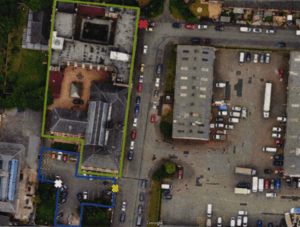
Maciej Rozanski, who was 42, had been working to remove a redundant steel cleaning machine from the company’s Sovereign Works site on Deepdale Lane, on 29 June 2018. However, during the work, Mr Rozanski stepped onto a fragile roof and fell more than 20 feet to the floor below. He suffered serious injuries and was pronounced dead at the scene.

Maciej Rozanski, who was 42, had been working to remove a redundant steel cleaning machine from the company’s Sovereign Works site on Deepdale Lane in Dudley

Surface Technik (Old Hill) Limited, which is now in liquidation, was found guilty following a trial earlier this week, while Robert Hammond had already entered a guilty plea, but disputed he was responsible for health and safety at the site. This prosecution was brought following an investigation by the Health and Safety Executive (HSE).

The HSE investigation found that the company began the work to remove the machinery in December 2017 and that project was led by Robert Hammond. The steel cleaning machine was housed in a corrugated steel tower on the side of the main production building which required partial dismantling in order to remove the machine. On the day of the incident, Mr Rozanski and another employee were tasked with the dismantling works. Once at the top of the tower they used an angle grinder to remove bolts holding the corrugated steel plates in place. It was during this activity that Mr Rozanski fell to his death.

Mr Rozanski stepped onto a fragile roof and fell more than 20 feet to the floor below

There was no suitable and sufficient risk assessment made for the work at height activities.  The work to remove corrugated steel sheets from the disused tower was carried out at height, near to a fragile roof surface without suitable access equipment or safe working practices.  The work was not properly organised, planned, appropriately supervised or carried out in a safe manner and the employees were not trained for working at height when the incident occurred.

Surface Technik (Old Hill) Limited formerly of Deepdale Lane, Dudley was found guilty by a jury of a breach of Section 2 (1) of the Health and Safety at Work etc. Act 1974 and have been fined £90,000 and ordered to pay costs of £28,956 at a hearing at Wolverhampton Magistrates Court on 21 March 2025.

Robert Hammond of Sutton Coldfield accepted that he did not take reasonable care for the health and safety of both employees when he pleaded guilty to breaching Section 7 of the Health and Safety at Work etc. Act 1974. Mr Hammond was fined £8,500 and pay the same amount in costs.

Speaking after the hearing, HSE inspector Sarah Smewin said “Working from height remains a leading cause of workplace death and injury.

“This case highlights the risks of working at height from or near to fragile roof surfaces and the importance of a risk assessment, proper planning, training and supervision of work at height and the use of suitable access equipment to ensure that the work can be carried out safely.

“It also demonstrates that placing a company into liquidation is no bar to prosecution.”

This HSE prosecution was brought by HSE enforcement lawyer Andrew Siddall and paralegal officer Gabrielle O’Sullivan.


Notes to Editors:

  1. The Health and Safety Executive (HSE) is Britain’s national regulator for workplace health and safety. We are dedicated to protecting people and places, and helping everyone lead safer and healthier lives.
  2. More information about the legislation referred to in this case is available.
  3. Further details on the latest HSE news releases is available.
  4. Relevant guidance can be found here Work at height – HSE; Fragile surfaces – HSE
  5. HSE does not pass sentences, set guidelines or collect any fines imposed. Relevant sentencing guidelines must be followed unless the court is satisfied that it would be contrary to the interests of justice to do so.  The sentencing guidelines for health and safety offences can be found here.
  6. HSE will always carefully consider any insolvency process and weigh that against the public interest of prosecuting a company that breaks the law.
  7. If necessary, we will take steps to prevent a company from being dissolved whilst criminal proceedings are ongoing.


Council fined following carbon monoxide leak at primary school

A Scottish local authority has been fined more than £13,000 after a carbon monoxide leak at a primary school in Bishopbriggs.

East Dunbartonshire Council pleaded guilty following the incident at Balmuildy Primary School in February 2020.  A number of staff and pupils attending the school on 19 February 2020 reported feeling ill, experiencing symptoms such as headaches and nausea. Throughout the day, several pupils were sent home and staff had to take medication to relieve symptoms. The following day, testing for a gas leak revealed high levels of carbon monoxide present in areas of the school. The building was immediately evacuated.

An investigation by the Health and Safety Executive (HSE), in conjunction with Gas Safe Register investigators, found that one of the two auxiliary gas boilers present at the site was leaking carbon monoxide into the boiler room and the school buildings. The investigation found this was due to a lack of maintenance.

Had the faults with the boiler been found prior to the incident through the required routine maintenance, it would have been classed as immediately dangerous in line with the Gas Industry Unsafe Situations Procedure (GUSP). This would have necessitated the disconnection of the gas boiler until the boiler was repaired for further use.

HSE provides free guidance to dutyholders: Safety in the installation and use of gas systems and appliances. The guidance states that effective maintenance of appliances usually involves an ongoing programme of regular/periodic inspections, together with any necessary remedial work.

In the absence of specific manufacturers’ instructions, effective maintenance should include as a minimum:

  • examination of the physical condition and safe functioning of appliance(s);
  • installation pipework;
  • ventilation and any flue for deterioration;
  • carrying out performance tests; and
  • taking the necessary remedial action.

East Dunbartonshire Council of Strathkelvin Place, Kirkintilloch, pleaded guilty to breaching Regulation 35 of the Gas Safety (Installation and Use) Regulations 1998. The council was fined £13,333 plus a victim surcharge of £999.98 at Glasgow Sheriff Court on 20 March 2025.

Speaking after the hearing, HSE inspector Stuart Easson, said: “This is the second time in five years that East Dunbartonshire Council have been handed a significant fine for failing to protect employees and children at a primary school under their control.”

“Although nobody suffered any serious adverse effects during this incident, we hope that this prosecution demonstrates that HSE will not hesitate to take action and that failures of this nature are simple not acceptable.”


Further information:

  1. The Health and Safety Executive (HSE) is Britain’s national regulator for workplace health and safety. We are dedicated to protecting people and places, and helping everyone lead safer and healthier lives.
  2. More information about the legislation referred to in this case is available.
  3. Further details on the latest HSE news releases is available.
  4. Relevant guidance can be found here: Safety in the installation and use of gas systems and appliances.
  5. HSE does not pass sentences, set guidelines or collect any fines imposed. Relevant sentencing guidelines must be followed unless the court is satisfied that it would be contrary to the interests of justice to do so.  The sentencing guidelines for health and safety offences can be found here.


Property developer fined for multiple construction site failures

A London property developer has been fined £63,000 plus costs after Britain’s workplace regulator found multiple failures at a construction site in Dalston.

Nofax Enterprises Limited was investigated by the Health and Safety Executive (HSE) following four visits to its site on Dalston Lane over a 13 month period between 2020 and 2021. The company was overseeing the construction of a four storey building on the site, containing nine flats and large basement to house a youth club.

Nofax Enterprises were served with nine enforcement notices for a catalogue of failures

However, the failures identified by HSE inspectors – including multiple working at height risks, poor fire precautions and exposure to large amounts of silica dust – were so serious, that they resulted in the site being closed down on two separate occasions. Other breaches of the law included failing to protect workers from exposure to wood dust, as well as insufficient covid and welfare controls.

  • Exposure to either wood or silica dust can result in very serious and life threatening health conditions, including asthma, nasal and lung cancers, chronic obstructive pulmonary disease and silicosis. HSE provides a range of guidance for stone workers and those working with wood.
Nofax Enterprises were served with nine enforcement notices for a catalogue of failures

In total, 9 enforcement notices were served against the company for the Dalston Lane site, including five prohibition notices. The subsequent HSE investigation included inspections at other sites operated by the company, identifying a poor health and safety culture and systemic management failings.

Owing to the repeated poor performance and lack of compliance to basic health and safety, Nofax Enterprises Limited, of Maldon, Essex pleaded guilty to breaches of sections 2(1) and 3(1) of the Health & Safety at Work etc. Act 1974. Following the hearing at Southwark Crown Court on 18th March 2025, the company was ordered to pay a total of £88,812.68 which included a fine of £63,000, costs of £25,622.

Nofax Enterprises were served with nine enforcement notices for a catalogue of failures

In summing up, the judge stated that despite repeated visits by HSE and multiple notices being served, risks subsisted over a long period and the company failed to make any appropriate changes. The judge concluded by saying that there had been a systemic failure within the organisation to manage health and safety.

After the hearing, HSE inspector Gordon Nixon said: “This company showed a total disregard to keeping its workers safe.

“They failed to meet even the most basic health and safety standards, continually exposing operatives to serious risks.

“HSE will not wait until workers are seriously injured, or worse and will take appropriate action including prosecutions when health and safety regulations are so blatantly flouted.”


Further information:

  1. The Health and Safety Executive (HSE) is Britain’s national regulator for workplace health and safety. We are dedicated to protecting people and places, and helping everyone lead safer and healthier lives.
  2. More information about the legislation referred to in this case is available.
  3. Further details on the latest HSE news releases is available.
  4. HSE does not pass sentences, set guidelines or collect any fines imposed. Relevant sentencing guidelines must be followed unless the court is satisfied that it would be contrary to the interests of justice to do so.  The sentencing guidelines for health and safety offences in England and Wales can be found here and for those in Scotland here.


Manufacturing firms reminded of their asbestos duties

Britain’s workplace regulator is reminding manufacturing firms of their asbestos duties. 

As we approach Global Asbestos Awareness Week (April 1 – 7), the Health and Safety Executive (HSE) is reminding those running businesses occupying buildings built before 2000 to properly assess, manage and monitor asbestos risks in line with the law. 

Older manufacturing facilities may house multiple asbestos containing materials (ACMs). Asbestos was widely used in buildings and in some equipment between 1950 and 1980; however, any building built or refurbished before 2000 could contain an ACM. 

Asbestos can be found in: pipe lagging, insulation board, asbestos cement products such as profiled roof sheets and wall panels, floor coverings and asbestos sprayed coatings. ACMs such as gaskets and rope seals can also be found within old plant and equipment such as industrial ovens and pipework. 

Asbestos exposures caused by poor planning and risk management can have substantial human costs for victims and their families. Asbestos-related diseases remain the highest cause of work-related deaths in Great Britain, these often fatal diseases, typically take decades for symptoms to occur following exposure.  

There is a legal duty to manage asbestos and failing to do so can result in penalties ranging from fines to prison sentences. The implications of an asbestos incident can also be far reaching in terms of reputation, staff morale, attracting new staff and overall costs.  

HSE data reveals there have been more than 100 asbestos-related prosecution cases brought in the past five years, relating to 150 breaches of the law. 

Make UK, supporting the manufacturing sector and businesses around the country is supporting HSE’s call. Chris Newson CFIOSH, Environment Health and Safety Director, said he was happy Make UK was fully behind the HSE’s “Asbestos – Your Duty” campaign. 

“The number of people affected each year by this deadly material within UK manufacturing is still far higher than it need be,” he said.  

“It is important that all dutyholders within our sector are aware of their duties and the excellent resources made freely available by HSE to help them meet their legal requirements.”  

The risks associated with asbestos-containing materials are well known and free advice and resources are available from the HSE’s website. 

As the regulator’s campaign continues, HSE Head of Manufacturing Sector, David Butter reminded those responsible that asbestos wasn’t just a problem of the past. 

“It can still be found in a wide variety of materials in factories and manufacturing premises,” they said.  

“Dutyholders must identify, assess and manage asbestos in their buildings to keep people safe.” 

There are six steps for how those responsible can comply with their legal duty: 

  1. Find out if asbestos could be present in your building. 
  1. Arrange an asbestos survey by a competent person or accredited surveyor. 
  1. Make a register and assess the risks from your asbestos. 
  1. Write your asbestos management plan. 
  1. Put your plan into action. 
  1. Continually monitor and communicate the plan. 

David went on to say: “Employers should not undertake any work with asbestos materials, which exposes their employees, unless the risks have been assessed and appropriate control measures have been implemented.  

“Some types of work associated with asbestos materials may only be undertaken by a suitably licensed asbestos contractor under stringent procedures. 

“As well as being a legal duty, it is simply common sense and good business to ensure rigorous managing and monitoring of asbestos.” 


Further information: 

 For further information on asbestos-related disease statistics visit: Asbestosis, mesothelioma, asbestos related lung cancer and non-malignant pleural disease in Great Britain 2024 


Hydraulics company fined after worker’s legs trapped in machine

A hydraulics company, with locations throughout the UK, has been fined after an employee became trapped in a machine that he was working on at a customer’s premises in Plymouth.

David Lawrence, a 63-year-old engineer, was undertaking fault finding on a laser cutting machine for Pearson Hydraulics Ltd, on 26 July 2023, when the cutting bed of the machine dropped and trapped both of his legs. After spending five weeks in hospital, Mr Lawrence had to have his right leg amputated above the knee. Despite extensive surgery to save his left leg, Mr Lawrence faces the possibility of having it amputated in the future.

David Lawrence suffered life-changing injuries when the machinery trapped both of his legs

An investigation by the Health and Safety Executive (HSE) found that Pearson Hydraulics Ltd did not have a safe system of work in place for maintenance activities  carried out by its engineers at its customer’s premises. It failed to carry out a suitable and sufficient risk assessment of the work to be undertaken by Mr Lawrence and there had been a total failure to monitor and supervise his work.  The investigation also identified that Mr Lawrence had not been adequately trained by his employer and that his knowledge of hydraulic systems on laser cutting machinery was inadequate, preventing him from carrying out the work safely.

HSE guidance stresses that it is important  these situations are properly assessed. Workers carrying out maintenance activities may need to undertake significant regular risk assessment (as the situation may develop and change in ways that could not be foreseen at the outset. Further information can be found here.

Pearson Hydraulics Ltd of Electric Avenue, Witham St Hughes, Lincoln pleaded guilty to breaching Section 2(1) of the Health and Safety at Work etc. Act 1974. The company was fined £96,333 and ordered to pay £10,701 in costs at Plymouth Magistrates’ Court on 13 March 2025.

HSE inspector Emma O’Hara said “This incident could so easily have been avoided with the correct risk assessment and implementation of a safe working procedure. Pearson Hydraulics Ltd left its employees to work out their own methods of completing fault finding and maintenance tasks, instead of providing them with suitable training and supervision so it could be done safely every time.”

This HSE prosecution was brought by HSE enforcement lawyer Andrew Siddall and paralegal officer Imogen Isaac with counsel Alan Fuller.


Further information:

  1. The Health and Safety Executive (HSE) is Britain’s national regulator for workplace health and safety. We are dedicated to protecting people and places, and helping everyone lead safer and healthier lives.
  2. More information about the legislation referred to in this case is available.
  3. Further details on the latest HSE news releases is available.
  4. HSE guidance about maintaining machinery is available.
  5. HSE does not pass sentences, set guidelines or collect any fines imposed. Relevant sentencing guidelines must be followed unless the court is satisfied that it would be contrary to the interests of justice to do so.  The sentencing guidelines for health and safety offences can be found here.