HSE launches workplace safety inspections for motor vehicle repair

The Health and Safety Executive (HSE) has launched 1,000 targeted inspections of motor vehicle repair businesses across Great Britain to tackle occupational asthma. Many skilled vehicle paint sprayers develop this life-changing and debilitating disease each year, forcing them to leave their profession permanently.

This inspection campaign will focus on workplaces that use isocyanate-containing paints and coatings – the leading cause of occupational asthma in the UK. Once asthma develops, even small amounts of isocyanate exposure can trigger severe attacks, making continued work in the industry impossible for affected workers.


Legal requirements under COSHH

The inspections will assess compliance with the Control of Substances Hazardous to Health (COSHH) Regulations. Under COSHH, employers must prevent or control worker exposure to isocyanates using effective control measures and safe working procedures. They must also verify these measures are working by arranging regular health surveillance and biological monitoring. Both are legally required for workers exposed to isocyanates.

Health surveillance is required when there is risk of inhalation exposure and skin contact during paint spraying activities. COSHH also requires that exposure is monitored using a suitable procedure. Biological monitoring (urine testing) is the most practicable and cost-effective method to assess exposure levels and ensure control measures are effective.


Protecting workers through health checks and testing

Health surveillance involves regular medical screening by competent occupational health professionals to detect early signs of health conditions like occupational asthma or dermatitis.

Biological monitoring involves laboratory analysis of samples taken from workers to detect chemical isocyanate exposure before health problems develop. This provides an early warning for employers to investigate and correct control failures. HSE recommends urine testing as the most practical and cost-effective method for measuring isocyanate exposure.

Kate Jones, HSE’s biological monitoring team lead, said: “Biological monitoring, a simple urine test, is a quick and cost-effective way to check that control measures are working and being used properly, giving sprayers, dutyholders and HSE confidence that spraying is being done safely.”

Isocyanate-containing materials, commonly known as two-pack (2k) paints, coatings and lacquers, are widely used for their durability and finish quality. However, when sprayed, these paints release invisible mist that spreads rapidly and can reach dangerous levels within minutes.


Three essential protection measures

Businesses must implement three critical safety measures during spray painting operations:

  1. Proper spray booth ventilation – Maintain spray booths or rooms with adequate extraction systems that create negative pressure. This prevents paint vapours escaping into workshop areas and contaminating the wider workplace.
  2. Correct respiratory protection equipment – Workers must use air-fed breathing apparatus certified to the appropriate standard. Filtering respirators do not provide enough protection against paint mist and vapours during spray operations. Breathing apparatus should ideally be full-visor type, but half-mask type with appropriate eye protection is acceptable with more frequent biological monitoring.
  3. Safe clearance procedures – Display measurable clearance times clearly for all workers to see. Workers must not remove respiratory protection until they are safely outside the spray area, or the required clearance time has fully elapsed.


Consequences of non-compliance

Businesses found to be breaching the COSHH Regulations may face improvement notices, prohibition notices, or prosecution leading to unlimited fines.

Motor vehicle repair businesses can access comprehensive information and materials through HSE’s campaign pages to ensure compliance and protect their skilled workforce from preventable occupational disease.


Building firm fined after employee killed by collapsing wall in Bath

  • Gary Anstey, 57, had just become a grandad
  • Inspector slams lack of planning that is “all too common”
  • HSE guidance on temporary structures is available

A building company has been fined after an employee was crushed to death when a 1.8m high retaining wall collapsed onto him.

Gary Anstey, 57, from Bristol, was working for H. Mealing & Sons Limited at a construction site at a school in Bath when the incident happened on 19 March 2019.

Gary James Anstey

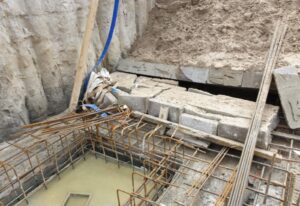
An investigation by the Health Safety Executive (HSE) found that H. Mealing & Sons Limited failed to properly plan and supervise the construction of the retaining wall at Swainswick School. This led to it becoming unstable when a large load of aggregate was placed against the incomplete wall which was not supported.

Collapsed wall

HSE guidance Temporary Works – HSE requires that any temporary structure must be designed and installed to withstand any loads placed against it and that it is used in accordance with its design. This includes ensuring appropriately trained operatives are provided with a suitable written design and plan to install to ensure the structure remains stable.

Aggregate at the construction site in Bath

In a victim personal statement, Gary’s wife Anne Anstey, said: “Gary’s workplace should have been a safe place to work – he should have come home as he always did – and now he hasn’t been here to celebrate all the family milestones and that is something that we as a family have to live with.”

She added: “Gary was 57 years old when he died. He was always full of life and he had recently become a grandad for the first time. He has missed Scarlett grow up into a funny loving girl and missed out on the celebration of Scott and his wife buying their first house, all the children starting school and many other milestones in our lives.”

  1. Mealing & Sons Limited of Northend, Batheaston, Bath pleaded guilty to breaching Section 2(1) of the Health and Safety at Work etc Act 1974. The company was fined £56,775 and ordered to pay £44,000 in costs at Taunton Magistrates’ Court on 11 September 2025.

HSE inspector Ian Whittles said: “This was a horrific incident which had heartbreaking consequences.

“It happened because of a lack of planning and coordination, which is all too common in construction activity. With simple clear procedures and appropriate training this incident would not have happened.”

Contributions to this statement were made by Gary’s wife, Anne along with their two sons Shaun and Scott.


Notes to Editors

  1. The Health and Safety Executive (HSE) is Britain’s national regulator for workplace health and safety. We are dedicated to protecting people and places, and helping everyone lead safer and healthier lives.
  2. More information about the legislation referred to in this case is available.
  3. Further details on the latest HSE news releases is available.
  4. Relevant guidance can be found here Temporary Works – HSE.
  5. HSE does not pass sentences, set guidelines or collect any fines imposed. Relevant sentencing guidelines must be followed unless the court is satisfied that it would be contrary to the interests of justice to do so.  The sentencing guidelines for health and safety offences can be found here.


Construction company fined after child injured by falling cast iron soil pipe

A construction company and its director have been fined after being found guilty of safety breaches that resulted in a five-year-old child being injured by a falling cast iron pipe.

Sage Homes Limited and its director were convicted on Monday 4 August 2025, at Southampton Crown Court, for failing to properly assess a foreseeable risk.

The incident occurred on 20 July 2021, during building work on an extension to a house in Totton – a few seconds’ walk from a local primary school. A cast iron pipe fell onto a passing child striking him on the head and fracturing his skull.

The base of the pipe had been broken away by the builder some days before to allow him to excavate into the concrete floor. When a TV cable was freed from the pipe, the top two sections of pipe, weighing over 45kg, fell across the pavement. The cast iron pipe was estimated to date from the 1930s, and both the pipe and the fixings were corroded.

The cast iron soil pipe

An investigation by the Health and Safety Executive (HSE) found that Sage Homes Limited and its director, Jason Scorey, had failed to properly assess what was a foreseeable risk. In giving evidence, Mr Scorey insisted that he could see no need to secure the pipe against the wall.

HSE provides a range of guidance advice: Managing risks and risk assessment at work: Overview – HSE

On 12 September 2025, at Southampton Crown Court, Sage Homes Limited and Jason Scorey were sentenced for breaches of Section 3(1) and Section 37 of the Health and Safety at Work etc. Act 1974, respectively. Mr Scorey received a fine of £1,685, with 45 days’ imprisonment in default, and was ordered to pay costs of £10,436. Sage Homes Limited was fined £15,000. Both Mr Scorey and Sage Homes Limited were also ordered to pay a victim surcharge.

After the hearing, HSE inspector Alexander Ashen said: “Properly assessing risk to workers and members of the public is a vital part of any construction project.

“It would have been a simple and inexpensive task to secure the pipe once it had been broken out at its base. The fact that the construction work was being carried out yards from a school gate at the time parents were collecting their children should have prompted even more care on the part of the duty holder.

“This case should underline to everyone in the building trade that the courts, and HSE, take a failure to follow the regulations extremely seriously. HSE will not hesitate to take action against companies and their directors which do not do all that they should to keep people safe.”

This HSE prosecution was brought by HSE enforcement lawyer Rebecca Schwartz and paralegal officer, Melissa Wardle.


Further information

  1. The Health and Safety Executive (HSE) is Britain’s national regulator for workplace health and safety. We are dedicated to protecting people and places, and helping everyone lead safer and healthier lives.
  2. More information about the legislation referred to in this case is available.
  3. Further details on the latest HSE news releases is available.
  4. HSE does not pass sentences, set guidelines or collect any fines imposed. Relevant sentencing guidelines must be followed unless the court is satisfied that it would be contrary to the interests of justice to do so.  The sentencing guidelines for health and safety offences can be found here.



Company fined after worker run over by forklift truck

Qube Containers Limited, which operates on Ipswich docks, has been fined £30,000 after an employee was run over and dragged by a forklift causing serious injuries to his ankle.

The Health and Safety Executive (HSE) brought the prosecution following its investigation of the incident involving Harvey Addison, from Ipswich, on 11 December 2023.

Mr Addison was unloading cars from shipping containers at the company’s site in Ipswich. Working with the driver of the forklift truck to empty two small bins, filled with waste packaging, including ratchet straps and chocks, into a larger commercial waste bin.

The two tipping bins had been positioned on a pallet, which was being carried on the forks of the forklift truck.

The forklift truck involved in the incident with two bins on a pallet

The 21-year-old was standing on the pallet and as the forklift truck moved some of the straps fell from the full waste bins, trailing on the floor and getting caught in the wheels of the lift truck. One of these straps got caught on his foot pulling him to the ground and the forklift truck drove over his foot.

Mr Addison remained in hospital for nine days, requiring skin grafts on the outside of his left calf and behind his left thigh just above his knee. He also sustained a broken ankle.

An investigation by HSE identified that Qube Containers Limited failed to provide equipment that was safe and suitable for the task and failed to risk assess the system of work for emptying the bins – which was found to be unsafe.

In addition, the traffic routes were not organised in a safe manner, and it was clear from the work practices on site that vehicles and pedestrians circulated in close proximity.

Qube Containers Limited of Forbes Business Centre, Kempson Way, Bury St Edmunds, Suffolk, pleaded guilty to breaching Section 2(1) of the Health and Safety at Work etc Act 1974. They were fined £30,000 and ordered to pay £3,752 in costs at Norwich Magistrate’s Court on 12 September 2025.

HSE Inspector Adepeju Sogadgi said: “This injury could easily have been prevented. Employers introducing new processes should make sure they assess the work activity sufficiently and apply effective control measures to minimise the risk. There should be systems in place to ensure safety and the risk should have been considered and documented.”

This HSE prosecution was brought by HSE enforcement lawyer Julian White and paralegal officer Hannah Snelling.


Further information

  1. The Health and Safety Executive (HSE) is Britain’s national regulator for workplace health and safety. We are dedicated to protecting people and places, and helping everyone lead safer and healthier lives.
  2. More information about the legislation referred to in this case is available.
  3. Further details on the latest HSE news releases is available.
  4. Relevant guidance can be found at Workplace transport – HSE.
  5. HSE does not pass sentences, set guidelines or collect any fines imposed. Relevant sentencing guidelines must be followed unless the court is satisfied that it would be contrary to the interests of justice to do so.  The sentencing guidelines for health and safety offences can be found here.



Fine for companies following failures at high-containment facility

Fine for companies following failures at high-containment facility

  • Lab located on industrial estate next to gym and bakery.
  • One company deliberately ignored legal requirements for its own gain.
  • HSE guidance on high hazard infectious agents is available.

A second company has been fined after an investigation by the Health and Safety Executive (HSE) into high-hazard infectious agents.

Lab 21 Healthcare Ltd, a clinical diagnostics company that operated a high-containment laboratory at Millwey Rise Industrial Estate in Axminster, was fined £52,000. It followed similar action taken against the Devon site’s previous operator Omega Diagnostics Ltd, after that company was fined £35,000 in May of this year.

Both companies carried out work with high hazard infectious organisms such as Salmonella typhi – which can cause typhoid fever – without providing legally required advanced notification to the HSE. Typhoid fever is known to cause potentially severe disease and can spread to the community.

The regulations for working with high hazard infectious agents are some of the tightest in the world.

The laboratory was located on Millwey Rise Industrial Estate in Axminster but closed in 2019

HSE specialist inspector Mark Cuff inspected the site in April 2019 and an investigation was subsequently carried out which identified failures he described as “both foreseeable and readily avoidable”.

Those failures included key safety equipment not being adequately maintained or tested frequently enough to confirm they were working properly and safely, while the poor condition of the laboratory was such, that safe and effective disinfection was not possible.

These failures substantially increased the risk of exposure to not only those working in the lab, but to the wider public. As well as Salmonella typhi, other risks included exposure to the highly toxic formaldehyde gas, which was used for disinfecting the laboratory. This was particularly significant as the laboratory was situated on an industrial estate with a gym and bakery close by.

Besides being aware of falling short of the legal requirements, Lab 21 Healthcare Limited continued the high-hazard work over a period of about seven months, before belatedly making HSE aware, ceasing its operations, and initiating actions to remedy its shortcomings.

Failures included key safety equipment not being adequately maintained or tested frequently enough

HSE guidance states that employers must notify work with high hazard infectious agents and take steps to adequately control exposure to hazardous infectious agents. The notification requirements and stringent control measures for high-containment laboratories are clearly defined within The Control of Substances Hazardous to Health Regulations (COSHH) 2002 (as amended). For example, the laboratory needs to be sealable for fumigation and safety critical plant and equipment (e.g., ventilation) needs to be regularly maintained and tested (COSHH 2002, Approved Code of Practice and Guidance).

Lab21 Healthcare Ltd, of York House School Lane, Chandler’s Ford, Eastleigh, pleaded guilty to breaching Regulation 7(10) Schedule 3 as well as Regulation 9(1) and 9(2) of COSHH 2002 (as amended). Lab 21 Healthcare Ltd. was fined £52,000 and ordered to pay £26,000 in costs at Exeter Crown Court on 11 September 2025.

Omega Diagnostics Ltd (the previous operator), c/o Shepherd & Wedderburn LLP, of 9 Haymarket Square, Edinburgh was also prosecuted under the same charges to which it pleaded guilty. The company stopped work following identifying the failure to notify its work with high hazard infectious agents. The company was fined £35,000 and ordered to pay £26,887 in costs at Exeter Magistrates Court on 22 May 2025.

HSE specialist microbiology inspector Mark Cuff said: “What is stark about this case is that it was not one but two companies that failed to notify HSE of their work with high hazard pathogens.

“Not only did both fail to notify HSE, they also failed to ensure that key plant and equipment on which the safety of the work relied was maintained properly.

“The circumstances were both foreseeable and readily avoidable had appropriate control measures been implemented and HSE made aware of the work.

“In the case of Lab 21 Healthcare Ltd, the company was not only aware of the relevant legal requirements, and its shortfall in meeting them, but also chose to ignore them over an extended period; the motivations for which were both – commercially driven and the avoidance of regulatory scrutiny.”

“Although there was no release from the facility or actual harm, the likely public expectation in such circumstances is that the companies should be held accountable. “

The laboratory was subsequently closed in 2019.

This HSE prosecution was brought by barrister Sam Jones, HSE enforcement lawyer Samantha Wells and paralegal officer Gabrielle O’Sullivan.


Notes to Editors

  1. The Health and Safety Executive (HSE) is Britain’s national regulator for workplace health and safety. We are dedicated to protecting people and places, and helping everyone lead safer and healthier lives.
  2. More information about the legislation referred to in this case is available.
  3. Further details on the latest HSE news releases is available.
  4. Relevant guidance can be found here – COSHH 2002, Approved Code of Practice and Guidance).
  5. HSE does not pass sentences, set guidelines or collect any fines imposed. Relevant sentencing guidelines must be followed unless the court is satisfied that it would be contrary to the interests of justice to do so.  The sentencing guidelines for health and safety offences can be found here.
  6. Proceedings are ongoing against three directors of Lab 21 Healthcare Ltd.. The three directors indicated a not guilty plea to charges under Section 37 of Health and Safety at Work ect. Act 1974 relating to their culpability in the company’s breaches of COSHH 7(1), 7(10) Sch 3. The trial has been set at Exeter Crown Court for September 2026.