Animal feed manufacturer fined £500,000 after worker seriously injured

  • Worker sustained serious injuries when his foot was trapped in machinery.
  • Company had failed to prevent access to dangerous parts.
  • HSE guidance is available.

A Yorkshire animal feed manufacturer has been fined £500,000 after a worker lost part of his foot when it was entangled in machinery.

William Thompson (York) Limited pleaded guilty after failing to prevent access to a rotating auger – a tool consisting of a central shaft with a blade wrapped around it – which is designed to transport excess feed away from a press.

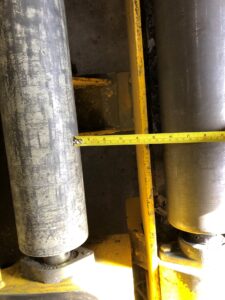
The pressing machine at the factory

The 41-year-old had been working as a supervisor at the company’s Jubilee Mill site in York on 14 November 2023. At the time of the incident, the man had been trying to resolve a maintenance issue with the machinery. However, he was able to open the press while its parts remained in operation at significant speed. His foot became entangled in the rotating auger and he sustained injuries so serious he remained in hospital for a period of six weeks.

An investigation by the Health and Safety Executive (HSE) found that William Thompson (York) Limited failed to prevent access to dangerous parts of the machinery and also to carry out a suitable risk assessment of the work being done.

A CCTV still shows only two bars of guarding above the auger – this allowed the worker’s foot to slip through to the blade below

HSE guidance states employers must take effective measures to prevent access to dangerous parts of machinery. This will normally be by fixed guarding but where routine access is needed, interlocked guards may be needed to stop the movement of dangerous parts before a person can reach the danger zone. Further guidance can be found here: Provision and Use of Work Equipment Regulations 1998 (PUWER) – HSE.

William Thompson (York) Limited, of Main Street, Malton, North Yorkshire, pleaded guilty to breaching Section 2(1) of the Health and Safety at Work Act etc 1974. The company was fined £500,000 and ordered to pay £4,455 in costs at York Magistrates court on 18 November 2025.

HSE Inspector Shauna Halstead said: “This company’s failures resulted in a man sustaining life-changing injuries.

“Too many workers are injured or killed every year because of failures to guard dangerous parts of machinery.

“Companies must implement safe working practices when carrying out maintenance operations.

“We will not hesitate to take action against companies which do not do all they should to keep people safe when working with machinery.

This HSE prosecution was brought by HSE enforcement lawyer Arfaq Nabi and paralegal officer Sarah Thomas.

Further information:

  1. The Health and Safety Executive (HSE) is Britain’s national regulator for workplace health and safety. We are dedicated to protecting people and places, and helping everyone lead safer and healthier lives.
  2. More information about the legislation referred to in this case is available.
  3. Further details on the latest HSE news releases is available.
  4. Relevant guidance can be found here Provision and Use of Work Equipment Regulations 1998 (PUWER) – HSE
  5. HSE does not pass sentences, set guidelines or collect any fines imposed. Relevant sentencing guidelines must be followed unless the court is satisfied that it would be contrary to the interests of justice to do so.  The sentencing guidelines for health and safety offences can be found here.


HSE publishes annual workplace health and safety statistics

The Health and Safety Executive (HSE) has today (Thursday 20 November) published its annual statistics on work-related ill health and workplace injuries for 2024/25.

The figures show that an estimated 1.9 million workers suffered from work-related ill health during 2024/25, remaining broadly consistent with the levels seen in recent years.

While the recent rates of self-reported work-related ill health are similar, they continue to be higher than pre-pandemic levels recorded in 2018/19.

Mental health conditions remain the primary driver of work-related ill health, with 964,000 workers reporting stress, depression or anxiety caused or made worse by work in 2024/25. This is in line with the upward trend in recent years.

Work-related ill health and injuries resulted in an estimated 40.1 million working days lost in 2024/25, continuing to place significant pressure on both workers and businesses.

HSE Chief Executive Sarah Albon said: “Great Britain maintains its position as one of the safest places to work globally, built on more than 50 years of health and safety regulation. However, these statistics demonstrate that workplace health challenges persist, particularly around mental health.

“We remain firmly committed to protecting people and places, supporting businesses to create healthier working environments, and ensuring continuous improvement in workplace safety standards across Britain.”

The statistics also highlight the economic impact of workplace health and safety issues. In 2023/24, the estimated annual cost of workplace injuries and new cases of work-related ill health reached £22.9 billion, similar to the estimate for 2022/23.

Fatal and non-fatal workplace injuries in 2024/25 totalled 124 worker fatalities and an estimated 680,000 self-reported non-fatal injuries.

Notes to editors:

  1. The Health and Safety Executive (HSE) is Britain’s national regulator for workplace health and safety. We are dedicated to protecting people and places, and helping everyone lead safer and healthier lives.
  2. Details on HSE’s work-related mental health campaign, Working Minds, can be found here Working Minds – Work Right
  3. Details on HSE’s new 10-year strategy can be found here HSE strategy 2022 to 2032 – About us – HSE.
  4. HSE’s annual statistics on work-related ill health and workplace injuries for 2024/25 can be found here – Health and safety statistics – HSE
  5. The annual costs are based on three-year rolling average, with the named year based on the middle year of the three, for example 2022/23, 2023/24, 2024/25 average is referred to as 2023/24.


Manufacturing company fined £600k after fatal workplace incident

  • Employee died after being trapped under fallen pallet
  • Company failed to undertake a suitable and sufficient risk assessment
  • Systagenix Wound Management Manufacturing Limited t/a Scapa Healthcare Limited fined £600,000

A global manufacturing company has been fined £600,000 after an employee suffered fatal injuries following an incident at the premises in Airedale Mills, Gargrave, Craven.

On 21st September 2020 Tony Snowden, 56, was fatally injured when a ‘Nelipak’ pallet that was stacked on top of another pallet fell trapping him between the pallet and a ledge on a wall behind him.

The loaded pallet in total weighed 592kg and other employees in the area had to ‘unload’ the pallet as it was too heavy for them to lift in order to remove it from Mr Snowden. Sadly, when the pallet was removed Mr Snowden had died from his injuries.

A HSE investigation found the company failed to conduct risk assessments considering load, height, weight and stability. The company stored three-legged ‘Nelipak’ pallets without racking systems, stacking them on top of each other at floor level. The investigation concluded these pallets should never have been stacked vertically.

Image of warehouse
RMS area – where the incident happened

Although the company had a “Procedure for Pallet Handling Policy” not all employees working in the RMS area had been trained on it. No evidence was found that Mr Snowden had been trained on the procedure.

Systagenix Wound Management Manufacturing Limited t/a Scapa Healthcare Limited of 997 Manchester Road, Ashton Under Lyne, pleaded guilty to a single charge of breaching section 2(1) of the Health and Safety at Work etc. Act 1974.

The court was told that the main failings of the company were:

  • Failing to undertake a suitable and sufficient risk assessment of the storage of goods pallets in the bulk storage area, and in particular failing to consider their height, weight and stability.
  • Failing to put in place measures to prevent double stacking and falling pallets;
  • Failing to provide adequate training for storing goods pallets in the RMS area;
  • Failing to ensure adequate monitoring and supervision of the condition and storage of goods pallets stored in the RMS area.

The company was fined £600,000 and ordered to pay £15,000 in costs at Leeds Magistrates’ Court on 12 November 2025.

Further information is available in HSE’s Guidance ‘Pallet Safety’ – PM15 Pallet safety – HSE.

Following the hearing, HSE Inspector Kirsty Storer-Cottrell said:

“This tragic incident could have been easily prevented had a suitable and sufficient risk assessment taken place and the actions identified implemented. Training, monitoring and supervision along with risk control measures, including not double stacking these pallets, would have prevented a fatality happening.”

This prosecution was brought by HSE Enforcement Lawyer Jonathan Bambro and Paralegal Officer Rebecca Withell.

Further information:

  1. The Health and Safety Executive (HSE) is Britain’s national regulator for workplace health and safety. We prevent work-related death, injury and ill health through regulatory actions that range from influencing behaviours across whole industry sectors through to targeted interventions on individual businesses. These activities are supported by globally recognised scientific expertise. hse.gov.uk
  2. More about the legislation referred to in this case can be found at: legislation.gov.uk/
  3. HSE news releases are available at: http://press.hse.gov.uk
  4. HSE guidance and information on Pallet safety is available here: Pallet safety – HSE


Home improvement company fined after worker sustains life-changing injuries in fall

A Staffordshire-based home improvement company has been fined £16,500 after a worker sustained serious injuries when he fell from height whilst carrying out gutter replacement work.

Birmingham Magistrates’ Court heard on 12th November 2025 how the worker had been tasked with replacing guttering on a domestic garage building in Hednesford on 12 August 2024. He had not been given any instructions on how to carry out the work safely and had not been told that a shed was restricting access to some parts of the guttering.

Whilst reaching from his position on the shed to the last gutter bracket, the worker fell approximately 7 feet to the ground below. The fall resulted in serious injuries, including fractures to his shoulder, upper arm, eye socket and nose.

An investigation by the Health and Safety Executive (HSE) found that the company, Goliath Home World Limited, failed to properly plan the work, put in place measures to prevent or protect against a fall from height, or provide adequate information and instruction to its worker.

The Work at Height Regulations 2005 require activities to be properly planned, appropriately supervised and carried out safely. Guidance on achieving compliance with the law and keeping workers safe is available on the HSE website.

Goliath Home World Limited of Goliath House, Navigation Way, Cannock, Staffordshire, WS11 7XU, pleaded guilty to breaching Section 3(1) of the Health and Safety at Work etc. Act 1974. The company was fined £16,500 with a victim surcharge of £2000 and ordered to pay costs of £5,994.55

Speaking after the hearing, HSE Inspector, Rob Gidman, said: “This incident highlights the importance of undertaking a thorough assessment of the risks for all work at height activities and ensuring that suitable control measures are implemented. Had the work been properly planned and suitable work equipment provided, this incident would not have happened.”

The HSE prosecution was brought by HSE enforcement lawyer, Arfaq Nabi.

 Further Information:

1.    The Health and Safety Executive (HSE) is Britain’s national regulator for workplace health and safety. We are dedicated to protecting people and places, and helping everyone lead safer and healthier lives.

2.    More information about the legislation referred to in this case is available.

3.    Further details on the latest HSE news releases is available.

4.    Relevant guidance can be found here Working at height: A brief guide.

5.    HSE does not pass sentences, set guidelines or collect any fines imposed. Relevant sentencing guidelines must be followed unless the court is satisfied that it would be contrary to the interests of justice to do so.  The sentencing guidelines for health and safety offences can be found here.


Isle of Wight farm owner hit with fine after disease outbreak infects hundreds of visitors

  • More than 200 people infected with disease.
  • Victims’ described experience as ‘the worst diarrhoea and vomiting ever they had ever had’
  • Extensive HSE and industry guidance is available.

A farm owner on the Isle of Wight has been fined £8,000 after an outbreak of  resulted in 264 people being infected with Cryptosporidium – a zoonotic disease.

Sharon Wheeler, 60, ran an animal bottle feeding activity at a petting farm at Hazelgrove Farm in Ryde in April and May 2023. This activity infected more than 30 per cent of attendees with the highly infectious illness, cryptosporidiosis, more than half of those were children.

The animal feeding area in barn, located next to car park

Cryptosporidium is a form of zoonotic parasite (a tiny organism) that causes an illness called cryptosporidiosis affecting people and some animals, particularly farm animals. Symptoms in people can include abdominal cramps, diarrhoea, and nausea.

The Hazelgrove Farm outbreak was declared following reports of gastrointestinal illness among visitors who had attended the animal bottle feeding activity, where visitors could purchase a bottle of milk to feed to a lamb or goat kid.

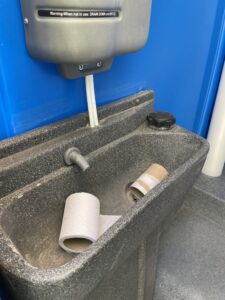
Cold washing facilities in a dirty condition

A joint investigation by the Health and Safety Executive (HSE) and the UK Health Security Agency (UKHSA) traced the infections back to the farm, identifying that approximately 2,400 tickets were sold between 4 April to 1 May 2023 for animal feeding event.

The investigation established failings in the way the animal feeding activity was run, including:

  • Failure to properly assess the risks to workers and visitors.
  • Inadequate washing and drying facilities (reusable cloth towels should not be used).
  • Insufficient information and instruction to employees and visitors (visitors were not given sufficient information about zoonotic risk and controls).
  • Inadequate control and supervision of visitor contact with animals (children were observed kissing both goats and lambs which were visibly contaminated with faecal matter).
The animal pens

As a result, 264 attendees suffered some form of symptoms, however, five per cent of cases were admitted for overnight hospital stays due to prolonged or severe symptoms, including children.

Many adults had to take time off work and school, amounting to 1,254 lost days, because of illness or caring responsibilities. Several victims have reported continuing gastrointestinal issues affecting their day to day lives since attending the event, with some having multiple hospital stays over 2024. Victims’ state that their experiences were among the worst diarrhoea and vomiting they had ever had, fearing for their children’s health, leaving lasting aftereffects and putting their families off ever visiting farm animals again.

In his judgement, District Judge Galloway, summarising the victims statements, said: “There is no doubt that that the events to which they refer are and were serious” and reflected on the victims “psychological toll experienced, and PTSD” and “the fact that the illness was life threatening “and “the fear that a child affected would not recover”.

The animal pens at the farm

Sharon Wheeler or Hazelgrove farm, Ryde, Isle of Wight, pleaded guilty to breaching Section 3(2) of the Health and Safety at Work etc. Act 1974. She was fined £8,000 and ordered to pay costs of  £9,528.35 in costs at a hearing at Southampton Magistrate’s court on 11 November 2025.

Speaking after the hearing HSE inspector Francesca Arnold said: “It is extremely important that farmers understand the risks on their farm, and they should ensure that visitors are protected when inviting the public onto their farms.

“Health risks from contact with the animals need attention and must be controlled. If the zoonotic risks had been properly controlled this incident could have been avoided, but the failures during the animal feeding activity meant a large number of visitors became ill and some suffered lasting effects.

“As with most activities, visits to farms and farm attractions can never be considered free from risk. However, it is possible to reduce the levels of risk by implementing control measures and safe practices to ensure that workers and members of the public are not put at risk and still provide a valuable and enjoyable recreational and educational experience.”

All animals naturally carry a range of microorganisms, some of which can be transmitted to humans. Diseases passed from animals to humans are known as zoonoses. Some zoonotic diseases are more serious than others. Young children and those with deficient immune systems are amongst those more likely to suffer serious effects from zoonotic disease. Some zoonotic diseases can potentially be  life-threatening.  Those operating animal visitor attractions have a legal duty to assess the risk and put in place suitable control measures.

While the risk of contracting a zoonotic disease is generally considered to be low, such risk may be significantly increased without adequate control measures being in place.

Only small numbers of cryptosporidium are required to become ill, and it is capable of surviving for a long time in the environment. People can become infected by consuming contaminated food or drink or by direct contact with contaminated animals. Infection can also occur when people come into contact with animal faeces or saliva, even in very small amounts, such as by touching or kissing infected animals, during bottle-feeding, or touching contaminated fences and other items such as contaminated cloth towels. Good control measures, including handwashing with soap and water are therefore essential.

Industry guidance to assist dutyholders to control zoonotic risk to farm visitors is freely available from the Access to Farms website. The HSE was consulted in the production of the Industry Code of Practice (ICOP) “Preventing or Controlling Ill Health from Animal Contact at Visitor Attractions”.

The ICOP provides sensible, proportionate and balanced advice to farms on how to comply with health and safety law and keep visitors safe and well, including the reasonably practicable measures available to reduce the risk of exposure to micro-organisms and a useful checklist for farmers to use.

This prosecution was brought by HSE enforcement lawyers Robert James and Kate Harney and paralegal officer Stephen Grabe.


Further information:

  1. The Health and Safety Executive (HSE) is Britain’s national regulator for workplace health and safety. We are dedicated to protecting people and places, and helping everyone lead safer and healthier lives.
  2. More information about the legislation referred to in this case is available.
  3. Further details on the latest HSE news releases is available.
  4. Zoonoses are diseases caused by micro-organisms that can be transmitted from animals to humans, these illnesses include those resulting from infection with the organisms Escherichia coli O157(E coli O157) and Cryptosporidium parvum.
  5. Relevant guidance can be found here Preventing or controlling ill health from animal contact at visitor attractions or open farms – HSE and Industry Code of Practice | Access To Farms and Cryptosporidium: public advice – GOV.UK.
  6. HSE does not pass sentences, set guidelines or collect any fines imposed. Relevant sentencing guidelines must be followed unless the court is satisfied that it would be contrary to the interests of justice to do so. The sentencing guidelines for health and safety offences can be found here.