Long-term investment support needed to boost green and digital transformation of the Czech Republic says the latest EIB Investment Survey
>@EIB
©EIB
  • The European Investment Bank and the Czech Banking Association hosted a virtual conference entitled “Investment and investment finance in the Czech Republic” today.
  • The EIB presented the results of its latest annual EIB Investment Report and Survey (EIBIS) for Europe and the specific results for the Czech Republic, providing insights on investment dynamics and investment needs.
  • After the first wave of COVID-19, half of Czech firms already planned to reduce their investment due to the pandemic. However, firms know they need to invest more to counter the impact of the pandemic.
  • Just over half of Czech firms have invested or are planning to invest to tackle the impact of climate change on their business.

As part of a series of events organised to discuss current investment trends in different EU Member States, the Czech Banking Association and the European Investment Bank, in partnership with the Confederation of Industry of the Czech Republic and the Institute for Democracy & Economic Analysis (IDEA), hosted the webinar “Investment and investment finance in the Czech Republic”. It focused on investment needs and priorities for the Czech Republic in the era of COVID-19, digitalisation and climate change.

During the webinar, EIB Vice-President Lilyana Pavlova gave an overview of the EIB’s activities in the Czech Republic and EIB Head of Economic Studies Pedro de Lima presented the results of the 2020 EIB Investment Survey for the Czech Republic.

The survey highlighted that in the long term, COVID-19 will likely give rise to further investment needs in the Czech Republic, notably in the areas of service or product portfolio and the supply chain.

EIB Vice-President Lilyana Pavlova said: “While the COVID-19 pandemic impacted investment in Czechia, the EIB, as the EU climate bank, is dedicated to helping the country through a digital and green recovery of the economy. Over the past five years, we have provided on average €900 million per year in new lending to the Czech public and private sectors and will continue to act as a key partner in the country.”

EIB Head of Economic Studies Pedro de Lima added: “About half of Czech firms planned to cut their investment spending and a third expect the pandemic to have lasting effects. This calls for patient long-term investment support – to accelerate the recovery, safeguard jobs and adapt to the challenges of the green and digital transformation.”

Zdenek Tůma, Member of the Czech Banking Association Presidium, and Chairman of the CSOB Supervisory Board, said: “Czech banks’ collaboration with the EIB Group is long lasting, professional and mutually advantageous. It brings benefits to final recipients not only through competitive interest rates but, in the case of the European Investment Fund´s guarantees, it also helps banks to finance innovative SMEs that would otherwise be commercially risky as borrowers. And it not only helps new companies to enter markets, it supports them in administratively friendly way, and it allows to share with them the benefits of a pan-European triple A creditor’s funding.”

Helena Horska, Chief Economist of the Raiffeisen Bank, said: “The Czech Republic’s investment gap is roughly €22 billion for 2020-2023. Without stimulating private investment, we will not be able to close it. And investment needs to be smart to lay the foundations of growth.”

The webinar was attended by business leaders, economists, policymakers and representatives from financial institutions and public sector partners, including Jan Dejl, Deputy Minister for the Ministry of Industry and Trade, Daniel Münich, Executive Director of the Institute for Democracy & Economic Analysis (IDEA) at CERGE-EI, Jitka Haubová, COO of Komercni Banka, Jan Švejnar, Professor of Global Political Economy at Columbia University and Adviser to the Czech Government, and Tomáš Kolář, CEO of Linet.

The EIB Investment Survey provides a clear picture of the challenges for firms in the EU. In addition to well-known investment barriers, such as skills shortages and aspects of the regulatory environment, firms need to deal with climate change and with the consequences of COVID-19. This translates into increased investment in innovation and digital technologies, and a rethink of the businesses’ global value chains.

This is also true for firms in the Czech Republic. Over the coming years, most Czech firms intend to prioritise the development or the introduction of new products and services over capacity expansion and replacement. Just over half of firms have invested or are planning to invest to tackle the impact of climate change on their business. On average, firms dedicated about 10% of their investment spending to energy efficiency, similar to those in the rest of the EU.

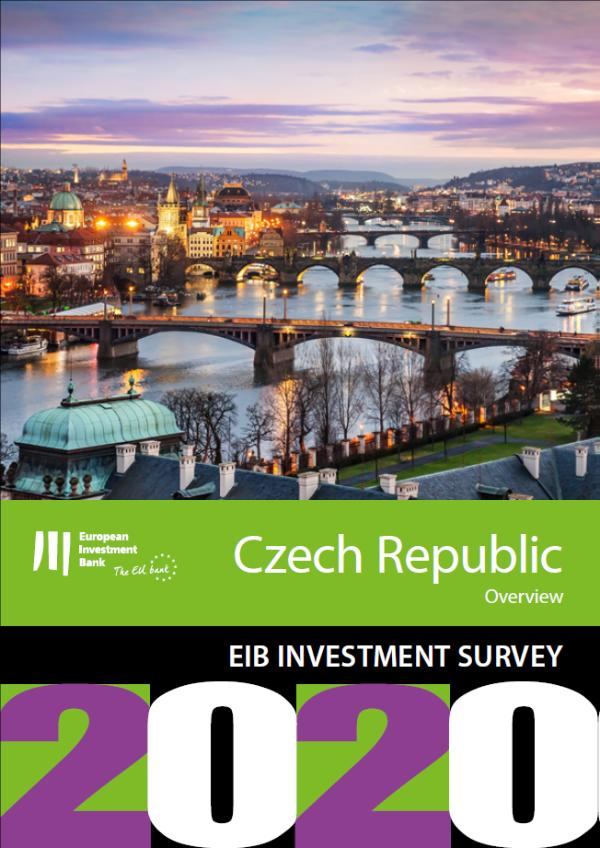
Read the EIB Investment Survey 2020 EIBIS 2020 – Czech Republic overview

Presentations from the seminar available on the post-event website.

About the EIBIS

The annual EIB Group Survey on Investment and Investment Finance (EIBIS) is an EU-wide survey that gathers qualitative and quantitative information on firms’ investment activities, their financing requirements and the difficulties they face. The survey was developed by our Economics Department and provides a unique set of data. It is the only survey that makes it possible to compare investment across countries and sectors in the EU. The survey collects data from approximately 13 300 businesses in total, across the EU27, the United Kingdom and, since 2019, the United States.

More information on The EIB Investment Survey – 2020 EU overview

About the European Investment Bank

The EIB has worked with the Czech Republic since 1992 and invested in infrastructure, small businesses, environment and innovation. Since its start of operations in Czech Republic, the EIB has provided €23.23 billion of financing to 192 projects.

About the Czech Banking Association

The Czech Banking Association is a voluntary association of banks and building societies operating on the Czech market representing more than 99% of the Czech banking sector. The Czech Banking Association has been supporting the development of the Czech banking sector, the entire economy, and the financial literacy of Czechs since 1990.



Brazil: EIB and BRDE support SMEs impacted by COVID-19

  • The European Investment Bank will provide support for COVID-19 impacted SMEs in the states of Rio Grande do Sul, Santa Catarina and Paraná, in Brazil
  • The new agreement will widen the eligibility criteria of the current EUR 80m BRDE CLIMATE ACTION Framework Loan to support and accelerate lending to private sector business
  • The loan is part of the Team Europe response to COVID 19
  • Part of the Framework Loan will fund urban projects, supported by FELICITY, implemented in cooperation with Deutsche Gesellschaft für Internationale Zusammenarbeit (GIZ)

The European Investment Bank (EIB) and Banco Regional de Desenvolvimento do Extremo Sul (BRDE) announced targeted finance for small and medium enterprises (SMEs) in the States of Rio Grande do Sul, Santa Catarina and Paraná in Brazil, facing the COVID-19 pandemic.

The new agreement is an amendment to a contract signed in 2018, allowing both institutions to provide flexibility and to widen the eligibility criteria of the current EUR 80m BRDE CLIMATE ACTION Framework Loan, in order to support and accelerate lending to private sector business, at the onset of the Covid-19 crisis in Latin America, especially in Brazil. This flexibility will accelerate access to finance for SMEs and in particular micro-enterprises in the states of Rio Grande do Sul, Santa Catarina and Paraná, to the tune of EUR 15m.

The EIB and BRDE are partnering to support a series of climate action projects in Brazil, including solar PV, small-scale hydropower and other renewable sources. In the COVID-19 context, the partnership has been adapted to help respond to specific needs of SMEs in this new challenging situation, by allowing faster loan disbursements to businesses.

As part of the BRDE CLIMATE ACTION Framework Loan, up to EUR 30m will fund urban projects, supported by FELICITY. FELICITY is a project preparation facility funded by the German International Climate Initiative (IKI), implemented in cooperation with GIZ.  FELICITY helps project promoters in cities to provide feasibility studies and other preparatory and capacity building measures to BRDE.  

EIB Vice-President, Ricardo Mourinho Félix responsible for Latin America said: “Fostering entrepreneurship is crucial for sustainable growth, in particular during these challenging times. We are pleased to announce this amendment agreement with BRDE to provide additional financial support to small businesses impacted by COVID-19 in Brazil. This COVID-19 finance aims at accelerating the uptake and deployment of funds by BRDE to Brazilian businesses. In collaboration with Team Europe, the agreement highlights our priorities in Latin America, helping to promote sustainable and inclusive economic growth by boosting productive investment.”

CEO of BRDE, Leany Lemos, confirmed that the agreement with the EIB was the result of a great effort by both institutions and comes at a crucial moment for micro and small entrepreneurs. “The current stage of the pandemic ended up accentuating the difficulties that many activities have been faced with for a year. Supporting during this journey means the survival of many small businesses, but above all it means maintaining jobs and income, and a better perspective at the time of recovery”, she stressed.

EU Ambassador to Brazil, Ambassador Ignacio Ybáñez Rubio, said: “Supporting private sector companies, especially SMEs as main drivers for jobs creation, is a major objective within the EU and its Member States. It is also an important part of its cooperation agenda with partner countries. Within the current pandemic context, it is even more important to align efforts to assure a sustainable recovery of businesses and reduce as much as possible the implicit negative socio-economic consequences derived from a slowdown of economic activity. We are proud to confirm that we have supported the establishment of this facility from the beginning, as this action forms part of the EIB’s External Lending Mandate that includes a guarantee from the EU. We applaud the conclusion of this agreement that, besides the original contract’s purpose of giving priority to climate action, which is in line with the current EU Green Deal approach, it also brings the possibility to use up to EUR 15 million of the approved loan to provide support for COVID-19 impacted SMEs in the states of Rio Grande do Sul, Santa Catarina and Paraná in the Southern part of Brazil.”

EIB and Team Europe global response to COVID-19

The proposed emergency financing is part of the policy and operational response of the EIB, in close cooperation with the European Commission (EC), to the COVID-19 epidemic breakout outside the EU. It is part of the EIB contribution to the Team Europe response to the COVID-19 crisis.

EU guarantee and the SDGs

The EU bank is providing this finance, which will cover up to 75% of the final project investment cost, in the framework of the 2014-2020 external lending mandate for Latin America. This agreement is therefore covered by the EU guarantee. By supporting this project, the EIB is contributing to achievement of the United Nations’ Sustainable Development Goals, ensuring access to affordable, reliable, sustainable and modern energy while fighting climate change.

The EIB and FELICITY

The first three projects supported by FELICITY in Brazil have an investment volume of around R$ 140 million (EUR 20m equivalent) in climate finance. In addition, there is a potential to reduce emissions of up to 257 Mt CO2 in 15 years. In addition, the training courses have reached about 500 professionals in the preparation, financing and implementation of low carbon infrastructure projects in cities.

Beyond Brazil, EIB and GIZ cooperate via FELICITY also in Mexico and Ecuador to develop urban waste management and wastewater projects.

The EIB in Latin America

The EIB, the Bank of the European Union, is the largest international financial institution in the world and approximately 10% of its lending and financing target is to the benefit of partners outside of the European Union. As the EU bank, the EIB supports the EU’s relationship with Latin America by financing projects that contribute to the EU’s external policy objectives: the development of economic, environmental and social infrastructure; private sector development; and climate change mitigation and adaptation.

In Latin America, the EIB has become a major promoter of renewable energy and energy efficiency, having signed projects worth over EUR 880m in the region between 2013 and 2018. Climate change mitigation and adaptation is the EIB’s main priority in the region, where projects supported by the EU bank focus on the environment, and especially on boosting renewable energy, energy efficiency and sustainable public transport schemes. Climate change adaptation-related projects involve upgrading existing infrastructure to be more resilient in the face of more volatile and unpredictable weather patterns, preparing it for direct and indirect impacts.

The EIB provides economic support for projects in Latin America by facilitating long-term investment with favourable conditions and by providing the technical support needed to ensure that these projects deliver positive social, economic and environmental results. Since the EIB began operating in Latin America in 1993, it has provided total financing of EUR 10.4bn to support 140 projects in 14 countries in the region.


Article – Coming up: vaccines, EU revenue, tourism

Committees

Vaccines

On Tuesday, the environment and public health committee will hear the latest news on the evaluation and market authorisation of Covid-19 vaccines from Emer Cooke, the Executive Director of the European Medicines Agency.

On the same day, the budget control committee will also discuss the current state of the EU’s Advance Purchase Agreement on Covid-19 vaccines with Sandra Gallina, the Euroepan Commission’s Director-General for Health.

Plenary session

EU revenue

MEPs will vote Thursday on the reform of the EU’s own resources that will lead to new sources of EU revenue, such as a levy on non-recycled plastic packaging waste.

Rule of law

On Wednesday, MEPs will vote on a resolution reiterating their call on the Commission to urgently activate the rule of law mechanism to protect the EU budget. The rules, approved in December, would allow payments from the EU budget to be frozen or cut if a member state has breached EU rules.

Dual-use products

MEPs will vote Thursday on new rules for the export of dual-use goods – products or services such as drones and chemicals that can be misused – to take into account new technologies and better protect human rights.

Sustainable tourism

MEPs are set to call on EU countries to include travel and tourism in their Covid-19 recovery plans to support the sectors after the crisis and help them to become cleaner and more sustainable. They will also back a European strategy including a common vaccination certificate to facilitate travel.

New EU-Africa strategy

The Parliament will vote on its input for a new EU-Africa strategy on Thursday, calling for a move from a donor-recipient relationship to a closer and more equitable one, to face common challenges, such as climate change and the coronavirus pandemic.

Marine litter

MEPs are expected to call Thursday for more reductions in single-use plastics and more sustainable fishing gear in order to reduce marine litter.


Repeated applications account for one in four asylum applications in the EU+ in January

Of the 40 000 applications for asylum lodged in the EU+ in January 2021, almost one quarter were repeated applications. Iraq and Nigeria replaced Venezuela and Colombia among the top five origin countries of applicants. 

Analysis released by the European Asylum Support Office (EASO) on asylum trends in January 2021 shows that 40 000 applications for international protection were lodged in the EU+, including close to 10 000 repeated applications.1 The share of repeated applications (24 %) was the highest in several years. 

This development reflects a shift towards repeated applications over the course of 2020 – when first-time applications declined due to the COVID-19 pandemic and related travel restrictions – but also a recent increase in repeated applications by Syrians (+ 2 000 from December 2020). A repeated application is lodged in the same country after a previous application was closed with a final decision. 
 

The top origin countries have changed

Following the decline of asylum applications by Venezuelans and Colombians in 2020, the top origin countries in January were Syria, Afghanistan, Pakistan, Iraq and Nigeria. Compared to December, applications by Syrians increased by 27 % to 10 400 (including repeated applications), and Syrians alone accounted for a quarter of all asylum applications lodged in the EU+. Pakistanis have consistently been the third most frequent nationality since October 2020 but Nigeria joined the top origin countries for the first time since June 2018.

Among other nationalities with more than 200 applications in January, some Sub-Saharan Africans lodged significantly more applications than in December: Guineans (+ 15 %), Malians (+ 17 %) and Senegalese (+ 41 %). Significantly fewer applications than in December were lodged by Bangladeshis (- 19 %), Eritreans (- 18 %), Russians (- 17 %), Moldovans (- 31 %), Tunisians (- 23 %) and Haitians (- 28 %).

Fewer applications were lodged by self-claimed unaccompanied minors (UAMs). In January, they accounted for approximately 3 % of all applications in the EU+, down from 5 % in December 2020. This notably reflected decreasing applications by UAMs from Afghanistan, Syria and Bangladesh.
 

Fewer decisions than applications

Decisions issued at first instance decreased to 38 700 in January (- 9 %) and fell below the level of applications lodged. Some 409 700 cases were pending at first instance in January, roughly as many as in December. Close to two thirds had been pending for more than six months, compared to 54 % in January 2020.

The recognition rate2 in the EU+ was 32 % in January 2021. Roughly as in the previous months, close to two thirds of the positive decisions granted refugee status, while the remainder granted subsidiary protection.

For more information and an interactive data visualisation, please visit the Latest Asylum Trends page.


Any further information may be obtained from the European Asylum Support Office on the following email address: press@easo.europa.eu


Footnotes

1 – EASO EPS data are preliminary and might differ from validated official statistics submitted to Eurostat at a later stage. Eurostat data are used in the annual EASO Asylum Report.

2 – This refers to the recognition rate for EU-regulated types of protection (refugee status and subsidiary protection) at first instance.


Press release – COVID-19: latest on evaluation and authorisation of vaccines

On Tuesday, Emer Cooke, Executive Director of the European Medicines Agency (EMA) will update Members of the Environment, Public Health and Food Safety (ENVI) Committee on the status of approving COVID-19 vaccines. They will also discuss the EMA’s recent evaluation of the AstraZeneca vaccine.

When: Tuesday 23 March 2021, 10.00-11.00 (indicative timing)

Where: European Parliament in Brussels, room Paul-Henri Spaak (3C050) and videoconference

You can watch the debate live here.

Background

Following positive scientific recommendations, the EMA has authorised four vaccines against COVID-19 for use in the EU (BioNTech-Pfizer, Moderna, AstraZeneca and Johnson & Johnson). Two additional contracts have been concluded that will allow vaccines to be purchased once they have proven to be safe and effective: Sanofi-GSK and CureVac (both under rolling review). Exploratory talks were also concluded with two companies, Novavax and Valneva. The EMA also started a rolling review of the Sputnik V vaccine (which is not part of the EU’s COVID-19 vaccines portfolio).

The EMA’s Pharmacovigilance Risk Assessment Committee (PRAC), responsible for evaluating safety issues for human medicines, investigated whether the COVID-19 AstraZeneca vaccine can cause thromboembolic events. The results were presented on 18 March 2021, concluding that the benefits of the vaccine still outweigh the risks, despite a possible link to rare blood clots.