European climate law: Council and Parliament reach provisional agreement

A climate neutral EU – what does it mean?

[Press release updated on 5 May 2021 to include a link to the text following approval by Coreper]

The Council’s and the European Parliament’s negotiators reached a provisional political agreement setting into law the objective of a climate-neutral EU by 2050, and a collective, net greenhouse gas emissions reduction target (emissions after deduction of removals) of at least 55% by 2030 compared to 1990.

We are very happy with the provisional deal reached today. The European climate law is “the law of laws” that sets the frame for the EU’s climate-related legislation for the 30 years to come. The EU is strongly committed to becoming climate neutral by 2050 and today we can be proud to have set in stone an ambitious climate goal that can get everyone’s support. With this agreement we send a strong signal to the world – right ahead of the Leader’s Climate Summit on 22 April – and pave the way for the Commission to propose its “fit-for-55” climate package in June.

João Pedro Matos Fernandes, Minister of Environment and Climate Action

Regarding the 2030 target, negotiators agreed on the need to give priority to emissions reductions over removals. In order to ensure that sufficient efforts to reduce and prevent emissions are deployed until 2030, they introduced a limit of 225 Mt of CO2 equivalent to the contribution of removals to the net target. They also agreed the Union shall aim to achieve a higher volume of carbon net sink by 2030.

Other elements of the provisional agreement include the establishment of a European Scientific Advisory Board on Climate Change, composed of 15 senior scientific experts of different nationalities with no more than 2 members holding the nationality of the same member state for a mandate of four years. This independent board will be tasked, among other things, with providing scientific advice and reporting on EU measures, climate targets and indicative greenhouse gas budgets and their coherence with the European climate law and the EU’s international commitments under the Paris Agreement.

The negotiators agreed that the Commission would propose an intermediate climate target for 2040, if appropriate, at the latest within six months after the first global stocktake carried out under the Paris Agreement. It will at the same time publish a projected indicative Union’s greenhouse gas budget for the period 2030-2050, together with its underlying methodology. The budget is defined as the indicative total volume of net greenhouse gas emissions (expressed as CO2 equivalent and providing separate information on emissions and removals) that are expected to be emitted in that period without putting at risk the Union’s commitments under the Paris Agreement.

Negotiators also agreed that the Commission would engage with sectors of the economy that choose to prepare indicative voluntary roadmaps towards achieving the Union’s climate neutrality objective by 2050. The Commission would monitor the development of such roadmaps, facilitate the dialogue at EU-level, and share best practices among relevant stakeholders.

The provisional agreement also sets an aspirational goal for the EU to strive to achieve negative emissions after 2050.

The provisional political agreement is subject to approval by the Council and Parliament, before going through the formal steps of the adoption procedure. The provisional agreement was reached by the Council’s Portuguese Presidency and the European Parliament’s representatives, based on mandates from their respective institutions.

The text of the agreement will follow.

Background

The European Council, in its conclusions of 12 December 2019, agreed on the objective of achieving a climate-neutral EU by 2050, in line with the objectives of the Paris Agreement, while also recognising that it is necessary to put in place an enabling framework that benefits all member states and encompasses adequate instruments, incentives, support and investments to ensure a cost-efficient, just, as well as socially balanced and fair transition, taking into account different national circumstances in terms of starting points.

On 4 March 2020, the European Commission adopted its proposal for a European climate law, as an important part of the European Green Deal. On 17 September 2020, the Commission adopted a proposal amending its initial proposal to include a revised EU emissions reduction target of at least 55% by 2030. The Commission also published a communication on the 2030 climate target plan, accompanied by a comprehensive impact assessment.

On 10-11 December the European Council in its conclusions, endorsed a binding EU target of a net domestic reduction of at least 55% in greenhouse gas emissions by 2030 compared to 1990.

The Council adopted a general approach on 17 December 2020, after which the Council and the Parliament launched a series of trilogue meetings with the aim of securing an agreement on the final text.



Media advisory – Foreign Affairs Council (Defence) of 6 May 2021

Indicative programme

from 08.15
Arrivals (in live streaming)

10.00
Beginning of the Foreign Affairs Council (Defence)

Adoption of the agenda
Current Affairs
Conclusions on security and defence
Strategic Compass
Any other business

At the end of the meeting (+/- 15.00) – press conference in live streaming.

Arrangements for the press conference

Please note that there will be no physical press conference. EU accredited journalists will be able to ask questions remotely using this link.

Journalists who already registered for previous FAC press conferences do not need to register again.

Deadline: Thursday, 6 May 2021, 14.00

Further instructions will be sent to all registered participants approximately half an hour after the deadline.

Videos and photos from the event


EIOPA publishes monthly technical information for Solvency II Relevant Risk Free Interest Rate Term Structures – end-April 2021

​Today, the European Insurance and Occupational Pensions Authority (EIOPA) published technical information on the relevant risk free interest rate term structures (RFR) with reference to the end of April 2021.

RFR information has been calculated on the basis of the foreseen changes in the deep, liquid and transparent points and the content of the Technical Documentation published on 16 December 2020 and based on RFR coding released on 8 October 2019.

All the documents are available on RFR specific area on EIOPA’s website. In particular, the updated version of the source code can be accessed under Related links in the RFR area.

Background

Technical information relating to risk-free interest rate (RFR) term structures is used for the calculation of the technical provisions for (re)insurance obligations.

In line with the Solvency II Directive, EIOPA publishes technical information relating to RFR term structures on a monthly basis via a dedicated section on EIOPA’s Website also containing the release calendar for 2021, the RFR Technical Documentation, the RFR coding and Frequently Asked Questions.

With this publication, EIOPA ensures consistent calculation of technical provisions across Europe.


Media advisory – Press briefing ahead of Foreign Affairs Council of 10 May 2021

The press briefing ahead of the Foreign Affairs Council will take place on Friday, 7 May 2021 at 14.00. The briefing will be given by a senior EEAS official.

This briefing is “off the record”.

Please note that this press briefing will take place remotely.

In order to participate and ask questions, EU accredited journalists should register using this link.

Those who already registered for previous press briefings of Foreign Affairs Council meetings earlier this year do not need to do it again.

  • Deadline for registration: Friday 7 May at 13.00

Further instructions will be sent to all registered participants shortly after the deadline.


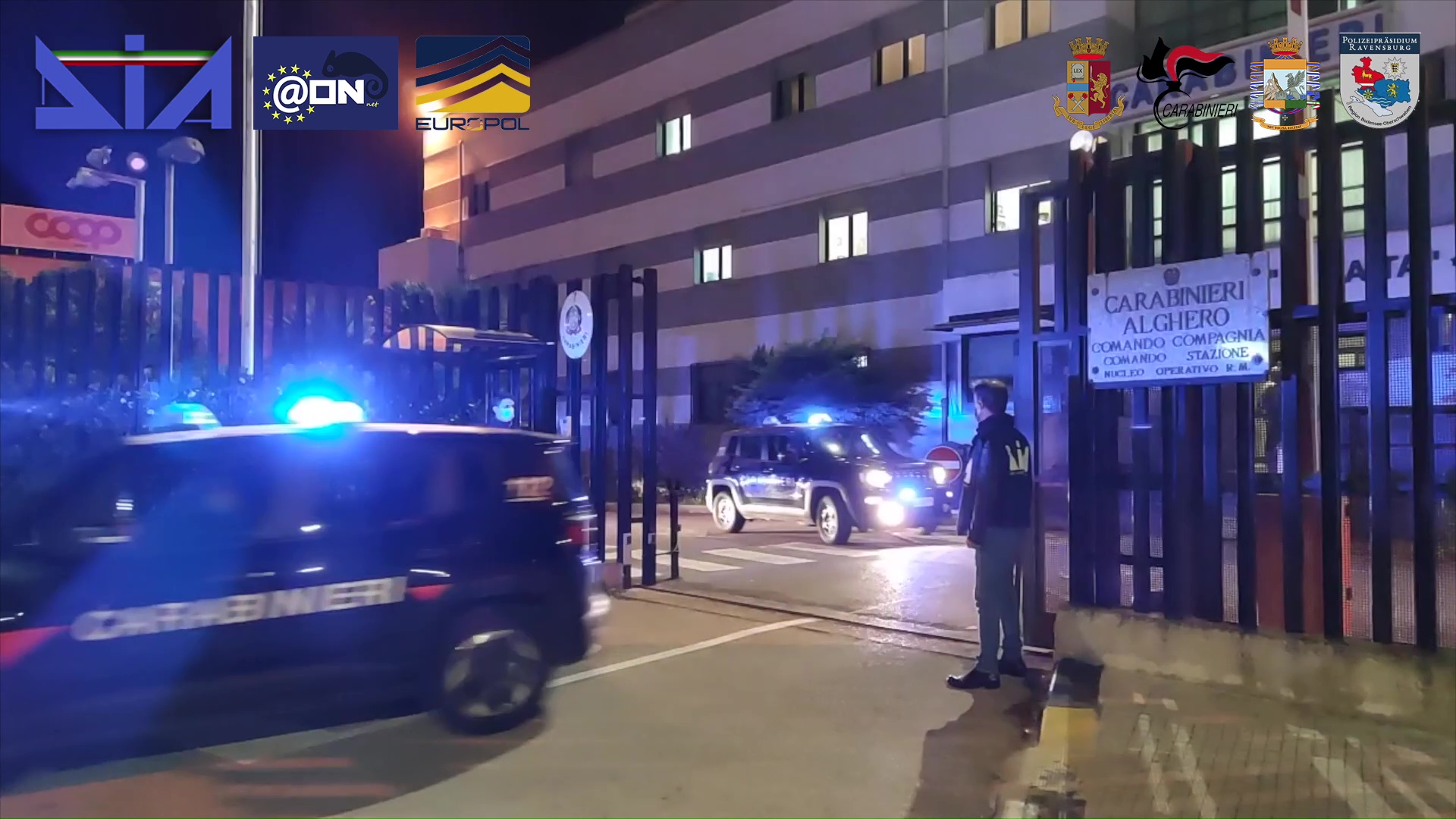
New action at EU level against ‘Ndrangheta in Italy and Germany

In a new major operation against international drug trafficking and money laundering, Eurojust and Europol have supported the competent Italian and German authorities with the arrest of 31 suspects in both countries, alleged to be part of the ‘Ndrangheta mafia, operating in different regions of Italy and abroad. Further to this, in the context of a joint investigation team (JIT) between Italy and Germany, 65 other suspects have been identified and their places were searched during a large-scale action, for which around 800 police officers and tax officials were deployed today in both countries. 

Today’s actions are a follow up to the Eurojust and Europol coordinated Operation Pollino, during which already 84 suspects were arrested in December 2018  in the two aforementioned countries, as well as Belgium and the Netherlands. In view of today’s operation, a European Arrest Warrant has been issued for one of the main and already sentenced Pollino suspects, who was recently taken into custody in Spain and is awaiting surrender to Italy. 

During the investigations, Eurojust assisted Italy and Germany in setting up a JIT and to ensure proper coordination of investigations, concerning two particular strands of an organised crime group (OCG), which amongst others is suspected of involvement with international drug trafficking and money laundering activities.

During a period of at least several years, the OCG is suspected of having organised the trade in cocaine between Italy, the Netherlands, Germany and Spain using encrypted EncroChat and Sky ECC communication tools. A string of building and hospitality companies was allegedly used to launder the proceedings in Italy. The investigations in Germany focus in particular on drug trafficking and potential tax avoidance. For this purpose, financial and economic specialists of the German police joined the JIT. 

The operation was carried out on the ground in Italy by the Anti-Mafia Investigation Directorate (DIA) under the coordination of the Public Prosecutor of Turin and of the National Antimafia Bureau (DNAA). In Germany, the operation was coordinated by the Public Prosecutor’s Office of Konstanz, in cooperation with the Criminal Police of Friedrichshafen and the Economic and Financial Police of Ulm.

Both agencies have assisted the Italian and German authorities during the whole cycle of the investigations. Europol supported the operation by coordinating the international law enforcement activities and providing expertise through its dedicated Analysis Project on Italian Organised Crime (AP ITOC). Eurojust set up a coordination centre and organised two coordination meetings, to prepare for the action day. 

In total at least several hundreds of thousands EUR have been seized, as well as weapons, cocaine, two luxury vehicles and jewelry. Furthermore, a full assessment of cash amounts seized is ongoing and bank accounts have been frozen. 

This investigation is part of the Italian DIA  Project ONNET, an EU-financed initiative to tackle mafia-type organised crime groups active in Europe. The project was launched at Europol’s headquarters and targets the mafia-style criminal groups in their entirety, rather than one or more of their specific criminal activities.