Practical guidance on border controls and fundamental rights at external land borders

The guidance ‘Border controls and fundamental rights at external land borders’  contains practical tips for border-management staff in five areas:

  1. Treating everyone with dignity
  2. Identifying and referring vulnerable people
  3. Respecting the legal basis, necessity and proportionality when using force
  4. Applying safeguards when holding people at borders
  5. Respecting procedural safeguards and protecting personal data

It gives examples of concrete actions that border guards and other competent authorities should take at operational level to uphold people’s fundamental rights in their daily work.

Previously, FRA published practical guidance on a variety of topics, including on reducing the risk of refoulement when working with third countries; apprehension of migrants in an irregular situation and relocation of unaccompanied children.

See all FRA practical guidance >>>


CoR SEDEC Bulletin No. 6: Updates on the COVID-19 crisis

​​​​​​​​​

The COVID-19 pandemic has dramatically affected our world and our way of living, with the loss of thousands of lives and unprecedented consequences for every aspect of our daily existence. The Commission for Social Policy, Education, Employment, Research and Culture (SEDEC) at the European Committee of the Regions is preparing regular bulletins on the policy fields within its remits, reflecting recent research, articles and discussions on the socio-economic impact of the pandemic in Europe and on the different actions and response measures being planned and implemented at EU, national, regional and local level.

You can read here the six​th edition of the SEDEC Bulletin.

Messages and contributions to: sedec@cor.europa.eu.​​


ECB announces public consultation on the publication of compounded €STR rates

PRESS RELEASE

24 July 2020

  • Consultation launched to seek feedback on the publication of compounded €STR rates by the ECB
  • Comments by interested stakeholders to be received by 11 September 2020

The European Central Bank (ECB) is considering the publication of compounded term rates based on the euro short-term rate (€STR) and solicits views of the public on this matter by launching a public consultation. The publication would take place on a daily basis shortly after the €STR publication. Published maturities could range from one week up to one year. A daily index, making it possible to compute compounded rates over non-standard periods, is also envisaged as part of the publication.

The public consultation, which asks for the public’s views on specific characteristics of the compounded rate, has been launched today and will expire on 11 September 2020 at 18:00 CET. Interested stakeholders are invited to respond using the template provided by the ECB. An anonymised summary of all the views expressed will be published following the solicitation period.

For media queries, please contact William Lelieveldt, tel.: +49 69 1344 7316.

More information

Media contacts


Press release – EU long-term budget deal must be improved for Parliament to accept it

In a resolution on the conclusions of the extraordinary European Council meeting of 17-21 July 2020, adopted by 465 votes against 150, with 67 abstentions, MEPs pay tribute to the victims of the coronavirus and to all the workers who have been fighting the pandemic. They underline that “people in the EU have a collective duty of solidarity.”


Positive step for recovery, inadequate in the long term

In the text, which serves as a mandate for the upcoming negotiations on the future EU financing and recovery, Parliament welcomes EU leaders’ acceptance of the recovery fund as proposed by Parliament in May, calling it a “historic move for the EU”. MEPs deplore however the “massive cuts to the grant components” and call for full democratic involvement of Parliament in the recovery instrument which “does not give a formal role to elected Members of the European Parliament”.

As for the long-term EU budget, they disapprove of the cuts made to future-oriented programmes and consider that they will “undermine the foundations of a sustainable and resilient recovery.” Flagship EU programmes for climate protection, digital transition, health, youth, culture, research or border management “are at risk of an immediate drop in funding from 2020 to 2021″, and that as of 2024, the “EU budget as a whole will be below 2020 levels, jeopardising the EU’s commitments and priorities.”


Parliament cannot accept a bad agreement

Parliament thus does not accept the European Council’s political agreement on the 2021-2027 MFF as it stands and “will not rubber-stamp a fait accompli”. MEPs are “prepared to withhold their consent” for the long-term EU budget, the Multiannual Financial Framework (MFF) until a satisfactory agreement is reached in the upcoming negotiations between Parliament and the Council, preferably by the end of October at the latest for a smooth start of the EU programmes from 2021.

In the case however that a new MFF would not be adopted on time, MEPs recall that Article 312(4) of the TFEU provides for the temporary extension of the ceiling of the last year of the present MFF (2020), and that this would be fully compatible with the recovery plan and the adoption of the new MFF programmes.


Rule of Law

Parliament “strongly regrets” that the European Council significantly weakened the efforts of the Commission and Parliament to uphold the rule of law, fundamental rights and democracy in the framework of the MFF and the recovery plan, recalling that the Rule of Law Regulation will be co-decided by Parliament.


New sources of EU revenue and repayment of EU-debt

MEPs reiterate that Parliament will not give its consent for the MFF without an agreement on the reform of the EU’s own resources system, including the introduction of a basket of new own resources by the end of the 2021-2027 MFF which is necessary to cover at least the costs related to the recovery plan.

They believe that the EU Heads of State and Government have failed to tackle the issue of the recovery instrument repayment plan and recall that without further cuts to key programmes or increasing the Member States’ contributions to the EU budget, new own resources is the only acceptable option to Parliament.


Mid-term revision indispensable

Parliament demands that a legally binding MFF mid-term revision enters into force by the end of 2024 at the latest and stresses that this revision must include the ceilings for the 2025-2027 period, the introduction of additional own resources and the implementation of the climate and biodiversity targets.




Italy: EIB provides FS Italiane Group with support for new hybrid regional trains with lower environmental impact

>@EIB
©EIB
  • The EU bank has approved €450 million in financing for Trenitalia.
  • The new resources will go towards the purchase of 135 less polluting and more efficient trainsets, almost half of which will be for southern Italy.
  • An initial tranche of €150 million has already been finalised via the subscription of an FS corporate bond.

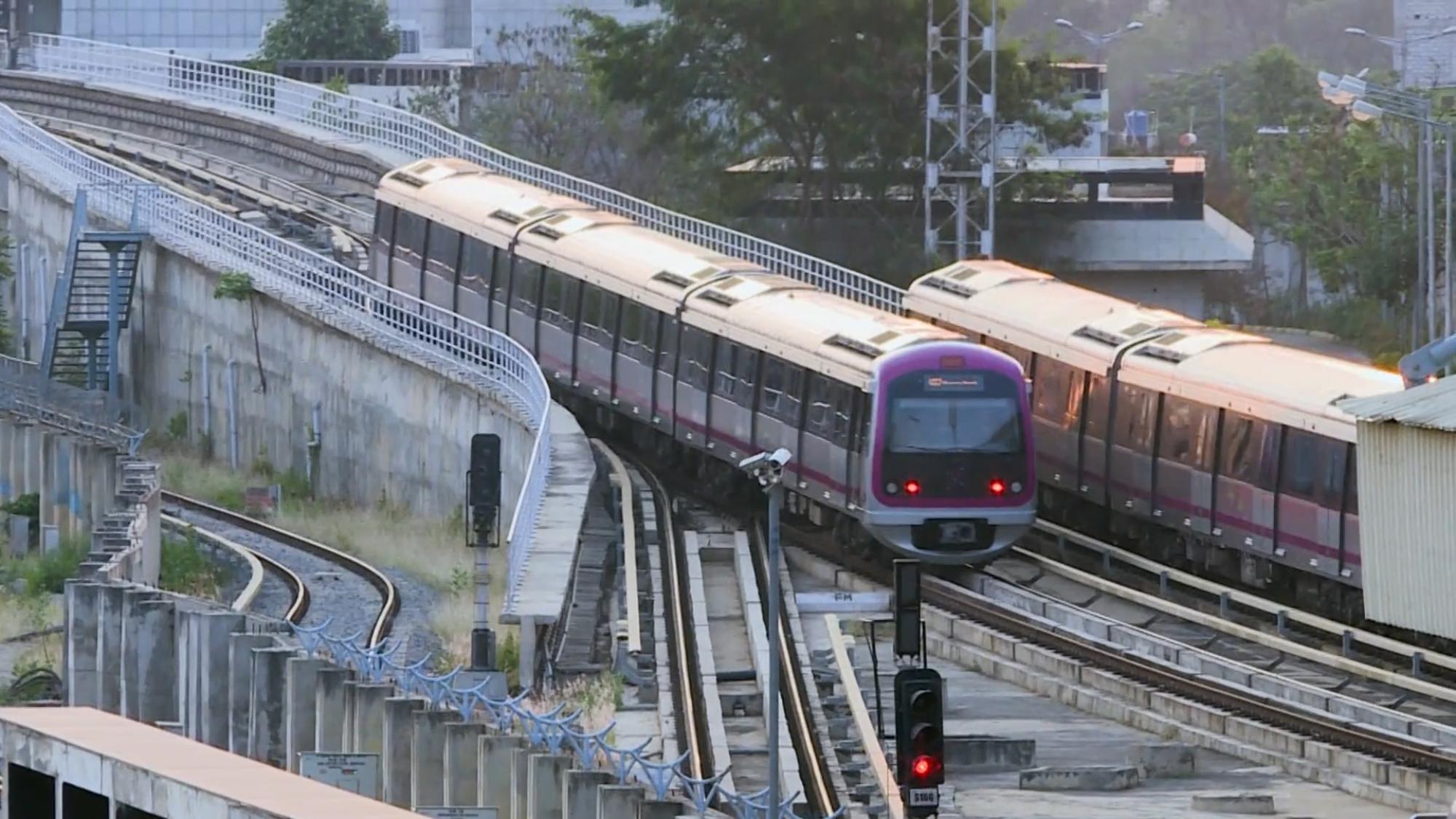
The EU bank is supporting FS Italiane Group’s investment plan covering new trainsets for Trenitalia’s regional transport division. The trains will be less polluting and more efficient, and almost half will be for southern Italy. This is the goal of €450 million in European Investment Bank (EIB) financing for FS Italiane (parent company of the Trenitalia transport company) announced today by EIB Vice-President Dario Scannapieco and FS Italiane Chief Executive Officer and General Manager Gianfranco Battisti.

€150 million of the total has already been finalised via the subscription of a corporate bond under FS’ EMTN programme, concluded by way of private placement, confirming the group’s commitment to sustainable finance.

The recently subscribed operation will finance the purchase of the first 43 trainsets ordered of a total of 135 covered by Trenitalia’s investment plan.

The new trains will operate on internal routes in several Italian regions (including Calabria, Lazio, Molise, Sardinia, Sicily, Tuscany and Valle d’Aosta). The 135 hybrid trainsets will have three or four passenger carriages. Trenitalia’s overall investment for this kind of train totals almost €960 million, covering the renewal of regional fleets on lines where electrification is not yet complete. The trains will be equipped with cutting-edge motors for non-electrified lines, with a pantograph for electrified lines and batteries for the last mile of non-electrified lines, thereby avoiding the use of fuel and the related emissions close to urban centres.

For the EIB, this operation is completely in line with its new status as a climate bank, the aim of which is to mobilise €1 trillion in new investment to tackle climate change in all sectors of the economy between 2020 and 2030.

For FS Italiane, this deal broadens the range of financing instruments used by the group since 2017 and that, from this year, includes not only public green bonds but also loans and private placement operations based on ESG principles and designed to finance projects with reduced environmental impact that encourage rail transport.

We have been working with Ferrovie dello Stato Group for a long time – for example, in recent decades the EIB has been the main financier of high-speed rail between Naples and Milan. This partnership has continued over the last few decades and is being renewed now with an operation enabling millions of passengers to travel on new trains that are considerably less polluting than in the past, in line with the EIB’s goals as a climate bank,” said EIB Vice-President Dario Scannapieco.

This major financing continues our investment plan to renew the regional train fleet, which as it stands remains one of our top priorities”, highlighted FS Italiane Group Chief Executive Officer and General Manager Gianfranco Battisti. “The new trains will be environmentally sustainable and of a very high standard, enabling another step forward in changing commuters’ travelling habits in Italy. We also expect the renewal of Trenitalia’s regional fleet to make it possible to reduce CO2 emissions by 600 million tonnes a year and take 400 000 cars off Italian roads.