Uganda: 1.4 million Ugandans to access reliable and affordable energy under new EIB – ENGIE initiative
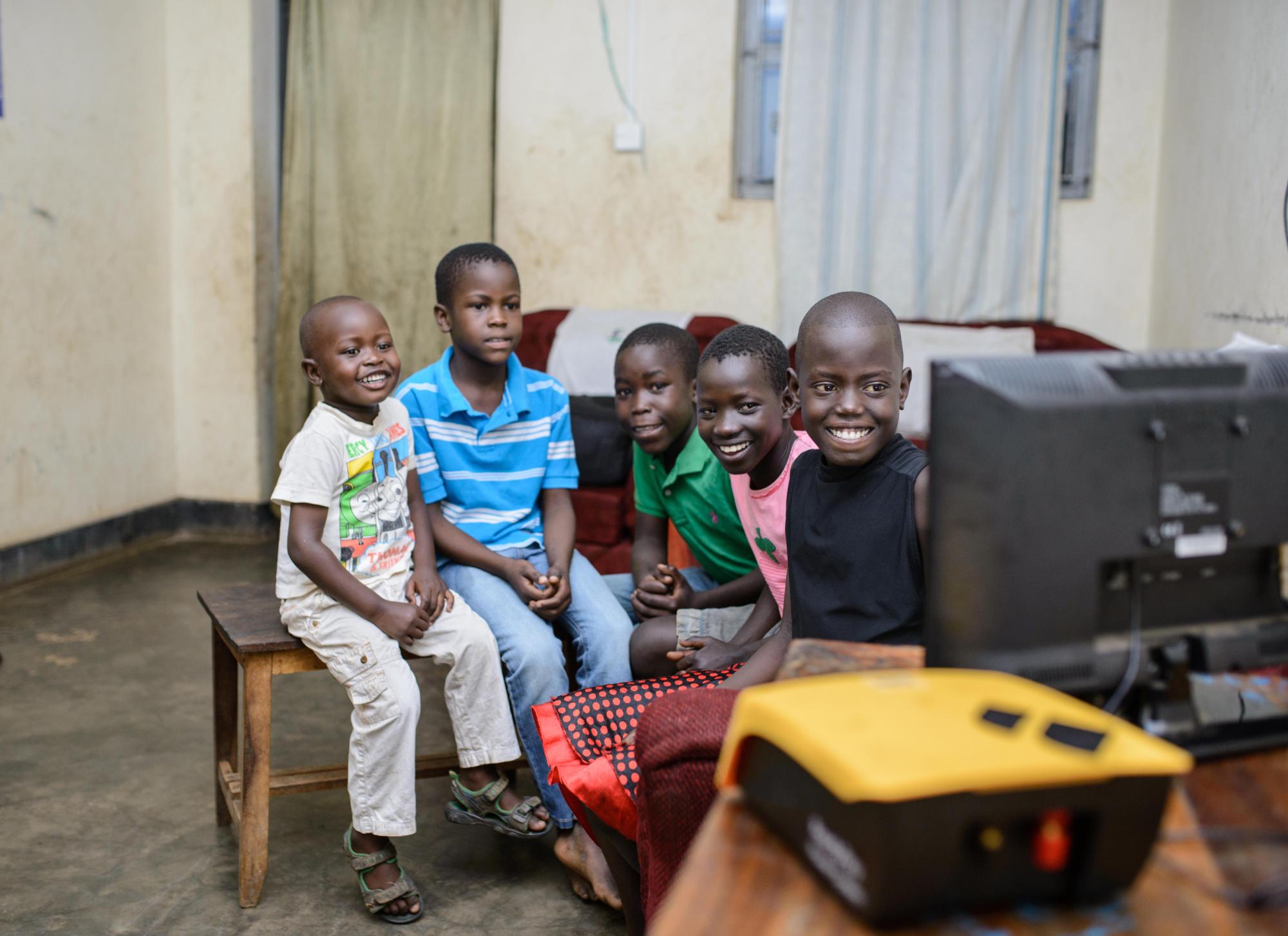
>@ENGIE 2020
©ENGIE 2020
  • Scaling up off-grid solar power model for transforming rural energy access across Africa
  • EIB financing to overcome barriers to 80% of Ugandans without access to electricity
  • Local currency financing to accelerate PAYGO solution for affordable green energy

Millions of people, small holders and entrepreneurs in remote villages across Uganda are set to access reliable and cheap electricity for the first time under a new off-grid solar scheme agreed between ENGIE, through its Solar Home System company Fenix International and the European Investment Bank, one of the world’s largest financiers of renewable energy.

“Access to affordable and clean energy is important to fight poverty, create jobs and empower women and girls. The European Investment Bank is pleased to agree new support for scaling up off-grid solar deployment in East Africa under this new partnership with ENGIE.  Over a million people across Uganda will be able to access electricity for the first time that will power communications, provide light and make cooking easier. This scheme will also reduce use of kerosene, charcoal and candles to help families save money, reduce pollution and reduce the risk of accidents. Unlocking sustainable economic and social development through off-grid solar is key for Africa’s future and the EIB is pleased to back this project in Uganda.” said Ambroise Fayolle, European Investment Bank Vice President.

At ENGIE, we see the massive potential of the off-grid electrification sector as a way to bridge energy gaps across Africa, faster and more affordably. Every day families across Africa are able to access electricity for the first time using off-grid solar technology provided by ENGIE Africa. Our new partnership with the European Investment Bank in Uganda will allow Fenix to provide ultra-affordable PAYGO systems to millions of people in villages across the country. This will provide access to clean solar power and financial empowerment. Providing access to energy in Africa is a huge undertaking but I firmly believe that universal access to energy is achievable in the foreseeable future, through smart investments in a combination of national grid extension, solar home systems and mini-grids. With our off-grid platform, we are industrializing and scaling up the development of a wide range of decentralized solutions, with a sustainable business model.  As of now, ENGIE is providing decentralized electricity to more than 4.5 million people in 9 countries through solar home systems from both Fenix and ENGIE Mobisol, as well as mini-grids from ENGIE PowerCorner.” said Yoven Moorooven, CEO of ENGIE Africa.

The European Investment Bank has agreed to provide a USD 12.5 million loan to support the deployment of 240,000 high-quality solar home systems in Uganda  by Fenix International, a subsidiary of ENGIE.

Solving the last mile challenge to provide power in remote communities across Uganda

Only one in five Ugandans living in remote and rural communities has access to reliable electricity. By scaling up adoption of off-grid solar technology this new initiative will provide economic, social, education and health opportunities for families and entrepreneurs who cannot be connected to the national electricity network.

Customers will also be able to benefit from Fenix International’s service centres that provide support in 30 languages across Uganda.

Supporting private sector growth and sustainable development in Uganda

Following the new agreement between Fenix and the European Investment Bank households, entrepreneurs and small holders across Uganda will be able to access electricity for mobile phones, solar lighting, refrigeration, radio and television. This will help farmers to sell produce, create new markets for traders and improve health.

Increased provision of reliable and affordable energy will create new opportunities for women and girls and reduce exposure to indoor pollution from current kerosene use.

“The European Union is committed to supporting sustainable economic and social development across Uganda. This new cooperation initiative between the European Investment Bank and Fenix International, a subsidiary of leading European energy company ENGIE, demonstrates the value-added of European engagement with Ugandan partners to advance the country’s development vision. Harnessing renewable energy through innovative off-grid solar technology, combined with productive uses of power in rural areas, is a direct demonstration of the European Union’s green deal for Africa, providing new opportunities for millions of Ugandans.” said Attilio Pacifici, European Union Ambassador to Uganda.

Unlocking financial empowerment and overcoming currency barriers

Provision of a PAYGO model will allow families who would be unable to afford the upfront costs of solar home systems to repay the cost of equipment over years at less than USD 20 cents a day. The new European Investment Bank financing will also allow repayment of equipment purchased in US dollars in Ugandan shillings. Previously currency fluctuations hindered provision of affordable clean energy solutions to Ugandans without access to foreign currency.

“Providing hundreds of thousands of new solar home systems through the PAYGO model will allow our Ugandan team to transform communities across the country. We are proud to be the latest national off-grid power operation to be supported by the European Investment Bank and we will work tirelessly to illuminate homes and provide clean power until all of Uganda can access electricity.” said Daniel Willette, Managing Director Uganda (Fenix)

Customers will also benefit from cheaper costs and easier repayment through use of mobile banking. This will also provide other financial products and allow customers to expand existing equipment as needed.

Building on the EIB’s renewable energy track record in Uganda and across Africa

Over the last decade the European Investment Bank has provided more than EUR 5.4 billion for clean energy investment across Africa.

In recent years the European Investment Bank has been a leading financial for the Bujagali hydropower project in Uganda, the Lake Turkana Wind Farm, Olkaria Geothermal plant and the Radiant and Eldosol solar schemes, as well as financing last mile connections in Kenya. The EIB is also supporting studies to harness hydropower to transform clean energy in Burundi and the Great Lakes region. 

ENGIE is the largest independent electricity producer in the world, and one of the major players in natural gas and energy services. The Group has more than 50 years of experience on the African continent and has the unique ability to implement integrated solutions all along the energy value chain, from centralized electricity production to off-grid solutions (solar home systems, mini-grids) and energy services. ENGIE Africa employs nearly 4,000 people, and has 3.15 GW of power generation capacity in operation or construction.  It is a leader in the decentralized energy market, providing clean energy to more than 4.5 million people through domestic solar installations and local microgrids.




World Hepatitis Day: EMCDDA showcases hepatitis questionnaire for drug service staff to refresh knowledge and identify training needs

Every year, on 28 July, the World Health Organization (WHO) and partners mark World Hepatitis Day to increase awareness and understanding of viral hepatitis and the diseases it causes. It is estimated that around 290 million people worldwide are living with viral hepatitis, and many remain unaware of their status. Failure to identify the undiagnosed, and link them to care, means that millions will continue to suffer and lives will be lost. The focus of this year’s campaign is therefore ‘Find the missing millions.’

Transmitted through the sharing of needles, syringes and other injecting equipment, hepatitis C is the most common infectious disease among people who inject drugs in Europe. If HCV infection in this group is not addressed, there may be considerable costs in the future, both to individuals and to health budgets.

As part of its harm reduction initiative to increase access to hepatitis C testing and improve linkage to care, the EMCDDA is showcasing today its knowledge questionnaire designed for those working in drug treatment settings. The main aim of the questionnaire is to: allow those working in these services to refresh their knowledge on the hepatitis B and C viruses (HBV, HCV), including transmission, testing and care for people who inject drugs. The questionnaire also provides a practical tool for managers of drug treatment facilities to identify staff training needs and increases awareness among drug service staff of the importance of knowing their own HCV status.

The knowledge questionnaire, now available in seven languages (German, English, French, Italian, Dutch, Polish and Portuguese), covers a wide range of issues, including HCV and HBV prevalence, routes of transmission, prevention measures, treatment and testing options and international testing and treatment recommendations. This practical tool, which can be administered on paper or adapted to an online version, consists of a series of true statements which provide factual information on viral hepatitis. The answer format — ‘I knew it already’ or ‘This is new to me’ — allows participants to ‘learn by doing’ and to assess their own level of knowledge and refresh it.

The EMCDDA has created an online version of the survey in English as an example. Click here to test your knowledge.

EMCDDA Director Alexis Goosdeel says: ‘Staff working in drug services play a vital role, both in reaching people who may be at risk of hepatitis infections, and in linking them to care. They are an important source for informing people who inject drugs about infection risks and prevention, about available tests and effective treatment and about the type of medical services they provide on-site. This questionnaire can help ensure that drug service professionals have up-to-date knowledge on viral hepatitis in order to help people who inject drugs access the care they need’.

Over the past 25 years, the EMCDDA has been monitoring the prevalence and incidence of blood-borne virus infections among people who inject drugs. In 1997, it published its first estimate of the burden of hepatitis C among this group, which highlighted the extent of what had, until then, been a ‘hidden epidemic’ in the shadow of HIV/AIDS. This triggered further research into the impact, costs and policy options regarding this disease, leading to an overview on the issue published in 2004. In the following years, the agency focused on identifying effective responses to prevent and reduce injecting-related harms and making this information available to policymakers and practitioners across Europe. Yet, despite the availability of new highly effective treatments for hepatitis C infection, access to testing and care for people who inject drugs still remains limited today. In line with countries’ commitment to eliminate hepatitis C as a public health threat by 2030 (1), the EMCDDA launched a new harm reduction initiative on hepatitis C in 2018. Through this initiative, the agency now offers a set of practical resources aimed at supporting countries in promoting HCV testing and care for this vulnerable group through drug services.

#WorldHepatitisDay #FindTheMissingMillions #emcdda25


Civic space: threats, attacks and lack of funding face many civil society organisations in the EU

The ‘Civic space ― experiences of organisations in 2019’ paper draws on views from 205 civil society organisations from FRA’s Fundamental Rights Platform. It shows the main obstacles they face in their work:

  • Almost half of national and local civil society organisations say that the situation in their country has deteriorated.
  • More than half say they faced verbal and online threats and attacks, including hate speech, as well as negative media reports about them.
  • One in five say they experienced a physical attack, targeting either one of their employees/volunteers or their office building.
  • The majority has difficulties accessing or participating in public consultations, mainly due to short deadlines or lack of feedback from the authorities.
  • Many face challenges arising from regulatory frameworks, such as provisions on freedom of expression, assembly and data protection.
  • Availability of, and access to funding is a problem for most civil society organisations. The proposed EU Justice, Rights and Values Fund could assist their finances.

Civil society is an essential component of the democratic system. The quantity, quality and intensity of obstacles affecting civil society’s ability to carry out their work provide an indication of a country’s general state of fundamental rights, democracy and rule of law.

This second annual consultation shows that many of the human rights organisations that FRA cooperates with continue to face challenges in their daily work.

FRA started an annual consultation with organisations participating in its Fundamental Rights Platform in 2018, focusing on the challenges they experience in their daily work.

The consultation followed the publication of FRA’s 2018 report on ‘Challenges facing civil society working on human rights in the EU’, which highlighted different areas of concern.

The new findings underline the continued relevance of the opinions FRA formulated in its 2018 report on civil society, which EU institutions and Member States should consider.


COVID-19 pandemic reinforces need to protect workers from exposure to biological agents

Workplace exposure to biological agents is widespread and linked to a large number of health problems, including infectious diseases, allergies and cancer. An estimated 5,000 workers die each year in the EU alone as a result of work-related infectious diseases. EU-OSHA’s new report aims to raise awareness of the topic and provide reliable information that supports efforts to establish effective preventive measures.

The research sought to identify and describe the most relevant exposures, and the report provides in-depth analyses for five sectors/types of occupation that are particularly at risk of exposure:

  • health care
  • animal-related occupations
  • waste and wastewater treatment
  • arable farming
  • occupations that involve travelling or contact with travellers.

The project also focused on emerging risks, including multi-resistant bacteria and the wider spread of infectious agents. The occurrence of the severe acute respiratory syndrome (SARS) and COVID-19 epidemics in Europe, for example, have been linked to the phenomenon of globalisation. EU-OSHA’s Executive Director, Christa Sedlatschek, emphasises the effect that such pandemics have on the healthcare sector: ‘Global health problems are putting healthcare systems under intense pressure, and urgent measures are needed to protect workers from infectious diseases beyond the provision of protective equipment. Healthcare workers’ safety and health has to be a priority in an emergency situation such as the COVID-19 pandemic, which has shown how important it is that the existing legal protections are implemented.’

The experts interviewed for the project spoke of the need for emergency plans that allocate financial resources to tackling future outbreaks of disease. They also mentioned that information collected through compulsory reporting could help in identifying early signs of the spread of a disease.

A legal framework exists to protect people from workplace exposure to harmful biological agents, but awareness of it needs to be raised. If the risks are to be tackled in a better organised way, exposure to biological agents and the health problems resulting from them have to be assessed and recorded. With this in mind, the research looked at and analysed systems for monitoring diseases and exposures. Providing more training and guidance to employers and workers will also help to ensure more systematic prevention.

The research highlights that there is lack of awareness of exposure to biological agents in all sectors with the exception of healthcare and laboratories. In addition, groups such as young people, cleaners and maintenance workers, migrant workers and pregnant women are at particular risk. Improving access to information and implementing specific measures to protect such groups are therefore essential.

Case study examples demonstrate the importance of recognising the risks and taking collective action to manage them. For example, in Finland, the occupational health services have made effective use of health surveillance data for targeted interventions to tackle farmer’s lung. The measures introduced were successful in reducing the number of cases and in helping agricultural workers who had already experienced health problems.

The report also concludes that sectors affected by unintended exposures need general guidance and that providing workers with relevant information is key. Respecting the hierarchy of control measures set out in legislation and prioritising collective over personal protective measures are vital.

Links:


EU Public Prosecutor's Office (EPPO): Council appoints European prosecutors

The Council today appointed the European prosecutors of the European Public Prosecutor’s Office:

  • Frédéric Baab
  • Cătălin-Laurențiu Borcoman
  • Jaka Brezigar
  • Danilo Ceccarelli
  • Gatis Doniks
  • Yvonne Farrugia
  • Teodora Georgieva
  • Daniëlle Goudriaan
  • Petr Klement
  • Tomas Krušna
  • Tamara Laptoš
  • Katerina Loizou
  • Ingrid Maschl-Clausen
  • José Eduardo Moreira Alves d’Oliveira Guerra
  • Juraj Novocký
  • Andrés Ritter
  • Maria Concepción Sabadell Carnicero
  • Gabriel Seixas
  • Kristel Siitam-Nyiri
  • Harri Tiesmaa
  • Yves Van Den Berge
  • Dimitrios Zimianitis

The prosecutors will supervise investigations and prosecutions and will constitute the EPPO College, together with the European Chief Prosecutor.

European prosecutors are appointed for a non-renewable term of six years. The Council may decide to extend the mandate for a maximum of three years at the end of this period. As part of the transitional rules for the first mandate following the creation of the EPPO, the European prosecutors from one third of the member states, determined by drawing lots, will hold a three year non-renewable mandate. This is the case for the prosecutors from Greece, Spain, Italy, Cyprus, Lithuania, Netherlands, Austria and Portugal.

Each member state nominated the candidates for the position of European prosecutor. These must be candidates who are active members of the public prosecution service or judiciary of the member state, whose independence is beyond doubt and who possess the qualifications required for appointment to high prosecutorial or judicial office in their respective member states. They must have relevant practical experience of national legal systems, of financial investigations and of international judicial cooperation in criminal matters. The selection panel then drew up the reasoned opinions and the ranking for each of the nominated candidates who fulfilled the conditions. After having received the reasoned opinions, the Council selected and appointed one of the candidates to be the European Prosecutor for each of the participating member states.

Background

The European Public Prosecutor’s Office will be an independent body of the EU responsible for investigating, prosecuting and bringing to judgment crimes against the financial interests of the Union (e.g. fraud, corruption, cross-border VAT fraud above 10 million euros). In that respect the EPPO shall undertake investigations, and carry out acts of prosecution and exercise the functions of prosecutor in the competent courts of the member states.

In 2019 the Council and the European Parliament appointed Laura Codruţa Kövesi to be the first European chief prosecutor.

There are currently 22 member states participating in the EPPO (Austria, Belgium, Bulgaria, Croatia, Cyprus, Czech Republic, Estonia, Finland, France, Germany, Greece, Italy, Latvia, Lithuania, Luxembourg, Malta, the Netherlands, Portugal, Romania, Slovenia, Slovakia, Spain).

The EPPO is expected to start its operation at the end of 2020. It will be based in Luxembourg.