India: Green, safe and affordable public transport for Kanpur as EIB invests €650 million into city metro rail
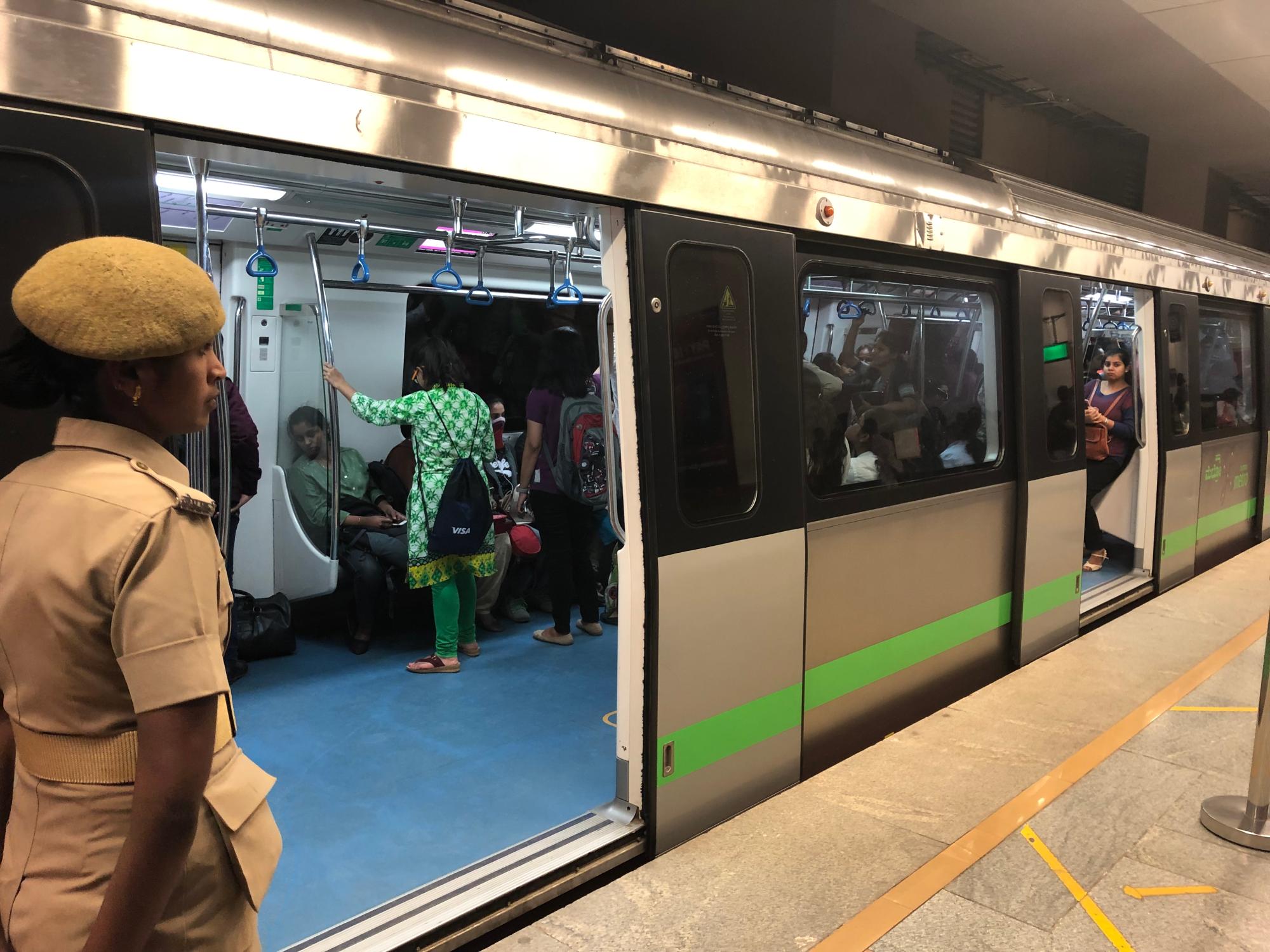
>@EIB
©EIB
  • EU bank to invest €650 million in Kanpur city rail in its second biggest operation outside the EU to date.
  • EIB will finance a 32.4 km metro line with 18 elevated and 12 underground stations, as well as acquisition of rolling stock.
  • Total EIB investment in connectivity projects in India and green infrastructure is now €2.6 billion.
  • Kanpur metro rail system will improve safety of commute, especially for female travellers.

The European Investment Bank (EIB) will invest €650 million into the construction of Kanpur’s first city metro line, enabling some 3 million people in the city of Kanpur, India, to benefit from green, safe, fast and affordable public transport. The new metro rail system will reduce commuting hours and unlock new employment and education opportunities in Kanpur, the industrial capital of Uttar Pradesh. This is the second metro rail project supported by the EIB in Uttar Pradesh, following the €450 million investment in the development of a metro rail system in the city of Lucknow.

The second biggest EIB operation outside the EU to date will finance the construction of a 32.4 km urban rail line, with 18 elevated and 12 underground stations. Once completed, Kanpur metro rail will create 1 100 new jobs and enable around 116 million more affordable commutes each year.

This is the fifth EIB investment in green infrastructure and connectivity in India and the second in the state of Uttar Pradesh. The EU bank has invested in metro rail systems in Bhopal, Pune, Bangalore and Lucknow. With the Kanpur investment, the total amount of the EIB’s approved support for metro rail systems in India has reached €2.65 billion, more than half of the entire EIB investment portfolio in India.

In addition to creating an affordable and accessible public transport network and a reliable alternative to heavily congested streets, the new metro will reduce pollution and greenhouse gas emissions and improve air quality across the city. With easier access to the local job market, healthcare and education for residents, Kanpur metro rail will have a positive impact on quality of life and doing business, and increase safety for female travellers.

Andrew McDowell, Vice-President of the European Investment Bank, said: “Kanpur is the fifth metro rail project to receive EIB funds in India and the biggest investment made by the Bank outside the EU. The metro will have a positive impact on quality of life and doing business in the city through access to affordable transport, creating new employment and education opportunities. It will be a safe, green and affordable transport alternative for Kanpur and its visitors. We are also glad to see this project is contributing to global climate action while strengthening EU-India relations.”

H.E. Ugo Astuto, the EU Ambassador to India, said: “At the last summit on 15 July, the EU and India discussed how to put climate action and the green transition at the heart of our economic recovery post COVID. Sustainable mobility is a key component of this strategy, towards modern, clean and healthy economies. The Kanpur project is an important investment in making public transport efficient, safe and sustainable. I am happy to see the European Investment Bank fully engaged in this transformational process.”

Kumar Keshav, Managing Director of Uttar Pradesh Metro Rail Corporation, said: “UPMRC is extremely thankful to European Investment Bank for their continued support for the development of metro rail projects in the state of Uttar Pradesh. Comfortable, fast, safe, energy efficient and affordable public transport systems like metros are needed for cities to become the engines of growth in our country. The faith and whole-hearted support of the EIB in funding the Lucknow metro, a world-class metro system in the capital city of Uttar Pradesh ahead of the stipulated time and within the approved cost is a source of pride for all of us. On behalf of the UPMRC team, I again assure you that fulfilling the trust shown by the EIB in funding the Kanpur metro project will be our highest priority in delivering this prestigious project on time, which will further accelerate the long-term economic and social development of the city.”

The EIB investment will accelerate the social and economic recovery of the city in the aftermath of the COVID-19 pandemic and support the long-term re-emergence of the local economy. The investment also bolsters the Government of India and its Urban Development “Smart Cities Mission”, as Kanpur is one of the first 100 targeted Smart Cities in the country.

The Kanpur metro rail project will help India achieve a number of UN Sustainable Development Goals (SDGs), namely SDG 13 (climate action), SDG 11 (sustainable cities) and SDG 5 (gender equality).

About the EIB in India:

Since the beginning of its operations in India in 1993, the EIB has supported 17 projects in the country and invested close to €4.2 billion in transport, energy, agriculture, fisheries and forestry projects as well as India’s small and medium enterprises.

More details about the EIB in India

About the EIB in Asia:

For 25 years, the EIB has supported economic development in Asia and the Pacific region through projects ranging from cutting travel times for the people of Bangalore with a new metro line, to providing cheaper, cleaner energy to western Nepal.

In Asia, the EIB’s focus is our lending on climate action across all sectors. Through our financing, we act as a catalyst to attract the funding needed to meet the UN’s Sustainable Development Goals for 2030. We also work to include gender equality in our projects, ensuring that women, men, girls and boys can benefit from projects equally and equitably.



EASO publishes a COI report: Afghanistan, State Structure and Security Forces

The focus of this report is on state structure, security institutions and state judiciary in Afghanistan. It is divided into three parts. The first part focuses on presenting an overview of the state structure in Afghanistan, including governance, corruption, and the latest developments on the 2019 elections. The second part focuses on the state security institutions, their mandate and structure, integrity, and the main reported cases of violations perpetrated by these security forces. The third part of the report provides a general overview of the state judiciary, focusing on its capacity, integrity, effectiveness in prosecution, as well as prison conditions.

The Afghan government continues to be involved in multiple and overlapping non-international armed conflicts between government forces and Anti-Government Elements (AGEs), mainly against the Taliban and Islamic State Khorasan Province (ISKP), among others. Governance in Afghanistan continues to be weak, mainly due to corruption within the government, insecurity, unemployment, violation of human rights, lack of rule of law, illiteracy and lack of capacity into administrative reforms.

The report was drafted by EASO COI Sector and produced in line with the EASO COI Report Methodology; it was reviewed by experts from The Netherlands, Office for Country Information and Language Analysis, Ministry of Justice.

With 2.7 million refugees as of the end of 2019, Afghanistan was the third largest country of origin of refugees in the world. Afghan continued to be the second most common citizenship of asylum applicants in the EU+ as of June 2020. 

The ‘Afghanistan, State Structure and Security Forces’ report is part of a series of EASO COI reports on Afghanistan due to be published in 2020.


Article – Coming up: EU long-term budget, human rights

The budget committee will discuss the negotiations on the EU’s long-term budget, the reform of the EU’s sources of income and the Covid-19 economic recovery plan on Tuesday.

The environment committee will be updated on the latest about Covid-19 on Wednesday by Dr Andrea Ammon, the director of the European Centre for Disease Prevention and Control, Committee members will vote on an update to the EU Civil Protection Mechanism, which helped to create a common EU reserve of medical equipment such as ventilators as part of the EU response to the coronavirus pandemic.

MEPS from the human rights subcommittee will discuss the human rights situation in the Democratic Republic of Congo with Dr Denis Mukwege, winner of the 2014 Sakharov Prize and 2018 Nobel Peace Prize, on Monday. Dr Mukwege has been receiving death threats for condemning human rights violations and sexual violence against women, as well as the recent wave of killings in his country.

On Wednesday, the civil liberties committee will vote on a report on the implementation of National Roma Integration Strategies, aiming to combat negative attitudes towards people with a Romani background in Europe.

The following day, the internal market and consumer protection committee will discuss the opportunities and challenges posed by new technologies, including artificial intelligence, and how the EU should regulate those areas.

To raise awareness about childhood cancer, the European Parliament will participate in the Childhood Cancer Awareness Month by lighting up its building in Brussels in gold during the first week of September. Fighting this disease is a priority for the EU.  In June, the Parliament set up a special committee on beating cancer.


Austria: EIB and UniCredit Bank Austria finance development of one of Austria's largest wind farms

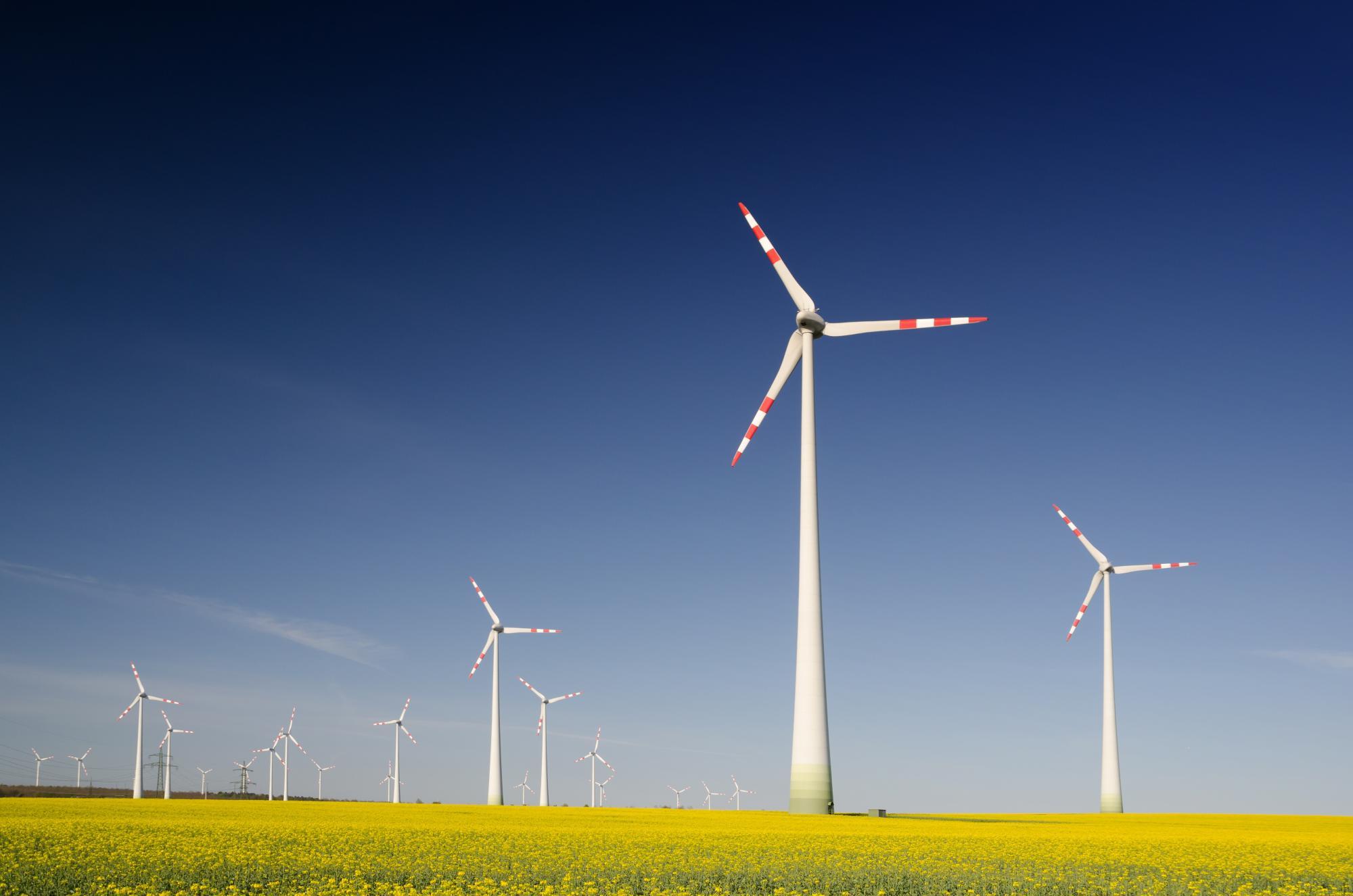
>@Zbynek Burival/free
©Zbynek Burival/free
  • Wind farm to have capacity of 143 MW, providing around 90 000 households with electricity produced from renewable energy sources
  • EIB and UniCredit Bank Austria providing total funding of €107,4 million
  • EIB’s share backed by guarantee from European Fund for Strategic Investments (EFSI), the financial pillar of the Investment Plan for Europe

“With this fresh start after the coronavirus crisis, we now have a unique opportunity to join forces and drive the Austrian economy’s transition to a sustainable, climate-friendly system,” said Susanne Wendler, board member of UniCredit Bank Austria’s “Unternehmerbank”. “Banks bear a particular responsibility in this task because the business decisions we make are capable of generating far greater leverage than those of any other sector.”

Austria is aiming to produce its entire electricity supply using renewable energies by 2030. To achieve this goal, major steps have already been taken in the form of wind farm repowering. An example of these repowering projects can be found in the municipalities of Gols and Mönchhof in Burgenland. Construction was launched in autumn 2019 and is expected to reach completion at the end of 2021. The entire wind farm will have capacity of 143 MW and provide around 90 000 households with electricity produced from renewable sources. With its 26 turbines, the project is one of the largest wind farms in Austria.

The facility will be run by PÜSPÖK Group. This family business based in Burgenland has been developing and operating wind farms in Austria since the late 1990s, currently supplying 160 000 households in the country with electricity.

The volume of equity and borrowed capital for the planned investment in the wind farm totals €143 million. The European Investement Bank provides to the total portion of borrowed capital of €107,4 million a direct loan of 71,6 million and an intermediated loan to UniCredit Bank Austria of 35.8 million. The EIB direct loan is backed by a guarantee from the EFSI, the financial pillar of the Investment Plan for Europe. Under this plan, the EIB and the European Commission are working together as strategic partners to boost the competitiveness of the European economy.

The EIB Vice-President responsible for operations in Austria, Andrew McDowell, said: “Austria is emphatically pursuing its changeover to a sustainable, competitive and secure energy supply. The development of wind power is playing an important role in this energy transition. We are therefore very pleased to welcome the cooperation with the PÜSPÖK Group and the construction of a new wind farm in the state of Burgenland, which has been a trailblazer for wind power in Austria. As the EU climate bank, we have made the transition to renewable sources of energy a key policy objective and a priority sector for our financing.”

European Commissioner for the Economy, Paolo Gentiloni, said: “Today the European Union confirms its commitment to supporting renewable energy in Austria and to helping the country to meet its decarbonisation targets. This financing under the Investment Plan for Europe will lead to the construction of a 143 megawatt wind farm, which will bring clean energy to around 90 000 households in the state of Burgenland. Through projects like this, we will reach the goals of the European Green Deal and achieve climate neutrality by 2050”.

Lukas Püspök, managing partner of PÜSPÖK Group, added: “This repowering project triples the energy produced over the same surface area, testifying to the technological and economic progress made in the use of wind power in the last 20 years. This marks a milestone in Austria’s path towards achieving its climate goals. Further major efforts are needed to address the climate crisis. A long-term positive framework for the development of renewables must finally become a reality.”

Background information:

About the EIB

The European Investment Bank (EIB) is the long-term lending institution of the European Union, owned by its Member States. It makes long-term finance available for sound investment in order to contribute towards EU policy goals.

About the Investment Plan for Europe

The Investment Plan for Europe is one of the EU’s key actions to boost investment in Europe, thereby creating jobs and fostering growth. To this end, smarter use will be made of new and existing financial resources. The EIB Group plays an integral role in this Plan. Thanks to guarantees from the European Fund for Strategic Investments (EFSI), the EIB and EIF are able to take on a higher share of project risk. This encourages private investors to participate in the projects. The EIB Group’s target was to catalyse additional investments of €500 billion by the end of 2020. It already reached and exceeded this goal in July. The projects and agreements approved under the EFSI so far have mobilised around €524 billion in investment, benefiting around 1.4 million small and medium-sized enterprises throughout the European Union.

About PÜSPÖK Group

PÜSPÖK Group has been developing, constructing and operating wind farms since 1997. Including the current development, the family business operates wind farms with capacity of approximately 400 MW. This supplies around 260 000 Austrian households with clean energy.

The current repowering projects at the Pannonia-Gols wind farm, and an additional project for the Mönchhof wind farm involving the full dismantling of 25 old turbines and the construction of 30 new ones, are located in the municipalities of Gols and Mönchhof in the north of the state of Burgenland and should reach completion by end-2021.

About UniCredit Bank Austria

UniCredit Bank Austria is part of UniCredit, a simple successful pan-European commercial bank, with fully plugged in corporate and investment banking, delivering a unique Western, Central and Eastern European network to its extensive client franchise. UniCredit offers both local and international expertise to its clients, providing them with unparalleled access to leading banks in its 13 core markets through its European banking network: Italy, Germany, Austria, Bosnia and Herzegovina, Bulgaria, Croatia, Czech Republic, Hungary, Romania, Russia, Serbia, Slovakia and Slovenia. Leveraging on an international network of representative offices and branches, UniCredit serves clients in another 18 countries worldwide.


Sharing of information on exports of harmful chemicals continues to grow

Sharing of information on exports of harmful chemicals continues to grow

ECHA/PR/20/06

Notifications from EU companies to export certain hazardous chemicals outside the Union have continued to steadily rise over the last three years. More than 10 000 notifications were processed in 2019 – an increase of around 35 % compared to 2016. With the increased workload, adequate resourcing is a necessity for future PIC work.

Helsinki, 31 August 2020 – ECHA’s second report on the operation of the Prior Informed Consent (PIC) Regulation shows that the regulatory actions taken in the EU to severely restrict the use of several hazardous chemicals has expanded the export notification obligations and resulted in a record number of 10 703 notifications being processed in 2019.

The workload of the Agency has consequently continued to increase during the three-year period from 2017-19. In addition to the processing of the export notifications, in 2019, the number of requests for support from EU and non-EU designated national authorities has grown by 72 % and the number of helpdesk questions from exporting and importing countries by 25 % compared to those in 2016.

ECHA has produced several guidelines to help EU companies understand their obligations under PIC. The Agency has also continued to support the European Commission on Rotterdam Convention activities – helping with substance identification activities, preparing 30 notifications of final regulatory actions taken in the EU to severely restrict the use of chemicals, and taking part in various communication and capacity-building projects.

The amount of staffing and budget available for PIC activities has, however, not increased proportionally, with the Agency needing to manage the higher workload with similar resources.

Bjorn Hansen, ECHA’s Executive Director says: “Despite all of our achievements, the continued increase in our workload is a concern. It is crucial that we have adequate staffing and enough budget in place to carry out our tasks and ensure that international trade of very hazardous chemicals remains informed and transparent, and that the environment and the health of those outside of the EU’s borders is also protected.”

The report proposes ways to improve the implementation of PIC by clarifying the legal text and adapting practices. It also identifies some areas where further EU investment – including a deeper involvement of ECHA – could lead to a higher impact of the regulation and contribute even more to the objectives of the Rotterdam Convention.

Background

The Prior Informed Consent (PIC) Regulation governs the export and import of certain hazardous chemicals between the EU and non-EU countries. It places obligations mainly on companies that want to export these chemicals to non-EU countries.

Within the EU, the regulation implements the Rotterdam Convention on the prior informed procedure for certain hazardous chemicals and pesticides in international trade.

This report is the European Chemicals Agency’s second on the operation of the PlC Regulation, for the period from 1 January 2017 to 31 December 2019, under Article 22 of the PIC Regulation.