5th Angola-EU Ministerial Meeting – Joint Way Forward

On 8 September 2020, the European Union (EU) and the Republic of Angola held the fifth Ministerial meeting organised under the framework of the EU-Angola Joint Way Forward (JWF). The meeting took place by videoconference. The Joint Way Forward is a dedicated framework for dialogue and cooperation based on common interests and shared values.

The meeting was co-chaired on the EU side by the EU High Representative for Foreign Affairs and Security Policy/Vice-President of the European Commission, Mr Josep Borrell Fontelles, and on the Angolan side by the Minister for External Relations of the Republic of Angola, H.E. Mr Tete Antonio. The meeting was also attended on the EU side by the Executive Vice-President of the European Commission, Mr Valdis Dombrovskis, and on the Angolan side by the Minister of Industry and Trade, Mr. Victor Fernandes, and the State Secretary for Economy, Mr Mario Caetano.

The Ministerial talks covered a broad spectrum of political and security issues, as well as an exchange on the impact of and response to the COVID-19 pandemic, and on further enhancement of bilateral cooperation, trade relations and cooperation in multilateral fora. The two sides expressed their satisfaction with the JWF as a framework, which remains relevant to a deepening partnership and responsive to the need to tackle together both existing and future challenges.

POLITICAL AND SECURITY ISSUES

Regional political and security priorities
The European Union congratulated Angola for holding the Secretariat-General of the Africa, Caribbean, Pacific (ACP) Group of States and the Chair of the Economic Community Central African States (ECCAS) Commission.

The two sides pledged to increase the scope of their work on peace and security. They exchanged views on the regional situation in central and southern Africa, noting the important role played by Angola in the Southern African Development Community (SADC), ECCAS and the International Conference on the Great Lakes (ICGLR) and in cooperation in the Gulf of Guinea. They touched upon a number of specific situations, such as the peace process in the Central African Republic, and the Peace, Security and Cooperation Framework for the Region, with a focus on actions to prevent and mitigate conflicts and to address the root causes of instability. In this perspective, they reaffirmed their commitment to pursue dialogue and cooperation in bilateral, regional and multilateral fora in different key priority areas, including human rights, in line with the ongoing activities of the EU-Angola Working Group on Human Rights. Whenever possible, EU-UN-AU trilateral cooperation would be promoted.

Cooperation in the field of security and defence
The two sides had a first discussion on different areas of interest for a possible EU-Angola structured cooperation in the field of security and defence. Both sides intend to look into establishing a partnership on security and defence. The first step would be the identification of priority issues of mutual interest, with a focus on possible concrete areas for cooperation, building on good ongoing cooperation on maritime security, through the holding of technical consultations. The two sides will explore avenues for further joint-cooperation in support to the Yaoundé architecture for maritime security in the Gulf of Guinea and the potential participation of Angola in EU Common Security and Defence Policy (CSDP) missions or operations.

European Union – African Union agenda: preparation of the Summit
The European Union and Angola stressed the importance of the upcoming Summit to set an ambitious agenda for the future with joint strategic priorities. In this respect, the EU updated Angola on the proposals put forward in its Joint Communication “Towards a Comprehensive Strategy with Africa”. They agreed that sustainable investment and jobs, linked to the green transition and the digital transformation alongside governance and peace and security would be priority areas. Both sides stressed their adherence to the promotion and protection of the rules-based multilateral system. They reaffirmed their commitment in World Trade Organisation (WTO) reform and in making their best efforts for a successful Twelfth WTO Ministerial Conference (MC12).

COVID-19 CRISIS – FUTURE EU-ANGOLA COOPERATION

COVID-19 impact and response
The sides exchanged on the impact of the COVID-19 pandemic in Europe, in Angola and more broadly in Africa and globally, including the importance of an environmentally sustainable economic recovery. The European Union introduced the “Team Europe” support package and explained the EU hosted “Worldwide Vaccine Pledging Marathon” to ensure the universal deployment of diagnostics, treatments and vaccines. Angola shared information on the country’s response strategy. Beyond the purely health-related issues, both sides discussed options for concerted action to tackle the socio-economic consequences of the pandemic, as well as the implications for peace and security. The EU and Angola confirmed their mutual commitment to supporting the UN Secretary-General’s call to “build back better” by investing in sustainable and resilient societies, recommitting to the Agenda 2030 and the Paris Agreement on climate change.

Preliminary exchange of views on the future of the EU-Angola cooperation
The EU updated Angola on the state of play of the future EU Multiannual Financial Framework. They had a preliminary exchange on possible common interest areas for future cooperation based on Angola and EU priorities (Green Deal, digitalisation, economic growth and jobs creation (including trade and investments) and governance, sustainable economic diversification, resilience to the impacts of climate change, the transition to green energy and to a low carbon economy). They agreed that the global economic crisis caused by the COVID-19 pandemic represents an opportunity to pursue green sustainable economic recovery and to build a more resilient model of economic growth.

Additional EU support to Angola
The European Union announced the preparation of a new package of up to €20 million in order to support Angola’s Covid-19 socio-economic response including economic formalisation. This comes in recognition of the comprehensive reform agenda of the Angolan government which includes the Macroeconomic Stabilisation Programme, improvements in Public Finance Management and commitments towards protecting the most vulnerable through social sector spending and social protection programmes. This €20 million action would complement the €10 million of funds already mobilised under existing programmes to make available emergency health supplies, provide humanitarian assistance to food insecure populations, deliver services to those affected by the State of Emergency and contribute to research on food and nutrition security of the most vulnerable.

Both sides concurred on the need to join forces to tackle the global challenge of climate change. In this perspective, the EU very much welcomed Angola’s ratification of the Paris Agreement. This ratification constitutes an important step in the context of the trade and sustainable development commitments taken in the Economic Partnership Agreement (EPA) between the EU and the SADC EPA States.

The EU presented its newly adopted action plan to combat money laundering and Angola provided a state of play of the country’s efforts to fight corruption and illicit financial flows. The parties recognised the importance of coordinated action in this field and agreed to explore avenues for further cooperation.

Both sides agreed on the importance of ongoing reforms in the critical areas of strategic natural resources, including extractive minerals. The EU updated on preparations to implement, as from next year, the 2021 Regulation (EU) 2017/821, which lays down supply chain due diligence obligations for EU importers of tin, tantalum and tungsten, and gold originating from conflict-affected and high-risk areas, and both sides agreed on the importance of supporting the ICGLR in coordinating regional action on minerals due diligence. In the context of the Kimberley Process, a multilateral commitment to remove conflict diamonds from the global supply chain, the EU reiterated its appreciation of Angola’s active role, particularly in its leadership of the Ad Hoc Committee on Review and Reform in 2019. The EU underlined its commitment towards further strengthening the Kimberley Process as unique tool for conflict prevention and sustainable development, and to working closely with Angola in this regard.

EU-ANGOLA TRADE COOPERATION
The EU and Angola stressed their ambition to build a solid trade and investment partnership. In order to achieve this, several work streams were discussed.

First, in an effort to promote bilateral, regional and continental trade and investment flows, both sides hope that the EU-SADC EPA accession process of Angola can start as soon as possible in 2020. The aim is to finalise the discussions on the terms of Angola’s accession by 2021. In addition, the EU affirmed its support for the implementation of the African Continental Free Trade Area (AfCFTA), standing ready to share its expertise with Angola, as well as for the long-term prospect of creating a comprehensive continent-to-continent free-trade area.

Second, both sides confirmed their intention to organise a high-level EU-Angola business event in the first half of 2021, bringing together representatives of business and public authorities with the aim of discussing how jointly to enhance trade and investment. The discussion would focus on sectors with potential for growth and value addition, and on those which could contribute to the diversification of Angola’s production base.

Finally, both sides confirmed their intention to start exploratory discussions on an EU-Angola investment agreement, on top of the EPA, focusing on investment facilitation. Such an arrangement would be a novelty for EU action in the Sub-Saharan region. To support these goals, both sides plan to continue and deepen economic diplomacy activities, focusing on improving the business climate and ensuring conditions conducive to sustainable investment, economic growth and job creation.

FOLLOW-UP

The European Union and Angola reiterated their full commitment to maintaining the Joint Way Forward as a forum for constructive dialogue and cooperation based on the principles of mutual respect, openness, and a commitment to promoting human rights, democracy, the rule of law and transparency. Such a partnership would allow continued future cooperation with a view to tackling bilateral, regional and global challenges in the mutual interest of both Angola and the EU.

The next Senior Officials Meeting (SOM) would be organised in Brussels, during the first half of 2021. This SOM should be dedicated to exploring new avenues for cooperation.

Both sides agreed that the next (sixth) Ministerial Meeting would take place in 2021 in Luanda.
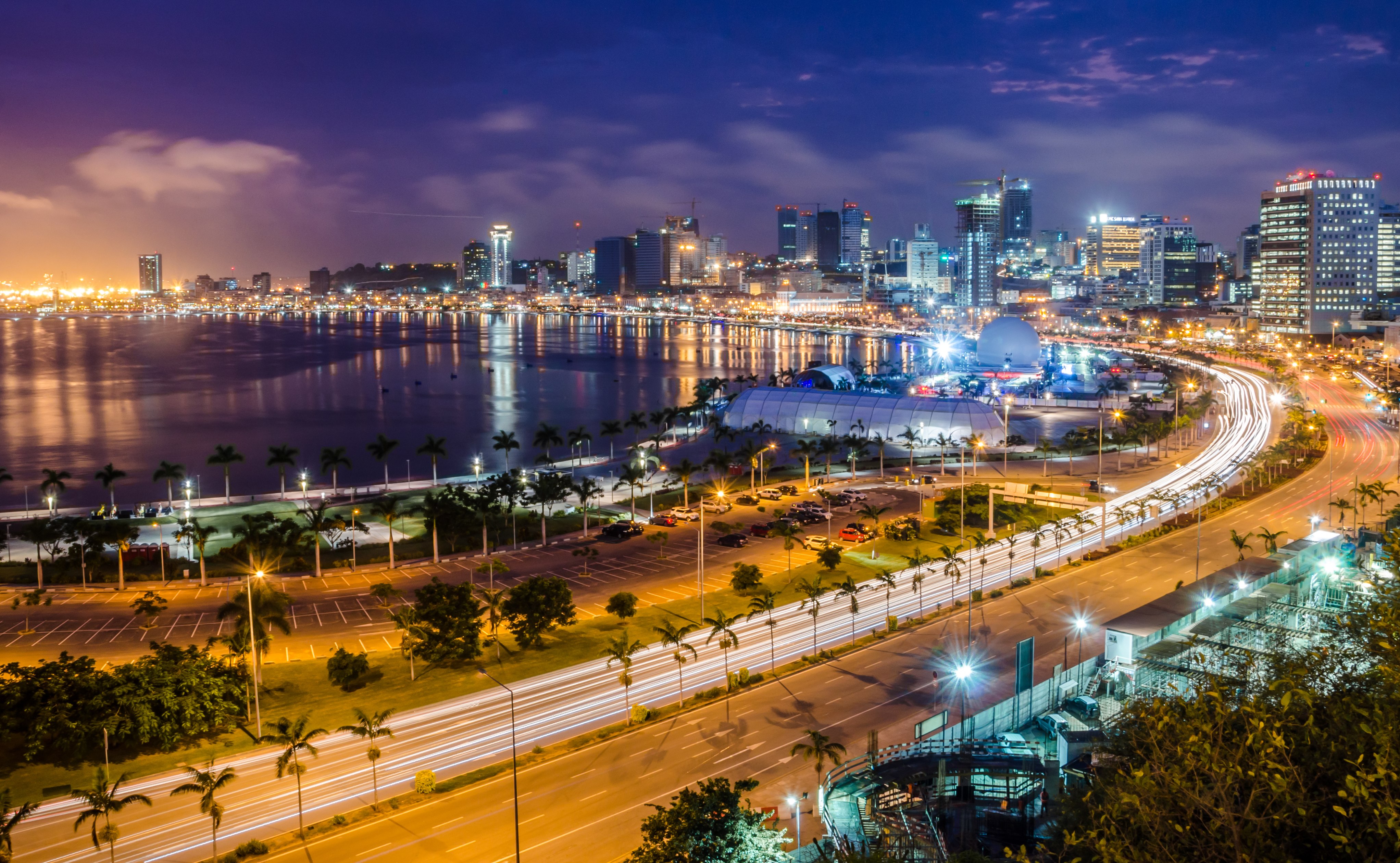


Angola and the EU strengthen their multidimensional partnership

On EU side, the meeting was also attended by Executive Vice-President of the Commission for An Economy that Works for the People and interim Commissioner for Trade, Valdis Dombrovskis and Commissioner for International Partnerships, Jutta Urpilainen. On the Angolan side, the Minister of Economy and Planning Sérgio dos Santos and the Minister of Industry and Trade Victor Fernandes took part in the meeting.

The meeting covered a broad range of topics that include political and security issues, the upcoming EU-AU summit, the COVID impact and response, the future of EU-Angola bilateral cooperation and trade and investment relations.

A roadmap on Security and defence

As the fourth biggest economy of Sub-Saharan Africa, and with its geographical position – straddling central and southern Africa – Angola has an important role to play to contribute to regional stability and promoting democratic values in a region where several neighbouring countries are facing domestic challenges and where persistent drivers of conflict are present.

During the meeting, the EU and Angola agreed to launch a roadmap aiming to establish a partnership on Security and Defence. The initial focus will be on consolidating the global rules-based order in support of the UN and the African Union, on possible Angolan participation in EU CSDP (Common Security and Defence Policy) missions and operations, and on maritime security in the Gulf of Guinea. 

Diversifying its economy and attracting investment

Angola has faced serious recessionary pressures, linked to a combination of factors including a severe reduction in oil revenue and the COVID-19 pandemic. President Joao Lourenço, elected in 2017, has dedicated his leadership to modernizing the economy, improving the business and investment climate and deepening the democratic system. 

The EU is actively supporting this reform dynamic. As an act of solidarity, Commissioner Urpilainen has announced an additional € 20 million funding to support Angola’s Covid-19 socio-economic response including economic restructuring. A business event focused on specific value chains will be organised in the coming months. One of the concrete actions that is already being launched in Angola is the development of coffee production, processing and marketing, developing a resource that can generate jobs and added value for the country.

In the near future, both parties are exploring the possibility of having an EU-Angola investment agreement focusing on investment facilitation, on top of the possibility for Angola to join the EU-SADC EPA (Economic Partnership Agreement). 

Background on EU-Angola cooperation

In Angola, the EU is funding programs in areas that are essential for the population’s well-being, supporting the fight against poverty and education. The areas of the cooperation include State capacity building to foster Angola’s stability; job creation to build a viable future for the youth; and economic diversification to make the economy more resilient. Among other programmes, projects in sustainable agriculture, water and sanitation as well as technical/vocational training and higher education are also being implemented. 

For more information: 5th Angola-EU Ministerial Meeting – Joint Way Forward


Press release: EU deploys a reinforced Election Expert Mission t

General elections have been set for 18 October in Bolivia, following a second postponement due to the COVID-19 pandemic.

In line with the European Union long-standing commitment to accompany and support peaceful, credible, inclusive and transparent elections in Bolivia, Josep Borrell, High Representative of the Union for Foreign Affairs and Security Policy and Vice-President of the European Commission, has decided to deploy a reinforced Election Expert Mission.

High Representative and Vice President Josep Borrell stated: “The organisation of genuine and credible elections is of paramount importance for the Bolivian people, who stand ready to reaffirm their commitment to democratic values and restore the country’s much-needed stability. Despite the difficult context in relation to the COVID-19 pandemic, which has led us to suspend or cancel the deployment of some EU Election Observation Missions, we continue to stand by Bolivia’s side, to help achieve their objective, including with a reinforced Electoral Expert Mission.

Member of the European Parliament and former Chief Observer of the Election Observation Mission to Bolivia Isabel Santos declared: “The deployment of this mission reflects the unfailing commitment of the European Union to support democratic elections in Bolivia, while at the same time ensuring people’s health in a context where all countries, including in Europe, are still struggling with the COVID-19 pandemic. I am confident that the Election Expert Mission will provide an important contribution to democracy in Bolivia.

This technical mission will be composed of 5-6 experts who will conduct a comprehensive analysis of the electoral process until its end.
The mission will draft a report analysing how the elections were implemented according to international and national laws as well as best practices for democratic elections and will provide a set of recommendations to improve future elections. The report will be made public at the end of the process.

In addition to this mission, the European Union is providing under the Instrument contributing to Stability and Peace a €2m support to the Supreme Electoral Tribunal in Bolivia to ensure that elections abide by international principles for democratic elections. Moreover, the European Union is supporting under the European Instrument for Democracy and Human Rights and for a budget worth €600,000 the efforts of Bolivian civil society organisations to conduct a national observation of the process.

The European Union is a key partner of Bolivia and is committed to support a constructive and consensual approach via national dialogue as basis for democratic elections in Bolivia where Bolivians can exercise their right to vote despite COVID-related challenges.


Article – LUX Award: audiences and MEPs to choose the winning film

The film award, created 13 years ago by the European Parliament to support the distribution of European films, is being made over. From now on, audiences will be directly involved in choosing the winner and the revamped LUX Award joins forces with the European Film Academy to reach a wider audience.

New voting, new branding, new partners, new calendar

To mark that change, the prize gets a new name: LUX European Audience Film Award . More films (five) will be subtitled in the 24 official EU languages. Exceptionally, this year, due to the impact of covid on the film industry, only three films will be in the running for the award.

“So far, the message of the LUX Prize was ‘The European Parliament is committed to culture’ and we can be proud of this achievement,” said Sabine Verheyen, chair of Parliament’s culture committee, at the 77th Venice International Film Festival when unveiling the new prize. “From now on, we want to share our journey with new partners. We want to share our LUX Prize with more and more Europeans,” she said.

The full title of the LUX Award reflects the enhanced partnerships: LUX – the European Audience Film Award by the European Parliament and the European Film Academy – in partnership with the European Commission and Europa Cinemas.


Recovery Plan: powering Europe's strategic autonomy – Speech by President Charles Michel at the Brussels Economic Forum

BEF speech by President Michel – Part 1
BEF speech by President Michel – part 2

Thank you to everyone watching and listening. And thank you, Paolo (Gentiloni), for inviting me to this forum — a major event for European economic debate.

In July, European leaders reached a deal on our next budget and our Recovery Plan.  It wasn’t easy, but it was a success. In fact, it was such a success that requests for me to speak have multiplied by twenty!

Of course, this achievement belongs to the European leaders.  And most importantly, to Europe as a whole.  This agreement was a major step to our vital objective: European strategic autonomy.

Before the Summit, many people were sceptical that a deal was possible. But I was determined to make it happen. I was so determined to reach a deal that when journalists asked me how many days the summit would last, I told them: If necessary, I’m ready to ask the Belgian Prime Minister to close all the Belgian airports! After 4 days and 4 nights, we reached a deal.  And no airports were closed.

Why was success at this first Summit so critical? We had to act quickly and decisively. Because uncertainty is damaging.

Think back to commentary before the summit.  It’s true, European leaders had divergent views. Some challenged the Union’s borrowing on financial markets to support Member States with grants. Some thought the amounts were too high.  Others thought they were too low. And at the start of the pandemic, Europe was criticised for reacting too slowly.

In fact, the reality was quite the opposite. Compared to the great financial crisis, Europe took charge with exceptional strength and speed. Precisely because we learned the hard lessons of that crisis. And decision-makers — both at national and EU level — recognised the urgency and took the difficult decisions.

Europe’s overall economic response has been far superior to the stimulus packages of the United States or China. This bold European response was fundamental to protect our citizens and safeguard our businesses. The financial markets have also recognised our comprehensive action.  

But let’s remember the atmosphere back in June and July. Enormous expectations were rising. The pressure was building. And so were the doubts and uncertainty. And while uncertainty is a political risk, it is also an economic one.  We know that the impact of economic shocks can last long after their causes have been addressed — for example, depressing the labour market and eroding skills associated with prolonged unemployment.

But there are other ways a crisis can undermine long-term growth. Such as undermining confidence. As companies lose trust in the future, their appetite for risk decreases. So does their appetite for investment in key areas like innovation.  And employees are less keen to develop new skills.

It was therefore crucial to act quickly. But also with strength and with unity. That’s exactly what we did in July, with one, strong, clear response to this unprecedented crisis…in the spirit of our founding fathers. 

In fact, this was a “first” for Europe in many ways. The first time the European Union will borrow to invest and to reform; The first time such a jaw-dropping amount — over 1.8 trillion Euros — has been negotiated for Europe; The first time a major part of the EU budget is linked to our climate ambitions; And the first time our budget will be linked to the rule of law.

And that’s not all … We also committed to creating new own resources during the next budgetary period. A few words about this. Establishing these new resources is of the utmost importance. Not only because creating new substantial revenues will be an irreversible step in strengthening the Union’s capacities. Not only because environmental taxation will make a pivotal contribution to our carbon neutrality goal for 2050. It’s more than that.

We will not accept that environmentally substandard goods unfairly compete with European products, while at the same time damaging the planet. We are ready to establish a carbon border adjustment mechanism in line with an improved Emission Trade System to protect our level playing field. If foreign companies want access to our market, we expect them to be on the same footing as our European companies. We are sending a message not only to our citizens, but also to the rest of the world: Europe is a world power.  We are ready to firmly defend our interests.  This is what we showed in July.

But important steps remain to get this agreement over the finish line: the European Parliament’s consent, and the ratification by Member States. And then comes the hard work.  Because this recovery plan is not just a simple stimulus plan. It’s much more than that.  It’s a transformation strategy that will lead us to the Europe of the future. This is a Copernican moment.

This strategy will build on its two main pillars ­– the Green Deal and the Digital Agenda – reinforced by an industrial plan for a more independent Europe. And to make this strategy sustainable, we will modernise our fiscal rules. And we never forget what underpins these plans — our unique set of European values. It’s the “why” behind all our actions to make our societies stronger, fairer, and more resilient.

The Green Deal will protect our planet and our quality of life, while creating wealth and increasing our well-being. Europe’s Digital strategy will unlock the promise of technology.   And improve the lives of our citizens, while respecting their fundamental freedoms. Our industrial strategy will foster greater independence.  And make sure we have access to all the necessary resources to ensure the prosperity of our citizens. This includes, for instance, greater autonomy in producing processors, vital medicines, and other essential products.

Finally, our fiscal rules. These rules give Member States the capacity to act in hard times.  Covid-19 has shown the pivotal role of the State in protecting livelihoods and businesses.  But we must remain vigilant. There’s no magic money. As we implement our recovery plan, every euro must be used thoughtfully and efficiently.

Europe’s recovery plan is not a three- or seven-year strategy.  It’s a thirty-year strategy. Our prosperity will be founded on democratic and human values. And for this to work, we need trust. 

As a Law student at the Free University of Brussels, I was strongly influenced by a professor. Her name was Nelly Schmitz.  She offered a ‘Schumpeter workshop’, as part of her political economy class. I never forgot her words: innovation and progress go together.

We all know that confidence is the key to democratic legitimacy.  Confidence is also key to transforming our economies and our social model, vital to making a success of our climate and digital transitions.

We believe in our future.  And we are sending one clear message: Europe is united and confident. Anchored in our values, Europe projects power.  And we are ready to act to transform our economic and social model. With one constant goal: greater benefits for our citizens.

European strategic autonomy – these are not just words.  The strategic independence of Europe is our new common project for this century. It’s in all our common interest. 

70 years after the founding fathers … European strategic autonomy is goal number one for our generation. For Europe, this is the real start of the 21st Century. Thank you.