Belarus: Remarks by the High Representative / Vice-President Jos

Opening remarks

Check against delivery!

Thank you Mr President, Honourable Members,

You have invited me to address the [European Parliament] plenary on three very important foreign affairs issues. All of them together is going to be a lot of work and not enough time to deal with them as much as needed. But let us try to summarise what has been, indeed, a summer of crisis.

Let us start with Belarus. The situation is clear for us. We consider the elections on the 9th of August fraudulent. We do not recognise Lukashenko as the legitimate President of Belarus.

I appreciate the support that this Parliament has demonstrated for the rights of the Belarusian people, as well as for the actions taken until now by the European Union. 

But the brutal crackdown continues. More than 7,500 peaceful protesters have been detained. 500 cases of torture have been recorded and documented. All Presidium members of the Coordination Council have been arrested or forced into exile, with the exception of Nobel Prize Laureate Ms [Sviatlana] Alexievich.

We have reacted covering four pillars of action.

First, adopting sanctions. We are in the process of adopting sanctions for a substantial number of those responsible for violence, repression and falsification of election results. They are, right now, under examination of the Council working parties with a view to adoption as soon as possible. “As soon as possible” – what does it mean? They should be adopted before the European Council if we want to keep the European credibility. We are trying to apply a gradual approach, and if the situation further deteriorates, additional sanctions will be envisaged.

Secondly, we call on the Belarusian authorities to find a way out of the crisis by ending violence and unlawful detentions, and by establishing an inclusive national dialogue. We continue to stress that we are ready to support any credible initiative in this direction. For example, the offer of the OSCE Chair in Office to visit Minsk could help to resolve the crisis. We stress the fact that, from our point of view, the re-run of elections under OSCE’s supervision would be the best solution, but so far it has been impossible for us to reach out to the Belarusian authorities on this issue at any level.

The single-minded determination of Lukashenko to stay in power – with the, apparently, increasing support of Moscow – makes all this difficult. You know that there was a meeting between Lukashenko and Putin on Monday (15 September), yesterday. It seems from this meeting that the support of Russia to Belarus – to Lukashenko – continues.

Thirdly, we are committed to strengthening the engagement with the Belarusian people and civil society. President von der Leyen announced €53 million allocated to Belarus. Funds have been made immediately available to the victims of violence, and we try to provide support to independent media.

Finally, we are conducting a review of European Union-Belarus relations. We are identifying areas where contacts should be suspended or scaled back; areas where our interest is to engage and even intensify contacts in support of the Belarusian people and civil society; and, finally, areas where we can assist further if there is a move towards a new, democratic Belarus.  

I want to stress these three areas: where we can suspend or scale back, where we can engage, and where we can assist further.

This is, telegraphically, what I can say about the Belarusian situation.

Link to the video: https://audiovisual.ec.europa.eu/en/video/I-194060

Closing remarks

Check against delivery!

Thank you Mr President, thank you honourable members for all your contributions to this debate. I do not have a lot of time to summarise.

We are using all the tools that we have at our disposal to contribute to the end of the violent repression that has been developing in Belarus after the elections, which we do not consider to have legitimately elected  [Alexander] Lukashenko [as President].

We support a peaceful and democratic solution to the crisis through political engagement, restrictive measures, and increased support to civil society and independent media. This is what we can do and that is what we are doing. Do not ask for things that are out of the competences of the European institutions. Sometimes you ask for decisions that belong to [the competence of] Member States, for which I am sorry but I cannot feel responsible. I try to work within the framework of the treaties for the European and the capacities we have. And believe me it is not always easy.

We are still discussing sanctions on Belarus and my main purpose is to try to see them approved with an agreement in the technical working groups of the Council, in order to have it approved before the European Council. But we will continue engaging on the situation with Belarus with all the tools at our disposal.

Link to the video: https://audiovisual.ec.europa.eu/en/video/I-195015


Lesvos: Asylum interviews to resume

Approximately 160 EASO personnel assisting in ensuring that asylum procedures are not disrupted. Agency also supporting establishment of emergency reception facility.

The European Asylum Support Office (EASO) confirms that its personnel will be resuming interviews for international protection on Lesvos in the coming days. Interviews were temporarily suspended following large fires which destroyed the Moria reception facility on 8 and 9 September 2020. 

Other elements of EASO’s operational activities on Lesvos, such as the drafting of Opinions, as well as Relocation workflows, were unaffected by the fires and continued without disruption. 

Together with the European Commission and other EU actors, EASO has been in constant contact with the Greek authorities to offer any assistance possible, including ensuring that applicants for international protection are able to continue their procedures.

EASO also confirms that, contrary to some speculation, the destruction of EASO’s facilities in Moria did not result in the loss of documents relating to applications for international protection. All such documents are not stored by EASO, and in any case are done so electronically. Furthermore, interviews carried out by EASO personnel did not take place in Moria, but rather at EASO’s dedicated premises in Pagani.

EASO, which has approximately 160 personnel deployed in Lesvos, including caseworkers, registration assistants and reception assistants, has also re-deployed personnel to assist the Greek authorities with the ongoing establishment of an emergency reception facility in Kara Tepe. The Agency also stands ready to engage in the establishment of a new reception facility built to EU standards. 

The Agency is fully engaged with the Greek authorities, as well as the European Commission, in addressing not only the immediate needs in Lesvos, but also in terms of finding long term solutions in line with European legal obligations and best practices. 

Any further information may be obtained from the European Asylum Support Office on the following email address: press@easo.europa.eu


Battlefield evidence increasingly used to prosecute foreign terrorist fighters in the EU

The Hague, 15 September 2020

Battlefield evidence, such as photos depicting crimes committed against civilians, fingerprints on explosive devices and e-mails describing terrorist plots, is increasingly being used to prosecute suspects of terrorism and core international crimes, including returning Foreign Terrorist Fighters. The 2020 Memorandum on Battlefield Evidence, which was published today by Eurojust, the EU Agency for Criminal Justice Cooperation, shows that while there are many challenges in obtaining such data and making sure it meets the criteria for admissible evidence, it has paved the way for bringing terrorist suspects to trial.

Photos © Shutterstock

Battlefield evidence can be considered as proof, similar to any other type of evidence, in criminal proceedings. Judicial authorities in ten EU countries report that, since 2018, they have increasingly received and used battlefield information in court proceedings – irrespective of whether the information came from national and/or foreign military forces, or from NGOs and UN entities. The evidence consists of both electronic data and physical items, such as mobile phone data, credit cards. Other examples are situational reports, letters describing potential terrorist plots, witness statements and administrative documents such as a payroll roster, a list of patients in a hospital, or a will.

To guarantee the right to a fair trial, general admissibility criteria for evidence must be strictly met. With experience, solutions have been found to overcome certain challenges in this respect, including declassification of raw data as a standard procedure, providing context for raw material by intelligence services and using standard procedures for international Mutual Legal Assistance requests. The report outlines a number of recommendations to further develop this practice, such as strengthening the operational relationships between judicial authorities and law enforcement counterparts and other authorities, which include border protection and military forces, both at national and international level.

The Memorandum is the result of close cooperation between Eurojust, the Genocide Network, national authorities in the EU Member States and the Liaison Prosecutors at Eurojust. It was produced following a recommendation from the EU Counter-Terrorism Coordinator as part of the European Union’s efforts to strengthen information exchange in the field of counterterrorism.

Background

What is battlefield evidence?

Definitions of ‘battlefield evidence’ and ‘battlefield information’ vary from country to country. This information may be of a general nature or very specific and linked to a particular situation. For the purposes of this report, the term ‘battlefield evidence’ and the more general term ‘battlefield information’ are used for materials that originate from a conflict area, and include materials collected by other actors, such as the military, non-governmental organisations (NGOs), UN entities, the International Criminal Court (ICC) and other organisations. The terms ‘battlefield evidence’ and ‘battlefield information’ may refer to both personal and non-personal data.

Eurojust’s support for judicial authorities in the fight against terrorism

Eurojust, the EU Agency for Criminal Justice Cooperation, supports EU Member States and Third States in the coordination of cross-border judicial investigations and prosecutions of all forms of serious crime, including terrorism. Eurojust also facilitates exchanges of national experiences both in terrorism and in core international crime cases, sharing information from national correspondents for terrorism matters and within the Genocide Network. Since 2018, cooperation with the US authorities has also been developing in this area.

Eurojust will continue to monitor developments in this area by analysing its own casework and convictions of terrorist offences, and particularly cases in which battlefield evidence was used. Its close collaboration with the European Counter Terrorism Centre at Europol is also destined to continue. On another front, Eurojust will pursue its cooperation with the US authorities on battlefield information, in which joint efforts will be made to enhance searches of stored battlefield information and provide guidance on the categories of information that could prove useful for criminal proceedings. 

Related content

Factsheet: Supporting judicial authorities in the fight against core international crimes (2020)
Factsheet: Supporting judicial authorities in the fight against terrorism (2019)


Poland: Investment Plan for Europe – EIB supports affordable housing in the city of Szczecin

>@Copyright City of Szczecin/press office
©Copyright City of Szczecin/press office
  • Aggregate PLN 85 million loan (approx. €20 million) to two city housing companies for the construction and renovation of social and affordable housing units.
  • The aim is to regenerate the historic part of the city, encourage a social mix and promote innovative energy-efficient solutions in parts of the housing stock.   
  • The operation is backed by EFSI and partly benefits from the Natural Capital Financing Facility.

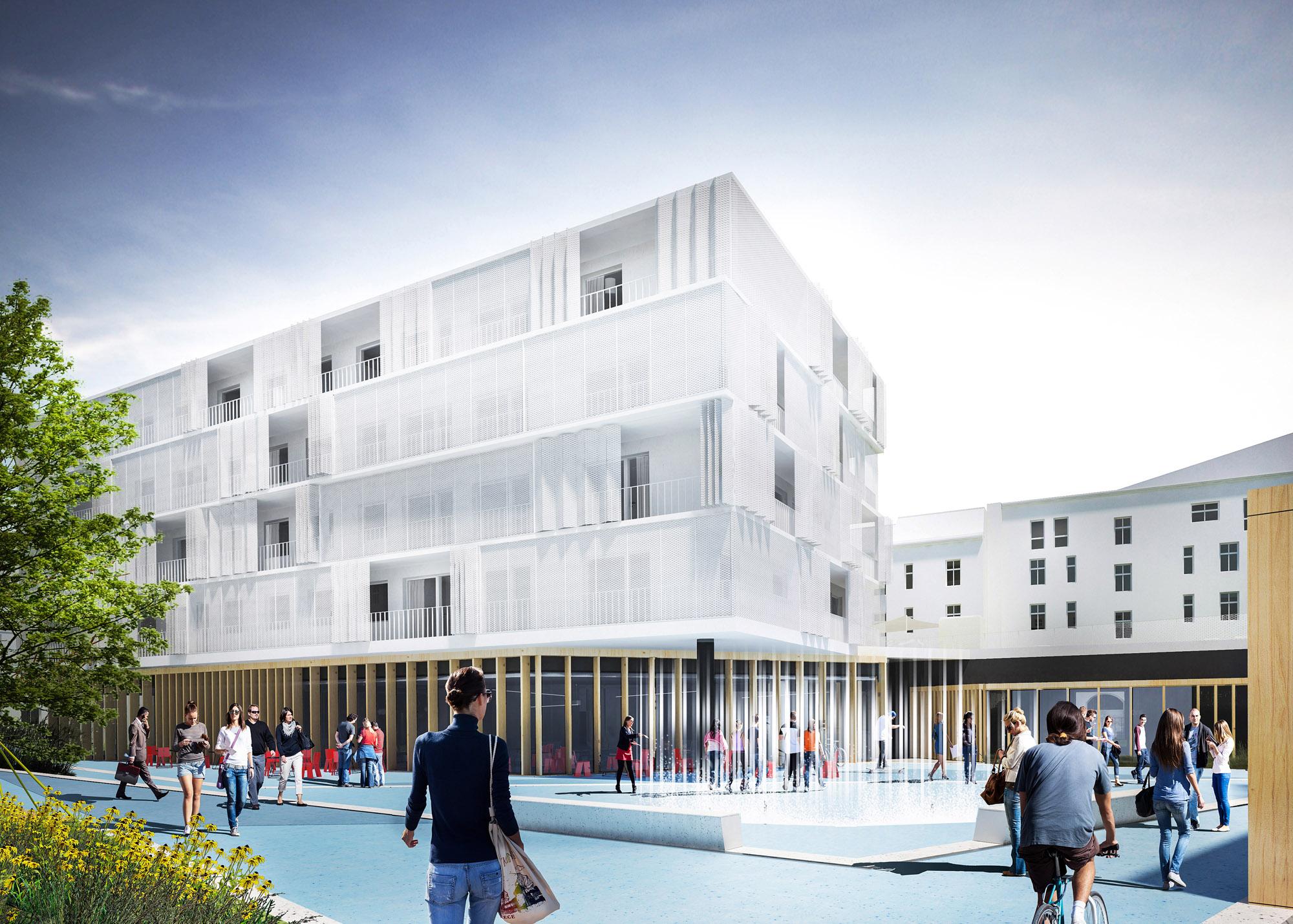
Szczecin has become the second Polish town to receive a loan from the European Investment Bank (EIB) to finance a municipal development plan for social and affordable housing. The EIB has agreed to lend up to PLN 85 million (approx. €20 million) to two housing companies owned by the City of Szczecin for the construction and renovation of 250 social and affordable housing units (169 new and 81 renovated) and associated underground parking facilities.

Thanks to the development of more energy-efficient dwellings, the project will generate savings of over 3 200 GJ per year, which will lead to a substantial reduction in Szczecin’s energy consumption and to lower emissions and energy bills. It will also enable the removal of on-street parking in the city centre and forms part of the larger urban regeneration programme of the historic part of the city.

Before Szczecin, the EIB had signed two loans in this sector with two municipal companies in Poznań. Such loans financed the construction and renovation of over 2 300 social and affordable housing units in the capital of the Wielkopolska Region.

More specifically, the Szczecin loan includes two financing parts. Up to PLN 58.25 million (approx. €13.7 million) was signed with Szczecińskie Towarzystwo Budownictwa Społecznego (STBS) and up to PLN 26.25 million (approx. €6.1 million) was signed with Towarzystwo Budownictwa Społecznego Prawobrzeże (TBSP).

The operation benefits from the guarantee of the European Fund for Strategic Investments (EFSI), the financial pillar of the Investment Plan for Europe. The European Investment Advisory Hub (EIAH), the advisory pillar of the Investment Plan for Europe, provided technical assistance to the beneficiaries.  

For the first time in social and affordable housing projects financed by the EIB, a specific focus on green infrastructure has been included in the operation. Thus, a separate PLN 3.4 million loan (approx. €0.8 million) was signed with Szczecińskie Towarzystwo Budownictwa Społecznego (STBS) to finance the integration of green roofs, urban farming plots, rainwater collection systems and other green elements. This loan thus falls under the Natural Capital Financing Facility (NCFF), an instrument managed by the EIB, supported by a guarantee under the LIFE Programme, for ecosystem –based investments for biodiversity and climate adaptation. This is the first NCFF project signed by the EU bank in Poland and it is the first time that the NCFF complements a social and affordable housing project in Europe. The EIB and the Stettin municipality stress the importance of the green elements in this operation in view of the recovery from the COVID pandemic.

EIB Vice-President Teresa Czerwińska, said:

This is the first EIB loan to the housing companies of the City of Szczecin and I am pleased that it will help to tackle two problems faced by the affordable and social housing sector: a decreasing housing stock and deteriorating quality due to ageing. The affordability and social fabric of our cities is at the core of the EU bank’s urban agenda. Szczecin is the second city in Poland to receive our support in this sector and will not be the last. I am also delighted that a small yet important part of the overall EIB financing is for the first time taking advantage of the NCFF, a joint instrument of the EIB and the European Commission that specifically targets green, innovative urban solutions.”

Paolo GentiloniEuropean Commissioner for the Economy, said: “This project is close to my heart because it fills vital needs with one deed. Allowing the most vulnerable inhabitants of Szczecin to benefit from affordable housing while lowering their energy expenditure is not only a social measure but also a boost for the climate. It also enables Polish citizens to become actors of the energy transition that will help us overcome the crisis.”

Background information

About the Investment Plan for Europe

The Investment Plan for Europe – the Juncker Plan – was launched in November 2014 to reverse the downward trend in investment levels and put Europe on the path to economic recovery. Its innovative approach based on the use of an EU budget guarantee provided to the EIB Group has enabled and continues to enable substantial public and private sector funds to be mobilised for investment in strategic sectors of the European economy. The Juncker Plan has already generated nearly €514 billion of investment, including €22.3 billion in Poland, and supported 1.2 million start-ups and SMEs across Europe. Find the latest EFSI figures by sector and by country here, or see the FAQs.

About STBS and TBSP

Both companies are owned by the City of Szczecin and their main mission is to deliver affordable housing in Szczecin either by building new apartments or by renovating existing onesLearn more here: www.stbs.pl, www.tbs.szczecin.pl

About NCFF

Under the Natural Capital Financing Facility (NCFF), the European Investment Bank provides loans and investments in funds to support projects that promote the preservation of natural capital, including adaptation to climate change, in the Member States. The total budget for the Investment Facility amounts to € 100 – 125 million for 2014-2021. Under the LIFE Programme, the European Commission contributes €50 million as a guarantee for the investments and finances a €10 million support facility.


Brexit: End of the transition period – Updated information

Please enable JavaScript to view the page content.
Your support ID is: 11469114197159835717.

This question is for testing whether you are a human visitor and to prevent automated spam submission.
Red dot

bottle

What code is in the image?

Your support ID is: 11469114197159835717.