Remarks by President Charles Michel after the EU-Japan summit via video conference

It was a pleasure to speak with Prime Minister Suga today. Japan is a like-minded partner, and a key ally for the EU. Values of multilateralism, democracy and the rule of law unite us. And this year we celebrate the 20th anniversary of our strategic partnership. In a couple of weeks, we will meet at the G7 summit in the UK. Today we had the opportunity to focus on three key areas: first, the global issues like COVID-19 and climate change; second, our bilateral relationship with Japan; and third, foreign and security policy.

Our first common priority is to defeat covid-19 and to ensure a sustainable and inclusive recovery. The European Union is playing a major role. We are the largest exporter of vaccines and with Japan we are firmly committed to COVAX. Prime Minister Suga will host the COVAX pledging summit next week, and we hope these efforts will help secure sufficient resources to vaccinate 30% of the world’s population by the end of this year. And the EU plans to share at least 100 million doses of vaccines this year. It is key to keep supply chains open.

We must also be ready for future pandemics. I have proposed with Dr Tedros, an international treaty on pandemics in the framework of the WHO. I want to thank Prime Minister Suga for his support.

We also discussed the great challenges of climate change and loss of biodiversity. And today we reached a new important milestone: the EU-Japan Green Alliance. It is our commitment to be a leader in climate neutrality by 2050 and this ambitious alliance will boost cooperation in many areas: energy transition, business, regulatory cooperation, innovation, environmental protection or sustainable finance.

We also discussed the digital transformation of our societies. The EU wants to make the next 10 years our digital decade. We will work with Japan on emerging technologies, critical materials, 5G, 6G, artificial intelligence, data and platforms. And this will boost the competitiveness of both the EU and Japan and set standards in multilateral fora.

We also discussed our bilateral relations. The full implementation of our economic partnership agreements to boost bilateral trade investment should remain our joint priority. Japan is the EU’s first connectivity partner and must continue to make concrete progress on high standard infrastructure projects in third countries.

We should complete our negotiations of the so-called “horizontal agreement” on air transport as soon as possible. And we are fostering cooperation in the industrial research and innovation and space sectors. This includes the possibility for Japan to be associated with the Horizon Europe research programme.

We have also strengthened our security and defence cooperation. The EU decided to reinforce its strategic focus on the Indo-Pacific region. We have a strong interest to intensify, with Japan, our cooperation in maritime security, technology cooperation, cyber security, disinformation, and to promote fundamental values and principles in the region. As human rights and democracy are attacked around the world, the EU and Japan need to coordinate our actions.

We also discussed a range of regional affairs, including the situation in the East and South China Sea, DPRK, Iran and JCPOA, Myanmar, Ukraine, Russia or China. We look forward to our next meeting in Tokyo to further strengthen our EU-Japan relationship.


EU-Japan Green Alliance

We use cookies in order to ensure that you can get the best browsing experience possible on the Council website. Certain cookies are used to obtain aggregated statistics about website visits to help us constantly improve the site and better serve your needs. Other cookies are used to boost performance and guarantee security of the website.


ESMA publishes guidance on funds’ marketing communications

The European Securities and Markets Authority (ESMA), the EU’s securities regulator, has today published the final report on its Guidelines under the Regulation on cross-border distribution of funds. The Guidelines specify the requirements that funds’ marketing communications must meet.

The purpose of the Guidelines is to clarify the requirements that funds’ marketing communications must meet, which is to:

  • be identifiable as such;
  • describe the risks and rewards of purchasing units or shares of an AIF or units of a UCITS in an equally prominent manner; and
  • contain clear, fair and not misleading information, taking into account the on-line aspects of marketing communications.

ESMA conducted a public consultation on these Guidelines to gather the views of relevant stakeholders. The report published today contains a feedback statement summarising the responses received and highlighting the amendments and clarifications introduced in the final guidelines to consider the feedback received during this consultation.

Next steps

The Guidelines will be translated into the official languages of the EU and published on ESMA’s website. The publication of the translations will trigger a two-month period during which national competent authorities must notify ESMA whether they comply or intend to comply with the Guidelines. The guidelines will apply 6 months after the date of the publication of the translations.  


ESMA CONSULTS ON SYNTHETIC SECURITISATIONS RTS AND AMENDMENTS TO STS TEMPLATES

The European Securities and Markets Authority (ESMA), the EU’s securities and markets regulator, published today a Consultation Paper (CP) on draft regulatory technical standards (RTS) implementing the amended Securitisation Regulation (SECR).

The amended SECR requires that certain securitisations meeting pre-defined simple, transparent and standardised (STS) requirements must be reported using standardised templates for STS notification published on ESMA’s website.

The CP sets out ESMA’s proposed draft RTS and implementing technical standards (ITS) specifying the content and the format of the standardised templates for STS notification of on-balance sheet (synthetic) securitisations. It builds on the existing technical standards for STS notification of traditional securitisations, while taking into account specific features of synthetic securitisations. The CP also includes targeted technical amendments to the STS notification templates for traditional securitisations.

Background

The amended SECR, which entered into force on 9 April 2021, introduces an STS framework for synthetic securitisations supplementing the existing STS framework for traditional securitisations.

At the same time, ESMA published interim STS templates for synthetic securitisations which may be used on a voluntary basis until the RTS becomes applicable.

Next steps

The consultation is open for feedback until 20 August 2021. ESMA is seeking feedback from originators, sponsors and institutional investors in securitisation. The draft RTS and ITS will be submitted to the European Commission for endorsement by 10 October 2021.


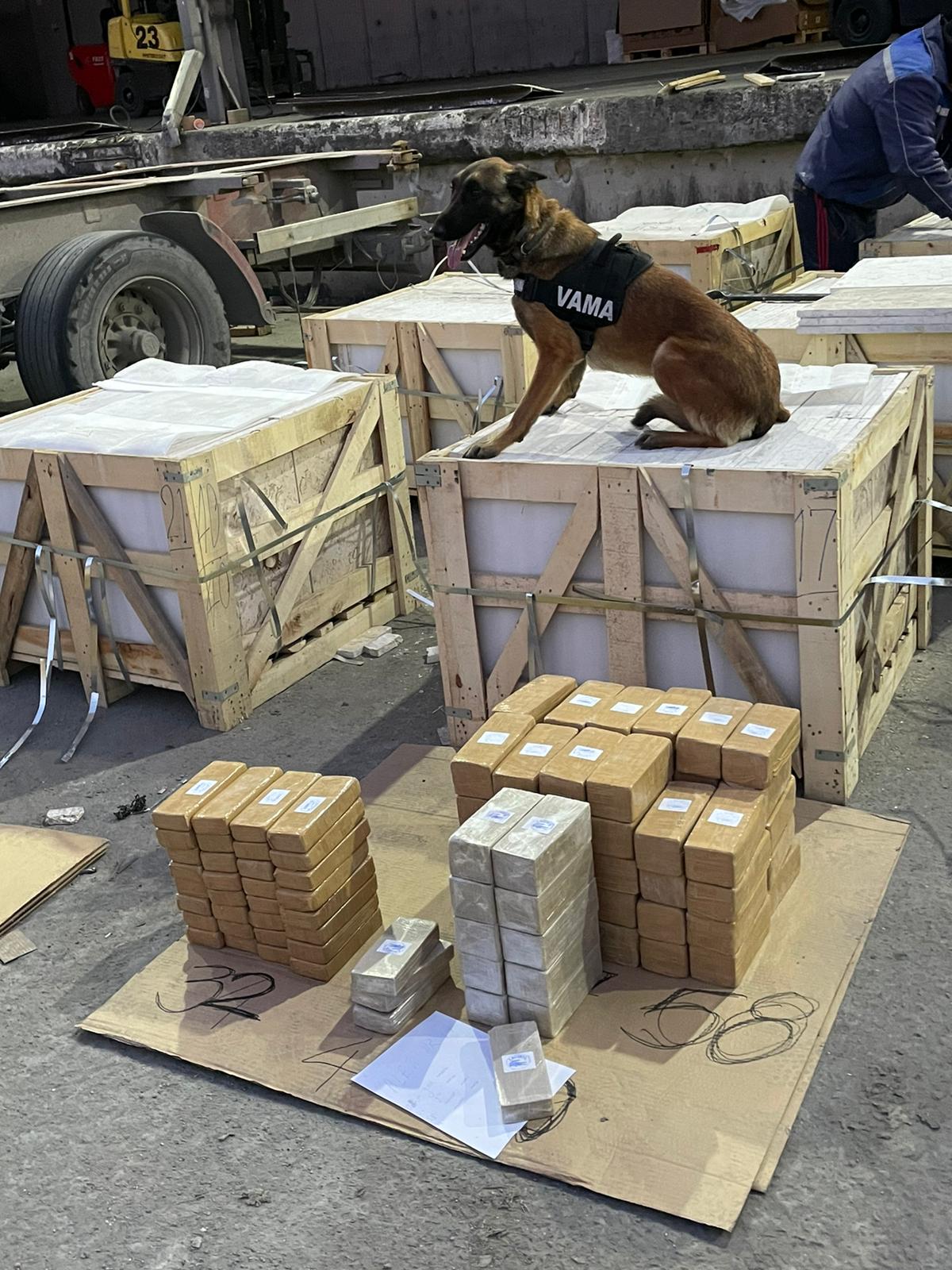
€45 million worth of heroin concealed in marble shipment seized in Romania

The 1.5 tonne of heroin, seized in the port of Constantia, was concealed in a shipment of a legal company operated by the criminal network

Europol supported the Romanian Police (Poliția Română) in dismantling an organised crime group involved in large-scale drug trafficking. The operation involved also law enforcement authorities from Austria, Belgium, Czechia, France, Germany, Hungary, the Netherlands, Slovakia and Slovenia. 

The action days on 19, 20 and 25 May and led to:

  • 12 location searches Belgium, Hungary, the Netherlands and Romania
  • 10 suspects arrested (7 in Belgium, 2 in the Netherlands and 1 in Romania)
  • 1 452kg heroin seized for an estimated value of €45 million

Legal structures across the EU used to conceal the drug trafficking

On 10 May 2021, the Romanian authorities detected and then seized 1 452 kg heroin in two containers loaded with marble slates. The shipment arrived to the Romanian port of Constanta from the Middle East. The following operational activities and monitoring of the drug delivery led to the arrests of the main targets on 19-20 May. The Belgium authorities arrested another suspect on 25 May. 

This operation is the result of a one year-long investigation targeting high-profile criminal network involved in  large scale drug trafficking. The leader of the criminal network had established a complex logistical and legal trade infrastructure to facilitate the import of large quantities of drugs from the production sites to the distribution market in Europe. He was using a significant number of companies across the EU to organise the distribution flow and conceal the illegal trafficking behind the façade of legal trade. 

The joint operational actions across the EU, which involved 90 officers in Romania only, were enabled by a swift judicial and law enforcement coordination, supported by Europol and Eurojust. Europol facilitated the information exchange and provided analytical support. On the action day, Europol supported the field activities by setting up a virtual command post. Europol also deployed an expert to Romania to enable the cross-checking of operational information in real-time. Eurojust facilitated the cooperation between judicial authorities, which enabled the controlled deliveries and the collection of evidence.  

Headquartered in The Hague, the Netherlands, Europol supports the 27 EU Member States in their fight against terrorism, cybercrime, and other serious and organized crime forms. Europol also works with many non-EU partner states and international organisations. From its various threat assessments to its intelligence-gathering and operational activities, Europol has the tools and resources it needs to do its part in making Europe safer.