Article – President Sassoli to EU leaders: help get the budget negotiations moving again

President Sassoli urged the EU heads of government to update the negotiating mandate they have given to the German Council presidency to make agreement on the EU long-term budget possible.

He noted that Parliament’s negotiators have asked for an additional €39 billion for key EU programmes that benefit Europeans and promote a sustainable recovery. “This is a paltry sum when set against an overall package worth €1.8 trillion, but one which would make an enormous difference to the citizens who will benefit from our common policies,” President Sassoli said, referring to the total amount of the seven-year budget and the Covid-19 recovery plan.

Mr Sassoli noted that if Parliament’s compromise proposal is accepted by the Council, the budget spending ceiling will have to be raised by only €9 billion and this will bring the ceiling of those programmes to exactly the same level of spending as in the 2014-2020 period in real terms.

He said that the interest payments for the debt that the EU plans to issue to finance the recovery must be counted on top of the programme ceilings so as not to further squeeze the financing of these policies. The recovery plan “is an extraordinary commitment, and therefore the cost of the interest should be treated as an extraordinary expense as well. It should not come down to a choice between these costs and the [budget] programmes”.

The President also stressed the need for a binding timetable for the introduction of new types of budget revenue over the coming years and for flexible provisions in the budget to finance unforeseen future events.

Mr Sassoli defended Parliament’s demand for ambitious emission reduction targets. “We must reduce greenhouse gas emissions by 60% by 2030. We need a target, which acts as a bright beacon on the path to climate neutrality. Protecting the environment means new jobs, more research, more social protection, more opportunities.”

“We should use the economic stimuli provided by public institutions to radically change our growth models while guaranteeing a fair transition that works for us and for future generations. No one should be left behind,” he added.

Commenting on the ongoing negotiations on future EU-UK relations, Mr Sassoli expressed concern about the lack of clarity from the UK side. “I hope that our UK friends use the very narrow window of opportunity that remains to work constructively towards overcoming our differences,” he said, adding that the UK should honour its commitments and remove the controversial provisions in its internal market act.
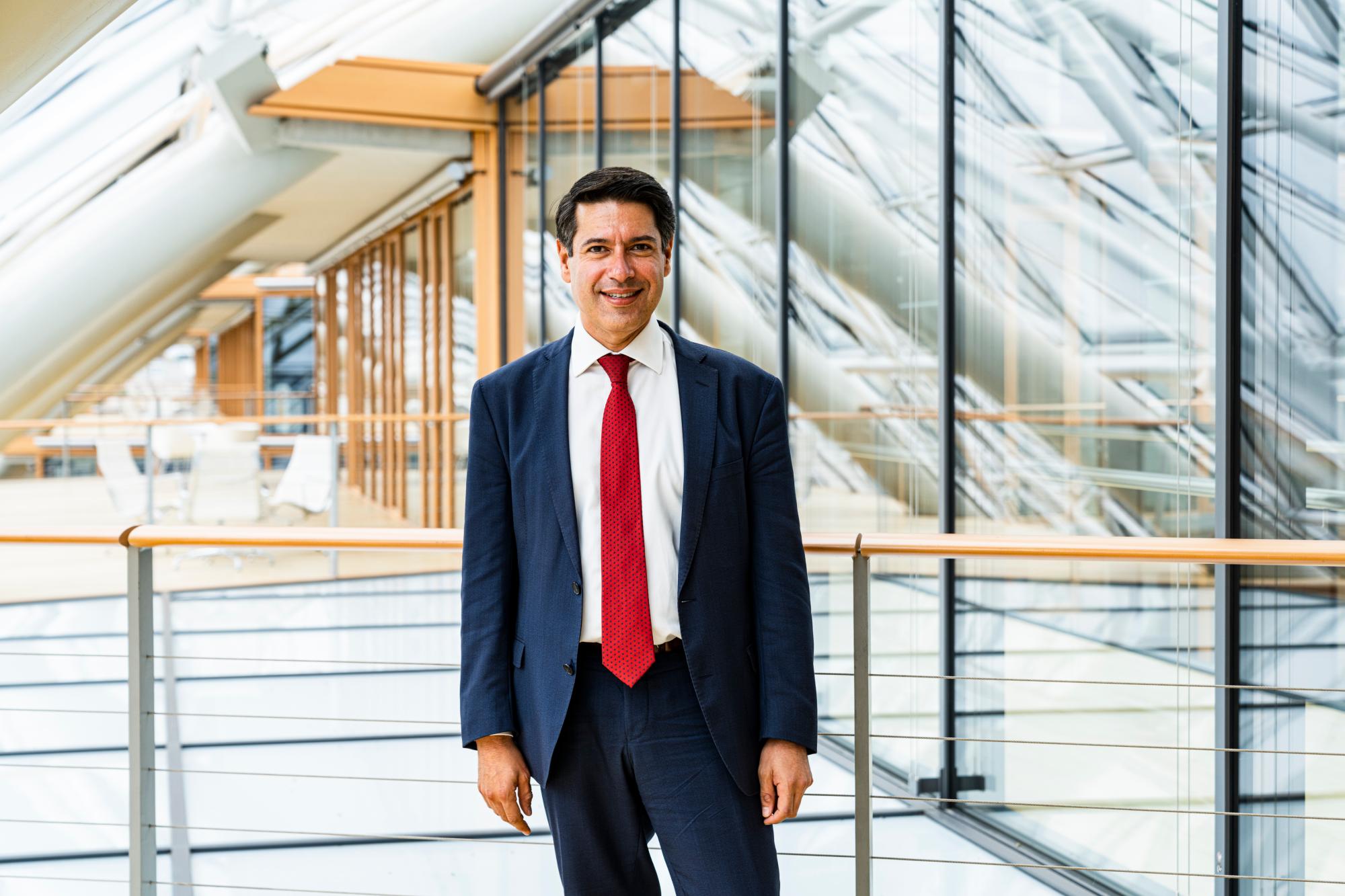


Ricardo Mourinho Félix appointed as Vice-President of the EIB

>@Caroline Martin/EIB
©Caroline Martin/EIB

Ricardo Mourinho Félix is the new Vice-President and Member of the Management Committee of the European Investment Bank (EIB). He takes up his duties on 16th October, succeeding Emma Navarro, whose mandate ends today.

The EIB’s Board of Governors appointed Mr. Félix, a Portuguese citizen, on a proposal from the Minister of Finance of Portugal and with the agreement of the shareholder constituency formed by Spain and Portugal.

Upon joining the EIB, Mr. Félix stated: “I am extremely motivated and honoured to join the EIB, the lending arm of the European Union and the world largest multilateral provider of finance for climate action. There is no better time to be part of such a key organisation, whose core mission is to support the European economy, create jobs, promote inclusive and sustainable growth and foster equality to continue improving the lives of our citizens. The EIB is at the forefront in addressing all the major challenges we are facing. These range from fostering a green transition and the implementation of the European Green Deal to helping viable companies affected by the COVID19-pandemics; from investing in digitalisation and innovation to ensuring access to public infrastructures and services. All of these are major issues to be tackled right now and the EIB is best placed to play a pivotal role in providing the funding for investments and the expertise needed to succeed. This is a time for action, in close coordination among all European institutions. This is the time for Europe.”

Prior to his appointment as EIB Vice-President, Mr. Félix held various high-ranking positions in the public sector in Portugal. He was Deputy Minister of Finance and Secretary State for Finance of Portugal between 2017 and 2020 and Deputy Minister of Finance and Secretary State for the Treasury and Finance between 2015 and 2017. Before joining the Portuguese Government, he worked as Head of Division of the Portuguese Economy Analysis at Banco de Portugal.

Born in Setúbal, in the south of the country, in 1974, Mr. Félix obtained a Master’s degree in Economics from NOVA School of Business and Economics of Universidade Nova de Lisboa and a degree in Economics from the ISEG Lisbon School of Economics and Management from the Universidade de Lisboa.

The Management Committee is the EIB’s permanent collegiate executive body, consisting of a President and eight Vice-Presidents. The members of the Management Committee are appointed by the Board of Governors – the economy and finance ministers of the 27 EU Member States.

Under the authority of Werner Hoyer, President of the EIB, the Management Committee collectively oversees the day-to-day running of the EIB as well as preparing and ensuring the implementation of the Board of Directors’ decisions, notably regarding borrowing and lending operations.


Press release – The response to the current COVID-19 crisis must make the EU more resilient

In their vote on Thursday on economic policies needed in the euro area to tackle the crisis created by the pandemic, MEPs from the Economic and Monetary Affairs Committee stressed that EU countries’ economies are strongly interconnected. An incomplete recovery in one country would therefore spill over to all the other countries and dampen economic growth everywhere.

Targeted spending decisions

MEPs also said that the governments’ spending decisions following the COVID-19 crisis should focus on putting more funds into reversing climate change and boosting digitalisation. These measures should also foster social, economic and environmental resilience and include investments, especially in SMEs. At the same time, MEPs suggest that the Commission should explore how to better finance the Just Transition Fund, designed to alleviate the socio-economic effects of the transition to a climate-neutral economy.

Deficit, debt and own resources

The Economic and Monetary Affairs Committee is concerned about the negative and uneven impact of the COVID-19 crisis on government deficit and public debt in the EU. MEPs agreed that issuing European Commission bonds helps member states cover the costs related to measures taken in response to the pandemic.

Furthermore, the committee calls on EU leaders and the Commission to take a bold decision and urgently put in place new own resources, at least as of 2021. This would not only boost the recovery but also allow loans to be repaid under the Next Generation EU, during the next long-term budget.

Efficient use and protection of state funds

The committee demands that those receiving state aid, EU funds or other public money due to the COVID-19 crisis, must sustain jobs, pay their fair share of taxes, commit to sustainability objectives and refrain from paying out dividends. MEPs recalled that tax evasion and tax avoidance at EU level amount to up to EUR 160-190 billion each year, constituting missing revenues. They stressed that it is vital to fight tax fraud, tax evasion, tax avoidance and money laundering, at both national and EU levels.

Finally, MEPs pointed out that linking the Recovery and Resilience Facility to the European Semester process in order to monitor the progress made in implementing investments and reforms could help EU countries with their recovery.

The resolution was approved by 29 votes to 11, with 11 abstentions. It is scheduled for a plenary vote during the next plenary session, 19-23 October.


Update from the Executive Director of the EUIPO

Please enable JavaScript to view the page content.
Your support ID is: 11469114198622782557.

This question is for testing whether you are a human visitor and to prevent automated spam submission.
Red dot

bottle

What code is in the image?

Your support ID is: 11469114198622782557.


Trust in EU recovers following COVID-19 responses

Trust in the European Union was significantly higher among respondents in the July wave of Eurofound’s Living, working and COVID-19 survey than in April, with average trust in the EU exceeding trust in national governments. This reflects positively on the work of the European institutions during the summer in addressing the COVID-19 pandemic, as very low levels of trust in the EU during the early stages of the pandemic raised fundamental questions about perceived EU action and broader European solidarity during the crisis.

Eurofound’s unique Living, working and COVID-19 research looks in detail at the experiences of citizens in both April, when much of Europe was under heavy restriction, and July, when restrictions had been somewhat eased. The full report details the social, economic, labour market, and quality of life findings of a total of 87,477 respondents across the EU. It shows that while trust in the media, police and healthcare system remained largely stable over the summer, there was a marked decline in government trust in some Member States, and relatively large growth in trust in the EU. This growth in trust is particularly noteworthy considering the consistent decline in EU trust in the aftermath of the financial crisis and onset of the Great Recession.

Trust in the EU, measured out of 10, was highest in Ireland (6.3), Poland (6.2), and Lithuania (5.9) in July, it was lowest in Greece (4.2), Croatia (4.2) and Czechia (4.3). Overall, trust increased from 4.6 in April to 5.1 in July, with significant increases recorded in 13 Member States – most notably Italy (from 4.1 to 5.2) and Spain (from 4 to 5.1). While increases in trust were recorded in southern Europe, a decline in EU trust was noted in Finland (from 6.5 to 5.5), Denmark (from 5.7 to 4.9), the Netherlands (from 4.9 to 4.4) and Sweden (from 5.2 to 4.8). This suggests different national perceptions of changes to European economic and monetary policies to deal with the pandemic during the period.

Trust in national governments was highest in Luxembourg (6.8), Finland (6.5) and Denmark (6.4), and lowest in Poland (2.4), Croatia, Bulgaria and Hungary (2.9 respectively). There were notable increases in trust in the national government in Spain (+0.5), France (+0.4) and Luxembourg (+0.3), but significant decreases in Malta (-1.5), Croatia (-1.2), Finland (-1.1) and Austria (-1.1). The report notes that trust in both the national government and EU was higher among respondents that received support from public services to help with living expenses or household needs.

Speaking about the findings, Massimiliano Mascherini, Eurofound Head of Unit for Social Policies, said ‘Maintaining and improving levels of trust is of vital importance during this pandemic, as trust is a keystone of the compliance needed to control COVID-19. The importance of the improving EU trust that this research demonstrates should not be understated, it sends a clear message that most people in Europe were in favour of coordinated, comprehensive action based on solidarity and common European values.’

More information