EIB Group adopts Climate Bank Roadmap and approves € 400 million for COVAX initiative to ensure global access to COVID-19 vaccine, part of € 7.8 billion for COVID-19 support, transport, water and cities.
>@GAVI
©GAVI
  • EIB Board approves EIB Group Climate Bank Roadmap to support € 1 trillion green investment by 2030 and Paris Alignment of all financing activities
  • € 1.8 billion for COVID-19 health, medical and economic resilience
  • € 2.6 billion for private sector investment with global financing partners
  • € 1 billion for sustainable cities and energy efficient housing

The European Investment Bank (EIB) Board of Directors today approved the EIB Group Climate Bank Roadmap 2021-2025 that will guide future EIB financing to support €1 trillion of climate action and environmental sustainability investments by 2030, and align all financing activities with the principles and goals of the Paris climate agreement by the end of 2020.

The EIB approved € 7.8 billion of new financing to support investment by business impacted by COVID-19, alongside backing clean transport, sustainable urban development, renewable energy, health and education investment across Europe and around the world.

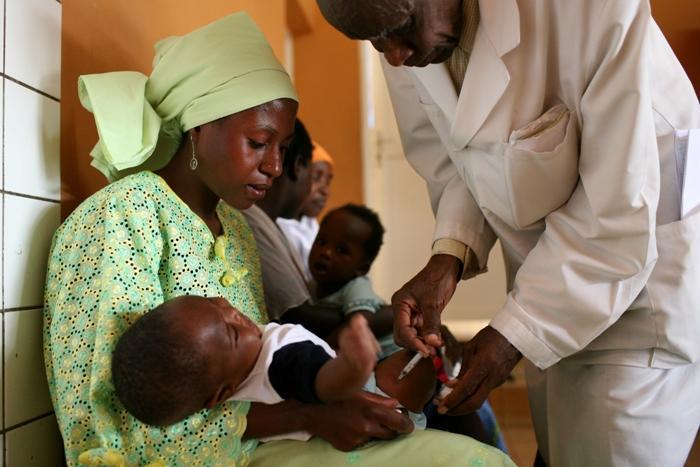
This includes € 400 million for the international COVAX initiative to ensure fair and equitable access to successful COVID-19 vaccines in Africa and scale up vaccine manufacturing in 92 developing and emerging economies alongside dedicated financing to help tourism companies impacted by the pandemic.

“The EIB Group is proud to have backed BioNTech, the German company that achieved a breakthrough in COVID-19 vaccine research this week. An effective COVID-19 vaccine is now within our reach – a truly historic achievement that has resonated globally. Now it is crucial that vaccines become available throughout the world, not only in rich countries. This is why it is so important that the EIB has today approved support for the COVAX initiative to ensure access to a successful COVID-19 vaccine in developing countries”, said Werner Hoyer, President of the European Investment Bank.

“But COVID-19 is not the only crisis on our hands. The climate and environment emergency is claiming lives as we speak and we must face up to it urgently. Today we agreed the EIB Group Climate Bank Roadmap that details our € 1 trillion response to the climate emergency in the years ahead. It is a major contribution to Europe’s role leading the way toward decarbonisation and a green, resilient and socially inclusive economy”, added Werner Hoyer.

The EIB approved € 1.8 billion for medical research, new hospitals and public health investment and local lending schemes to strengthen private sector reliance to the economic shocks of COVID-19.

Since the outbreak of COVID-19, the EIB has approved more than € 27 billion of new financing to enable public and private partners across Europe around the world to better tackle health, social and economic challenges.

Meeting by video conference, the EIB Board also agreed projects to improve sustainable transport, urban development, clean energy, access to water and education across Europe, Africa and Asia.

€ 2.6 billion to help businesses address COVID-19 challenges

The EIB today approved more than € 2.6 billon for new targeted business financing programs. This includes dedicated support for tourism companies hit by the COVID-19 crisis in France and a regional investment programme for growth companies in Bavaria.

Access to financing in Bulgaria, France, Germany, Romania and Spain will be enhanced by EIB support for new schemes managed by local financial and banking partners.

Direct EIB backing for corporate investment in electric vehicles, renewable energy and chemical innovation was also approved, alongside increased support for venture debt financing across Europe.

New initiatives to enhance access to finance by SME supply chain companies in Spain and venture debt financing across Europe will be supported by the European Guarantee Fund.

EIB Board adopts Climate Bank Roadmap

The EIB Group Climate Bank Roadmap 2021-2025 was approved today by the Board of the European Investment Bank. This will guide future climate action financing by the European Investment Bank and European Investment Fund (EIF). 

The EIB Group Climate Bank Roadmap details how the EIB and EIF will support €1 trillion of climate action and environmental sustainability investments by 2030, and align all financing activities with the principles and goals of the Paris climate agreement by the end of 2020.

It sets out in detail how the EIB Group aims to support the European Green Deal and sustainable development outside the European Union. 

The proposal adopted today reflects input from stakeholder engagement earlier this year and more than 200 written submissions to the bank. 

The existing EIB Climate Strategy was announced at the Paris Climate Conference in 2015. Five years later, the EIB is on track to deliver on its commitment of $100 billion climate finance in the period of 2016-2020.

€ 1.9 billion for sustainable urban and regional transport in Europe

Sustainable urban transport in towns across Italy will be transformed by € 300 million EIB backing for a new municipal clean transport financing scheme that will accelerate adoption of clean vehicles and reduce reliance on private cars.

Support for 145 electric buses and associated charging infrastructure in the Swedish city of Gothenburg was also approved.

The EIB board approved new financing for construction of a new high speed railway line between Madrid and the Portuguese border, as well as regional trains in Hungary and eastern France.

Rural communities in Cyprus and Ukraine will benefit from new EIB backed investment in local roads.

€ 1.1 billion for improving cities and better homes

People living in cities across Poland, Germany, Austria, Ukraine and Mongolia will benefit from improved housing, better municipal services and upgraded urban transport under new sustainable urban investment and social housing financing approved by the EIB.

New initiatives will improve social services, urban transport and accelerate regeneration in the Polish cities of Poznan, Bialystok and Radom as well as across the Wielkopolska region.

Energy efficiency, social housing and urban development will be supported in Düsseldorf and Innsbruck along with financing programmes to upgrade urban infrastructure in secondary cities across Mongolia.

The EIB also approved further support for priority investment in towns most impacted by conflict in eastern Ukraine and to meet infrastructure needs for internally displaced people.

€ 1 billion for improving health and education

Hospital patients as well as university and school students will benefit from new hospitals and improved health services, schools and university investment agreed by the EIB.

Health care, medical education and scientific research at the Medical University in Lublin in Poland will be transformed by EIB backed modernisation and expansion of specialist facilities. The EIB also agreed to support construction of a new hospital in the French city of Lens and COVID-19 healthcare investment across the Netherlands.

Education and school life in the Seine-et-Marne department north of Paris will be improved by EIB backed construction and upgrading of high schools approved today.

The EIB also agreed to support investment to increase local manufacturing capacity of Active Pharmaceutical Ingredients in Africa.

€ 1 billion backing for clean energy, addressing regional pollution and water

The EIB approved support for new windfarms in southern Italy, France and Portugal, expansion of district heating in Alkmaar and Dordrecht and increased use of geothermal energy to heat Dutch greenhouses.

The latest phase in the € 5 billion twenty year restoration of the Emscher River in Germany will benefit from further EIB support following approval of a new € 500 million 45-year loan. The initiative is improving wastewater for 2.2 million local inhabitants and allowing the rich ecosystem in the Emscher River to return following decades of use as an open sewer.

Water and wastewater services in Cologne will also be upgraded following new EIB support.

Overview of projects approved by the EIB Board

Details on the European Guarantee Fund


Press release – Opening – MEPs hold a minute of silence in memory of victims of terrorism

Expressing his condolences to the friends and families of the victims of the terrorist attacks in Dresden, Conflans-Sainte-Honorine, Nice and Vienna, President Sassoli stressed that every attack represents an attack on the EU’s fundamental values, freedom of expression, religion, and an open and inclusive society.

It is our shared responsibility to fight all types of extremism, said the President, adding that MEPs stand united against violence and hate.

Outgoing MEPs

Clotilde Armand (Renew, RO) as of 4 November

Incoming MEPs

Cyrus Engerer (NI, MT) as of 5 November

Changes to the agenda

Wednesday

Council and Commission Statements on the Multiannual Financial Framework (including Own Resources), Rule of Law Conditionality Mechanism and the Recovery Fund for Europe are added as the first item in the afternoon.

Two statements by the Vice-President of the Commission/High Representative of the Union for Foreign Affairs and Security Policy on:

  • The fight against impunity for crimes committed against journalists around the world, and
  • The geopolitical implications of the Abraham Accords in the Middle East region

are postponed to the November II part-session.

The sitting is extended to 22.30

Thursday

The debate on the report by Mr Mureşan and Mr Tang on Sustainable Europe Investment Plan – How to finance the Green Deal is moved to Thursday morning as the last item in the morning.

The reports by Ms Bilbao Barandica and Ms Roose which were part of the Joint debate on the Fisheries Partnership Agreements with Senegal and Seychelles are moved directly to the votes.

The reports by Mr Winkler which were part of the Joint debate on the Agreement between the European Union and the government of the People’s Republic of China are moved directly to the votes.

Consequently, the time slot from 15.00 till 16.30 is cancelled.

In addition, the following files are added directly to the votes:

  • the report by Ms Tinagli and Mr Fernandes on the InvestEU programme 2021–2027, and
  • three Objections pursuant to Rule 112, two on Genetically modified maize as well as one on Genetically modified soybean.

The information concerning the distribution of votes is available on the website of the European Parliament under the section “Priority information”.

The changes to the agenda with timing of votes can be found here.

Requests by committees to start negotiations with Council and Commission

Decisions by committees to enter into inter-institutional negotiations (Rule 71) are published on the plenary website.

If no request for a vote in Parliament on the decision to enter into negotiations is made by Thursday 12.00 midnight, the committees may start negotiations.

Information on the extraordinary remote participation procedure is available here.


ESMA sees potential for sudden reversal in investors’ risk assessment

During the third quarter of 2020, EU financial markets have continued their recovery and equity market valuations have edged up further.  There are increasing signs of strong geographical and sectorial differentiation across financial markets with fixed income markets seeing large-scale valuation increases across various segments such as emerging markets, investment grade and high yield. Credit rating downgrades have been slowing and investment funds recorded inflows across asset classes, especially for bond funds.

These developments, taken together, highlight the ongoing risk of decoupling between asset valuations and economic fundamentals. So, the potential for a sudden reversal in investor’s risk assessment is the key risk currently seen for EU financial markets and so ESMA maintains its risk assessment.

Looking ahead, ESMA sees a prolonged period of risk to institutional and retail investors of further, possibly significant, market corrections and see very high risks across the whole of ESMA’s remit. The extent to which these risks will further materialise will critically depend on three drivers:

  • the economic impact of the pandemic;
  • market expectations on monetary and fiscal support measures; and
  • any occurrence of additional external events in an already fragile global environment

Risk dashboard 2 2020Risk dashboard 2 2020 – ESMA


Article – Budget and recovery: no more excuses for delays, says budgets committee chair

During a Facebook live on 11 November, Van Overtveldt (ECR, Belgium) described the agreement reached with the Council on the EU’s long-term budget as “rather successful” and “a positive thing”. However, he explained there are still hurdles to be overcome before the money from the recovery plan starts reaching people and companies across Europe and urged the Council and EU countries to finalise the process.

Parliament intends to give its final approval on the long-term budget at the plenary session at the end of November, said Van Overtveldt. He emphasised that Parliament has never sought to slow things down: “There has been some talk in the last weeks about Parliament being responsible for delays. Stop that! That was never the case and that is certainly not the case now.”

The budgets committee chair noted that it is now up to the Council and the member states to approve the EU recovery plan. This requires unanimity in the Council and ratification of the decision to borrow funds on the market in all member states. Van Overtveldt said that in the best case scenario, the Commission would be able to go to the market in early spring.

He also spoke of the letter that Hungary’s prime minister Viktor Orbán sent to European Council president Charles Michel, threatening to veto the agreement on the EU budget and recovery. Hungary has reservations about the provisional deal between Parliament and Council establishing a mechanism suspending budget payments to an EU country found to be in breach of the rule of law.

“We know there is a problem with Mr Orbán and the rule of law [file] but you cannot leave the rest of Europe waiting for the €750 billion needed to fight this pandemic. There are millions of jobs on the line today and every day wasted is terrible for all the people living in uncertainty and for all the companies on the brink of shutdown.”

The budgets committee chair detailed the increases secured by Parliament for key EU programmes in areas including health, research and young people. The total amount of these top-ups is €15 billion, and another €1 billion will be put aside if unexpected future crises need to be addressed.

He noted that the deal reached with the Council allows for the Parliament to play a  bigger role as part of the EU’s budgetary authority on the oversight of how the recovery funds are spent. “It’s not a question of rights – Parliament has a duty to exercise oversight on the amounts involved.”


Press release – EP Group leaders endorse EU long-term budget and own resources agreement

Political group leaders also underlined the importance of the political agreement reached between Parliament and Council on the Rule of law Regulation.

Parliament has fought hard in the past ten weeks to reach a good agreement to address the effects of the COVID-19 pandemic and to support the recovery and make European society more resilient. Yesterday, Parliament and Council reached a political agreement on the EU’s future financing, the next EU long-term budget (MFF 2021-2027) and Own Resources proposal.

Parliament secured €15 billion for EU flagship programmes at the heart of citizens’ concerns that bring real benefits: research, health, climate and digital transitions and support for young people. €1 billion will increase flexibility to address future needs and crises.

The provisional agreement includes also:

  • a joint declaration on Next Generation EU (NGEU) interest costs and repayments in the 2021-2027 MFF to ensure that expenditure covering the financing costs of NGEU shall not reduce EU programmes and funds;
  • a legally binding roadmap for the introduction of EU own resources to finance the repayment of the recovery debt and to finance future budgets;
  • enhanced scrutiny of NGEU funds by the budgetary authority, ensuring democratic accountability is included in the Inter-institutional Agreement;
  • a role secured for the European Parliament in new proposals based on Art 122 TFEU with potentially significant implications for the European Union budget, by means of a Joint Declaration, and
  • a Commission declaration on the climate-tracking methodology and the involvement of Parliament and Council as well as a Commission declaration regarding climate contributions per programme.

Next steps

President Sassoli holds a press conference today at 14:00, more information here.

The Plenary will debate this afternoon at 15:15 the outcome of the negotiations. The agreement will then be subject to votes in the Committee on Budgets and the plenary in the coming weeks.