Brazil: Finance in Common Summit – EIB and BDMG support SMEs impacted by COVID-19

>@Shutterstock
©Shutterstock

During the Finance in Common Summit, the European Investment Bank (EIB) and Banco de Desenvolvimento de Minas Gerais (BDMG) announced targeted finance for small and medium enterprises (SMEs) in Brazil facing the COVID-19 pandemic.

The new agreement is an amendment to a contract signed in 2019, allowing both institutions to provide flexibility and to widen the eligibility criteria of the current EUR 100m BDMG CLIMATE ACTION Framework Loan II, in order to support and accelerate lending to private sector business, at the onset of the Covid-19 crisis in Latin America, especially in Brazil. This flexibility will accelerate access to finance for SMEs and in particular micro-enterprises across the country to the tune of EUR 30m.

The EIB and BDMG are partnering to support a series of climate action projects in Brazil, including solar PV, small-scale hydropower and other renewable sources. In the COVID-19 context, the partnership has been adapted to help respond to specific needs of SMEs in this new challenging situation, by allowing faster loan disbursements to businesses.

EIB Vice-President, Ricardo Mourinho Félix responsible for Latin America said: “We are pleased to announce this amendment agreement to provide additional financial support to small businesses impacted by COVID-19 in Brazil. Fostering entrepreneurship is crucial for a sustainable economic and inclusive growth, in particular during the challenging times we are facing. The EIB special COVID-19 fast response aims at accelerating the uptake and deployment of funds by BDMG to Brazilian businesses. The agreement highlights our priorities in Latin America, helping to promote sustainable and inclusive economic growth by boosting productive investment.”

Sergio Gusmão Suchodolski, President of BDMG, said: “In light of the challenging scenario triggered by the pandemic, we at BDMG have intensified our partnerships and funding diversification strategy. This includes a more dynamic relationship with Multilateral Development Banks, in which our partnership with EIB is a key element. In 2019, we have partnered with EIB on a 100 million euros framework loan for projects focused on climate action. Now, adding flexibility in the use of part of these proceeds, we will be able to further expand our emergency programs and provide additional liquidity for small and medium enterprises, securing jobs and providing countercyclical relief for the State of Minas Gerais, Brazil. This additional flexibility is therefore an important step for deepening the partnership between our sister institutions, allowing the generation of sustainable and inclusive development in this challenging moment of our world”.

EU Ambassador to Brazil, Ambassador Ignacio Ybáñez Rubio, said: “Supporting private sector companies, especially SMEs as main drivers for jobs creation, is a major objective within the EU and its Member States. It is also an important part of its cooperation agenda with partner countries. Within the current pandemic context, it is even more important to align efforts to assure a sustainable recovery of businesses and reduce as much as possible the implicit negative socio-economic consequences derived from a slowdown of economic activity. We are proud to confirm that we have supported the establishment of this facility from the beginning, as this action forms part of the EIB’s External Lending Mandate that includes a guarantee from the EU. We applaud the conclusion of this agreement that, besides the original contract’s purpose of giving priority to climate action, which is in line with the current EU Green Deal approach, it also brings the possibility to use a part of the approved facility to finance relevant projects in a wide range of sectors where Brazilian SMEs are active.”

EIB global response to COVID-19

The dedicated EIB support for COVID-19 economic resilience in Brazil is part of the EIB’s EUR 20 billion global response to reduce the economic impact of the pandemic.

EU guarantee and the SDGs

The EU bank is providing this finance, which will cover up to 75% of the final project investment cost, in the framework of the 2014-2020 lending mandate for Latin America. This agreement is therefore covered by the EU guarantee. By supporting this project, the EIB is contributing to achievement of the United Nations’ Sustainable Development Goals, ensuring access to affordable, reliable, sustainable and modern energy while fighting climate change.

The EIB in Latin America

The EU is the main development partner of the Latin America region, its number one investor and its second-largest trading partner. As the EU bank, the EIB supports the EU’s relationship with Latin America by financing projects that contribute to the EU’s external policy objectives: the development of economic, environmental and social infrastructure; private sector development; and climate change mitigation and adaptation.

In Latin America, the EIB has become a major promoter of renewable energy and energy efficiency, having signed projects worth over EUR 880m in the region between 2013 and 2018. Climate change mitigation and adaptation is the EIB’s main priority in the region, where projects supported by the EU bank focus on the environment, and especially on boosting renewable energy, energy efficiency and sustainable public transport schemes. Climate change adaptation-related projects involve upgrading existing infrastructure to be more resilient in the face of more volatile and unpredictable weather patterns, preparing it for direct and indirect impacts. In 2019, the EIB stepped up its contribution to sustainable development and climate action in Latin America, providing EUR 825m to finance 9 operations: that is the highest number of EIB operations structured in one year in the region.

About the Finance in Common Summit

The first-ever global meeting of Public Development Banks – The Finance in Common Summit – focuses on how Public Development Banks can influence the global financial system to better protect our planet and societies. The Summit takes place on the sidelines of and in partnership with the Paris Peace Forum, and contributes to the UNSG “SDG Decade of Action”, just ahead of the G20 Summit in Riyadh (21-22 November), and the 5th anniversary of the Paris Agreement and the COP21.
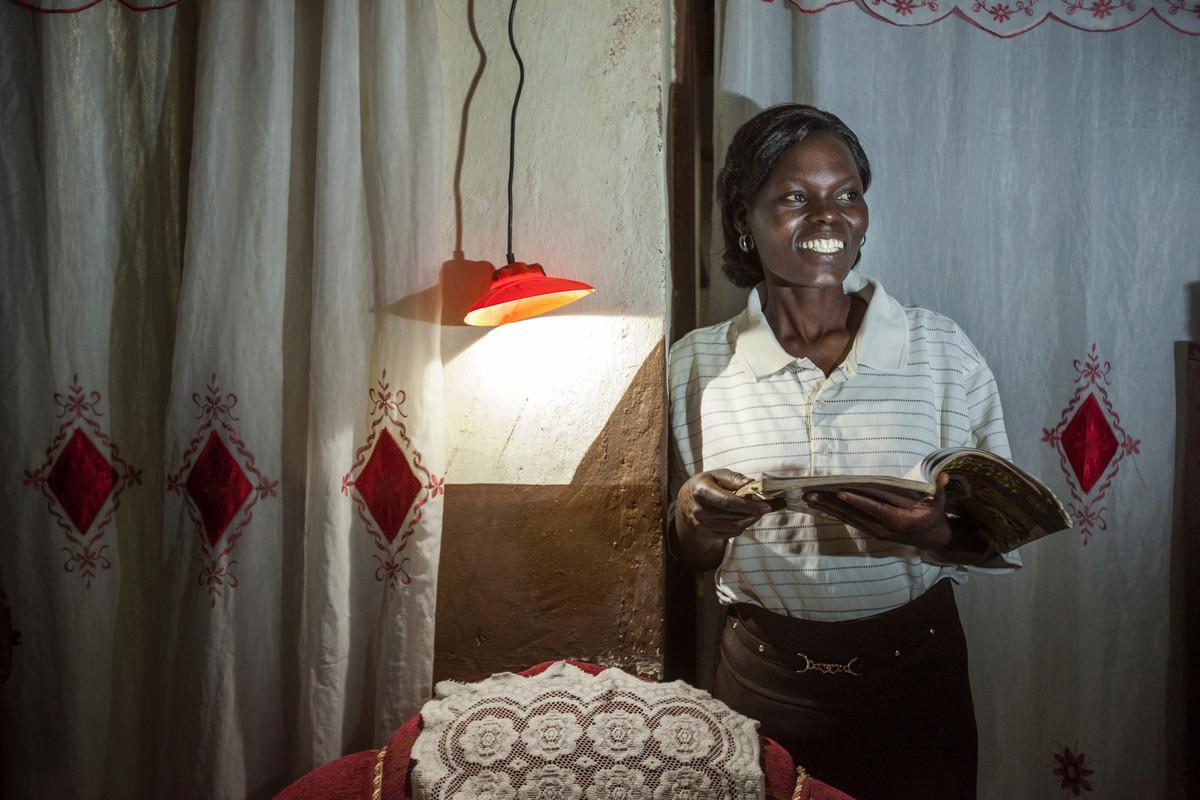


Finance in Common Summit: responsAbility, supported by FMO and EIB, Commits to Gender Equality: Climate fund qualifies for the 2X Challenge

>@responsAbility Investments AG
©responsAbility Investments AG

During the Finance in Common Summit, responsAbility Investments, a leading Swiss sustainable asset manager, commits to apply a gender lens to its investments through its climate fund. With this commitment, the climate fund, a private debt fund addressing lack of access to clean power primarily in Sub-Saharan Africa and South and South-East Asia, qualifies for the 2X Challenge. The 2X Challenge is a leading initiative deploying and mobilizing capital to empower women and enhance their economic participation in emerging markets.

 The fund qualified for the 2X Challenge by meeting the Employment Criteria with at least 50% of its portfolio companies actively improving and providing quality employment for women. The energy sector is one of the least gender diverse sectors with only 32% of the workforce being women (IRENA 2019). Applying a gender lens will help the climate fund ensure that female talent is attracted and retained, and that they can contribute to this growing industry.

responsAbility is supported by FMO, the Dutch entrepreneurial development bank, and the European Investment Bank (EIB). FMO is a member of the 2X Challenge and the EIB has adopted the 2X Challenge Criteria, which aims to advance opportunities for women through enterprise support, leadership, and career progression, quality employment, and products/services that enhance women’s economic participation. The 2X Challenge aims to identify eligible companies directly or through financial intermediaries that are committed to one or more of these areas. It exceeded its target of $3bn in commitments in June 2020.

“We applaud and support responsAbility’s commitment to apply a gender-smart investment lens to its climate fund and to joining the 2X Challenge,” said Jorim Schraven, Director Impact and ESG at FMO, the Dutch development bank. “We see responsAbility’s climate fund setting an example by supporting women’s economic empowerment in the energy sector, and we are looking forward to partnering together to deliver towards the climate action and gender equality SDGs.”

Thomas ÖSTROS, Vice-President of the European Investment Bank (EIB) said: “Supporting gender smart investment is smart economics. It is vital to enhance business productivity and to catalyse economic growth, social cohesion and social justice. As the EU bank, together with our partners, we are committed to ensure that our investment benefit all parts of our communities equally. I am very proud to be supporting responsAbility’s climate fund with FMO, which qualified today for the 2X Challenge.”

Antoine Prédour, Head of Climate Finance at responsAbility commented that, “Success always includes a holistic outlook and I am proud to be part of this initiative. It’s about time that gender equality is being considered a must, no matter the type of investment.”

responsAbility is piloting a gender smart investing framework for its fund to promote the advancement of gender equity and other social and environmental outcomes for the benefit of its businesses. To do so, it receives technical assistance from Power Africa, and advisory services from leading impact and gender advisors Sagana and Catalyst at Large.

Blog: Moving the Gender Equality Needle: A personal Story from the Energy Sector


FRA and eu-LISA strengthen cooperation

The plan focuses on joint activities across a range of areas from 2020 through to 2022. These include: the exchange of information, expertise and best practices; policy coordination; training Member States on the use of border management IT systems; data protection; and communication and events.

The plan builds on a cooperation agreement signed between both agencies on 6 July 2016.


Press release – EP Today

EU4Health Programme

To fill gaps exposed by COVID-19 and ensure health systems can cope with threats to public health, MEPs are expected to reiterate their support for a strengthened EU health programme. During talks on the next EU long-term budget, Parliament’s negotiating team succeeded in securing an additional €3.4 billion for the programme (€5.1 billion in total for 2021-2027). The vote will take place on Friday.

Thomas HAAHR
(+32) 470 88 09 87

EP_Environment

Investing in the Green Deal

MEPs will debate Parliament’s contribution to the Sustainable European Investment Plan that would allow a smooth transition to a carbon-neutral EU in 2050. MEPs will emphasise the need for investments to reduce economic and ecological disparities between member states and boost competitiveness, creating sustainable and high quality jobs. The vote takes place on Friday.

Dorota KOLINSKA
(+32) 498 98 32 80
EP_Economics

COVID-19 vaccinations

In the morning, MEPs will debate with Commissioner Stella Kyriakides the criteria and conditions for the EU purchase of COVID-19 vaccinations. They are also due to receive answers on how to ensure equal access to safe, effective, and affordable vaccines everywhere, for anyone who needs them.

Thomas HAAHR
(+32) 470 88 09 87

EP_Environment

In brief

New first Vice-President. Roberta Metsola (EPP) from Malta has been put forward as candidate for first Vice-President, replacing Mairead McGuinness who took up the post of European Commissioner. Since no other candidate was nominated, she will be elected by acclamation.

COVID-19 measures and European values. From 08:30, MEPs will quiz the Commission on the impact that national measures taken to tackle the COVID-19 pandemic have had on EU values. A resolution will be put to the vote on Friday.

Votes

The first voting session lasts from 09:30 to 10:45, results will be announced at 13:00.

MEPs will elect a new first Vice-President and vote on amendments on the EU Budget 2021.

The second voting session lasts from 14:30 to 15:45, with results announced at 18.15.

MEPs will cast their final vote on the 2021 budget and will vote amendments on:

  • the EU4Health programme
  • the Sustainable Europe Investment Plan.


Press release – MEPs update role of European Network of Public Employment Services

On Wednesday, Parliament approved the informal agreement on the enhanced cooperation between Public Employment Services (PES) across the EU with 627 votes in favour, 28 against and 31 abstentions.

This vote extends the Network’s mandate until 31 December 2027, while also compelling the Commission to submit an evaluation report by the end of September 2026 to assess the Network’s achievements.

MEPs call for a more resilient Network, capable of modernising and strengthening national PES by making them use public funds more effectively and more efficiently. Network members need to develop joint initiatives, which would also facilitate the exchange of information and best practices, MEPs stress.

Although European Union financial support for the Network should continue in accordance with the 2021-2027 Multiannual Financial Framework, Parliament suggests funding PES at national level as well. Member states are now encouraged to provide PES with the necessary financial and human resources to address challenges such as the digitalisation of the economy and changing work patterns.

MEPs emphasise that the Network’s approach must be all-inclusive, linking its objectives with the implementation of the European Pillar of Social Rights, a socially-just transition to a green economy, and meeting the UN Sustainable Development Goals.

Background

PES are the main agencies that execute employment policies supporting jobseekers to integrate into the labour market. They help match supply with demand in the labour market through information, placement, and active support services at local, national, and European levels.

EU-wide collaboration between PES started in 1997 and, in 2014, the European Network of Public Employment Services (“the Network”) was formally established, with a mandate running until 31 December 2020. The Network is now part of the EU’s employment policy framework.