Tackling the gender pay gap: the Council approves conclusions

The Council adopted conclusions calling the Commission and the member states for greater efforts to reduce the gender pay gap and gender gaps in care, and to combat gender stereotypes.

The Council has approved Conclusions on “Tackling the Gender Pay Gap: Valuation and Distribution of Paid Work and Unpaid Care Work”.

In its conclusions, the Council calls on the Commission to step up the efforts to reduce the gender pay gap and gender gaps in care, using all available measures, and to follow up the measures set out in the EU Action Plan 2017 – 2019 on Tackling the gender pay gap.

The conclusions highlight a two-pronged approach to achieve both equal pay and comprehensive equality on the labour market: firstly, paid work and unpaid care work need to be shared on an equal basis between women and men, and, secondly, the provision of public infrastructure and external services is crucial to allow for the “outsourcing” of care work.   

The conclusions also invite the member states to further develop or establish a framework, including collective agreements where relevant, for the sharing of paid work and unpaid care work between men and women on an equal basis. At the same time, member states are invited to take steps to ensure that the value of care-related occupations is recognised.

In addition, the Council also invites the member states and the Commission to design and implement measures to combat gender stereotypes that restrict the free choices of girls and boys and women and men regarding their studies and careers. Among the suggested measures are combating gender stereotypes in early childhood, pre-school, primary and secondary education, and better informing young people about all relevant aspects and implications regarding occupational choices.

The Council also calls on the social partners to give due consideration to gender equality in the context of collective bargaining.

The conclusions are based on a report prepared by the European Institute for Gender Equality. They were drawn up within the context of the review of the implementation of the United Nations agenda for gender equality and women’s empowerment (Beijing Platform for Action), with particular reference to the area of women and the economy.

The conclusions were approved by written procedure.


Press release – Agreement on EU funding for cross-border projects

The total resources available for cross-border cooperation for the period 2021-2027, through the EU Interreg instrument, are set at 8 billion EUR (8 050 000 000 in 2018 prices).

Interreg will support the following types of actions (referred to as “strands”):

  • cross-border cooperation between adjacent regions to promote integrated and harmonious regional development between neighbouring land and maritime border regions (Interreg A; 72,2% of total resources);
  • transnational cooperation over larger transnational territories or around sea-basins (Interreg B; 2%);
  • interregional cooperation to reinforce the effectiveness of cohesion policy (Interreg C; 1%);
  • outermost regions’ cooperation to facilitate their integration and harmonious development in their region (Interreg D; 5%).

The co-financing rate at each Interreg programme level is set at a maximum of 80% of the funds to be provided by the EU, with up to 85% for outermost regions.

Other key measures agreed

  • More resources are expected to be spent on climate action and social programmes, including public health;
  • Increased support for small projects and people-to-people projects: up to 20% within an Interreg programme may be allocated to small project funds;
  • Pre-financing levels (funds made available to member states following the approval of the Interreg programmes) are set at 1% for the years 2021 and 2022, and at 3% for the years 2023 to 2026, resulting in more liquidity for programmes.

Quote

Rapporteur Pascal Arimont (EPP, BE) said: “Interreg is an important symbol for cooperation between neighbours. It significantly helps remove border obstacles – above all, those in people’s minds.”

“As a result of these negotiations, we enable regions to cooperate more easily – i.e. through simplified rules and procedures. In particular, small and people-to-people projects will be supported more strongly than ever.”

“We are also addressing the challenges of our time: regions have to invest in projects that tackle climate change or strengthen our health systems. As a consequence, together with the increased opportunities offered by REACT-EU, there will be many new possibilities for our regions to invest in sustainable and socially valuable cross-border projects in the future.”

Next steps

Parliament and Council are now expected to endorse the content of the agreement.

Background

The regulation lays down the specific provisions for the European territorial cooperation goal (Interreg) supported by the European Regional Development Fund (ERDF), the European Social Fund (ESF+) and the Cohesion Fund for the 2021-2027 programming period.

Under the future Common Provisions Regulation, five policy objectives are identified: (1) a more competitive and smarter Europe; (2) a greener, low-carbon transitioning towards a net zero carbon economy and resilient Europe; (3) a more connected Europe; (4) a more social and inclusive Europe; (5) a Europe closer to its citizens.


Channel Tunnel rail traffic at the end of the transition period: Coreper agrees mandate to ensure it can continue

Today, the Council’s Permanent Representatives Committee agreed on a negotiating mandate for discussions with the European Parliament on a proposal aimed at ensuring that rail traffic can continue in the Channel Tunnel as of 1 January 2021. The Council did not make any changes to the Commission proposal.

The proposal follows on from the Council and the European Parliament’s decision of 21 October 2020 to empower France to negotiate with the United Kingdom a continuation of the binational administration of the Channel Tunnel (see press release of 14 October 2020 below).

According to the draft regulation, the safety authorisation issued to the infrastructure manager of the Channel Tunnel would remain valid for two months after the end of the transition period defined in the withdrawal agreement. This is the time period which the French authorities consider would be needed to allow the French National Safety Authority to issue its own authorisation for the section of the Channel Fixed Link under French jurisdiction.

Moreover, the measure provides that certain safety certificates and licences which have been issued under EU law to rail companies established in the UK and using the cross-border infrastructure linking the EU and the UK through the Channel tunnel should be extended for nine months from the date of application of the regulation.

By temporarily extending the validity of these safety authorisations and certificates, the measure gives the French authorities more time to arrange the future binational administration, so that railways can continue to operate in the Channel Tunnel after 1 January.

Without this measure, traffic in the Channel Tunnel, a fundamental connectivity link between the EU and the UK, would be interrupted. 

Procedure

The Commission published its proposal on 27 November 2020.

Both the Council and the European Parliament will need to agree on the final text. The negotiations between the co-legislators on the proposal are taking place as a matter of urgency.


Press release – EU agreement with African, Caribbean and Pacific countries at risk

Ahead of a meeting to conclude negotiations on the new EU partnership agreement (Post-Cotonou) with African, Caribbean and Pacific countries (ACP), the Chair of the Committee on Development, Tomas Tobé (EPP, SE) and Carlos Zorrinho (S&D, PT), Chair of Parliament’s ACP Delegation, told the Commission that the current negotiation draft is not acceptable. The two Chairs warned that Parliament would not give its consent to the new Post-Cotonou agreement if greater parliamentary scrutiny and democratic control were not included.

Quotes:

“We are sending a clear message to the Commission: a parliamentary dimension with a real consultative role for the ACP-EU Joint Parliamentary Assembly (JPA) as well as at a regional level is a non-negotiable condition for the European Parliament in order to give its consent to a new Agreement”, said (Tomas Tobé (EPP, Sweden), Chair of the Committee on Development.

“The Commission should come forward with a new text that incorporates a strengthened parliamentary dimension, with clearly identified functions and powers for the Joint Parliamentary Assembly, safeguarding its legal and operational autonomy”, said Carlos Zorrinho (S&D, PT), Chair of the European Parliament ACP Delegation.

For the two Chairs, the current text falls far short of these conditions. Parliament cannot accept that this important instrument of the EU’s external relations would undo the progress made over the last decades in terms of parliamentary scrutiny and parliamentary diplomacy. This position also has the backing of the ACP countries.

The consent of Parliament is required under EU law for the international agreement to come into effect.

Background:

Twenty years after its initial conclusion, the Cotonou Partnership Agreement between the EU and 78 African, Caribbean and Pacific (ACP) countries should have expired in February 2020, but has been extended until December 2021 as negotiations on a successor Agreement have taken longer than planned. The ACP-EU framework is the most comprehensive partnership between the EU and third countries and a key foundation of EU development cooperation and external relations.

The European Parliament strongly supports a deepened and continued ACP-EU partnership that is legally binding and with joint institutions, including the ACP-EU Joint Parliamentary Assembly, while also supporting regionalisation in order to enhance the partnership with Africa. Parliament’s position is outlined in three resolutions of 2019, 2018 and 2016.


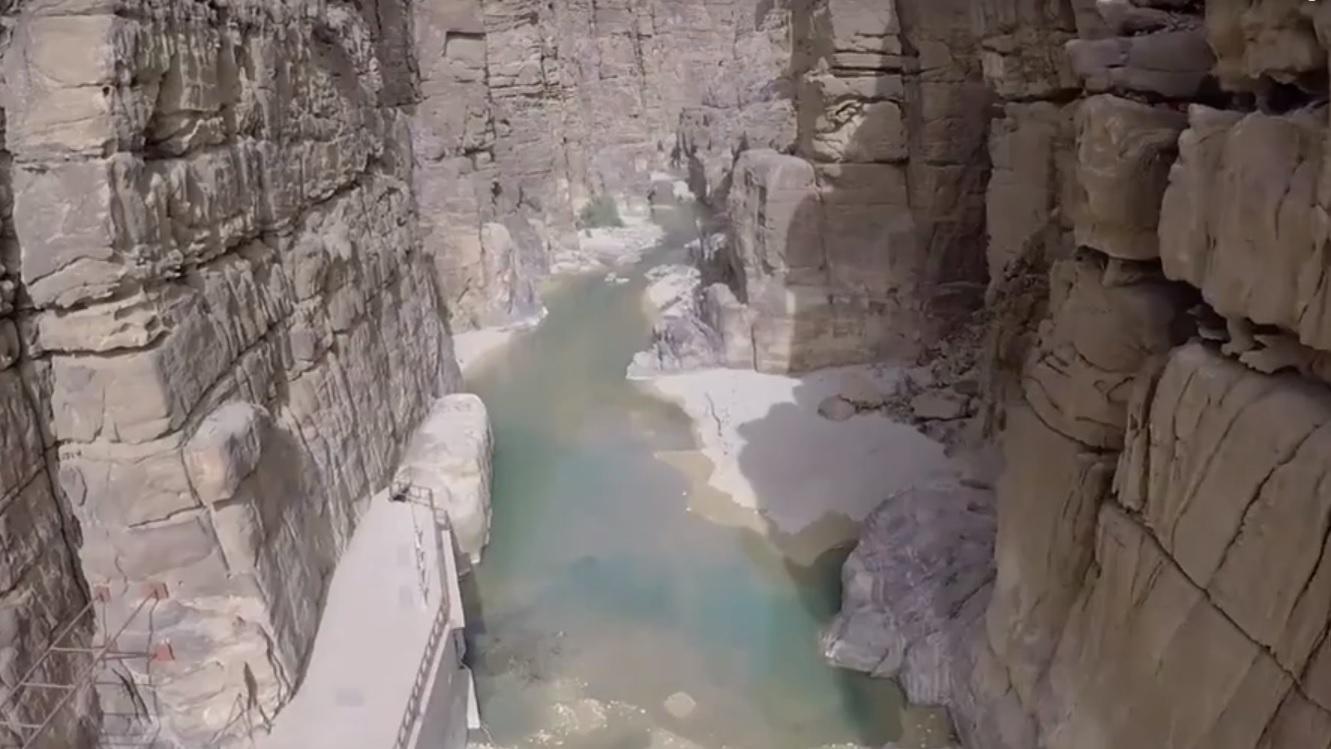
Jordan: EIB supports priority water sector investments

>@EIB
©EIB
  • EUR 260 million to invest in priority water projects across Jordan
  • The programme supports Jordan’s adaptation to climate change

The European Investment Bank (EIB) signed a framework loan of EUR 260 million with the government of the Hashemite Kingdom of Jordan (HKJ) to support priority water sector investments of the Ministry of Water and Irrigation. The programme will contribute to optimising the production, transmission and distribution of water in Jordan.

The EIB’s funds will finance projects in the construction, upgrade and improvement of various water supply facilities in several governorates across Jordan. The implementation of these projects will improve the resilience of the water supply sector and support adaptation to climate change, as well as creating jobs during both the construction phase and the operation of the facilities.

In addition to the Bank’s funding, the Economic Resilience Initiative Technical Assistance envelope will provide a EUR3 million grant for technical assistance to support necessary preparatory and feasibility studies and allocation of sub-projects under the programme. The Economic Resilience Initiative is part of the EU’s response to the challenges in the Southern Neighbourhood and Western Balkans.

The framework loan seeks to support the objectives of the Jordanian government in the framework of the National Water Strategy 2016-2025, which identifies projects that contribute to a resilient water sector as a key priority. The implementation of the programme will improve Jordan’s Economic Resilience and support the socio-economic infrastructure of the country.

Dario Scannapieco, Vice President of the EIB commented on the signature: “As the Bank of the European Union, we give high priority to climate action projects. We are pleased to reinforce our support to the water sector in Jordan. This framework loan will support the construction, upgrade and improvement of numerous water facilities across Jordan. These projects are much needed to improve people’s access to water over the coming years.”

The EU Ambassador to Jordan, H.E. Maria Hadjitheodosiou, indicated that “the water projects that will be financed under this Framework Loan will contribute to reinforcing the resilience of the water supply sector and enhance Jordan’s capabilities to address climate change challenges.” She stressed that “these projects are fully aligned with, and reinforce the EU’s partnership with Jordan and the joint efforts to mitigate the impact of climate change.”

The Minister of Planning and International Cooperation, H.E. Nasser Shraideh, stated that the aim of the agreement is to secure financing for Jordan on favourable terms for the next six years (with an exceptional long repayment period of up to thirty years). The funding will be allocated to priority Jordanian water projects to support the objectives under the National Water Strategy 2016-2025, by working to build, modernize and improve various water supply facilities in governorates across Jordan.

The implementation of these projects will improve water supply resilience and support adaptation to climate change in addition to creating employment opportunities during both the construction and the operation phase.

The water sector is of central importance to the Government of Jordan due to the country’s severe water scarcity and the sector’s role in safeguarding the country’s long-term social and economic stability. Jordan has one of the lowest levels of water availability per capita globally, making it the world’s second most water-scarce country. Water availability levels are anticipated to decline further over the next years due to climate change and the expected increase in the country’s population. The new EIB financing falls under the EU’s External Lending Mandate (ELM) 2014-2020 and benefits from the EU comprehensive guarantee on a fall back basis. It is consistent with the EIB’s External Lending Mandate relating to the development of social and economic infrastructure, the EIB’s Water Sector Lending orientation, as well as the European Neighbourhood Policy.

Furthermore, this new EIB financing is part of the Bank’s substantial engagement in the water sector in Jordan, which has been gradually increasing over recent years in the context of the Economic Resilience Initiative. In 2015, EIB signed a loan for the Wadi Al Arab Water System II project for USD 54 million for which the EU is also providing an investment grant of EUR 13.75m. In 2019, EIB signed a EUR 65 million loan and EUR 16.25 million-investment grant for the Deir Alla Water and Sanitation project. 

Jordan and the EIB

EIB in the region

Economic Resilience Initiative