Council agrees on new rules for cross-border energy infrastructure

The Council today reached a general approach on the revision of the Trans-European Networks for Energy (TEN-E) Regulation. The objective of the revised TEN-E regulation is to modernise, decarbonise and interconnect the EU’s cross-border energy infrastructure in order to help the EU achieve its 2050 climate neutrality objectives. The revised Regulation also aims to continue ensuring market integration, competitiveness and security of supply.

João Pedro Matos Fernandes, Portuguese Minister for the Environment and Climate Action

To become climate-neutral by 2050, we need modern, interconnected energy infrastructures that are fit for clean energy technologies. We need to see more smart grids and more renewables in our grids. The agreement reached today invests in a green and climate-neutral future that guarantees efficiency, competitiveness and security of supply, while leaving no one behind.

João Pedro Matos Fernandes, Portuguese Minister for the Environment and Climate Action

The revision of the TEN-E Regulation identifies 11 priority corridors and 3 priority thematic areas to develop and interconnect. This will be done mostly through projects of common interest (PCIs), financed by the Connecting Europe Facility for 2021-2027. The revised Regulation updates the infrastructure categories eligible for support with an emphasis on decarbonisation and adds a new focus on offshore electricity grids, hydrogen infrastructure and smart grids.

The Council, in its position, decided to end support for new natural gas and oil projects and to introduce mandatory sustainability criteria for all projects. During a transitional period until 31st December 2029, dedicated hydrogen assets converted from natural gas can be used to transport or store a pre-defined blend of hydrogen with natural gas or biomethane. Selected projects shall demonstrate how, by the end of this transitional period, these assets will cease to be natural gas assets and become dedicated hydrogen assets. The assessment of candidate projects will also ensure that the assets are designed in view of creating dedicated hydrogen assets by the end of the transitional period and do not lead to the prolongation of the lifetime of natural gas. The purpose is to gradually decarbonise this sector and increase the share of renewable gases in the pipelines.

In its position, the Council put a particular emphasis on energy from renewable sources regarding all assets, including smart gas grids.

In the case of Cyprus and Malta, that are still not interconnected to the trans-European gas network, projects under development or planning that have been granted the Project of Common Interest status under the previous Regulation will maintain their status until the interconnection is complete. The purpose of this exception is to end the isolation of these two member states and to give them access to future energy markets, including hydrogen.

The Council decided to include certain types of electrolysers that contribute to sustainability in the scope of the Regulation. Those electrolysers shall account for at least 100 MW capacity in a project. The production of hydrogen, particularly of renewable sources, from these electrolysers, shall comply with a life cycle greenhouse gas emissions savings requirement of 70 % relative to a fossil fuel comparator of 94g CO2e/MJ.

Member States also agreed to simplify and accelerate permitting and authorisation procedures.

According to the Council’s position, the revised Regulation will continue to ensure that new projects respond to market integration, competitiveness and security of supply objectives. It will also continue to support projects that connect regions currently isolated from European energy markets, that strengthen existing cross-border interconnections and that promote cooperation with countries outside of the EU.

The text of the general approach will be available soon.

Background and next steps

The European Commission presented its proposal on a revised TEN-E on 15 December 2020. The general approach reached today will serve as a basis for the Council’s position in the negotiations with the European Parliament to find a final agreement on the future legislation. Once a provisional political agreement is found between the two institutions, a formal adoption procedure will seal the agreement into legislation.



Council approves conclusions on an EU renovation wave

The Council today approved conclusions on a renovation wave that repairs the economy now, and creates green buildings for the future. The renovation wave strategy aims to intensify renovation efforts throughout the EU, in order to make the necessary contribution by the buildings sector to the 2050 climate neutrality goal and to deliver a fair and just green transition.

Member states endorse the strategy’s aim to double energy-related renovation rates in the EU by 2030, while tackling energy poverty, creating new jobs and promoting resource efficiency and circular economy. The conclusions also emphasise the importance of social inclusion and accessibility.

The strategy promotes in particular renovations that reduce energy use, curb greenhouse gas emissions, increase the environmental performance of buildings and generate cost savings. Member states underline that the starting point for renovations should be the cost-efficient reduction of energy demand and the replacement of carbon intensive or energy-inefficient heating and cooling technologies. This should go hand in hand with the integration of energy efficient solutions and the use of renewable energy and waste heat or cold.

The Council underlines the importance of eco-design, environmental and energy labelling measures in promoting green heating and cooling solutions and facilitating the phase-out of fossil-fuel-operated equipment in the most cost-efficient way.

The Council emphasises the pivotal role of buildings renovation in the process of economic recovery from the COVID-19 pandemic. The Council recalls the crucial opportunity offered by the Recovery and Resilience Facility to mobilise investments and prioritise building renovations. The EU has set a target of at least 30% for climate action in the Multiannual Financial Framework for 2021-2027, and of at least 37% under the Recovery and Resilience Facility.

The Council highlights that work must continue in order to extend and combine the available financing options for building renovations, such as green subsidies, tax and green loan incentives, green bonds, energy saving obligation schemes.

Background and next steps

The buildings sector is one of the largest energy consumers in Europe and is responsible for more than one third of the EU’s greenhouse gas emissions. With millions of Europeans unable to afford keeping their home adequately heated, renovation is also an important response to energy poverty and quality of life of citizens.

The European Commission presented the renovation wave strategy on 14 October 2020 as part of the European Green Deal.


CPVO internal decision on End of Crisis as regards the management of the COVID-19 pandemic

Given the relaxing of confinement measures and improvement of the sanitary situation in France, Mr Martin Ekvad, President of the CPVO, has decided to dissolve the internal crisis team set up to manage the pandemic and its consequences.

Pursuant to the CPVO Business Continuity Plan, the end of crisis shall be declared once the event has been efficiently managed by the crisis management team or the incident is over.

This decision refers to the way the CPVO deals internally with COVID-19 related matters, after the CPVO switched to a crisis management mode and set up a crisis team (i.e. the BCP team) in March 2020 in order to monitor closely the situation and take a series of exceptional measures for our stakeholders and staff members.

At this stage of the pandemic, where COVID-related matters have become routine and where opening-up measures and massive vaccination campaigns are being implemented by national governments, it has been considered appropriate to revert to a normal management mode.

As of 14 June 2021, the CPVO BCP team will no longer meet and the CPVO management team will therefore address all future questions and take all necessary decisions, both internal and external, relating to the COVID-19 pandemic.

In addition to the fact that there is a duty under the CPVO Business Continuity Plan to inform stakeholder when the decision on end of crisis is taken, we wanted to share this information, so that you are kept abreast in full transparency of CPVO’s latest operational decisions. The decision will have very little or no impact at all on the vast majority of CPVO’s stakeholders.

If the pandemic situation would change drastically in the future, rest assured that we will communicate all relevant measures that will eventually be adopted by the CPVO.  


Five arrested over brazen Paris bank heist

The suspects held up at gunpoint a high-end bank off the Champs-Elysees avenue in 2019

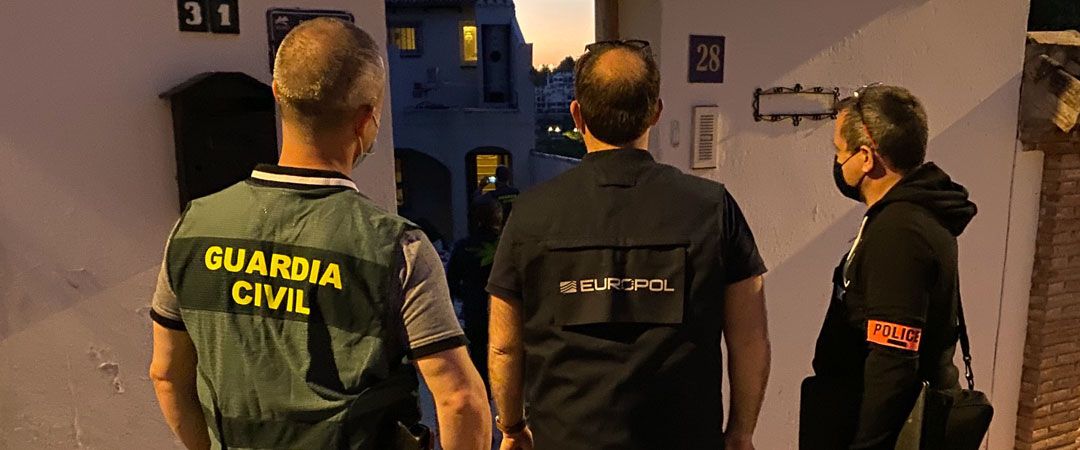
In the early hours of 7 June, officers from the French National Police (Police Nationale) and the Spanish Civil Guard (Guardia Civil) carried out a series of coordinated raids close to Paris (France) and Malaga (Spain). A total of five suspects – 3 French nationals and 2 Algerian nationals – were arrested for their involvement in an armed bank robbery in Paris. 

In 2019, this organised crime group pulled off a bank robbery off the Champs-Elysee, locking staff and customers in for hours while they opened over sixty safe deposit boxes before fleeing with their loot. The value of the stolen items is estimated at several millions of euros.

The arrests this week took place in the region of Paris. A property owned by one of the suspects in Spain has also been seized in the framework of a Freezing Order. 

Europol support 

  • Europol brought together the national investigators on both sides who have since been working closely together to prepare for the action day;
  • Since then, Europol has provided continuous intelligence development and analysis to support the field investigators;
  • On the action day, a specialist from Europol’s Serious Organised Crime Centre (ESOCC) was deployed to Paris to assist the French authorities with the cross-checking of operational information. At the same time, a specialist from Europol’s European Financial and Economic Crime Centre (EFECC) was sent to Spain to assist the Civil Guard with asset recovery. 

This investigation was carried out in the framework of the European Multidisciplinary Platform Against Criminal Threats (EMPACT).


Press briefing ahead the EU-US summit of 15 June 2021

The press briefing ahead of the EU-CS summit of 15 June 2021 will take place via video conference on Monday 14 June 2021 at 10.30

English and French interpretation will be available.

This briefing is “off the record”.

In order to follow the briefing and to be able to ask questions remotely, EU accredited journalists and journalists who had a EUCO accreditation from June 2019 European Council meeting or later, can register using this link

Journalists who already registered for high-level press conferences (European Councils, international summits) in 2020 or 2021 don’t need to register again.

Deadline: Monday 14 June, 08.00

Further instructions will be sent to all registered participants approximately half an hour before the briefing