Press release – Agreement on a Mandatory Transparency Register

The agreement establishes principles and rules for a coordinated approach to transparent and ethical interest representation at EU level, building a common culture of transparency while taking into account the signatory institutions’ respective specificities.

A wide scope

The reinforced Transparency Register will apply to all three institutions, including the Council for the first time. Other European Union institutions and bodies can voluntarily use it too, thereby increasing the potential for greater transparency at EU level. The member states’ permanent representations will also take part through unilateral voluntary measures.

Activities aimed at influencing the decision-making processes or the formulation or implementation of policy or legislation at EU-level will fall within the Transparency Register’s scope. The negotiators agreed on a non-exhaustive list that includes organising meetings or events, contributing to public consultations, communication campaigns, and preparing position papers or amendments. The same types of activities by third countries will also be covered, when they are carried out by entities without diplomatic status or through intermediaries. Interest representatives will have to declare the interests and objectives they promote, as well as to specify the clients they represent. All registrants will need to provide information on the resources that they devote to interest representation activities, with a new focus on sources of funding.

Some activities will remain possible without registration, such as spontaneous meetings, providing information at the request of the institutions, legal advice, and activities by social partners, political parties, intergovernmental organisations or public authorities of the member states. However, associations and networks of such public authorities engaging in interest representation activities can register, if they choose to do so. In order to avoid unnecessary administrative burden, activities carried out by interest representatives exclusively on behalf of an association or network of which they are a part will be considered to be activities of that network or association.

Conditionality and complementary transparency measures

Each signatory institution will make registration of interest representatives a precondition for certain activities, and may put in place complementary transparency measures to encourage registration. In doing so, the institutions will ensure that those measures are consistent with the agreement and contribute to a high standard of transparent and ethical interest representation. All measures must be made publicly available on a dedicated webpage. You can read more on this in the relevant press release (7.12.2020).

Code of conduct and operational structure

Applicants must observe a code of conduct in order to be eligible for registration. Stronger provisions on monitoring and investigations ensure that effective action can be taken if the code of conduct is not observed, potentially resulting in the removal of registrants. The existing Joint Transparency Register Secretariat in charge of these processes will evolve into a tripartite operational structure, in which the three institutions will be represented on an equal footing. A Management Board will oversee the overall implementation of the Agreement. Find out more in the

Press conference

A press conference (at 15.45 on 15 December, in Parliament’s Anna Politkovskaya press conference room) will be held with the negotiators, Parliament’s Vice-President Katarina Barley and Constitutional Affairs Committee Member Danuta Hübner, German Minister of State for Europe Michael Roth for the Presidency of the Council, and Commission Vice-President for Values and Transparency Věra Jourová. Follow live or on VOD on EbS and Parliament’s Multimedia Centre.

Quotes

EP negotiator Katarina Barley (S&D, DE) said: “I am confident that the newly evolved Transparency Register will be effective, balanced, and increase citizens’ trust in the EU institutions. Our objectives have been achieved in this agreement: the EU will have a stronger Transparency Register, we have avoided unnecessary administrative burden for registrants, and the free mandate of European citizens’ elected representatives has been safeguarded. The improved rules provided in the code of conduct for interest representatives will also undoubtedly make a big positive impact.”

EP negotiator Danuta Hübner (EPP, PL) said: “”I am pleased that the new agreement expands the scope of the register to the Council. In addition, we have broadened the scope of the new transparency register. These, among other improvements, now allow us to monitor interest representation throughout the EU’s decision-making procedures in a more coherent manner. This agreement signals a new chapter for transparency in the EU”.”

Next steps

The agreement will have to undergo internal adoption procedures in each institution, after which it can be signed and enter into force. For Parliament, this means it will be referred to the Committee on Constitutional Affairs, and then tabled for a vote by the full House. In the Council, it will be submitted for approval by the Committee of Permanent Representatives and afterwards adopted at Council level. The College will need to formally adopt the Agreement and empower Vice-President Jourová to sign it on behalf of the Commission.

Background

The Commission presented its proposal for a new inter-institutional agreement on a mandatory Transparency Register for interest representatives covering the Parliament, Council and the Commission in 2016. Since 2011, the Parliament and the Commission have jointly operated a public register for interest representatives. The Council has been an observer since 2014. More information can be found on the dedicated EP webpage.


Press release – Sakharov Prize 2020: press conference with EP President Sassoli and laureates

This year’s Sakharov Prize for Freedom of Thought has been awarded to the Belarusian democratic opposition, represented by, among others, opposition leader Sviatlana Tsikhanouskaya. Read more on all the laureates here.

The press conference on Wednesday will take place immediately after the 2020 Sakharov Prize award ceremony in Brussels and is expected to start at around 12.40 CET.

Interpretation will be available in English, French, German, Italian, Belarusian and Russian.

Journalists wishing to actively participate and ask questions, please connect via Interactio by using the link https://broadcaster.interactio.io/join?code=HIAGWR22EJPB.

You can also follow it live from 12.40 via Parliament’s webstreaming and EbS+.

When: Wednesday, 16 December 2020, at 12.40 CET

Where: Paul-Henri Spaak building, room 0A50 (Anna Politkovskaya) and remotely via Interactio (see below)

Information for the media – Use Interactio to ask questions

Interactio is only supported on iPad (with the Safari browser) and Mac/Windows (with the Google Chrome browser).

When connecting, enter your name and the media you are representing in the first name / last name fields.

For better sound quality, use headphones and a microphone. Interpretation is only possible for interventions with video.

Journalists who have never used Interactio before are asked to connect 30 minutes before the start of the press conference to perform a connection test. IT assistance can be provided if necessary.

For more details, check the connection guidelines and recommendations for remote speakers.


Georgia: Team Europe – EIB and Bank of Georgia expand credit line for SMEs and mid-caps with €25 million to aid recovery from COVID-19 pandemic

>@EIB
©EIB
  • The EIB will top up its existing credit line at the Bank of Georgia €25 million to a total of €75 million to support the recovery of Georgian SMEs from the pandemic, extending coverage to include mid-caps.
  • The operation is part of the Team Europe’s COVID-19 emergency response to help sustain jobs, maintain liquidity and operations, and fuel the economic recovery of Georgia.
  • Since 2007, the EU bank has invested close to €2 billion in all key sectors of the Georgian economy, including connectivity, healthcare and SMEs.

The European Investment Bank (EIB), the lending arm of the European Union, will invest €25 million to expand a credit line for Georgian small and medium-sized enterprises (SMEs) and mid-caps available at the Bank of Georgia, helping to accelerate the recovery of the national economy from the COVID-19 pandemic. The credit line can be disbursed in multiple currencies, including in lari, Georgia’s national currency. 

The EIB loan will inject fresh capital into the national economy at a time when the COVID-19 pandemic is burdening SMEs with liquidity issues and restricting their ability to access finance and maintain daily operations or fund expansion plans. 

The investment from the EU bank will reinforce SMEs and mid-caps, which are the backbone of the Georgian economy and major employers in the country, and the country’s financial sector, boosting their ability to drive the economic recovery from the pandemic.

EIB Vice-President Teresa Czerwińska, who is in charge of operations in Georgia, said: As the bank of the European Union, we are proud to be bolstering Georgia and its economy in this hour of need, no matter how difficult the situation is. The EIB financing will support both Georgian SMEs and the country’s financial sector so that they can continue to operate despite the pandemic and drive the Georgian economy forward. This means we will save jobs, incomes and revenues. Together with our partners in the country’s public and private sector, we look forward to building a prosperous and sustainable future for Georgia.”

EU Ambassador to Georgia Carl Hartzell said: The EU stands by Georgia during the pandemic.  The EU has mobilised an unprecedented GEL 1.5 billion COVID-19 support package for Georgia, of which economic recovery of businesses is a fundamental part.  This top-up by the EU bank strengthens this component by providing more assistance via local Georgian banks. Thanks to this agreement, an additional number of Georgian small and medium businesses will be able to access finance to get them through these challenging times.

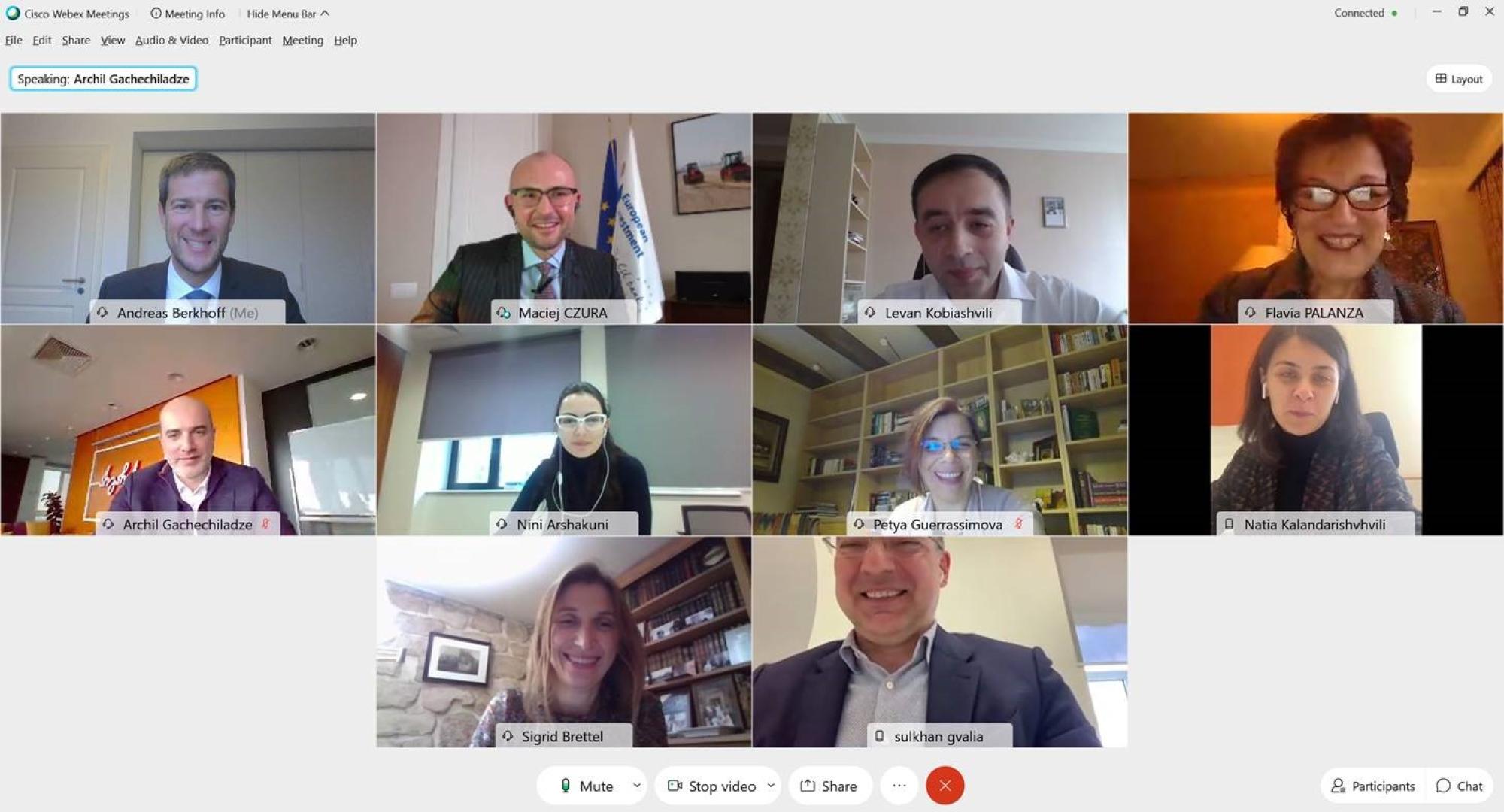
Bank of Georgia CEO Archil Gachechiladze commented: “I am very glad to see that our very successful partnership with the EIB is continuing. The multi-currency long-term facility gives us flexibility to utilise the funds according to the currency and maturity needs of our SME and mid-cap clients. Such facilities are key for the private sector, especially during these challenging times, and this further strengthens our position as a leading provider of long-term financial resources on the market. I would like to thank the EIB for its cooperation with us and look forward to many more successful deals in the future.”

Team Europe adds value for Georgian companies

Covered by a guarantee from the European Union, the loan from the EU bank will enable the Bank of Georgia to increase its lending activities without jeopardising the long-term stability of the country’s financial sector or its ability to support the economic recovery from the pandemic in the long term.

The credit line is even more attractive due to the more flexible terms enabled by the EIB’s COVID-19 emergency measures, extended as part of the Team Europe’s efforts to support partner countries such as Georgia during the pandemic.

This is the third operation between the EIB and the Bank of Georgia supporting the country’s SMEs and mid-caps. To date, the EU bank has invested more than €330 million in credit lines for Georgian SMEs and mid-caps, sustaining more than 54 000 jobs in the country.

The EIB in Georgia:

Since the beginning of operations in Georgia in 2007, the EIB has invested close to €2 billion in 23 projects in infrastructure, the private sector and climate action. The EIB stepped up its support for the country with the 2014 Association Agreement and the Deep and Comprehensive Free Trade Area between Georgia and the European Union, making it the main EIB lending beneficiary per capita in the EU Eastern Neighbourhood.

The EIB finances most projects in Georgia under the EU External Lending Mandate. This provides the EIB with a guarantee covered by the EU budget for projects in the fields of social and economic infrastructure, local private sector development and climate action. For more information on the EIB’s activities in Georgia please follow this link.


Press release – Parliament adopts deal to improve quality of tap water and reduce plastic litter

On Tuesday, Parliament approved the agreement with member states on the new drinking water directive.

The new rules are designed to offer high quality tap water across the EU. This is in response to the demands of over 1.8 million Europeans who signed the first-ever successful European Citizens’ Initiative, “Right2Water”, in support of improving access to safe drinking water for all Europeans.

To this end, member states shall ensure the free provision of water in public buildings and should encourage restaurants, canteens, and catering services to give customers water for free or for a low service fee. Member states should also take measures to improve access to water for vulnerable groups, such as refugees, nomadic communities, homeless people, and minority cultures such as the Roma and Travellers.

Monitoring and improving the quality of tap water

To enable and encourage people to drink tap water rather than bottled water, the quality of tap water will be improved by imposing stricter limits for certain pollutants, including lead.

By early 2022, the Commission will draw up and monitor a list of substances or compounds of public or scientific concern to health. These will include pharmaceuticals, endocrine-disrupting compounds, and microplastics.

The Commission shall also establish European lists indicating which substances are authorised to come into contact with drinking water.

Member states shall ensure that measures taken to implement the new standards are based on the precautionary principle and under no circumstances lead to the deterioration of the present quality of drinking water.

Quote

“Twenty years after the first drinking water directive came into force, it is time to update and tighten the threshold for certain contaminants, such as lead. For the European Parliament, it was of utmost importance that the new directive makes our drinking water even safer and takes into account emerging pollutants. I therefore welcome the directive’s provisions for microplastics and endocrine disruptors such as Bisphenol A”, said lead MEP Christophe Hansen (EPP, LU).

Next steps

The directive will enter into force 12 days after its publication in the Official Journal of the EU. Within two years of passing into law, member states shall make the necessary changes to comply with the directive.

Background

According to the European Commission, lower consumption of bottled water could help EU households save more than 600 million EUR per year. If confidence in tap water improves, citizens can also contribute to reducing plastic waste from bottled water, which would also reduce marine litter. Plastic bottles are one of the most common single use plastic items found on European beaches.


Team Europe contributes €500 million to COVAX initiative to provide one billion COVID-19 vaccine doses for low and middle income countries

>@EIB
©EIB
  • High-risk and vulnerable groups and healthcare workers first in line for successful vaccine
  • Team Europe supports global initiative to fight global pandemic through €400 million European Investment Bank loan and €100 million grant to Gavi, the Vaccine Alliance
  • EIB loan guaranteed by European Fund for Sustainable Development

Fair and equitable access to a successful COVID-19 vaccine, regardless of income, for millions of people across Africa, Asia, the Caribbean and Pacific, and in Europe’s eastern and southern neighbourhood, has been enabled by €500 million of new European financial support for the global vaccine initiative COVAX. Team Europe’s engagement will accelerate global efforts to bring the pandemic under control and scale up distribution of a successful vaccine as soon as it becomes available.

The European Investment Bank today agreed €400 million of financing to support the participation of low and middle income economies in COVAX Advance Market Commitment (COVAX AMC).

This rapidly approved financing, guaranteed by the European Fund for Sustainable Development and alongside €100 million grant support from the European Commission to COVAX AMC, will support access to safe and effective COVID-19 vaccines in 92 low and middle-income countries.

This enables COVAX, a multilateral initiative aimed at ensuring global fair and equitable access, to accelerate up-front investment essential to deliver vaccine doses as soon as they become available.

“This vital funding from the European Commission and the European Investment Bank ensures that lower income economies are not left behind when a safe and effective COVID-19 vaccine is available. Team Europe’s support will play a vital role in ending the acute phase of this pandemic.” said Dr Seth Berkley, CEO of Gavi, the Vaccine Alliance. “This funding is a tremendous boost as we look to raise at least an additional US$ 5 billion in 2021 to ensure equitable distribution of these vaccines to all those who need them.”

“The European Commission and the European Investment Bank are strong supporters of COVAX, the world’s facility to ensure fair and universal access to COVID-19 vaccines. Together with the EU Member States, Team Europe has so far allocated more than €850 million to COVAX, which makes the European Union COVAX’s biggest donor. The European Commission and EIB’s combined support of €500 million will enable COVAX to make one billion doses of vaccines available as rapidly as possible to people in low and middle income countries”, said the President of the European Commission, Ursula von der Leyen.

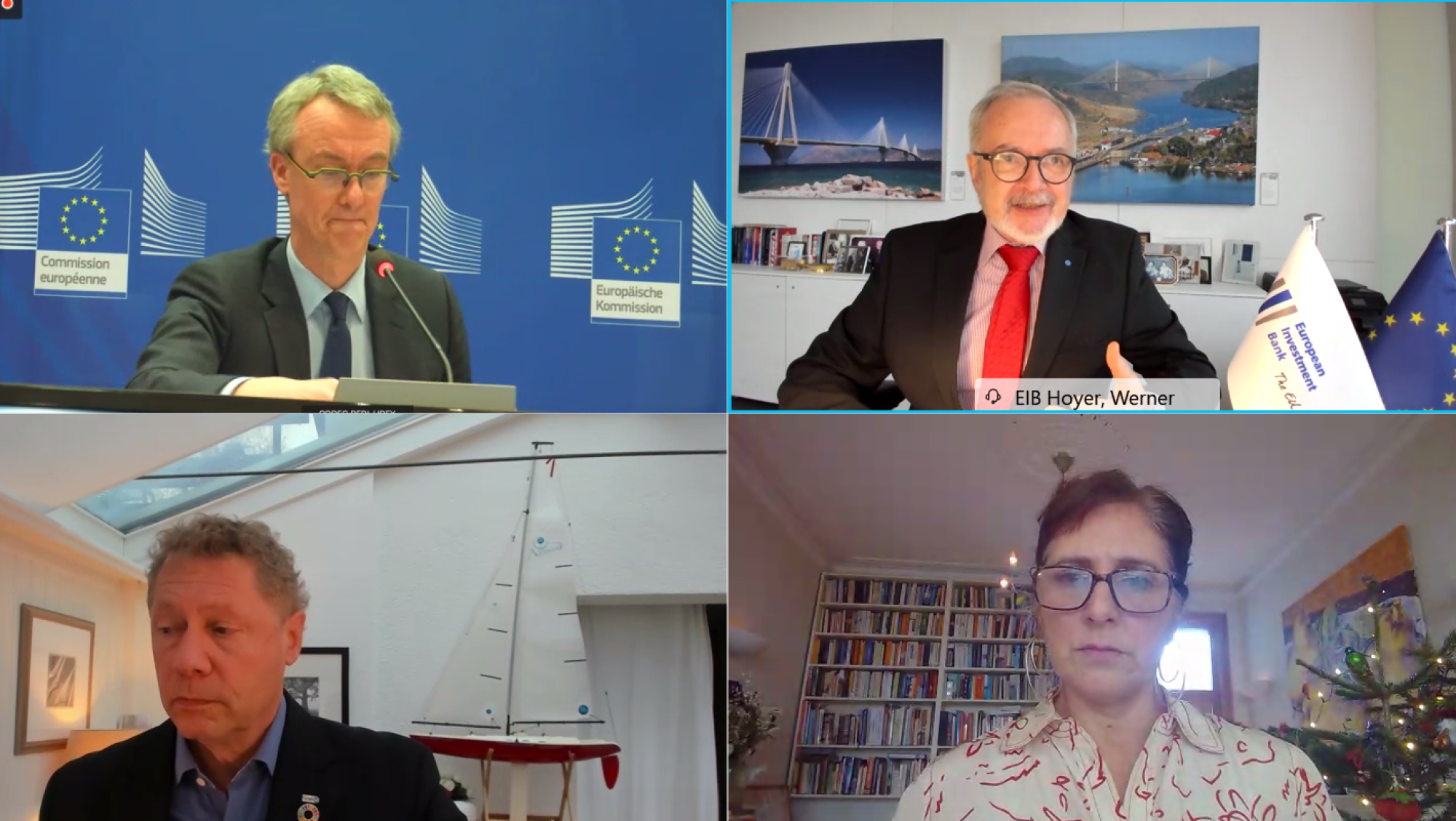
“It is a moral imperative that no country should be excluded from access to COVID-19 vaccines because of costs. The European Investment Bank’s €400 million support for COVAX is a response to this by helping ensure fair access to successful COVID-19 vaccines. Through this new loan the EIB is strengthening Team Europe’s partnership with COVAX and accelerating an effective response to end the global pandemic. Since the start of the COVID pandemic the EIB has been working with partners across Europe and around the world to accelerate vaccine development, strengthen public health and help business weather the crisis, with more than €27 billion of COVID related financing approved in recent months. The success of several vaccine programmes, notably BioNTech’s, backed by the European Commission and European Investment Bank, is giving the world hope that a recovery is closer. The time has now come to look ahead and ensure that all countries can benefit from this progress.” said President of the European Investment Bank Werner Hoyer.

Jutta Urpilainen, Commissioner for International Partnerships, added: “By working together, Team Europe and its partners help to make the vaccine a global public good to help end the pandemic, ensure a sustainable recovery, and build back better. EU’s €100 million grant and the €400 million EIB loan, backed by the EFSD guarantee, will support access, to COVID-19 vaccines in low and middle-income countries”.

Prioritising vaccine provision to high-risk groups and front-line services

New European Union financing for COVAX will secure access to safe and effective COVID-19 vaccines for high-risk and vulnerable populations alongside front-line health workers in low and middle income countries at the same time as vaccines are procured for self-financing economies, including the European Union.

Ensuring global roll out of successful COVID-19 vaccine

The new €500 million European support for COVAX AMC will help COVAX reserve and accelerate doses for 92 low and middle income economies. Agreements between the European Union and partner countries across Africa, Asia, the Caribbean and Pacific, as well as the eastern and southern neighbourhood, already exist under the European Fund for Sustainable Development.

Vaccines will be procured and delivered by UNICEF and the Pan-American Health Organisation (PAHO) on behalf of COVAX.  

Read the COVAX blog story