EIB launches EUR 50 million Africa pharmaceutical manufacturing initiative
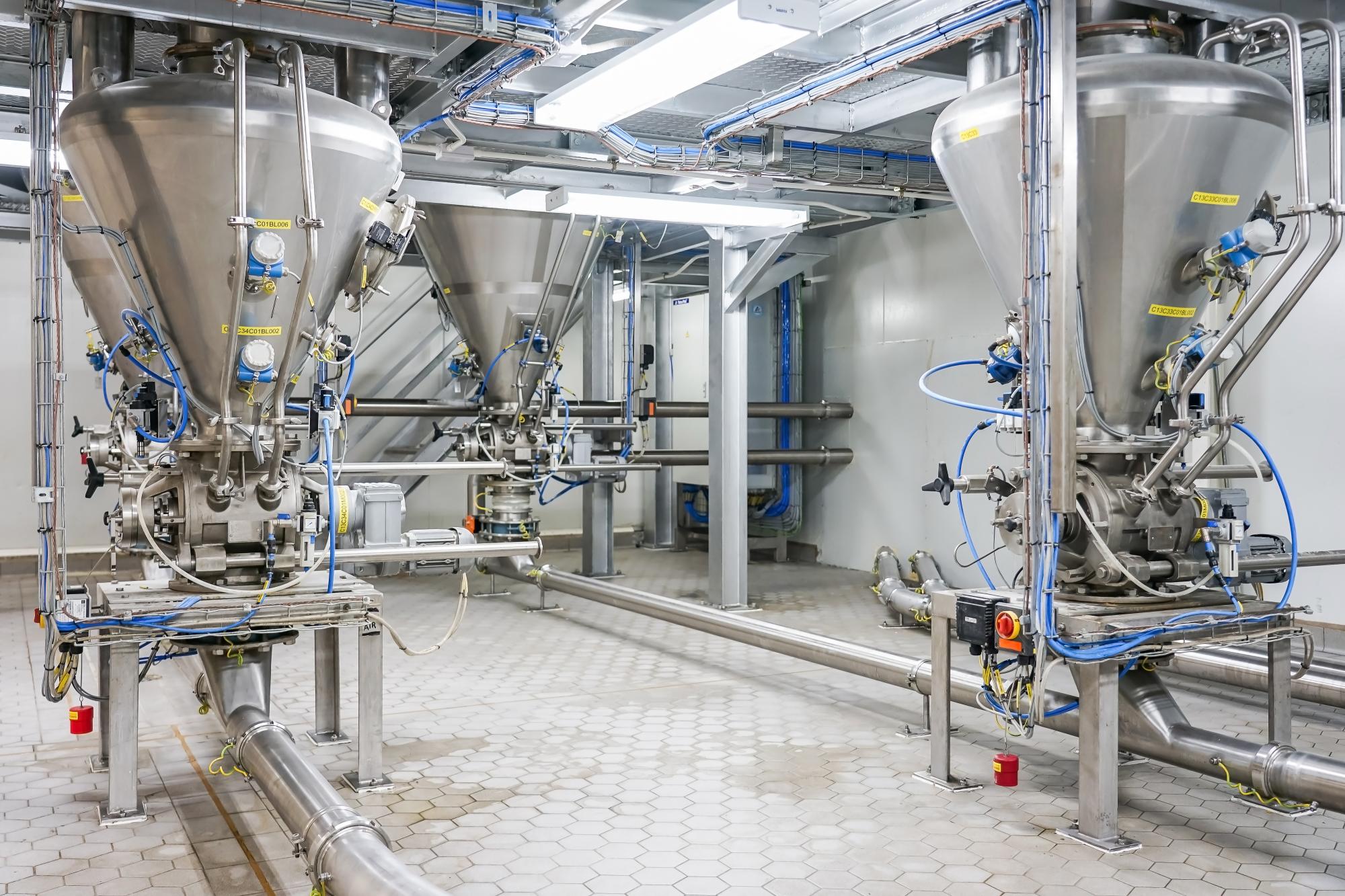
>@EIB
©EIB
  • Programme to strengthen supply chain and reduce dependency on drug imports
  • Investment to scale-up local production of Active Pharmaceutical Ingredients
  • Scheme to improve healthcare, create skilled jobs and boost industrial growth

The European Investment Bank today launched the first ever scheme to strengthen local production of Active Pharmaceutical Ingredients in Africa and scale up drug manufacturing essential to improve public health.

The EIB’s new EUR 50 million pharmaceutical investment initiative, initiated together with kENUP Foundation, will contribute to reducing dependency on drug imports and address medical supply chain weaknesses linked to COVID-19. The programme will improve availability of specialist drugs and tackle supply chain challenges that currently damage public health across Africa.

Scaling up pharmaceutical investment in Africa will help to protect millions of people from disease and disability and strengthen resilience to ongoing and future pandemics.

“Accelerating high-impact pharmaceutical investment across Africa is crucial to improve public health, address medical supply chain weaknesses and unlock long-term economic development.  The European Investment Bank is pleased to launch the first ever-financing initiative to scale up local production of Active Pharmaceutical Ingredients in Africa. This scheme has been designed with African and global experts and builds on the EIB’s unique global technical experience and financing expertise supporting health and innovation investment.” said Thomas Östros, European Investment Bank Vice President.

“COVID-19 has highlighted how public health in Africa is vulnerable to global supply chains and dependent on international production. Increasing local specialist manufacturing of Active Pharmaceutical Ingredients will help to improve the public health of millions of Africans. This new initiative demonstrates how specialist pharmaceutical and financing expertise can create jobs and a better future for Africa.” said Dr Mariângela Batista Galvão Simão, World Health Organisation Assistant Director- General responsible for Access to Medicines and Health Products.

“Team Europe’s new support to scale up African manufacturing of advanced pharmaceutical ingredients and build on the strengths of existing manufacturing expertise, in Kenya and elsewhere in Africa, will help to protect millions of people from disease and disability. The demand for pharmaceuticals is expected to double in Africa by the end of the next decade. This provides huge business opportunities for African pharmaceutical companies.” said Simon Mordue, European Union Ambassador to Kenya.

The Active Pharmaceutical Ingredients financing initiative was formally launched earlier today with participation of representatives from the European Investment Bank, World Health Organisation, EDCTP, Global Access in Action at Harvard Law School and kENUP Foundation. Kenyan-based non-profit APIFA (API for Africa) contributed their expertise throughout the process of establishing this financing facility and will act as a non-exclusive promotor to the facility.

“In the spirit of leaving no region behind in the pursuit of Sustainable Development Goals, we warmly welcome the launch of the API for Africa initiative. This will add value to future Research & Development with more active involvement of the African region.” said Michael Makanga, Executive Director of the European & Developing Countries Clinical Trials Partnership (EDCTP).

“This is a timely facility that will transform the pharmaceutical manufacturing industry on the continent and thus enhance access to essential medicines for vulnerable populations. We call on all relevant stakeholders to now work together to support manufacturers in this transformation journey and ensure the long-term viability of this initiative”, says Gerald Macharia, a founding director of APIFA.

Supporting global efforts to strengthen health system reliance

This new initiative is aligned with World Health Organisation goals and the recently announced cooperation between the EIB and WHO to combat COVID-19 and strengthen health system resilience to better face future pandemics. 

Specialised pharmaceutical financing responding to exceptional COVID-19 healthcare needs

Long-term financing will be available in USD, EUR and local currency and can cover more than 50% of the total cost of eligible investment, as part of the EIB’s exceptional response to COVID-19. EIB financing can co-finance projects alongside philanthropic, equity, development financing or support from commercial banks.

Tackling medical supply chain weaknesses highlighted by COVID-19

In recent months the global COVID-19 pandemic has stained fragile supply chains and led to acute local shortages of medical and pharmaceutical supplies, including drugs to treat HIV. Increasing local production will reduce dependency on imports and exposure to counterfeit drugs.

Enabling African business to benefit from future pharmaceutical growth

The scheme will enable Africa to benefit from predicted doubling in local pharmaceutical sales over the next decade, improve access to healthcare and create specialist jobs on the continent. Demand for pharmaceutical products in Africa is expected to double to EUR 60 billion by 2020.

Unlocking high-value innovation investment in Active Pharmaceutical Ingredients

The EIB initiative will provide long-term financing for pharmaceutical production across sub-Saharan Africa and specifically target manufacturing of Active Pharmaceutical Ingredients that constitute 45% of final drug costs.

The new financing programme will also ensure that African pharmaceutical manufacturing can benefit technological innovation that is transforming the industry and making local production easy through digital connectivity, automation and cloud computing.

Building on the EIB global response to COVID-19

The European Investment Bank is the world’s largest international public bank and a leading financier of public health and innovation investment.

Since the start of the COVID pandemic the EIB has been working with partners across Europe and around the world to accelerate vaccine development, strengthen public health and help business to invest during the crisis, with more than EUR 27 billion of COVID related investment approved in recent months. 

Last year the EIB provided more than EUR 3 billion for public and private investment across Africa.



Report on the EU internal market enforcement of intellectual property rights

December 17, 2020 General

Report on the EU internal market enforcement of intellectual property rights

In September 2019, the EUIPO published the ‘Report on the EU enforcement of intellectual property rights: results at EU borders and in Member States 2013-2017’, containing an analysis of detentions both at the EU borders and within the EU internal market, and providing information about related trends for that period.

Following up on that report, the EUIPO is now publishing this ‘Report on the EU internal market enforcement of intellectual property rights: results of detentions in EU Member States, 2019’, produced from the analysis of the 2019 data on detentions in national markets, as reported through the IP Enforcement Portal by the enforcement authorities of 25 different Member States’. It also contains, as baseline for comparison, the 2018 data. It aims to provide useful information to support the analysis of IPR infringements in the EU and the development, by the relevant enforcement authorities, of appropriate countermeasures, since the figures allow for a better understanding of the scope and extent of the problem.

  • According to figures reported by police, customs and market surveillance authorities in the EU internal market, the annual number of IPR-infringing items reported as detained in 2019 (40 million) decreased compared to 2018 (70 million).
  • Despite the large reduction in the number of items detained, the estimated value of the reported items detained in the EU internal market remained almost unchanged in 2019 (EUR 1.8 billion) compared to 2018.
  • Of the top four product subcategories identified, Clothing accessories was the leader, both in terms of the number of items reported as detained within the EU and in terms of their estimated value.

The report’s publication coincides with that of the ‘Report on the EU customs enforcement of intellectual property rights: results at EU border, 2019’ by DG TAXUD, available on their website. The two reports complement each other, together presenting the results of all the detentions of counterfeited goods across the EU in 2019.

All Observatory publications, including this report, can be found on the Observatory website.


Press release – Fair transition to digital and green economy: a new social agenda for Europe

In order to complement the changes that the European economy is currently undergoing, clear objectives should be put in place to ensure social justice in the labour market. In a resolution that was adopted today by 380 votes in favour, 219 against and 97 abstentions, Parliament sets out its priorities for a strong social Europe for Just Transitions.

The COVID-19 crisis has highlighted the precarity of some workers – particularly young people and women with low-skilled jobs – and has exposed the urgent need for adequate social protection and an inclusive employment policy.

Setting an ambitious “Porto 2030 Agenda”

In the resolution, MEPs call on member states and the European Commission to adopt an ambitious political agenda with mandatory indicators for social sustainability during the May 2021 EU Social Summit in Portugal. The so-called “Porto 2030 Agenda” should include targets and measures to guarantee decent work and wages, social justice and equal opportunities, robust social welfare systems, and fair labour mobility.

Furthermore, MEPs urge that the Porto Agenda should set concrete goals towards the implementation of the European Pillar of Social Rights (ESPR), to ensure that social rights receive the same protection as economic freedoms in the single market.

Monitoring the progress of social recovery

To mitigate the social repercussions of COVID-19, member states should make full use of the available flexibility for public finances and fiscal policies. Investments made under NextGenerationEU and the Recovery Fund should support social equality as much as economic and environmental objectives. To this end, member states should submit Social Progress Plans (SPP) alongside the existing National Recovery plans and national Climate and Energy plans, says the resolution.

Quotes

Agnes Jongerius (S&D, NL): “In what what kind of Europe do we want to live in 10 years’ time? I want to live in a Europe where all workers earn a living wage, all families can afford housing, and no child has to grow up in poverty.

Recommendations are simply not enough to get there. EU governments and the Commission must commit to concrete mandatory targets to be reached by 2030, such as halving youth unemployment, equal pay, and more affordable social housing.”

Dennis Radtke (EPP, DE) added: “Climate change change and digitisation will challenge an entire generation. They will inevitably lead structural change, which must be shaped in a socially acceptable and just way. This can only work if we protect and support both our industry and our workers.

Our report proposes clearly defined targets for a socially just transition to a greener and more digital economy. We expect the EU Commission to take our proposals into account in its action plan for the next EU Social Summit in Porto 2021.”

Background

In January 2020, the European Commission published a communication on A strong social Europe for just transitions ahead of the implementation plan for the European Pillar of Social Rights (EPSR). The EPSR is a list of 20 key principles and rights for fair and effective labour markets and welfare systems in the 21st century, which all EU institutions signed up to in 2017. The communication led to a broad discussion with institutions, social stakeholders, and citizens.

In January 2021, the European Commission will publish an action plan for the implementation of the EPSR.


Press release – Statement of the Conference of Presidents of the European Parliament on the EU-UK future relationship negotiations

The Conference of Presidents

1. Takes note that negotiations are ongoing with the UK on the future relationship and welcomes efforts being made to avoid a no deal scenario, and the huge negative impact it would have on citizens and businesses; Highlights its wish to avoid the disruptive impacts of a possible no-deal outcome and notes in this context the UK Government’s refusal to even consider extending the transition period; Welcomes the four targeted and time-limited contingency measures to be voted tomorrow in plenary;

2. In this respect, stands ready to organise an extraordinary plenary session towards the end of December, in case an agreement is reached by midnight on Sunday 20th December, for the European Parliament to debate the outcome of negotiations and consider granting its consent;

3. Insists that this is contingent on having access to the text of any agreement in advance of the formal referral being made, and in this respect urge the Commission to provide the Parliament with a provisional text as soon as possible; Recalls that ratification of any agreement is dependent on the full implementation by the UK government of all provisions of the Withdrawal Agreement, including the Protocol on Ireland/Northern Ireland; Therefore invites the Commission to provide Parliament with a full report on the implementation of the Protocol, in order to allow it to assess whether or not this condition has been met;

4. Recalls the Political Guidelines for the Next European Commission 2019/2024 which state that “my Commission will always propose that provisional application of trade agreements take place only once the European Parliament has given its consent”;

5. Highlights the exceptional nature of these negotiations and stresses that in no way can this be seen to constitute a precedent for future trade agreements, where the usual format of cooperation and access to information must be fully guaranteed, in line with Article 218 (10) TFEU, including far-reaching sharing of all negotiating texts, regular dialogue, and sufficient time for formal EP scrutiny and debate of agreements;

6. Is grateful for the dedicated and professional work of the EU’s Chief Negotiator, Michel Barnier, and the UK Taskforce, who are working tirelessly for a positive outcome and welcomes their extremely close and regular cooperation with the European Parliament, in particular the UK Coordination Group, which has been fully informed and consulted at every step of the negotiations.


Press release – Sustainability: businesses interests must align with society’s interests

Parliament wants upcoming corporate governance proposals from the Commission to include a series of mandatory obligations for companies and incentives to act rather than rely on the voluntary disclosure of information. A clear set of rules strengthening the duties of company boards regarding sustainability is also needed. The report was adopted with 347 votes in favour, 307 against and 42 abstentions.

Disclosing non-financial information

MEPs welcome the Commission’s commitment to review the Non-Financial Reporting Directive (NFRD) next year but reiterate their call to widen its scope to cover all listed and non-listed large undertakings established in the EU, including non-EU companies operating in the Union. In particular, they suggest targeting investments and sectors often linked to illegal business activities, e.g. environmental crimes, illegal wildlife trade, corruption or financial crime.

Parliament asserts that existing non-binding guidelines are not enough and calls for a mandatory EU framework to cover a full array of sustainability issues related to non-financial reporting. It should ensure that disclosures are clear, balanced, comparable between companies, verifiable, objective, include time-bound sustainability targets and are publically available via an EU-wide digital platform.

Requirements for company directors

Executive directors play a key role in defining a company’s strategy. MEPs deem it their legal duty to integrate long-term interests and sustainability risks. The Commission should therefore put forward a legislative proposal, which clearly defines their responsibilities when it comes to acting in the long-term interest of the company and society as a whole, as well as that of employees and stakeholders.

Sustainability strategies should include measurable, time-bound and science-based targets in line with the EU’s commitments on the environment, climate change, biodiversity and deforestation. They should also incorporate policies on fair salary, gender equality, and better integration of employees’ rights determined by the companies themselves.

Quote

Rapporteur Pascal Durand (Renew, FR) said: “Our report calls for the creation of clear European environmental, social and governance reporting standards for companies, subject to certified and independent audits. To achieve a more sustainable world, this obligation to report must go hand in hand with an obligation to act. We therefore believe that companies should define and implement their own internal sustainability strategies, in consultation with stakeholders.”

Background

A recent study carried out for the Commission on directors’ duties and sustainable corporate governance stressed the positive impact of clarifying directors’ obligations on sustainability and long-term consequences of their actions. It also highlights the problems associated with short-termism and reiterates the need for companies to take into account their long-term impact in order to help the EU meet its own sustainability commitments. The study indicates the need for EU legislation in this regard.

In its 2018 resolution on sustainable finance, Parliament called for the scope of application of the Non-Financial Reporting Directive (NRFD) – which sets out the rules on the disclosure of non-financial information – to be widened. For instance, this relates to how companies manage social and environmental challenges, human rights, anti-corruption and bribery, and diversity on boards.