Peru: EIB provides USD 100m to COFIDE to support SMEs and climate projects

>@EIB
©EIB
  • European Investment Bank to invest USD 100 million to finance SMEs and climate action projects in Peru;
  • The project backed by the European Union will help businesses impacted by the COVID-19 crisis;
  • The investment contributes to the achievement of a number of Sustainable Development Goals and to building Peru’s resilience to pandemics such as Covid-19.

The European Investment Bank is providing a USD 100 million framework loan to Peru’s development bank, Corporación Financiera de Desarrollo S.A. (COFIDE), to finance small businesses and climate action investment projects, primarily in the renewable energy and energy efficiency sectors.

As a response to the COVID-19 crisis, the EIB loan will provide approximately USD 30 million to small and medium sized businesses, targeting companies impacted by current economic challenges. The loan will be channelled to eligible investment projects through local commercial banks.

The investment will also benefit from a EUR 3.7m (USD 4.5m) EU Latin America Investment Facility (LAIF) grant blending resources. LAIF funds would primarily be deployed in the form of technical assistance support, aimed at strengthening COFIDE’s environmental and social risk management systems, enabling private investment in the sustainable energy sector in Peru.

EIB Vice-President, Ricardo Mourinho Félix responsible for Latin America said: “Investing in micro, small and medium entreprises is crucial to create jobs and drive economic development and innovation. We are pleased to be signing this agreement with COFIDE to provide additional financial support to Peruvian small businesses impacted by COVID-19, and to further boost the development of the sustainable energy sector in the country. The agreement is a good example of joint EU efforts under “Team Europe” and highlights our priorities in Latin America: contributing to sustainable and inclusive growth and promoting Climate Action.”

Carlos Linares, President of COFIDE, said: “As part of our role as a development bank in Peru and aligned with our triple bottom line strategy that seeks to achieve positive economic, social and environmental impacts, we are very pleased with this agreement with the European Investment Bank that will benefit MSMEs in their search for finance allowing them to reactivate their businesses, especially after this difficult situation at all levels. It will also help us to continue contributing to closing the infrastructure gap, but with an emphasis on green projects, which COFIDE has been financing for several years now.”

EU Ambassador to Peru, Diego Mellado, said: “The existence of climate and environmental effects are a smouldering problem for Peru and the world. In this context, supporting sustainable projects, such as renewable energy or urban mobility or green housing, are essential to face these risks and these projects are also in line with other efforts such as the European Green Pact. The investment of the European Investment Bank, precisely, will promote and help to carry out initiatives and business support that help to mitigate against these climate risks. This will have a very positive impact on the future of Peruvians.”

EIB global response to COVID-19

The dedicated EIB support for COVID-19 economic resilience in Peru is part of the EIB’s EUR 20 billion global response to reduce the economic impact of the pandemic.

EU guarantee and the SDGs

The EU bank is providing this finance in the framework of the 2014-2020 lending mandate for Latin America and the agreement is covered by the EU guarantee. By supporting this project, the EIB is contributing to the achievement of the United Nations’ Sustainable Development Goals, ensuring access to affordable, reliable, sustainable and modern energy while fighting climate change.

The EIB in Latin America

The EU is the main development partner of the Latin America region, its number one investor and its second-largest trading partner. As the EU bank, the EIB supports the EU’s relationship with Latin America by financing projects that contribute to the EU’s external policy objectives: the development of economic, environmental and social infrastructure; private sector development; and climate change mitigation and adaptation.

In Latin America, the EIB has become a major promoter of renewable energy and energy efficiency, having signed projects worth over EUR 1,564m in the region between 2015 and 2019. Climate change mitigation and adaptation is the EIB’s main priority in the region, where projects supported by the EU bank focus on the environment, and especially on boosting renewable energy, energy efficiency and sustainable public transport schemes. Climate change adaptation-related projects involve upgrading existing infrastructure to be more resilient in the face of more volatile and unpredictable weather patterns, preparing it for direct and indirect impacts.

In 2019, the EIB stepped up its contribution to sustainable development and climate action in Latin America, providing EUR 817m to finance 9 operations: that is the highest number of EIB operations structured in one year in the region.

The operation is the EU bank’s sixth in Peru, where the EIB has to date financed investment projects for a total financing amount of USD 360 million.


Netherlands: Vesteda and EIB sign financing agreement

  • EIB lends EUR 150 million to residential investor Vesteda to improve sustainability of its existing housing portfolio and to acquire new residential complexes.
  • Vesteda targets the government-regulated renting segment, aiming to offer affordable homes to middle-income households.

Vesteda and the European Investment Bank (EIB) signed a EUR 150-million financing agreement. The loan has a term of 10 to 15 years. Vesteda plans to use the funds in 2021 and 2022 to improve the sustainability of the homes in its existing portfolio and for the acquisition of new residential complexes. Vesteda will also use this financing for homes in the government-regulated rental segment, so it can also offer affordable homes to middle-income households.

EIB Vice-President Christian Thomsen said: “Sustainability in the construction sector is a very important issue when it comes to climate change. Acknowledging the challenge, Vesteda, through its recent green bond issuance, is increasing its contribution to improve this situation. The EIB is glad to further support the company on this mission.”

Frits Vervoort, Vesteda CFO: “Vesteda and the European Investment Bank share high ambitions on the sustainability and affordable living fronts. Following the issue of our previous green private placement and green bond, we now qualify for EIB financing. This agreement adds another level of diversity to our financing sources and improves our debt maturity profile.”

The European Investment Bank (EIB) extends loans to finance projects or investment programmes aligned with the European Union’s priorities, such as the promotion of equality, social cohesion and sustainable development.   

Vesteda is a Dutch residential investor focusing on the mid-rental segment. Vesteda invests funds from institutional investors, such as pension funds and insurers. Vesteda has invested nearly €8 billion in Dutch residential real estate. The rental portfolio comprises more than 27,000 homes, mainly in economically strong areas and metropolitan regions.


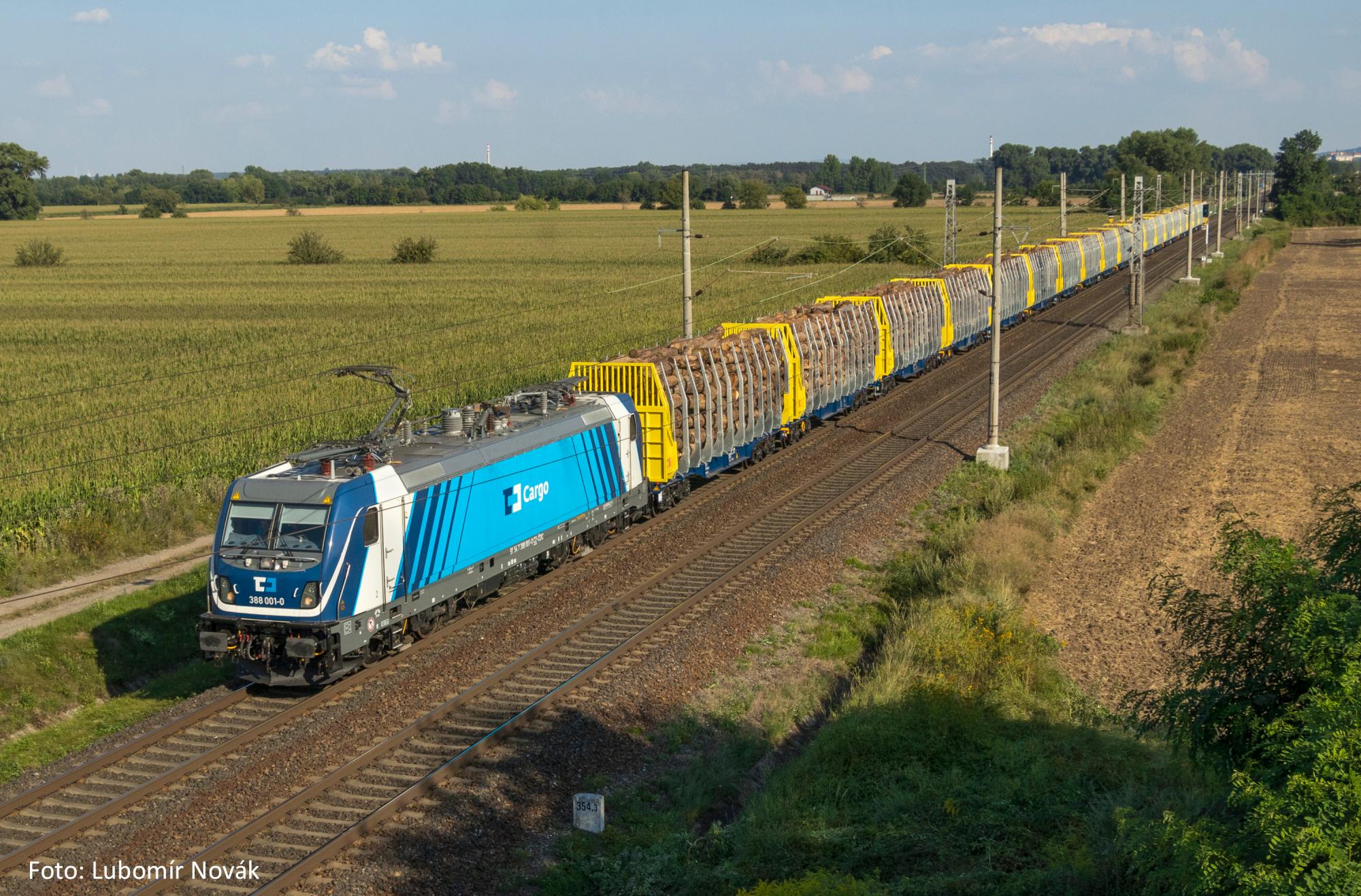
Czech Republic: EIB signs a CZK 3.43 billion loan with CD Cargo to modernise and expand its freight services

>@CD CARGO
©CD CARGO
  • Financing for 50 new electric locomotives and 140 freight intermodal wagons
  • Retrofit of 310 locomotives with European Railway Traffic Management System
  • Supporting sustainable transport and cohesion in the Czech Republic

The European Investment Bank signed a CZK 3.43 billion loan (equivalent to €130 million) with CD Cargo, the largest Czech railway transport provider, to support the acquisition of new electric locomotive and replacement of obsolete rolling stock. CD Cargo is the subsidiary company of České dráhy, the national passenger rail carrier fully owned by the Czech Republic.

The new EIB loan will support CD Cargo in its ambitious intermodal transport development plan, which aims at responding to the growing market and brining its fleet in compliance with European interoperability requirements. The project consists of the acquisition of 50 electric locomotives and 140 freight intermodal wagons as well as retrofit of around 310 older locomotives with European Railway Traffic Management System (ERTMS).

EIB Vice-President Lilyana Pavlova said: “Our partnership with CD Cargo will improve the capacity, safety and quality of freight services in the Czech Republic, notably through the use of modern control and signalling system. By promoting a shift from road to rail transport, this project will have a positive impact on the environment and will thus contribute to supporting the transition of the Czech Republic to a low-carbon economy, in line with the objectives of our recently approved EIB Climate Bank Roadmap and of the Transport Policy of the Czech Republic.”

We are delighted to sign our first ever agreement with the EIB. It comes after an extensive process that allowed the EU bank to better know our company and positively assess its potential for growth. The long-term lending approach and the distinctive, favourable terms of the EIB loan will allow ČD Cargo to invest in its future with a sustainable growth perspective,” said Tomáš Tóth, Chairman of the Board of Directors of ČD Cargo, a.s.

Investment related to the European Railway Traffic Management System (ERTMS) could be complemented by a grant component from the CEF Transport Blending Facility, designed to promote projects contributing to the environmental sustainability and efficiency of the transport sector in Europe. The CEF Transport Blending Facility is implemented via a cooperation framework between the European Commission and implementing partners such as the EIB. The assets purchased within this project will be partly used in Convergence Regions in the Czech Republic and largely on the Trans-European Transport Network (TEN-T).

About CD CARGO

The company ČD Cargo, a.s. was established as a subsidiary of České dráhy, a.s. on the 1st of December 2007. It offers the transportation of a wide range of goods from raw materials to high value-added products, transportation of containers and exceptional consignments, rental of railway wagons, siding services and other transport services. With an annual volume of goods transportation of approximately 65 million tons, it is one of the largest railway carriers within the EU member states. It provides services to customers in approximately one thousand places in the Czech Republic and through branches and subsidiaries also throughout Europe. To ensure the operation of freight trains, ČD Cargo, a. s. has approximately 900 locomotives at its disposal – electric and diesel ones.


Netherlands: EIB further supports climate resilience of drinking water

>@Shutterstock
©Shutterstock
  • EIB lends EUR 100 million to Dutch public water company PWN in support of its climate adaptation strategy, to safeguard and futureproof Noord-Hollands drinking water supply.
  • Project will see more intensive source and nature protection, investments in purification and partial replacement of distribution networks to make them more climate resilient.

The European Investment Bank (EIB) has signed a EUR 100 million, 20-year loan agreement with PWN, the company that manages the drinking water supply in most of the province of Noord-Holland in The Netherlands. The loan supports the necessary investments to maintain the high quality of drinking water that PWN provides, from source to tap. The investments are needed to anticipate the effects of climate change on PWN’s business model. The more frequent and prolonged drought periods that are expected in the near future, will impact drinking water production and distribution. Apart from this, the population of the province of Noord-Holland is growing, and drinking water demand with it.

Sustainable drinking water supply

PWN aims to produce CO2-neutral drinking water by 2050, meaning it wants to be a completely emission-free and circular organisation by that time, already halving its carbon footprint by 2030. The highest priority remains the sustainable supply of drinking water, for which the protection of its main freshwater sources and nature reserves is very important. The EIB’s financing will support PWN in implementing more climate-friendly ways to filter drinking water, substituting part of its distribution network with more heat- and draught-resistant pipes, as well as measures to better manage supply among different water sources and storage areas.

The EIB has been supporting drinking water production companies in The Netherlands for quite some time now.” said EIB Vice-President Christian Thomsen. “People in the country are becoming more and more aware of the risks The Netherlands are running in the face of climate change. Apart from changing our ways when it comes to emissions, we need to adapt to the changing situation as well, and the EIB is very glad to support PWN in doing that.”

“The world around us is changing. PWN has to anticipate to this, so that our client will always – now, and in the future – dispose of reliable drinking water. That is why we welcome the willingness of the EIB to lend to PWN. This way, we jointly work for the future of drinking water for our citizens.” added Ria Doedel, General Director of PWN.

Technically speaking, PWN’s investments focus on the rehabilitation and upgrade of production installations, replacement of distribution piping, water storage facilities, reservoirs, pumping stations and sustainable management of coastal dunes in a region expected to be affected by climate change. This is the fourth operation with PWN funded by the EIB since 1998, with the last one signed in 2016. 

PWN Waterleidingbedrijf Noord-Holland N.V. is a publicly owned company whose sole shareholder is the Province of Noord-Holland. PWN supplies drinking water to 1.7m customers through a pipeline network of 10,342km with 811,770 connections, which represents about 10% of the Dutch market, making it the fourth largest drinking water company in The Netherlands by number of connections. It supplies drinking water and manages the dunes in the province of North Holland. The water is treated at plants in Andijk, Bergen, Heemskerk and Wijk aan Zee. PWN is appointed by the province to manage more than 7,500 hectares of nature reserves between Zandvoort and Bergen. The dunes in the Zuid-Kennemerland National Park and the North Holland Dune Reserve are protected as Natura 2000 sites. These areas are managed in accordance with the Barometer Duurzaam Terreinbeheer certification system for sustainable landscape management (Gold standard) and attract approximately six million visitors a year. See also www.pwn.nl.


Spain: EASO launches new operation to support reception system

The European Asylum Support Office (EASO) to support the Spanish authorities in developing and implementing a new model for the reception of asylum seekers in line with EU standards.

(Text in Spanish below)

The Executive Director of EASO, Nina Gregori, and the State Secretary for Migration of Spain, Hana Jalloul Muro, signed an Operating Plan for 2021 which will see the Agency immediately commence work to support the reception authorities in Spain.

The Operating Plan follows a Joint Rapid Needs Assessment (JRNA) carried out by EASO and the Spanish Ministry for Inclusion, Social Security and Migration, between mid-September and the end of October 2020. The JRNA helped identify the needs of the Spanish authorities, which EASO will now assist in addressing.

Commenting on the new EASO operation, Nina Gregori stated: “I am proud that EASO is once again able to quickly provide tangible support to frontline Member States’ asylum and reception capacity. I want to personally thank State Secretary Jalloul Muro and her services for the exceptional partnership that we have already developed, and for Spain’s clear commitment to the EU’s reception standards. EASO will immediately begin working to implement the Operating Plan and assist our colleagues in Spain.

In addition to establishing a new dedicated team at EASO Headquarters in Malta, the Agency will deploy personnel to Spain. 

In particular, EASO will:

  • Support in the transition towards a new model for reception in the country;
  • Enhance structural processes in support of the Spanish reception system;
  • Contribute to strengthening capacity within the Spanish reception system through professional development, tools and materials;
  • Provide enhanced capacity to reception services in the Canary Islands; and 
  • Support the Spanish authorities in the area of resettlement.

Spain will become EASO’s fifth ongoing operation, the others being in Cyprus, Greece, Italy and Malta. The Agency has approximately 2 000 personnel deployed in these Member States, which is an unprecedented level of support, and recently announced that it had more than doubled it operational productivity in 2020. 

Any further information may be obtained from the European Asylum Support Office on the following email address: press@easo.europa.eu


España: La EASO inicia una nueva operación de apoyo al sistema de acogida

La Oficina Europea de Apoyo al Asilo (EASO) ayudará a las autoridades españolas a elaborar y poner en práctica un nuevo modelo destinado a la acogida de los solicitantes de asilo acorde al estándar de la UE.

Doña Nina Gregori, directora ejecutiva de la EASO, y Doña Hana Jalloul Muro, secretaria de Estado de Migraciones de España, firmaron un plan operativo para 2021 en virtud del cual la Agencia comenzará inmediatamente a asistir a las autoridades de acogida españolas.

El plan operativo es consiguiente a un diagnóstico rápido de  necesidades realizado conjuntamente por la EASO y por el Ministerio de Inclusión, Seguridad Social y Migraciones de España entre mediados de septiembre y finales de octubre de 2020. Este diagnóstico rápido sirvió para identificar las necesidades de las autoridades españolas, a las que la EASO intentará dar respuesta.

En relación con la nueva operación de la EASO, Doña Nina Gregori comentó lo siguiente: «Me enorgullece que, una vez más, la EASO pueda ofrecer una asistencia rápida y tangible a la capacidad de asilo y acogida de los Estados miembros situados en primera línea. Deseo agradecer personalmente a la secretaria de Estado Jalloul Muro y a sus servicios la excepcional colaboración que ya hemos entablado y el claro compromiso de España con el cumplimiento de las normas de acogida de la UE. La EASO comenzará a trabajar inmediatamente para poner en práctica el plan operativo y poder asistir a nuestros colegas españoles».

Además de crear un nuevo equipo específico en su sede de Malta, la Agencia desplegará miembros del personal en España.

En concreto, la EASO:

  • asistirá en la transición hacia un nuevo modelo de acogida en el país;
  • mejorará los procesos estructurales en apoyo del sistema de acogida español;
  • contribuirá a reforzar la capacidad del sistema de acogida español a través del desarrollo profesional y por medio de herramientas y materiales;
  • aumentará la capacidad de los servicios de acogida en las islas Canarias; y
  • asistirá a las autoridades españolas en materia de reasentamiento.

España será el país beneficiario de la quinta operación en curso de la EASO, tras Chipre, Grecia, Italia y Malta. La Agencia cuenta con unos 2 000 miembros de su personal desplegados en estos Estados miembros, lo cual supone un grado de asistencia sin precedentes, y recientemente ha anunciado que, en 2020, ha duplicado con creces su productividad operativa.

Si desea ampliar esta información, póngase en contacto con la Oficina Europea de Apoyo al Asilo, a través de la dirección de correo electrónico siguiente: press@easo.europa.eu.