EIOPA consults on ORSA in the context of COVID-19

The European Insurance and Occupational Pensions Authority (EIOPA) published today a consultation on the Supervisory Statement on Own Risk Solvency Assessment (ORSA) in the context of COVID-19

The statement promotes convergence by guiding undertakings through common supervisory expectations on the ORSA in the current situation triggered by the pandemic, taking into account that the impact on each individual undertaking can differ depending on its specific risk profile. A proper balance between flexibility and acknowledgment of the ORSA as an undertaking own exercise and clarification of supervisory expectations, in particular in specific circumstances, should be kept.

EIOPA believes that the current situation calls for an ad-hoc/non-regular ORSA in the cases where the pandemic impacts the risk profile of the undertaking materially, in particular in those cases where the performance of the regular ORSA has not allowed the undertaking to assess and to take into account the impact of the pandemic. 

Undertakings are expected to take into account the uncertainty in the duration and (macroeconomic) impact of the pandemic in its ORSA and, if relevant for its risk profile, consider multiple scenarios to capture this uncertainty in an appropriate manner. In this case the scenarios are expected to include several degrees of severity for the pandemic’s impact on the undertaking’s solvency and capital needs taking into account its individual situation.

The stakeholders are invited to provide the views by completing the survey by Monday, 15 March 2021. EIOPA will consider the feedback received, develop impact assessment and publish a final report on the consultation as well as submit the supervisory statement for adoption by its Board of Supervisors.
Go to the survey


ESMA updates Q&A on costs and charges

The European Securities and Markets Authority (ESMA), the EU’s securities markets regulator, has today updated its Questions and Answers on the implementation of investor protection topics under the Market in Financial Instruments Directive and Regulation (MiFID II/ MiFIR).

The Q&As on MiFID II and MiFIR investor protection and intermediaries’ topics includes one new Q&As on ‘Information on costs and charges’ that aim to give guidance on how firms can present ex-post costs and charges information to clients in a fair, clear and not misleading manner.

In particular, the information should be presented:

  1. through a standalone document (which could still be sent together with other periodic documents to clients); or
  2. within a document of wider content, provided that it is given the necessary prominence to allow clients to find it easily.

The purpose of the MiFID II/MiFIR investor protection Q&As is to promote common supervisory approaches and practices in the application of MiFID II and MiFIR.

ESMA will continue to develop this Q&A document on investor protection topics under MiFID II and MiFIR, both adding questions and answers to the topics already covered and introducing new sections for other MiFID II investor protection areas not yet addressed in this Q&A document.


Denmark: Continued European support for Novozymes’ enzyme research

>@Novozymes, 2020
©Novozymes, 2020
  • EIB signs €100 million (DKK 745 million) loan with Novozymes A/S to further support its research, development and innovation activities regarding biological solutions
  • The research focuses on biological solutions that can have a positive climate impact, such as in industrial, household and agrifood applications

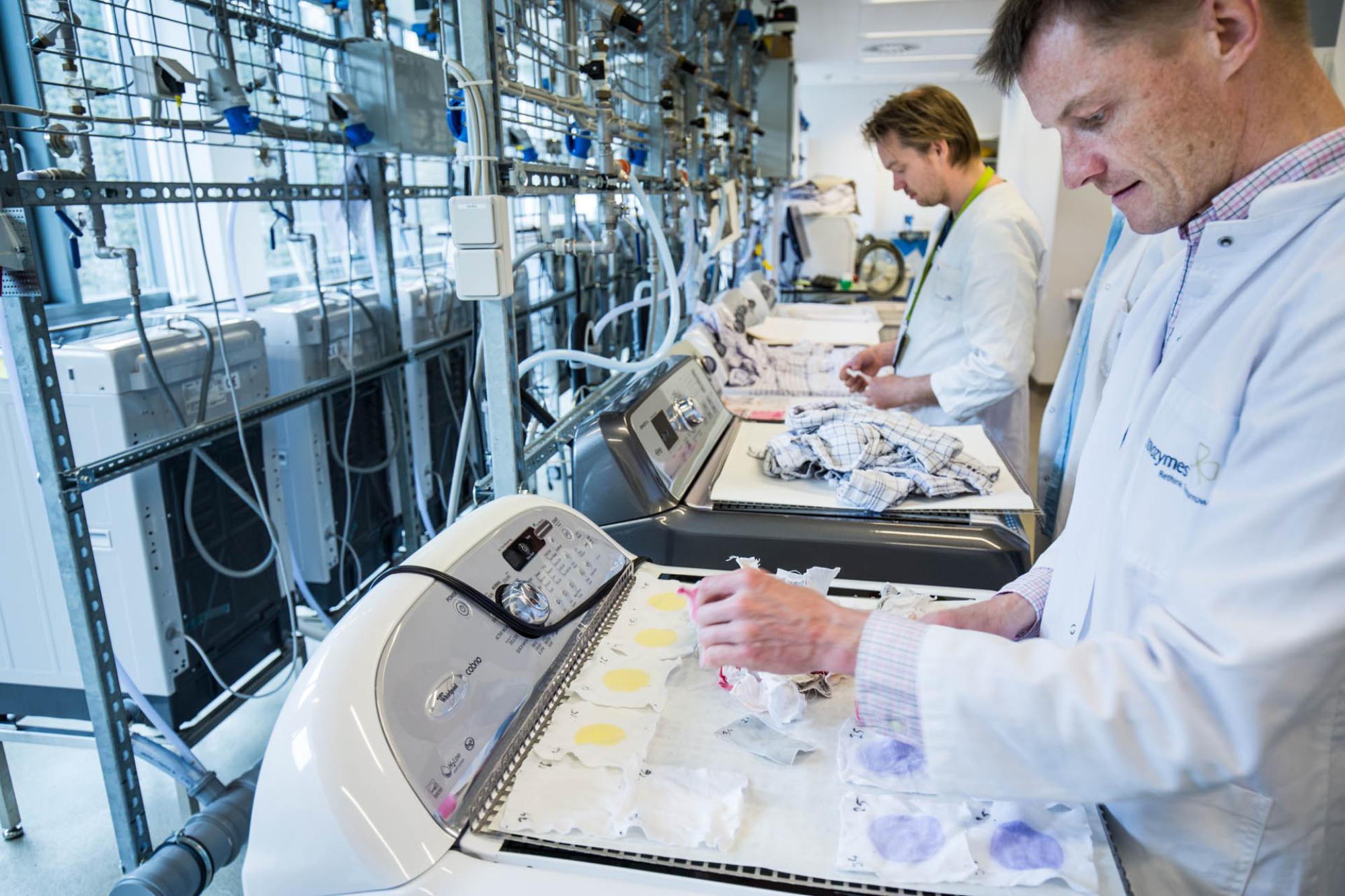
The European Investment Bank (EIB) has signed a €100 million (DKK 745 million) loan with Novozymes, the Danish-based world leader in biological solutions. The financing will support the company’s R&D investment plans for the coming years, and will mainly benefit R&D activities for discovering and producing enzymes that can be used in both industrial and home activities, reducing the need for traditional chemical products.

Demand for biological solutions is growing due to their potential for replacing less environmentally-friendly chemicals or more energy-intensive processes. They can, for example, be used to wash clothing at lower temperatures, thus saving energy, or reduce CO2 emissions in agriculture by adding enzymes to animal feed.

EIB Vice-President Christian Kettel Thomsen stated: “The EIB and Novozymes go back a long way, and we’re glad to continue our support. By bringing down the climate impact of everyday things, the enzymes that Novozymes researches can open the door to new, more climate friendly ways of going about our lives, something that the EIB – as the EU’s climate bank – supports wholeheartedly. Denmark can be proud of having such a world-leading company, and safeguarding this kind of in-house EU-knowledge is very important for us.”

The research, development and innovation activities supported under this financing will be carried out at Novozymes’ R&D facilities in Bagsværd and Lyngby in Denmark. Since 2004, the European Investment Bank has made available €740 million to support Novozymes’ research and development activities and the previous loan was signed in early 2019.


EMCDDA technical report on the new psychoactive substance methyl 3,3-dimethyl-2-{[1-(pent-4-en-1-yl)-1H-indazole-3-carbonyl]amino}butanoate (MDMB-4en-PINACA)

December 2020

Summary

The purpose of this technical report is to provide an analysis of the available information on methyl 3,3-dimethyl-2-{[1-(pent-4-en-1-yl)-1H-indazole-3-carbonyl]amino}butanoate (commonly known as MDMB-4en-PINACA), a synthetic cannabinoid receptor agonist that has recently emerged on the drug market in Europe, in order to support the risk assessment of the substance which has been requested by the European Commission in accordance with Article 5c of Regulation (EC) No 1920/2006 (as amended).

Explanatory note: In the interests of public health protection the EMCDDA is releasing this report before formal copy editing and page layout in the EMCDDA house style. The final report will be available in due course.

Download as PDF

Table of contents

  1. Summary
  2. Chemical and physical properties, methods and the precursors used for manufacture or extraction
  3. Background
  4. Legitimate use
  5. Pharmacological and toxicological properties
  6. Extent and patterns of use, availability, and potential for diffusion
  7. Health risks Social risks
  8. Other relevant information
  9. References

Main subject:

NPS


EMCDDA technical report on the new psychoactive substance methyl 2-{[1-(4-fluorobutyl)-1H-indole-3-carbonyl]amino}-3,3-dimethylbutanoate (4F-MDMB-BICA)

EMCDDA, Lisbon, December 2020

Summary

The purpose of this technical report is to provide an analysis of the available information on methyl 2-{[1-(4-fluorobutyl)-1H-indole-3-carbonyl]amino}-3,3-dimethylbutanoate (commonly known as 4F-MDMB-BICA), a synthetic receptor cannabinoid agonist that has recently emerged on the drug market in Europe, in order to support the risk assessment of the substance which has been requested by the European Commission in accordance with Article 5c of Regulation (EC) No 1920/2006 (as amended).

Explanatory note: In the interests of public health protection the EMCDDA is releasing this report before formal copy editing and page layout in the EMCDDA house style. The final report will be available in due course.

Download as PDF

Table of contents

  1. Summary
  2. Background
  3. Chemical and physical properties, methods and the precursors used for manufacture or extraction
  4. Legitimate use
  5. Pharmacological and toxicological properties
  6. Extent and patterns of use, availability, and potential for diffusion
  7. Health risks Social risks
  8. Other relevant information
  9. References

Main subject:

NPS