Daily News 22 / 11 / 2017

European Semester Autumn 2018 Package: Striving for sustainable and inclusive growth

The Commission today sets out its views on the EU’s economic, fiscal and social priorities for the year ahead, building on the guidance from President Juncker‘s 2017 State of the Union address and on the latest economic data from the Commission’s Autumn 2017 Economic Forecast. The 2018 European Semester cycle of economic governance starts against the backdrop of robust economic activity in the euro area and the EU, record high employment rates and unemployment rates declining towards pre-crisis levels. As all Member States contribute to this strong growth momentum, the priority now is to make sure that this lasts and brings benefits to all members of our societies. Structural reforms should focus on creating the conditions to boost investments further and to increase real wage growth to support domestic demand. A press release and memo are available online. The remarks of Vice-President Dombrovskis, Commissioner Thyssen and Commissioner Moscovici at the press conference will be available online soon. Further information is available on the European Semester and DG ECFIN websites. (For more information: Johannes Bahrke – Tel.: + +32 229 58615; Juliana Dahl – Tel.: +32 229 59914; Christian Wigand Tel.: +32 229 62253; Sara Soumillion Tel.: +32 229 67094)

Women in management: Commission moves closer to its target of at least 40%

The European Commission is steadily moving towards meeting the target set by President Jean-Claude Juncker of ensuring that, by the end of the current mandate, at least 40% of its middle and senior managers are women. According to the latest data, female managers at all levels have reached a total of 36% on 1 November 2017, up from 30% at the beginning of the mandate. Commissioner Günther H. Oettinger, in charge of human resources and budget, said: “Gender-diverse management is more effective and achieves better results. The Commission owes the best to the EU citizens, which is why we have to lead by example. We are on the right path and we will continue making targeted efforts until our female colleagues are well represented at all management levels.” More details are available online, also in DE and FR. (For more information: Alexander Winterstein – Tel.: +32 229 93265; Andreana Stankova – Tel.: +32 229 57857)

Drones: Commission coordinates sector-wide efforts to offer commercial services in 2019

The European Commission, national authorities and the industry today endorsed the “Helsinki Declaration” aiming to deliver advanced drone operations safely and securely in Europe. This Declaration was adopted at a high-level conference on drones organised jointly by the Commission and the Finnish authorities. It identifies three priority areas for sector-wide cooperation in order to ensure that safe commercial drones operations are up and running by 2019. Commissioner for Transport Violeta Bulc said The Commission is focussing on a clean and quiet, safe and secure development of drones. The months ahead will be crucial, but I am confident that the Helsinki Declaration will give us the necessary impetus. It sets out a clear and common strategy endorsed by the entire sector. Let’s now turn words into reality!”.As a first step, the Commission is calling on the European Parliament and the Council to agree on its proposal from December 2015 establishing an EU-wide framework for drones. This constitutes an important deliverable under the Aviation Strategy aiming to give a boost to European aviation. More information is available here.(For more information: Enrico Brivio – Tel.: +32 229 56172; Alexis Perier – Tel.: +32 229 69143)


Agriculture: les volailles de plein air pourront rester confinées plus longtemps sans risque de perdre le label pour leurs œufs

La Commission européenne a prolongé de 12 à 16 semaines la période de dérogation permettant de commercialiser les œufs en tant qu’«œufs de poules élevées en plein air» en cas d’accès restreint aux espaces extérieurs pour raisons vétérinaires.  Cette décision, prise après de nombreuses consultations avec les Etats membres, les eurodéputés et les représentants d’éleveurs et consommateurs,  intervient alors que de nombreux producteurs avaient ainsi perdu le label “plein air” pour leurs œufs suite aux longues périodes de confinement exigées l’année dernière. Cette prolongation devrait contribuer à minimiser les pertes financières subies par les éleveurs en cas d’épidémie tout en maintenant des garanties pour les consommateurs au vu de la nature limitée de la dérogation. Les autres exigences de production pour bénéficier du label «œufs de poules élevées en plein air» restent en vigueur, notamment les critères de densité des poules sur le terrain et dans les enclos. Il y a actuellement un peu plus de 390 millions de poules dans l’UE dont 54 millions sont élevées en plein air. Les plus grands élevages de plein air se situent au Royaume-Uni, en Allemagne, France, Irlande et Pays-Bas et ce sont ces pays avec la Belgique qui ont dû faire face aux restrictions vétérinaires les plus sévères durant l’épidémie d’influenza aviaire de 2016/2017. Plus d’informations sont disponibles en ligne. (Pour plus d’informations: Daniel Rosario – Tel.: +32 229 56185; Clémence Robin – Tel: +32 229 52509)

EU leads international efforts to ensure sustainable tuna stocks in the Atlantic

The International Commission for the Conservation of Atlantic Tunas (ICCAT), responsible for the conservation of tunas and tuna like species in the Atlantic Ocean and adjacent seas, has concluded its Annual Meeting in Marrakesh on 14 – 21 November. Dominating the negotiations was the stock of Eastern Atlantic tuna for which, following a widely recognized improvement in their stock compared to a decade ago, ICCAT agreed to a gradual increase in the total allowed catches (TAC) reaching a maximum of 36,000 ton in 2020 (28,200t in 2018 and 32,240t in 2019). The increase reflects the outcome of action led by the European Union and the sustained efforts by fishermen and the fishing industry, in the last decade. Karmenu Vella, Commissioner for Environment, Maritime Affairs and Fisheries said: “Our experience of recent years is that concerted efforts by all parties can secure rapid progress towards more sustainable fisheries. We now need to continue our work towards a long-term management regime for Eastern Bluefin tuna as proposed by the European Commission.” Based on an EU-proposal, for the first time in ICCAT history, Harvest Control Rules were adopted for the Northern albacore and a quota increase of 20%. Harvest Control Rules are the latest generation of science-based approaches to effective fisheries management and provide guidelines on how much fishing can take place according to the state of the stock. Moreover, ICCAT adopted measures to freeze the fishing effort on the stock of Mediterranean albacore and adopted Recommendations reducing the TACs for Northern and Southern Atlantic swordfish, as tabled by the EU. Finally, important steps were taken to protect sharks in the North Atlantic, including the Norther shortfin mako. As member of ICCAT, the European Union is represented in the negotiations by the European Commission. More information here. (For more information: Enrico Brivio– Tel.: +32 229 56172; Iris Petsa – Tel.: +32 229 93321)


Antitrust: Commission fines five car safety equipment suppliers €34 million in cartel settlement 

The European Commission has fined Tokai Rika, Takata, Autoliv, Toyoda Gosei and Marutaka a total of €34 million for breaching EU antitrust rules. The companies took part in one or more of four cartels for the supply of car seatbelts, airbags and steering wheels to Japanese car manufacturers in the European Economic Area (EEA). All five suppliers acknowledged their involvement in the cartels and agreed to settle the case. Takata was not fined for three of the cartels as it revealed their existence to the Commission. Tokai Rika was not fined for one of the cartels as it revealed its existence to the Commission. The five car component suppliers addressed in this decision coordinated prices or markets, and exchanged sensitive information for the supply of seatbelts, airbags and steering wheels to Japanese car manufacturers Toyota, Suzuki and Honda in the EEA. The cartel may have had a significant effect on European customers, since around one out of every eleven cars sold in Europe is produced by a Japanese company. Furthermore, all the Japanese car companies affected by the cartel have manufacturing plants in the EEA. Commissioner Margrethe Vestager, in charge of competition policy said: “Seatbelts and airbags protect lives every day and are essential in all cars in the EU. The five suppliers fined today colluded to maximise their profits from the sale of these components. This may have raised the costs of these car parts for a number of manufacturers selling cars in Europe, potentially affecting consumers. We do not accept cartels that affect the European consumers, even if the cartel is organised outside Europe.” The press release in available online in EN, FR, DE. (For more information: Ricardo Cardoso – Tel.: +32 229 80100; Maria Sarantopoulou – Tel.: +32 229 13740)

Concentrations: La Commission autorise l’acquisition de EasyMile par Alstom et Continental

La Commission européenne a approuvé, en vertu du règlement européen sur les concentrations, l’acquisition de EasyMile par Alstom Holdings, les deux basées en France, et Continental Automotive Holding Netherlands BV (“Continental”) basée aux Pays Bas. EasyMile est une entreprise commune de plein exercice, active dans le développement et la commercialisation de technologies sans conducteur et de solutions de mobilité intelligente pour les courtes distances. EasyMile est actuellement contrôlée par Alstom. Alstom est actif dans la fourniture d’équipement et services pour les transports ferroviaires, comprenant des matériaux roulants, infrastructure de transport, et des équipements et services de signalisation et de maintenance. Continental est une entreprise internationale active dans la fabrication et la fourniture de différents composants et pièces détachées, notamment pour l’industrie automobile. La Commission a conclu que l’opération envisagée ne soulèverait pas de problème de concurrence compte tenu de l’activité limitée de EasyMile dans l’Espace Economique Européen. L’opération a été examinée dans le cadre de la procédure normale du contrôle des concentrations. De plus amples informations sont disponibles sur le site internet concurrence de la Commission, dans le registre public des affaires sous le numéro d’affaire M.8588. (Pour plus d’informations: Ricardo Cardoso – Tel.: +32 229 80100; Maria Sarantopoulou – Tel.: +32 229 13740)

Mergers: Commission clears acquisition of Paysafe by CVC and Blackstone

The European Commission has approved, under the EU Merger Regulation, the acquisition of Paysafe Group PLC of the UK by CVC Capital Partners of Luxembourg and the Blackstone Group L.P. of the US. Paysafe is active in the provision of online and mobile payment processing services. CVC provides advice to and manages certain investment funds and platforms. Blackstone is a global alternative asset manager. The Commission concluded that the proposed acquisition would raise no competition concerns because there are only minor horizontal overlaps or vertical relationships between the activities of Paysafe and a number of companies owned by one of its parents, CVC. More information is available on the Commission’s competition website, in the public case register under the case number M.8640. (For more information: Ricardo Cardoso – Tel.: +32 229 80100; Maria Sarantopoulou – Tel.: +32 229 13740)

Eurostat: La production agricole totale dans l’UE a diminué de 2,8% en 2016 par rapport à 2015

Les comptes économiques de l’agriculture font apparaître que la valeur totale de la production agricole dans l’Union européenne (UE) s’établissait à 405,0 milliards d’euros au prix de base en 2016, soit en baisse de 2,8% par rapport à 2015. En 2016, l’équivalent de 59% de la valeur de la production agricole générée a été consacré à la consommation intermédiaire (intrants de biens et services), tandis que la valeur ajoutée brute (c’est-à-dire la valeur de la production moins la valeur de la consommation intermédiaire) a atteint 41% (165,7 milliards d’euros). Un communiqué d’eurostat est disponible ici. (Pour plus d’informations: Daniel Rosario – Tel.: +32 229 56185; Clemence Robin – Tel.: +32 229 52509)

ANNOUNCEMENTS

Commissioner Mimica participates in the #YouthTakeover

Tomorrow morning, Commissioner for International Cooperation and Development Neven Mimica will symbolically hand over his social media accounts to Upendo Abisai, a 23-year old woman from Tanzania. This comes one week before the 5th African Union–European Union Summit 2017 in Abidjan, which will focus on “Investing in youth for a sustainable future” as its central theme. Ms Abisai is a fellow of the African Union-European Union Youth Plug-In Initiative. This EU-funded initiative has allowed a group of 36 young people from Africa and Europe to jointly develop recommendations for African and European leaders that they will present in the form of a Youth Agenda. Commissioner Mimica said: “I am happy to welcome and learn from Upendo, as well as the other fellows of our Youth Plug-in Initiative. Their participation and their contributions are key for the AU-EU Summit which takes place next week. Their work will contribute greatly to the future of our partnership with Africa.” Ms Abisai will spend the morning shadowing Commissioner Mimica in his work. They will meet with journalists, and conduct a live Twitter Q&A from the Commissioner’s account between 10.30 and 11.00. She will touch upon issues related to the priority themes of the Youth Plug-In Initiative: business, job creation and entrepreneurship; education and skills; government, political and democratic inclusion; culture and arts; peace and security; environmental preservation and climate change. (For more information: Carlos Martin Ruiz De Gordejuela – Tel.: +32 229 65322; Christina Wunder – Tel.: +32 229 92256)

Commissioner Thyssen co-hosts first European Business-Education Summit

Tomorrow 23 November, Commissioner for Employment, Social Affairs, Skills and Labour Mobility, Marianne Thyssen, will host the very first Business-Education Summit, together with Etienne Davignon, President of CSR Europe, a European business network for Corporate Social Responsibility This high-level event will gather together 650 participants, including Vice-President for the Euro and Social Dialogue, Valdis Dombrovskis, Commissioner for Education, Culture, Youth and Sport, Tibor Navracsics, President of the European Parliament, Antonio Tajani, around 50 CEOs of several companies as well as representatives of youth organisations, civil society and national and EU policy makers. It will be an opportunity to take stock of the accomplishments of the Pact for Youth initiative, a mutual engagement of EU and business leaders, in close collaboration with youth representatives, aiming to set-up business-education partnerships to improve the chances for young people of getting a job. Ahead of the Summit, Commissioner Thyssen said: “At the Social Summit in Gothenburg last week, European leaders proclaimed the European Pillar of Social Rights. The first principle of the Pillar is the right to Education, Training and Life Long Learning. Business is an essential partner to teach the right skills through traineeships, apprenticeships and on the job training. The Pact for Youth has built a bridge to harness the divide between education and business, and I hope it will continue to do so.” Mr Davignon added: “Throughout Europe, the partners of the Pact for Youth have provided a critical mass of practical examples of how enterprises collaborate with schools and colleges, to the benefit of students at various stages of their education, teachers, employees, and their business. Our ambition is clear, to better equip youth for the future of work by making business-education partnerships the new norm in Europe.” Since its launch in November 2015, the Pact has helped to form 23,000 business-education partnerships and create 160,000 new opportunities for young people in Europe. The Business-Education Summit will also be an opportunity for participants to explore new ways to boost youth employment in the years to come. More information about the Summit can be found here. Tomorrow at 11:30, a press statement with Commissioner Thyssen and Mr Davignon will take place in the Commission’s Charlemagne building. The press statement can also be followed online. (For more information:Christian Wigand– Tel.: +32 229 62253; Sara Soumillion – Tel.: + 32 229 67094)

Commissioner Navracsics to announce the winners of the first #BeInclusive EU Sport Awards

At the very first #BeInclusive EU Sport Awards ceremony in Brussels this evening, Tibor Navracsics, Commissioner for Education, Culture, Youth and Sport, will present the three winners with their awards and a prize of EUR 10,000 each. Ahead of the event, Commissioner Navracsics said: “With the #BeInclusive EU Sport Awards, I want to highlight and reward outstanding work and commitment in promoting social inclusion through sport across Europe. Sport is a powerful tool for breaking down barriers and building a more inclusive society, and I want to give recognition to that.” The Awards were launched in June and the competition was open to all organisations established in the EU – public or private, commercial or not-for-profit – that have successfully developed sport projects aimed at social inclusion of ethnic minorities, refugees, people with disabilities or any other group facing challenging social circumstances. The initiative is part of the Commission’s efforts to promote the values of freedom, tolerance and non-discrimination through education, both formal and non-formal, as set out in the so-called Paris Declaration. Projects were evaluated according to their impact, replicability and innovation. Nine projects were shortlisted with the three best projects being unveiled this evening. The names of the winners will be available here later along with information on all the projects. (Further information: Nathalie Vandystadt – Tel. +32 229 67083; Joseph Waldstein – Tel. +32 229 56184)

La Commissaire Crețu au forum de la Stratégie Alpine à Munich

Demain, la Commissaire à la politique régionale Corina Crețu sera à Munich, en Allemagne, pour participer au premier forum annuel de la Stratégie macro-régionale Alpine, aux côtés de Karl-Heinz Lambertz, Président du Comité européen des Régions. “Ce premier forum sera l’occasion de faire un premier bilan et de renouveler notre engagement en faveur de la Stratégie, pour travailler plus étroitement ensemble, au-delà des frontières, dans cette grande et belle région,” a déclaré la Commissaire Crețu, “Ce sera aussi l’occasion de réfléchir à l’avenir de nos stratégies macro-régionales, après 2020.” La Stratégie Alpine, qui regroupe sept pays (France, Allemagne, Italie, Autriche, Slovénie, ainsi que le Liechtenstein et la Suisse) et 70 millions d’habitants, vise à davantage mutualiser les ressources de la région pour faire face à des défis communs, comme la pollution atmosphérique ou la congestion routière, et accroitre les échanges. Parmi ces ressources; 80 programmes différents financés par les Fonds Structurels et d’Investissements européens, que la Stratégie a pour objet de mieux utiliser en commun. (Pour plus d’informations: Johannes Bahrke – Tel.: +32 229 58615; Sophie Dupin de Saint-Cyr – Tel.: +32 229 56169)

Commissioner Avramopoulos in Morocco to discuss cooperation on migration and border management

Commissioner for Migration, Home Affairs and Citizenship Dimitris Avramopoulos will be inHOBBSAL Morocco on 23-24 November to discuss cooperation on migration and border management. He will meet among others Moroccan Minister of the Interior Abdelouafi Laftit and Minister of Foreign Affairs and International Cooperation Nasser Bourita. (For more information: Natasha Bertaud – Tel.: +32 229 67456; Tove Ernst – Tel.: +32 229 86764; Thomas Kramer – Tel.: +32 229 58602)

Commission appoints senior managers in its departments for agriculture and for environment

The Commission has today appointed two Directors – Ms Veronica Manfredi and Mr Michael Niejahr – in its departments for the environment (DG Environment) and for agriculture and rural development (DG Agriculture), respectively. It has also appointed Mr Thomas Verheye to the position of a Principal Adviser in its department for the environment. Ms Manfredi, an Italian national, joined the European Commission in 1999. Between 2002 and 2011, she consecutively worked in the private offices of Commissioners Bolkestein – then in charge of internal market and fiscal affairs – and Kallas – first in charge of administration and then, of transport. Ms Manfredi has been Head of the Consumer and Marketing Law Unit in the Commission’s justice department since 2011. She will take up her new position of Director “Quality of life” in DG Environment at a date that will be set later. Mr Niejahr, a German national, is taking up his new position of a Director “Legal, Institutional and Procedural Matters” in DG Agriculture as of 1 December. Mr Niejahr joined the European Commission in 1993. He has worked in the area of agricultural law since 1998 – first in the Commission’s Legal Service and then in DG Agriculture, where he first became Head of Unit in 2005. Mr Niejahr is currently leading DG Agriculture’s agricultural law team. Mr Verheye, a Belgian national, will become a Principal Adviser“Green finance and investments” on 1 December in DG Environment. After jobs in the International Monetary Fund and in the private sector, Mr Verheye joined the European Commission in 1996 and DG Environment in 2002. Mr Verheye first became Head of Unit in 2011. He is currently Head of Unit in charge of green finance and economic analysis in DG Environment. (For more information: Alexander Winterstein – Tel.: +32 229 93265; Andreana Stankova – Tel.: +32 229 57857)

Upcoming events of the European Commission (ex-Top News)


European Semester 2018: The Autumn Package Explained

Today, the Commission presents:

2018 Annual Growth Survey

2018 Alert Mechanism Report

2018 draft Joint Employment Report

Proposal for the Amendment of Employment Guidelines

Recommendation for a Council Recommendation on the economic policy of the euro area

assessment of euro area Member States’ 2018 Draft Budgetary Plans: a Chapeau Communication and individual Opinions for 18 euro area Member States (except Greece).

– a number of steps under the Stability and Growth Pact

2018 ANNUAL GROWTH SURVEY (AGS)

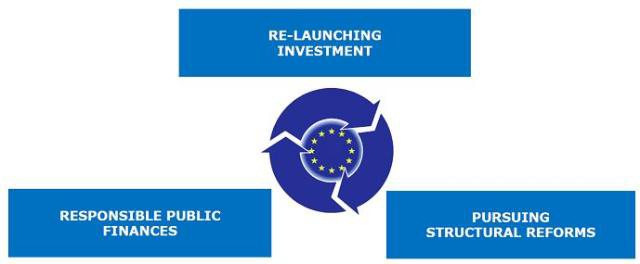
The Annual Growth Survey aims at reigniting sustained economic and social convergence by building on the virtuous triangle of boosting investment, pursuing structural reforms and ensuring responsible public finances. It builds on the messages emerging from the Alert Mechanism Report, the draft Joint Employment Report and the Commission’s economic forecasts. It also builds on the principles and rights of the European Pillar of Social Rights, which is designed as a compass for renewed convergence towards better working and living conditions in Europe.  

What are the main priorities in the 2018 AGS?

The 2018 Annual Growth Survey builds on the positive momentum of the ongoing economic expansion. Following on from previous guidance, and taking account of Member States’ different situations in the economic cycle, the focus is placed on reforms to boost investment, including in human capital, and to improve the functioning of product, service and labour markets which will increase productivity and long-term growth, as well as greater convergence and inclusion, supported by better quality of public spending, fairer taxation and modern public institutions. The European Pillar of Social Rights is fully integrated by prioritising reforms that aim at helping the labour force acquire skills, promoting equal opportunities in the labour market, fair working conditions, increasing labour productivity to support wage growth and adequate and sustainable social protection systems.
graph

What economic progress has been made since last year?

There are a number of positive signs that structural reforms are now delivering tangible results. Both the euro area and the EU economy have steadily grown over the past 18 months and the economic expansion has reached all Member States. Employment is increasing, with a record 235.4 million people in jobs in the second quarter of 2017. 8 million additional jobs have been created in the EU – of which 5.5 million are in the euro area – since the current Commission took office.[1] Unemployment stands at 7.5% in the EU and 8.9% in the euro area, the lowest levels in nine and eight years respectively. Public finances have improved significantly and investment is slowly recovering. Now the EU has a window of opportunity to relaunch economic and social convergence between and within Member States, further strengthen Europe’s Economic and Monetary Union and increase the resilience of individual economies.

2018 ALERT MECHANISM REPORT

The “Six Pack” introduced a system to monitor broader economic developments, to detect early on problems such as credit and real estate bubbles, issues in external sustainability or falling competitiveness. This Macroeconomic Imbalance Procedure (MIP) forms an integral part of the European Semester. The Alert Mechanism Report (AMR) kicks off the annual cycle of surveillance on imbalances. It identifies Member States for which the Commission should undertake in-depth reviews to assess whether they are experiencing macroeconomic imbalances. It is based on the economic reading of a scoreboard of agreed indicators.

What are the main findings of this Alert Mechanism Report?

This year’s AMR reviews progress with the correction of macroeconomic imbalances from a horizontal perspective, in particular as regards the euro area. The economic expansion is helping with the correction of existing imbalances, supporting the ongoing reduction of domestic and external debt ratios, the easing of some persisting challenges in the financial sector and the improvement of the labour market situation. However existing imbalances unwind only slowly and remain a source of risks and vulnerabilities.

How is the adjustment of current accounts progressing?

At the aggregate level, the euro area continues to have the world’s largest current account surplus. This is symptomatic of efforts to reduce debt across sectors and Member States, but also points to the need for Member States with large current account surpluses to further increase domestic demand and investment.

However, challenges remain as the rebalancing of external accounts remains asymmetric across Member States. Large surpluses persist in some Member States. In net-debtor countries (i.e. with a negative net external position), net international investment positions (NIIP) are improving at an accelerated pace, reflecting rising current account balances and higher GDP growth. However, the negative NIIPs remain large in these countries and competitiveness gains which previously supported this improvement have stalled in 2016. Indeed, as unit labour costs evolved similarly in surplus and net-debtor Member States, developments in cost competitiveness are becoming less supportive to economic rebalancing within the euro area.

Which EU Member States will be subject to an in-depth review?

On the basis of the analysis in the AMR, 12 countries have been proposed to be covered by an in-depth review in 2018. These are the same countries identified as having imbalances in the previous round of the MIP (Bulgaria, Croatia, Cyprus, France, Germany, Ireland, Italy, the Netherlands, Portugal, Slovenia, Spain and Sweden). The Commission will present the in-depth reviews as part of its annual Country Reports in early 2018.

DRAFT JOINT EMPLOYMENT REPORT 2018

The Joint Employment Report (JER) is a key element in EU economic governance, mandated by Article 148 TFEU. It provides an annual overview of the main employment and social developments in the EU as a whole, as well as Member States’ reform actions in line with the Employment Guidelines. In addition, for the first time the Joint Employment Report 2018 monitors Member States’ performance in relation to the European Pillar of Social Rights. The current draft version, presented by the Commission, will be discussed with the Employment Committee and the Social Protection Committee, with a view to final adoption by the EPSCO Council in March 2018.

What are the main findings of the Joint Employment Report?

The economic expansion has reached all Member States and is reflected by steady improvements in the labour market and social situation. In the second quarter of 2017, 235.4 million people were employed which corresponds to an employment rate of 72.3%. At this pace, reaching the 75% employment rate target set by the Europe 2020 strategy is on track. Unemployment continues to fall and stood at 7.5% (8.9% in the euro area) in September 2017, the lowest level since 2008. Older workers are staying increasingly longer in the labour market and the employment rate of women has reached another record high.

At the same time, youth unemployment is still at 16.6% in the EU (18.7% in the euro area) in September 2017. Despite the improvements in the labour market, wage growth remains subdued in most Member States due to a combination of low inflation, sluggish productivity and remaining slack in the labour market. Despite the improvements in job creation and employment, still more people need to work and for a longer period in order to maintain growth in the coming years, especially in view of ageing societies.

Along with the economic and labour market recovery, the proportion of people at-risk-of poverty or social exclusion continued to decrease in 2016 and has reached its 2008 level. Income inequality has also slightly decreased in the EU, after increasing in the aftermath of the crisis. The richest 20% of the population had a disposable income around five times higher than that of the poorest 20% in 2016. Member States continue to modernise social protection systems, including by improving coverage and adequacy of benefits, in particular for non-standard workers, and actively encourage labour market participation.

How will the European Pillar of Social Rights be reflected in the European Semester?

The European Semester is an essential vehicle for delivering on the Pillar as it takes account of the situations of each Member State and drives the political direction and coordination in the three areas encompassing the Pillar: equal opportunities and access to the labour market, fair working conditions, and social protection and inclusion. The content of the European Pillar of Social Rights is reflected into some key elements of the European Semester.

  1. The Annual Growth Survey marks the start of this process and this year puts the Pillar at the forefront of the jobs and growth policy guidance for the months to come.
  1. The Joint Employment Report directly monitors progress on the ground, notably through the Social Scoreboard. Performance of Member States is assessed on the basis of 14 headline indicators.
  2. The proposed Employment Guidelines have been amended to fully align with the principles of the Pillar. This is also important as it provides the legal basis for the adoption by the Council of country-specific recommendations in the employment and social field.
  3. The Pillar will play a central role as the primary analytical basis for the Country Reports which will be published in February 2018.
  4. The country-specific recommendations (CSRs), which will be proposed in May 2018, will identify the most urgent challenges in Member States.

PROPOSAL FOR EMPLOYMENT GUIDELINES

What are the Employment Guidelines?

The Employment Guidelines proposed by the Commission and approved by the Council, present common priorities and targets the national employment policies. Specifically, they frame the scope and direction for Member States’ policy coordination and provide the basis for country-specific recommendations.

What are the proposed changes?

The revised guidelines for Member States’ employment policies have been amended to align the text with the principles of the European Pillar of Social Rights. Parts of the 20 Pillar principles have been used to complement the Employment Guidelines, for example where it concerns precarious working conditions, the abuse of atypical contracts, social dialogue or access to adequate social housing assistance. This revision also represents an opportunity to adjust the employment guidelines in other ways, for example through changes related to other policy initiatives such as a work-life balance initiative.

RECOMMENDATION ON THE ECONOMIC POLICY OF THE EURO AREA

The euro area recommendation provides tailored advice to euro area Member States on issues relevant for the functioning of the euro area as a whole. It is supported by solid economic analysis by the Commission services.

The euro area recommendation covers issues concerning the whole monetary union, such as policies related to correcting macro-economic imbalances, the euro area fiscal stance and the completion of the Economic and Monetary Union. It is now published early in the Semester, ahead of country-specific discussions, so that common challenges are discussed, agreed and then fully reflected in country-specific actions.

What is the 2018 euro area recommendation?

The Commission recommendation consists of five parts:

  1. Pursue policies that support sustainable and inclusive growth and improve resilience, rebalancing and convergence. Make significant progress towards completing the Single Market, particularly in services, including financial, digital commerce, energy and transport. Given the positive cyclical conditions, all Member States should prioritise reforms that increase productivity and growth potential, improve the institutional and business environment, remove bottlenecks to investment, support the creation of quality jobs and reduce inequality. Member States with current account deficits or high external debt should additionally aim at containing growth in unit labour costs. Member States with large current account surpluses should additionally promote wage growth and implement as a priority measures that foster investment, support domestic demand and facilitate rebalancing in the euro area.
  1. Aim at a broadly neutral fiscal stance at the aggregate level for the euro area and a balanced policy mix. Fiscal policies should strike the appropriate balance between ensuring the sustainability of public finances, in particular reducing debt ratios where they are high, and supporting the economic recovery. While ensuring the effective functioning of national fiscal frameworks, Member States should pursue fiscal policies that respect the Stability and Growth Pact (SGP) and which support investment and improve the quality and composition of public finances, also by making use of spending reviews and adopting growth-friendly and fair tax structures. Member States should take and implement measures to reduce debt bias in taxation and fight aggressive tax planning to ensure a level playing field, provide fair treatment of taxpayers and safeguard public finances and stability within the euro area. This includes continuing work towards the Common Consolidated Corporate Tax Base (CCCTB).
  1. Implement reforms that promote quality job creation, equal opportunities and access to the labour market, fair working conditions, and support social protection and inclusion. Reforms should aim at: (i) reliable and flexible labour contracts combined with adequate support during transitions and avoiding labour market segmentation; (ii) quality, efficient and life-long education and training systems, which aim at matching skills with labour market needs; (iii) effective active labour market policies that foster labour market participation; (iv) sustainable and adequate social protection systems that respond to new types of employment and employment relationships; (v) smooth labour mobility across jobs, sectors and locations; (vi) effective social dialogue and wage bargaining at the appropriate level; (vii) shifting taxes away from labour, particularly for low-income and second earners.
  1. In line with the Council (ECOFIN) roadmap of June 2016, continue work to complete the Banking Union with regard to risk reduction and risk sharing, including a European Deposit Insurance Scheme, making the common backstop for the Single Resolution Fund operational and strengthening the European supervisory framework to prevent the accumulation of risks. Take measures to tangibly accelerate reduction of the levels of non-performing loans on the basis of the agreed Council (ECOFIN) Action Plan and promote orderly deleveraging in Member States with large stocks of private debt. Enhance the integration and development of EU capital markets to support growth in the real economy while safeguarding financial market stability.
  1. Make swift progress on completing the Economic and Monetary Union, notably on the basis of the Commission initiatives launched in autumn 2017, in full respect of the Union’s internal market and in an open and transparent manner towards non-euro area Member States.

OPINIONS ON THE DRAFT BUDGETARY PLANS

The Commission has also completed its assessment of the compliance of euro area Members States’ Draft Budgetary Plans (DBP) with the provisions of the SGP, taking into account its recent Autumn 2017 Economic Forecast and consultations with Member States. It has adopted Opinions for 18 Member States today (all but Greece).

Regarding the sixteen countries in the preventive arm of the Stability and Growth Pact:

For six countries (Germany, Lithuania, Latvia, Luxembourg, Finland and the Netherlands), the DBPs are found to be compliant with the requirements for 2018 under the SGP.

For five countries (Estonia, Ireland, Cyprus, Malta, and Slovakia), the DBPs are found to be broadly compliant with the requirements for 2018 under the SGP. For these countries, the plans might result in some deviation from each country’s medium-term objective (MTO) or the adjustment path towards it.

For five countries (Belgium, Italy, Austria, Portugal, and Slovenia), the DBPs pose a risk of non-compliance with the requirements for 2018 under the SGP. The DBPs of these Member States might result in a significant deviation from the adjustment paths towards the respective MTO. For Belgium and Italy, non-compliance with the debt reduction benchmark is also projected.

In the case of Italy, the persisting high government debt is a reason of concern. In a letter to the Italian authorities, Vice-President Dombrovskis and Commissioner Moscovici informed that the Commission intends to reassess Italy’s compliance with the debt reduction benchmark in spring 2018 on the basis of validated data for 2017 and in the light of the final budget to be adopted by the Italian Parliament in December 2017.

Regarding the two countries remaining in the corrective arm of the Stability and Growth Pact (i.e. subject to the Excessive Deficit Procedure):

For France, which could become subject to the preventive arm from 2018 onwards if a timely and sustainable correction of the excessive deficit is achieved, the DBP is found to be at risk of a non-compliance with the requirements for 2018 under the SGP. The Commission Autumn 2017 Economic Forecast projects a significant deviation from the required adjustment path towards the MTO and non-compliance with the debt reduction benchmark in 2018.

For Spain, the DBP is found to be broadly compliant with the requirements for 2018 under the SGP. The Commission Autumn 2017 Economic Forecast projects that the headline deficit will be below the Treaty reference value of 3% of GDP in 2018, although the headline deficit target is not projected to be met and there is a significant shortfall in fiscal effort compared to the recommended level.

STEPS UNDER THE STABILITY AND GROWTH PACT

The Commission has also taken a number of steps under the Stability and Growth Pact:

UK

The Commission recommends that the Excessive Deficit Procedure (EDP) be abrogated for the United Kingdom. The Commission’s Autumn 2017 Economic Forecast confirms the timely and durable nature of the correction by the United Kingdom’s of its excessive deficit during the fiscal year 2016-17.

ROMANIA

For Romania, the Commission established that no effective action was taken in response to the Council recommendation of June and proposes that the Council adopts a revised recommendation to Romania to correct its significant deviation from the adjustment path toward the medium-term budgetary objective. In June 2017, the Council had issued a recommendation of an annual structural adjustment of 0.5% of GDP to Romania under the Significant Deviation Procedure (SDP). On the back of developments since and following the lack of effective action by Romania to correct its significant deviation, the Commission now proposes a revised recommendation of an annual structural adjustment of at least 0.8% of GDP in 2018.

Have any Member States applied for flexibility under the SGP in autumn 2017?

The activation of the structural reform and investment clauses is upon the request of concerned Member States, when all the eligibility criteria are fulfilled.

No requests for use of the structural reform and investment clause have been received in autumn 2017.

In terms of previous requests, Italy and Finland were granted the use of both the structural reform and investment clauses in 2016 and 2017 respectively, while Latvia and Lithuania were granted the use of the structural reform clause in 2017.

Will any country receive considerations under the unusual events clause?

At this stage, it is not envisaged that the unusual event clause (such as for natural disasters, security costs and refugee-related costs) will be applied to any Member State in 2018.

In 2017, an allowance under the unusual events clause is expected to be granted to Belgium, Italy, Hungary, Austria, Slovenia and Finland. The Commission will make a final assessment in spring 2018 for adoption by the Council.

For More Information

[1]Net employment change between the third quarter 2014 and the second quarter in 2017.


Women in management: Commission moves closer to its target of at least 40%

According to the latest data, female managers at all levels have reached a total of 36% on 1 November 2017, up from 30% at the beginning of the mandate.

The progress is even stronger at senior management level (Directors, Deputy Directors-General and Directors-General) where the share of women has increased to 35% from 27% on 1 November 2014. At middle management level (Heads of Unit), 37% of managers are women, compared to 31% when the Juncker Commission took office.

Commissioner Günther H. Oettinger, in charge of human resources and budget, said: “Gender-diverse management is more effective and achieves better results. The Commission owes the best to the EU citizens, which is why we have to lead by example. We are on the right path and we will continue making targeted efforts until our female colleagues are well represented at all management levels.”

The progress comes after a series of measures that the Commission has put in place since the beginning of its mandate:

–   Efforts to identify, develop and support female talent, targeted training sessions and mentoring;

–   Under the Diversity and inclusion strategy adopted in the summer of 2017, specific management programmes and support for existing and new female networks;

–   Individual targets for all Commission departments when it comes to appointing someone as Head of Unit for the first time. Today’s data shows that our departments are on the right path towards fulfilling their targets.

This is part of the Commission’s broader agenda on gender equality. The 2018-2019 Action Plan to tackle the gender pay gap foresees, among other initiatives, actions to break the glass ceiling by funding projects to improve the gender balance in companies at all management levels as well as encouraging governments and social partners to improve gender balance in decision-making.

For More Information

–    Diversity and inclusion strategy – press release

–    Action Plan to tackle the gender pay gap

–   Special Eurobarometer on gender equality in the EU


European Semester Autumn Package: Striving for sustainable and inclusive growth

The 2018 European Semester cycle of economic, fiscal and social policy coordination starts against the backdrop of robust economic activity in the euro area and the EU, record high employment levels and unemployment rates declining towards pre-crisis levels. As all Member States contribute to this strong growth momentum, the priority now is to make sure that this lasts and brings benefits to all members of our societies. Alongside responsible fiscal policies, the pursuit of structural reforms should focus on creating the conditions to boost investment further and to increase real wage growth to support domestic demand. Today’s package is based on the Commission’s Autumn 2017 Economic Forecast and builds on the priorities of President Juncker’s 2017 State of the Union address. It also reflects the recent proclamation of the European Pillar of Social Rights at the Gothenburg Social Summit.

Valdis Dombrovskis, Vice-President for the Euro and Social Dialogue said: “For all the reforms of the past years, Europe’s Economic and Monetary Union (EMU) remains uncompleted. This is why we need to use good times now to further strengthen our EMU and make our economies more resilient and inclusive. Next month we will come forward with proposals to reinforce the EMU further. However, strengthening EMU architecture does not replace the need for sound budgetary, economic and social policies at national level. This is the main aim of the European Semester. Today we provide the Opinions on Draft Budgetary Plans and call on Member States that are at risk of non-compliance with the Stability and Growth Pact to take the necessary measures to adjust their budgetary path.”    

Commissioner Marianne Thyssen, in charge of Employment, Social Affairs, Skills and Labour Mobility, welcomed today’s agreement and said: “Only days after the Social Summit and the proclamation of the European Pillar of Social Rights, we are presenting a European Semester that puts the Pillar into practice, for a renewed convergence towards better working and living conditions between and within Member States.”

Pierre Moscovici, Commissioner for Economic and Financial Affairs, Taxation and Customs said: “The euro area economy is growing at its fastest pace in ten years and its average deficit is set to fall below 1% of GDP next year, from over 6% in 2010. Yet several Member States continue to shoulder high levels of public debt, which constrain their ability to invest for the future. These countries should use this opportunity to further strengthen their public finances, also in structural terms, while those with fiscal space should use it to support investment for the benefit of their citizens.”

Economic growth is accelerating strongly, with the euro area economy on track to grow at its fastest pace in a decade this year. The good performance is propelled by resilient private consumption, robust growth around the world and falling unemployment rates. The economies of all Member States are expanding and their labour markets improving, but wages are rising only slowly. Investment is also picking up on the back of favourable financing conditions and considerably brightened economic sentiment as uncertainty has faded. The public finances of the euro area countries have improved considerably. With Member States in different stages of the economic cycle, today’s guidance stresses the need to strike the right balance between supporting the economic expansion and ensuring the sustainability of public finances, in particularly through reducing high debt levels.

2018 Annual Growth Survey

Building on previous guidance, and taking account of Member States’ different situations in the economic cycle, the Annual Growth Survey (AGS) calls on Member States to boost investment as a way to support the expansion and to increase productivity and long-term growth. The Commission also recommends further structural reforms that are needed to make Europe’s economy more stable, inclusive, productive and resilient. Fiscal policies should strike the appropriate balance between ensuring the sustainability of public finances and supporting the economic expansion. Reducing high levels of debt and re-building fiscal buffers must continue to be a priority. Closing tax loopholes, improving the quality of the composition of public finances and better targeted spending can help in this effort. Social fairness remains a crosscutting priority and the principles and rights of the European Pillar of Social Rights will be mainstreamed in the European Semester from now on.

2018 Alert Mechanism Report

The Alert Mechanism Report (AMR) is an integral tool of the European Semester, which aims to prevent or address imbalances that hinder the smooth functioning of Member States’ economies, of the euro area or of the EU as a whole. On the basis of the analyses in the Alert Mechanism Report, 12 countries have been proposed to be covered by an in-depth review in 2018. These are the same countries identified as having imbalances in the previous round of the Macroeconomic Imbalances Procedure (MIP), i.e. Bulgaria, Croatia, Cyprus, France, Germany, Ireland, Italy, the Netherlands, Portugal, Slovenia, Spain and Sweden. The Commission will present the in-depth reviews as part of its Country Reports in February 2018.

Draft Joint Employment Report

This year’s draft Joint Employment Report is the first edition to bring into practice the Social Scoreboard, launched as one of the tools to implement the European Pillar of Social Rights. The performance of Member States is assessed on the basis of 14 headline indicators. The Joint Employment Report (JER) also takes into account the national policy reforms vis-à-vis the ambitions set by the Pillar.

The JER points to continued improvements in the labour market: around 8 million additional jobs have been created since the current Commission took office. The unemployment rate continues to fall and stood at 7.5% (8.9% in the euro area) in September 2017, the lowest level since 2008. However, the labour market recovery is not reflected in wage growth. In a number of Member States disposable incomes are still below pre-crisis levels.

Proposal for employment guidelines

The employment guidelines present common priorities and targets for the national employment policies and provide the basis for country-specific recommendations (CSRs). This year’s proposal aligns the text with the principles of the European Pillar of Social Rights, with a view to improving Europe’s competitiveness and making it a better place to invest, create quality jobs and foster social cohesion.

Recommendation on the economic policy of the euro area

The Commission recommends a broadly neutral fiscal stance and a balanced policy mix for the euro area as a whole. This should contribute to supporting investment and improving the quality and composition of public finances. In line with the Commission’s priorities, Member States are also asked to step up their efforts to implement measures to fight aggressive tax planning.

The recommendation also calls for policies that support sustainable and inclusive growth, and improve resilience, rebalancing and convergence. Priority should be given to reforms that increase productivity, improve the institutional and business environment, facilitate investment, support the creation of quality jobs and reduce inequality. The Commission urges Member States to achieve significant progress towards completing the Single Market, particularly in services. Member States with current account deficits or high external debt should seek to raise productivity, while Member States with current account surpluses should promote wage growth and foster investment and domestic demand.

The Commission advocates the implementation of reforms that promote equal opportunities and access to the labour market, fair working conditions, social protection and inclusion. It also calls on euro area Member States to shift taxes away from labour, in particular for low-income and second earners.

The recommendation calls for continued work to complete the Banking Union, with regard to risk reduction and risk sharing, including a European Deposit Insurance Scheme and making the common backstop for the Single Resolution Fund operational. European supervision of financial institutions should be strengthened to prevent the accumulation of risks. The reduction of the levels of non-performing loans should also be accelerated and EU capital markets further integrated and developed to facilitate access to finance, especially for small and medium sized-enterprises (SMEs).

Finally, the Commission recommends swift progress on completing the Economic and Monetary Union in full respect of the Union’s internal market and in an open and transparent manner towards non-euro area Member States.

Opinions on the euro area Draft Budgetary Plans

The Commission has also completed its assessment of whether the 2018 Draft Budgetary Plans (DBP) of euro area Member States comply with the provisions of the Stability and Growth Pact (SGP). It adopted 18 Opinions for all euro area Member States except Greece.

Regarding the sixteen countries in the preventive arm of the Stability and Growth Pact:

For six countries (Germany, Lithuania, Latvia, Luxembourg, Finland and the Netherlands), the DBPs are found to be compliant with the requirements for 2018 under the SGP.

For five countries (Estonia, Ireland, Cyprus, Malta, and Slovakia), the DBPs are found to be broadly compliant with the requirements for 2018 under the SGP. For these countries, the plans might result in some deviation from each country’s medium-term objective (MTO) or the adjustment path towards it.

For five countries (Belgium, Italy, Austria, Portugal, and Slovenia), the DBPs pose a risk of non-compliance with the requirements for 2018 under the SGP. The DBPs of these Member States might result in a significant deviation from the adjustment paths towards the respective MTO. For Belgium and Italy, non-compliance with the debt reduction benchmark is also projected.

In the case of Italy, the persisting high government debt is a reason of concern. In a letter to the Italian authorities, Vice-President Dombrovskis and Commissioner Moscovici informed that the Commission intends to reassess Italy’s compliance with the debt reduction benchmark in spring 2018.

Regarding the two countries remaining in the corrective arm of the Stability and Growth Pact (i.e. subject to the Excessive Deficit Procedure):

For France, which could become subject to the preventive arm from 2018 onwards if a timely and sustainable correction of the excessive deficit is achieved, the DBP is found to be at risk of a non-compliance with the requirements for 2018 under the SGP, as the Commission Autumn 2017 Economic Forecast projects a significant deviation from the required adjustment path towards the MTO and non-compliance with the debt reduction benchmark in 2018.

For Spain, the DBP is found to be broadly compliant with the requirements for 2018 under the SGP, as the Commission Autumn 2017 Economic Forecast projects that the headline deficit will be below the Treaty reference value of 3% of GDP in 2018, although the headline deficit target is not projected to be met and there is a significant shortfall in fiscal effort compared to the recommended level.

The Commission has also taken a number of steps under the Stability and Growth Pact:

UK

The Commission recommends that the Excessive Deficit Procedure (EDP) be closed for the United Kingdom. The Commission forecast confirms the timely and durable nature of the correction by the United Kingdom of its excessive deficit during the fiscal year 2016-2017.

ROMANIA

For Romania, the Commission established that no effective action was taken in response to the Council recommendation of June and proposes that the Council adopts a revised recommendation to Romania to correct its significant deviation from the adjustment path towards the medium-term budgetary objective. In June 2017, the Council had issued a recommendation of an annual structural adjustment of 0.5% of GDP to Romania under the Significant Deviation Procedure (SDP). On the back of developments since and following the lack of effective action by Romania to correct its significant deviation, the Commission now proposes a revised recommendation of an annual structural adjustment of at least 0.8% of GDP in 2018.

What next?

The Commission invites the Council to discuss the package and endorse the guidance offered today and it looks forward to a fruitful debate with the European Parliament on the policy priorities for the EU and euro area.

For More Information

Annual Growth Survey 2018

Alert Mechanism Report 2018

Euro area recommendation 2018

Draft Joint Employment Report 2018

Proposal for the Amendment of Employment Guidelines

Communication on the Draft Budgetary Plans of the euro area

Follow Vice-President Dombrovskis on Twitter: @VDombrovskis

Follow Commissioner Moscovici on Twitter: @pierremoscovici

Follow DG ECFIN on Twitter: @ecfin


Antitrust: Commission fines five car safety equipment suppliers € 34 million in cartel settlement

The companies took part in one or more of four cartels for the supply of car seatbelts, airbags and steering wheels to Japanese car manufacturers in the EEA.

All five suppliers acknowledged their involvement in the cartels and agreed to settle the case. Takata was not fined for three of the cartels as it revealed their existence to the Commission. Tokai Rika was not fined for one of the cartels as it revealed its existence to the Commission.

Commissioner Margrethe Vestager, in charge of competition policy said:“Seatbelts and airbags protect lives every day and are essential in all cars in the EU. The five suppliers fined today colluded to maximise their profits from the sale of these components. This may have raised the costs of these car parts for a number of manufacturers selling cars in Europe, potentially affecting consumers. We do not accept cartels that affect the European consumers, even if the cartel is organised outside Europe. “

The five car component suppliers addressed in this decision coordinated prices or markets, and exchanged sensitive information for the supply of seatbelts, airbags and steering wheels to Japanese car manufacturers Toyota, Suzuki and Honda in the European Economic Area (EEA). The coordination to form and run the cartel took place outside the EEA, notably in Japan, mainly through meetings at the suppliers’ business premises but also in restaurants and hotels, as well as through e-mail exchanges. Collusion between the car safety equipment suppliers generally intensified when specific requests for quotations were launched by the car manufacturers concerned.

The cartel may have had a significant effect on European customers, since around one out of every eleven cars sold in Europe is produced by a Japanese company. Furthermore, all the Japanese car companies affected by the cartel have manufacturing plants in the EEA.

The Commission’s investigation revealed the existence of four separate infringements. The following table details the participation and the duration of each company’s involvement in each of the four infringements:


Supplier (group)

Scope

Start

End

1

  • Tokai Rika
  • Takata
  • Autoliv
  • Marutaka

Sales of seatbelts to Toyota

6/07/2004 – Tokai Rika, Takata, Marutaka 18/12/2006 – Autoliv

15/04/2009- Marutaka

11/02/2010- Tokai Rika

25/03/2010- Takata, Autoliv

2

  • Takata
  • Autoliv
  • Toyoda Gosei

Sales of airbags to Toyota

14/06/2005- Takata, Toyoda Gosei

18/07/2006 – Autoliv

15/07/2009- Toyoda Gosei

26/07/2010- Takata, Autoliv

3

Sales of seatbelts to Suzuki

14/02/2008

18/03/2010

4

Sales of seatbelts, airbags and steering wheels to Honda

28/03/2006

22/05/2010

Fines

The fines were set on the basis of the Commission’s 2006 Guidelines on fines (see also MEMO).

In setting the level of fines, the Commission took into account, in particular, the sales value in the EEA achieved by the cartel participants for the products in question, the serious nature of the infringement, its geographic scope and its duration. With respect to Marutaka, the Commission took also into account its role as the facilitator of one of the cartels.

Under the Commission’s 2006 Leniency Notice:

  • Takata received full immunity for revealing three of the cartels (thereby avoiding an aggregate fine of ca. € 74 million).
  • Tokai Rika received full immunity for revealing one of the cartels (thereby avoiding an aggregate fine of ca. € 15 million).
  • Tokai Rika, Takata, Autoliv and Toyoda Gosei benefited from reductions of their fines for their cooperation with the Commission investigation. The reductions reflect the timing of their cooperation and the extent to which the evidence they provided helped the Commission to prove the existence of the cartels in which they were involved.

In addition, under the Commission’s 2008 Settlement Notice, the Commission applied a reduction of 10% to the fines imposed on the companies in view of their acknowledgment of the participation in the cartel and of the liability in this respect.

The breakdown of the fines imposed on each company is as follows:


Supplier (group)

Reduction under Leniency Notice

Reduction under Settlement Notice

Fine (€)

1

Tokai Rika

Takata

Autoliv

Marutaka

100%

50%

30%

0%

10%

10%

10%

10%

0

12 724 000

265 000

156 000

2

Takata

Autoliv

Toyoda Gosei

100%

50%

28%

10%

10%

10%

0

4 957 000

11 262 000

3

Takata

Tokai Rika

100%

46%

10%

10%

0

1 818 000

4

Takata

Autoliv

100%

50%

10%

10%

0

2 829 000

Background

Automotive occupant safety systems cover products such as seatbelts, airbags and steering wheels that are supplied to car manufacturers. These systems provide protection against injury in the event of a crash for those inside and outside the vehicle.

Today’s decision is part of a series of major investigations into cartels in the automotive parts sector. The Commission has already fined suppliers of automotive bearings ,wire harnesses in cars , flexible foam used (inter alia) in car seats, parking heaters in cars and trucks, alternators and starters, air conditioning and engine cooling systems and lighting systems. Today’s decision brings the total amount of Commission fines for cartels in this sector to €1.6 billion.

Procedural Background

Article 101 of the Treaty on the Functioning of the European Union (TFEU) and Article 53 of the EEA Agreement prohibit cartels and other restrictive business practices.

The Commission’s investigation in this case started with an application under the Commission Leniency Notice.

More information on this case will be available under the case number AT.39881 in the public case register on the Commission’s competition website, once confidentiality issues have been dealt with. For more information on the Commission’s action against cartels, see its cartels website.

The settlement procedure

Today’s decision is the 25th settlement since the introduction of this procedure for cartels in June 2008 (see press release and MEMO). In a settlement, parties acknowledge their participation in a cartel and their liability for it. Settlements are based on the Antitrust Regulation 1/2003 and allow the Commission to apply a simplified and shortened procedure. This benefits consumers and taxpayers as it reduces costs. It also benefits antitrust enforcement as it frees up resources to tackle other suspected cartels. Finally, the parties themselves benefit in terms of quicker decisions and a 10% reduction in fines.

Action for damages

Any person or company affected by anti-competitive behaviour as described in this case may bring the matter before the courts of the Member States and seek damages. The case law of the Court and Council Regulation 1/2003 both confirm that in cases before national courts, a Commission decision constitutes binding proof that the behaviour took place and was illegal. Even though the Commission has fined the cartel participants concerned, damages may be awarded without being reduced on account of the Commission fine.

The Antitrust Damages Directive, which Member States had to transpose into their legal systems by 27 December 2016, makes it easier for victims of anti-competitive practices to obtain damages. More information on antitrust damages actions, including a practical guide on how to quantify antitrust harm, is available here.

Whistleblower tool

The Commission has set up by a tool to make it easier for individuals to alert it about anti-competitive behaviour while maintaining their anonymity. The new tool protects whistleblowers’ anonymity through a specifically-designed encrypted messaging system that allows two way communications. The tool is accessible via this link.