European Pillar of Social Rights: a new social contract for the future
It is time to translate the principles of the European Pillar of Social Rights (EPSR) into action, and Europe needs a new social contract for the future. This is the key message of the webinar on the Action Plan to implement the European Pillar of Social Rights and the Social Summit. The event was organised by the Workers’ Group at the European Economic and Social Committee. 

The participatory debate, which took place on 26 January 2021, was moderated by EU specialised journalist Jacki Davis. It saw the participation of European Commissioner Nicolas Schmit, S&D Group President at the European Parliament Iratxe García, Portuguese Deputy Minister of Labour and Vocational Training Miguel Cabrita and Workers’ Group President Oliver Röpke. The idea of an action plan for the EPSR and the organisation of a Social Summit was born before the current pandemic. All speakers agreed, however, that the COVID-19 crisis creates a window of opportunity for the EU to change its political mindset and reconstruct the European social model.

Nicolas Schmit said I very much like the expression chosen by the European Economic and Social Committee, that we need a new social contract. We need it for the future. Without a new social contract, we will not be able find our way out of this crisis, which is causing everyone to lose out: individuals, businesses and States.

On 7 May 2021, the Porto Summit will therefore be the ideal occasion to launch the work on this new social contract and to face major challenges such as unemployment, inequalities and the digital and green transformations. Miguel Cabrita explained that this would be a two-day event, with a high-level conference involving civil society, the social partners and NGOs before the Heads of State summit. We need to build the broadest possible consensus, he said.

What is a new social contract?

It is about the content and about the process, said Oliver Röpke. On the one hand, we have to implement those 20 principles and transform them into tangible results. On the other hand, we have to reinforce social dialogue and the involvement of the social partners and civil society. Only if we have all stakeholders on board can the EPSR fly.

Iratxe García emphasised the importance of concrete action: We need a plan to reintroduce the social European dimension into our lives. For example, we have to think about how to introduce the golden rule for social investment. The new social contract is about understanding that we cannot repeat the same austerity measures that we had after the financial crisis.

Nicolas Schmit highlighted one main principle: the fair distribution of wealth. This starts with raising wages, he said. While stock markets are exploding, wages remain stable”. “We have impoverished our social services, he added. We must focus on education, equal opportunities, democracy and social dialogue: we need to shift from a shareholders’ economy to a stakeholders’ economy, in which both the social partners and civil society are involved.

Concrete measures

Panellists agreed that the European Structural and Investment Funds (ESIF) are the key budgetary asset to implement the EPSR. The Commission’s proposal on adequate minimum wages for workers across Member States is only a starting point to achieve onward convergence in the social dimension of Europe.

We also need a legal framework on minimum income, said Oliver Röpke, as well as on common minimum standards for unemployment benefits. The European Semester could also be central in monitoring social indicators in the Member States.  

According to Miguel Cabrita, measures should address social cohesion and inclusion, income distribution, the quality of jobs and equal opportunities and should reinforce social dialogue. At the Porto Summit, we want to establish a link with the plan to implement the Social Pillar. We need an ambitious agenda because this will be a plan for the next few decades.

Background

In 2020, the Workers’ Group at the EESC published a study on The Macroeconomic Effects of Common Minimum Standards for Unemployment Benefit Schemes in EU member states. Another study, published in 2019, focuses on Integrating the European Pillar of Social Rights into the roadmap for deepening Europe’s Economic and Monetary Union. The debate on the implementation of the EPSR is available on EESC Twitter account at this link.



Declaration by the High Representative on behalf of the European Union on the alignment of certain countries concerning restrictive measures against Belarus

On 17 December 2020, the Council adopted Council Decision (CFSP) 2020/2130[1] implementing Council Decision 2012/642/CFSP.

The Council Decision adds 29 persons and 7 entities to the list of persons and entities subject to restrictive measures set out in the Annex to Decision 2012/642/CFSP.

The Candidate Countries the Republic of North Macedonia, Montenegro and Albania[2] and the EFTA countries Iceland, Liechtenstein and Norway, members of the European Economic Area, align themselves with this Council Decision.

They will ensure that their national policies conform to this Council Decision.

The European Union takes note of this commitment and welcomes it.


[1] Published on 17.12.2020 in the Official Journal of the European Union no. LI 426, p. 14.

[2] The Republic of North Macedonia, Montenegro and Albania continue to be part of the Stabilisation and Association Process.


Successful hit against drug trafficking in the EU

Seven suspects linked to an international criminal network trafficking drugs arrested in Poland

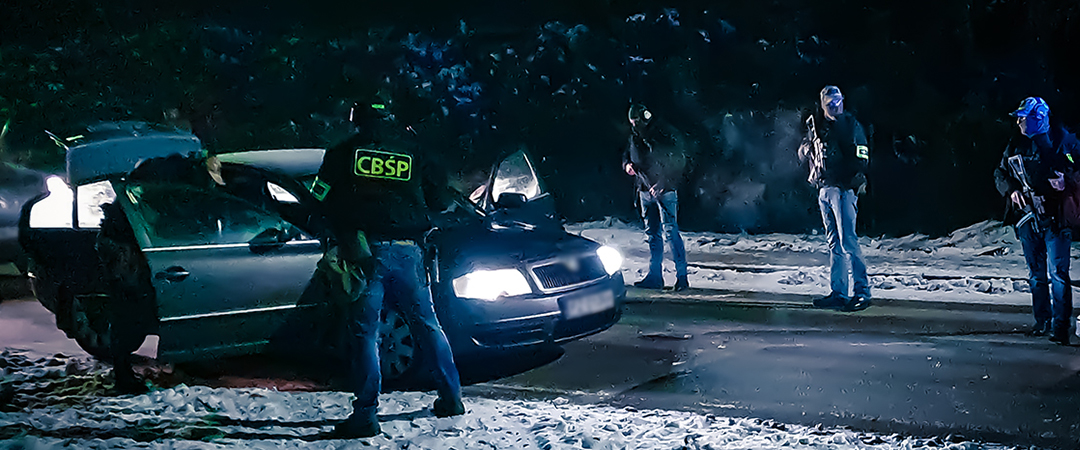
The Polish Police Central Bureau of Investigation (Policja) arrested seven suspects allegedly linked to a high-risk poly-criminal organised network operating in different EU countries. Supported by Europol and Eurojust, the arrests follow a two-year-long investigation into an organised criminal group producing, smuggling and marketing large volume of drugs, mainly marijuana, from Spain to EU countries.  During the action days, over 100 police officers carried out raids in the provinces of Wielkopolskie and Warmińsko-Mazurskie. The arrested individuals are suspected of taking part in the transport and transfer of large quantities of drugs. They are also said to have recruited truck drivers for smuggling drugs.  

The international criminal network under investigation is thought to have operated since 2016 and is likely to have trafficked tonnes of drugs. The criminal group controlled the wholesale supply chain – from the production to large shipments across several EU countries, and the marketing of drugs. The truck drivers recruited to transport drugs carried out their illegal activities under the cover of transport legally set-up companies. 

Successful international cooperation since 2019 

This operation is a continuation of an international investigation initiated in 2019 to dismantle the criminal network. Supporting the investigation since its very beginning as a high-priority case, Europol helped set up the international cooperation. Europol actively coordinated and supported the investigation as well as the action days. 

As a result of the effective cooperation between Polish authorities, Spain’s Civil Guard (Guardia Civil), Europol and Eurojust, 100 suspects have been arrested to date. The investigation has also led to the seizure of around 1.5 tonnes of marijuana, 91 kg of hashish, 43 kg of cocaine, 8 units of weapons, and 27 cannabis plantations. The plantations included over 20 000 plants in various stages of growth and could enable the production of nearly 2 tonnes of drugs. 


Headquartered in The Hague, the Netherlands, Europol supports the 27 EU Member States in their fight against terrorism, cybercrime and other serious and organised forms of crime. We also work with many non-EU partner states and international organisations. From its various threat assessments to its intelligence-gathering and operational activities, Europol has the tools and resources it needs to do its part in making Europe safer. In 2019, Europol supported 1 874 international operations.


Press release – Migrants and asylum seekers on the Greek islands: committee debate

In a debate with representatives of the European Commission and the NGO Greek Council for Refugees, the Civil Liberties Committee will look into the latest figures on the number of people arriving and staying in reception and emergency shelters, and assess the humanitarian situation on the ground. According to UNHCR, there are currently around 18,500 migrants and asylum-seekers stranded on the Aegean islands.

MEPs will also learn from the European Commission about the project involving EU bodies and the Greek authorities to set up a new reception centre on the island of Lesvos by early September 2021. The plan was agreed in the aftermath of the fire that destroyed the Moria camp in September last year. It should contribute to offering adequate reception conditions for asylum-seekers whilst ensuring the necessary screening and identification take place, and that asylum and return procedures are managed more quickly.


When:
Wednesday, 27 January, from 14.35 to 16.15


Where:
European Parliament in Brussels, József Antall building, room 2Q2 & via remote participation.

You can follow the meeting live.


Background

The EU response to the humanitarian crisis following the destruction of the Moria camp was the focus of a plenary debate with Commissioner Ylva Johansson just after the fire, on 17 September 2020. Last week, MEPs assessed again in plenary the situation of refugees and migrants at the EU’s external borders.

The Civil Liberties Committee has repeatedly called on the EU and the Greek Government to adopt measures to improve the living conditions of refugees on the Aegean islands and ensure their asylum-claims are processed smoothly.

The current turmoil surrounding the EU border agency Frontex, whose alleged involvement in pushbacks of asylum-seekers in Aegean waters has prompted an internal investigation, as well as calls from the European Parliament for more transparency to ensure respect of human rights, is likely to be raised during the debate too.


EU Bank appoints Alessandro Bragonzi the new Head of its Regional Representation for the Western Balkans

>@EIB
©EIB
  • New EIB Head of Regional Representation for the Western Balkans appointed
  • Since 2009, the EU bank has invested €8.6 billion in the region’s infrastructure and private sector development
  • The EIB will continue supporting the whole region on its path to recovery from COVID-19, EU accession and the creation of a sustainable common market

The European Investment Bank has appointed Alessandro Bragonzi the new Head of the Regional Representation for the Western Balkans. He is succeeding Dubravka Nègre, whose mandate ended 15 January.

EIB Vice-President Lilyana Pavlova who is responsible for the Western Balkans stated: “We are looking forward to rolling out our new initiatives for this region to assist the recovery from COVID-19 and the economic transition towards a sustainable, connected, digital and green common market. As the EU bank, we remain firmly committed to helping socioeconomic recovery and the region’s further development on the EU path in line with the European Commission’s Economic and Investment Plan and the Team Europe initiative. These initiatives are essential to generating a more competitive regional market integrated within EU value chains and better living conditions for the people of the Western Balkans. We are confident that Mr Bragonzi, as the new Regional Representative, will be able to build on past achievements and make a considerable contribution to the Bank’s activity in the areas of transport connectivity, SME and vital infrastructure development, digitalisation, the green transition and innovation. Through our local offices across the region, we are expanding the EIB’s footprint, fostering good and fruitful relations with our local partners that can rely on our technical and financial support in implementing their key strategic investments in these sectors.”

When taking on his new role, Alessandro Bragonzi stated: “It is a great honour for me to take on new responsibilities in the region when it is facing another challenging year. The Western Balkans have been severely impacted by the pandemic and remain vulnerable to further shocks. The EIB’s priority is to strengthen economies and healthcare systems while fighting for a smart and green recovery. I look forward to engaging with all our partners, the governments, the private sector and all relevant stakeholders, including fellow international financial institutions. In particular, we aim to scale up renewable energy and energy efficiency, support sustainable transport, increase the availability of social and affordable housing and access to water and help companies in the sectors most impacted by the pandemic.”

As part of Team Europe, the EIB’s priorities for the Western Balkans will continue to be (i) supporting the recovery from COVID-19, (ii) strengthening and modernising their vital infrastructure, and (iii) addressing the financing needs of small and medium-sized enterprises (SMEs) through its partner banks. The EU bank will promote investments that encourage better and greener transport connectivity, modern infrastructure, a stronger private sector and the transition towards a green and digital economy, in line with the European Union’s Economic and Investment Plan. For more information

Mr. Bragonzi has been with the EIB for 11 years. Prior to this position, he was the EIB’s representative for Albania, responsible for institutional and operational activities of the country, as well as of North Macedonia and Kosovo*. Before his current assignment, he contributed to the development of the Bank’s mandate management activity for EU financial instruments. He appraised, structured and negotiated financing for investment projects and lending to governments, banks and projects, while leading multidisciplinary teams.

As the largest investor in the region, the EIB has unlocked over €8.6 billion since 2009 to support the modernisation of vital infrastructure and the private sector’s development in the Western Balkans. To date, the EIB has invested €365 million in the healthcare sector, including for the renovation of clinical centres in Niš and Banja Luka and 21 regional hospitals. With over €2 billion invested, it has contributed to the construction of hundreds of kilometres of highway along the major regional routes. To support SMEs, it has disbursed more than €4 billion to date, helping to sustain over half a million jobs in the Western Balkans. In 2020 alone, the EU bank mobilised more than €1 billion to alleviate the negative effects of the COVID-19 pandemic.

* This designation is without prejudice to positions on status, and is in line with UNSCR 1244/1999 and the ICJ Opinion on the Kosovo declaration of independence.