Belgium: EIB and SPGE commit to protecting water resources, biodiversity and ecosystems in the Walloon Region
The EIB is providing €4.5 million to SPGE to implement projects enabling river basins to become healthy habitats again, thereby promoting biodiversity.
This is the first operation in Belgium under the Natural Capital Financing Facility created by the EIB and the European Commission.
The operation is part of a €150 million finance contract signed in spring 2020 by the EIB for SPGE, supporting its environmentally friendly wastewater collection and treatment infrastructure modernisation programme.
The European Investment Bank (EIB) and Société Publique de Gestion de l’Eau (SPGE) have announced a €4.5 million agreement to finance a series of projects in Wallonia specifically intended to improve biodiversity and restore and/or preserve ecosystems. In particular, this loan will support the efforts of SPGE – which is working with all local stakeholders (Walloon public administration, Natura 2000, etc.) – to re-establish the conditions enabling the freshwater pearl mussel to return to the rivers and streams of Wallonia.
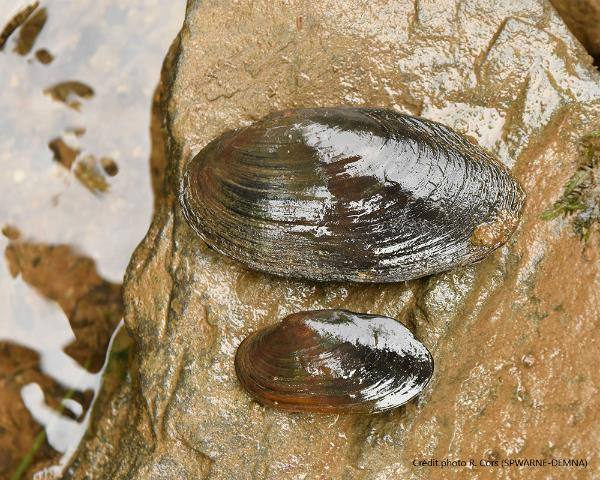
An initial group of projects will develop nature-based solutions for wastewater treatment, with the goal of ensuring bodies of water are in an excellent condition and promoting the return of the pearl mussel and the thick-shelled river mussel, along with their host species of fish. These two Natura 2000 species are currently endangered and have almost disappeared due to poor water quality in some rivers polluted by untreated domestic wastewater and excessive use of fertilisers (see note at the bottom of the page). However, investment in restoring these species’ habitats and better sewerage management for more than 20 years now are aiming to encourage the progressive return of these extremely vulnerable species.
The second group of projects will put in place measures to protect wastewater treatment plant outlet basins and therefore safeguard the water quality of rivers and associated ecosystems. These measures will include actions to protect water catchment areas to reduce harmful nitrate intake, environmentally friendly pasture management, the creation of meadows with especially rich biodiversity, and the development of natural basins or lagoons that reduce water overflows.
By carrying out these projects under its investment programme also supported by the EIB, SPGE will go beyond its legal obligations. SPGE is applying a diversified action plan to promote water quality and a healthier environment in Wallonia. Preserving water – a natural resource vital to life – is at the heart of the challenge to protect our planet.
This biodiversity-focused programme will therefore be able to benefit from a guarantee from the Natural Capital Financing Facility, created by the EIB and the European Commission to support projects fostering environmental protection, biodiversity and climate change adaptation via tailor-made loans and investments with an EU guarantee.
As the new loan was announced, EIB Vice-President Kris Peeters, who is representing the Benelux countries, said: “SPGE is the first company in Belgium to benefit from Natural Capital Financing Facility support. Their projects to improve river water quality, biodiversity and ecosystems connected to and dependent on their infrastructure are exemplary and promising. As the EU climate bank, we support innovative investments that respect the climate and the environment, and we are firmly committed to supporting sustainable growth. This development must come with smart management of natural capital, as this is vital for our planet and its inhabitants in terms of biodiversity and healthy ecosystems.”
President of the SPGE Executive Committee Jean-Luc Martin said: “We have been financing and coordinating the Walloon water sector for over 20 years. Every day, we work to treat wastewater across the region, renewing our infrastructure and innovating in multiple domains including studies on micro-plastic treatment and alternative energy generation. We are at the gates of a world making a radical change. Our commitment to one of the world’s most important resources – water – is at the very heart of our identity. Achieving this change in the face of climate issues brings huge challenges. But we must work together to protect the environment, to protect water.”
This operation between the EIB and SPGE follows the March signing of a €150 million finance contract for SPGE’s implementation of its wastewater collection and treatment infrastructure modernisation programme. The long-term financial partnership between the EIB and SPGE dates from 2004, and has aimed to protect the environment since the very beginning. The EIB and SPGE were therefore able to conclude this particular operation with confidence, obtaining the recognition and support of the Natural Capital Financing Facility.
Briefing notes
The freshwater pearl mussel and thick-shelled river mussel in our streams and rivers
The pearl mussel is native to most European rivers, but over the last century has seen a decline of over 90%, reflecting the global decline in biodiversity and freshwater life.
Its secret life could easily be a tale of science fiction, and for scientists, that says a lot. It has an extraordinary life cycle. Fertilised females eject up to 10 million microscopic larvae into the moving water, where their large numbers allow some to attach to the gills of a few select species of fish, such as brown trout. They spend nine months there before the tiny juvenile mussels fall onto the riverbed, where they bury themselves for five years.
The thick-shelled river mussel has a variety of names, including the common freshwater mussel, the stream mussel and the small freshwater mussel. It is smaller than the pearl mussel, but above all, its lifespan is much shorter – 20 to 30 years approximately (with pearl mussels living for a century). It is even less visible than the pearl mussel because it burrows deep into the sand beds of the streams where it dwells. Only the mussel’s two siphons can be seen above the bed’s surface, allowing it to draw in and expel water for its filter-feeding process.
Since these are both bioindicator and umbrella species, replenishing their population benefits all river fauna and flora and contributes significantly to the natural purification of water.
As part of this operation, the investments financed by the Natural Capital Financing Facility (NCFF) target the implementation of low-cost, nature-based solutions to treat domestic wastewater and water polluted by agricultural spreading, with this being the only way to achieve the water quality needed by the freshwater pearl mussel, its host, the brown trout, and the thick-shelled river mussel to develop.
For more information, consult the information sheets from the Walloon Region’s species and habitats catalogue for Natura 2000 sites (Natura 2000 code: 1029 and 1032)
Background information
About the Natural Capital Financing Facility
The Natural Capital Financing Facility (NCFF) combines EIB financing and the European Commission’s funding under the LIFE programme, the EU’s funding instrument for the environment and climate action.
It is a €125 million financial instrument specifically created to support projects dedicated to biodiversity and/or nature-based climate change adaptation. It supports EIB loans and equity participation and aims to mobilise around €400 million of additional investment. It is financed from the EIB’s own resources and benefits from a €50 million guarantee and €10 million of technical assistance under the LIFE programme. More information is available on the EIB website: Natural Capital Financing Facility.
About Société Publique de Gestion de l’Eau
Société Publique de Gestion de l’Eau (SPGE) coordinates and finances the Walloon water sector in order to safeguard public health and to protect and restore water resources and aquatic systems affected by any kind of pollution.
