Jordan: #Team Europe: EIB and MFW support micro-entrepreneurs with €2.7 million
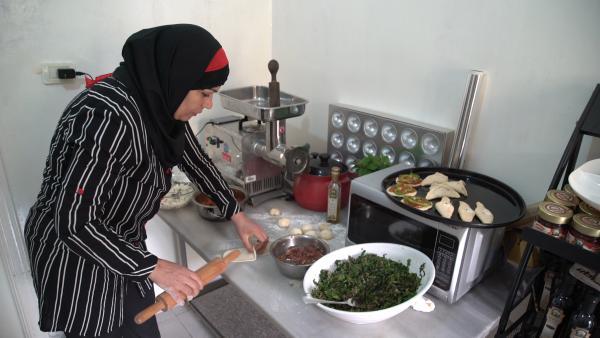
>@EIB/To be defined
©EIB/To be defined

The European Investment Bank (EIB)  has provided €2.7 million ($3.3 million) to Microfund for Women to boost the financing of micro-enterprises in Jordan during and after the COVID-19 pandemic. The new financing is expected to support around 9 100 new beneficiaries, more than 90% of whom will be women.

This new financing is a top-up of the €4.1 million ($5 million) financing agreement signed in November 2018 to provide microloans to micro-entrepreneurs running income-generating activities in both urban and rural areas, including self-employed individuals, sole proprietors and micro-entrepreneur groups.

The EIB financing comes under Team Europe’s response to the COVID-19 pandemic. It is carried out under the Southern Neighbourhood Microfinance Facility (SNMF) – a €71.3 million lending facility that supports investments in microfinance markets in Southern Neighbourhood countries. The facility blends EIB resources with European Commission resources under the Neighbourhood Investment Facility.

EIB Vice-President Dario Scannapieco commented on the new financing: “We are pleased to strengthen our partnership with Microfund for Women. The additional €2.7 million in financing will increase the outreach of MFW to support more Jordanian micro-entrepreneurs, mainly women, during these difficult times. Micro-entrepreneurs are the most vulnerable to the new challenges arising from the spread of the COVID-19 pandemic. As the Bank of the European Union, we are keen to support entrepreneurship in Jordan to sustain and create jobs.

EU Ambassador to Jordan H.E. Maria Hadjitheodosiou welcomed this new operation with Microfund for Women as a part of the Team Europe initiative, indicating that “this project reflects the European Union’s commitment to supporting partner countries, such as Jordan, addressing the impact of the COVID-19 pandemic and at the same time fostering women’s empowerment in Jordan, by helping them achieve sustainable livelihoods for themselves and their families, alongside other women empowerment projects supported by the European Union.”

Muna Sukhtian, MFW Managing Director, also commented “we value our long term partnership with the EIB and we look at it as a success story. We are fully aware of the challenging times that our beneficiaries are going through due to the effects of the COVID-19 pandemic so we are carefully studying their situations. We are pleased that we will be utilising this EIB financing to offer new solutions to beneficiaries such as refinancing and rescheduling, in addition to empowering them in rebuilding their businesses by helping them secure various new marketing channels. The funds will also be used to attract potential young entrepreneurs and women interested in setting up new projects.”

“Previously, the first loan we received from the EIB was used to offer more than 1 250 microloans, 91.5% of which went to women and 26.6% to young entrepreneurs, covering the following sectors: trade, production and services,” added Muna Sukhtian.

The EIB has been collaborating with the Microfund for Women since 2014. It is the leading microfinance institution (MFI) in Jordan dedicated to empowering micro-entrepreneurship. Currently, the Fund has more than 124 000 active borrowers with a strong focus on women.

Background information

The European Investment Bank (EIB) is one of the leading development finance players in the Mediterranean region. The Bank’s goal is to support economic and social development by improving people’s living conditions. The EIB aims to establish a tangible presence in partner countries, focusing on their economic and social priorities. It not only contributes its financing capacity, but also adds value in project implementation and the modernisation of public policies thanks to its technical and financial expertise and advisory services.

The Risk Capital Facility for the Southern Neighbourhood provides access to equity and debt financing to MSMEs in the Mediterranean region in order to support private sector development, inclusive growth and private sector job creation. Set up by the European Commission and EIB, it builds on the success of the ENPI-FEMIP Risk Capital mandate 2007-2013 which was fully deployed despite the unprecedented geopolitical turmoil in the target region.



Press briefing ahead of Eurogroup video conference of 15 February 2021

The (virtual) press briefing ahead of the videoconference of Eurogroup will take place on 10 February 2021 at 15.00.

The briefing will be “off the record” and will be given by Tuomas Saarenheimo, President of the Eurogroup Working Group.

EU accredited journalists will be able to participate and ask questions remotely. If you hadn’t registered for one of the previous virtual Eurogroup press events, please use this link to do so and have the possibility to ask questions.

  • Deadline: Wednesday, 10 February 2021, 13.00

Further instructions will be sent to all registered participants after the deadline.


Press release – Press briefing on plenary session at 15.30

The main topics that MEPs will discuss and vote on during the 8-11 February plenary session include:

  • the EU’s vaccination strategy with Ursula von der Leyen
  • the crackdown on the political opposition in Russia
  • scrutiny of social media/fundamental rights
  • curbing the effects of the pandemic
  • EU consumption and recycling rules
  • fighting in-work poverty/Minimum wage
  • the debate with Christine Lagarde.

Interpretation will be available at the press conference in English, French and German.

Journalists wishing to actively participate and ask questions, please connect via Interactio by using the link https://broadcaster.interactio.eu/join/66e2-hy1p-1w4u.

You can also follow it live from 15.30 via Parliament’s webstreaming and EbS+.

Information for the media – Use Interactio to ask questions

Interactio is only supported on iPad (with the Safari browser) and Mac/Windows (with the Google Chrome browser).

When connecting, enter your name and the media you are representing in the first name / last name fields.

For better sound quality, use headphones and a microphone. Interpretation is only possible for interventions with video.

Journalists who have never used Interactio before are asked to connect 30 minutes before the start of the press conference to perform a connection test. IT assistance can be provided if necessary.

For more details, check the connection guidelines and recommendations for remote speakers.


EIB Group provides €443 million to Bulgarian economy in 2020

  • Support for SMEs and mid-caps, urban development and advisory services
  • Operations benefited 4 000 businesses and supported some 81 000 jobs
  • Ten-year record for EIF, unlocking €1.8 billion for SMEs in Bulgaria

The European Investment Bank Group (EIB Group), which consists of the European Investment Bank (EIB) and the European Investment Fund (EIF), provided loans, guarantees and equity commitments worth €443 million for projects in Bulgaria in 2020. This represents a 23% increase in total financing activities compared to 2019.

In 2020, EIB lending in Bulgaria amounted to €115 million. The EIF committed some €328 million in new operations for small and medium-sized enterprises (SMEs), which is expected to unlock €1.8 billion for SMEs in Bulgaria, most of which will support those that are struggling under the impact of the COVID-19 pandemic.

EIB Vice-President Lilyana Pavlova said: “2020 has been a very challenging year for all of us. The COVID-19 pandemic has triggered an unprecedented global crisis. In this context, I am proud that the EIB Group has increased its financing, in particular for SMEs. Our financial support is helping to improve people’s lives and has an important role in boosting the economic development of Bulgaria during the pandemic. I want to thank all our partners and assure you that we stand ready to support SMEs, regional cohesion, climate action and urban development to create employment and prosperity across Bulgaria.”

Deputy-Minister of Finance of Bulgaria Marinela Petrova said: “We highly appreciate the active role of the Bank in the fulfilment of the climate-related strategic objectives and priorities of the European Commission and the Member States, as well as its willingness to support Member States in the implementation of the transition towards climate neutrality. In order to successfully use the financial opportunities provided by the European Commission and the EIB, it is essential to identify the specific investment needs and to prepare quality projects. With its experience and expertise in financing investments in the area of infrastructure, innovation, climate and environment, the Bank can significantly support this process and contribute to the successful transition of Bulgaria to carbon neutrality.”

In a virtual press conference, Marinela Petrova, Bulgarian Deputy Minister of Finance and member of the EIB Board of Directors, and EIB Vice-President Lilyana Pavlova presented the impact of the EIB Group’s financing in Bulgaria and discussed the strategic outlook for the EU bank in the year ahead. In addition, Vice-President Pavlova gave an overview of the main EIB Group activities in 2020, including the response to the COVID-19 pandemic and the key role it plays in fighting the climate crisis.

The press conference was followed by a virtual conference, organised by the EIB Economics Department, to present the annual EIB Investment Survey results for Bulgaria. The survey gathers unique insights on the corporate investment landscape in the European Union.

The survey found that in Bulgaria, COVID-19 has substantially affected firms’ investment strategies. It prompted nearly half of firms to invest less than planned (46%) and only very few to invest more than planned (7%). Bulgarian firms’ reaction to the pandemic is in line with the EU average (45%). A quarter of firms cited the increased use of digital technologies (25%) compared to half of firms in the European Union (50%). A quarter of firms expect a permanent reduction in employment (25%) as a long-term impact of COVID-19, similar to the EU average (21%). In addition, almost two-thirds (63%) of firms in Bulgaria have no investment plans to tackle climate change impact, well above the EU average (35%).

EIB Group in Bulgaria 2020

EIB Activity Report 2020

EIF Brochure 2020

EIB at a glance

EIB Investment Survey


Joint EUIPO/EPO IP Contribution Report

February 08, 2021 About the EUIPO

Joint EUIPO/EPO IP Contribution Report

By effectively protecting their intellectual property, innovative companies can secure financing, grow, collaborate and create value. But how does owning intellectual property rights (IPRs) impact their performance?

This joint report by the EUIPO and the European Patent Office (EPO) delves deeper into the role of IPRs by analysing a representative sample of over 127 000 European firms from all 28 EU member states as of 1 January 2020. According to this analysis, firms that own IPRs generate 20% higher revenues per employee than their counterparts without an IP portfolio. Firms that own IPRs also pay on average 19% higher wages than firms that do not.

The report also includes an econometric analysis which makes it possible to isolate the effect of IPR ownership from other factors such as the size of a firm or the countries and sectors in which it operates. The results confirm the positive association between IPR ownership and economic performance, with revenue per employee 55% higher for IPR owners than for non-owners.

A more detailed analysis of the overall picture reveals significant potential, especially when it comes to small and medium-sized enterprises (SMEs). Although fewer than 9% of European SMEs rely on IPRs, this subset of companies appears to generate 68% higher revenues per employee than SMEs without IPR portfolios.

All Observatory studies and reports can be found on the Observatory Webpage here