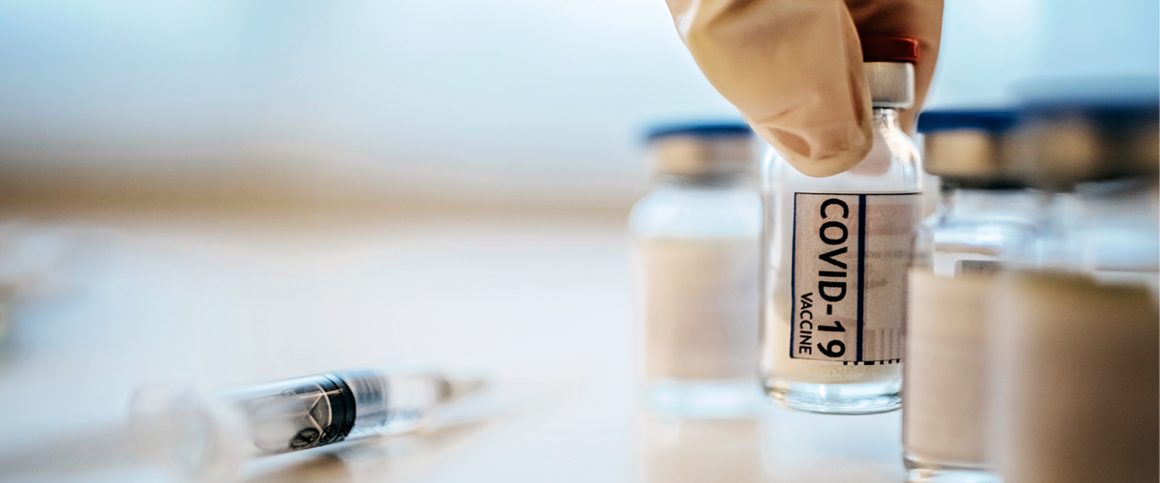
Detailed data on COVID-19 vaccination progress in the EU/EEA available via Vaccine Tracker and in weekly reports

The new version of the Vaccine Tracker is now available as a separate dashboard. It provides information on the national uptake of the first and second doses of COVID-19 vaccines by age and other target groups, as well as by vaccine products, for all EU/EEA countries. Information is provided as maps, graphs and charts and can be exported as data.

Data provided in the Vaccine Tracker is the latest information reported to ECDC by the relevant authorities in EU/EEA countries through the EU surveillance system. Data are subject to retrospective corrections, and corrected datasets are released as soon as the processing of updated national data has been completed. ECDC works closely with all EU/EEA countries to continually improve data completeness and quality. For accurate interpretation of data, various factors affecting vaccine deployment in each country should also be considered. Monitoring will be further enhanced as more vaccines are rolled out and more information on vaccine coverage becomes available.

In addition to the latest data available in the Vaccine Tracker, the weekly COVID-19 vaccines roll-out overview report provides key figures and additional data as of the previous week. The latest weekly update indicates that, as of 14 February, nearly 22 million vaccine doses have been administered in the EU/EEA, and the estimated median uptake of the first vaccine dose among adults aged 18 years and above in the EU/EEA is 4.2% (among 29 countries reporting). Within the most vulnerable group – those aged 80 years and above – the estimated median uptake of the second vaccine dose (full vaccination) is 5.6% (among 20 countries reporting). These results should be interpreted with caution, as further work is ongoing to improve data quality and completeness.


Media advisory – Press briefing ahead of the informal video conference of European affairs ministers of 23 February 2021

The press briefing ahead of the informal video conference of European affairs ministers will take place on Friday, 19 February 2021 at 16.30. The briefing will be given by Ambassador Nuno Brito. 

Please note that this press briefing will be “off the record” and will take place remotely.

In order to participate and ask questions, EU accredited journalists should register using this link. Those who already registered for previous press briefings or press conferences of informal video conferences of European affairs ministers do not need to do it again.

Deadline for registration: 19 February 2021 at 15:30

Further instructions will be sent to all registered participants after the deadline.


Using EU funds to address fundamental rights migration challenges

FRA gave the presentation during a European Commission workshop on 10 February. FRA highlighted issues relating to child protection, the integration of migrants and refugees, fundamental rights monitoring at borders and the implementation of EU law safeguards when setting up new large-scale information technology systems. 


ESMA webinar – WP on MiFID II research unbundling

ESMA has published a working paper on MiFID II research unbundling. During the webinar you will see a presentation of the working paper and its findings, followed by a Q&A session.

Main findings presented in the working paper:

Concerns have been raised that the MiFID II research unbundling provisions could have had detrimental effects, particularly on SMEs, on the availability and quality of research on EU companies, as well as on company financing conditions. We do not find material evidence of these effects: following the introduction of the MiFID II research unbundling provisions

  1. the quantity of research per SME has not declined relative to larger firms;
  2. the probability of an SME completely losing coverage has not increased relative to a larger firm;
  3. the quality of SME research has not worsened relative to larger firms; and
  4. SME liquidity conditions have worsened, relative to larger firms, in terms of tightness (measured by bid-ask spreads), but not in terms of depth (measured by the Amihud illiquidity ratio and the turnover ratio). However, in absolute terms, SMEs continue to be characterised by lower amount of analyst research, higher probability of losing coverage, worse quality of research and limited market liquidity. This situation appears to have been neither improved nor worsened by the MiFID II research unbundling provisions.

This webinar will be of particular interest to:

  1. Members of the academic community;
  2. Think tanks; and
  3. Financial market participants seeking to better understand the MiFID II research unbundling regime impacts, including financial institutions, legal firms and consultancies


Remarks by President Charles Michel on the occasion of the 30th anniversary of Visegrad cooperation

First of all, I would like to thank you dear Mateusz (Morawiecki) for your invitation. It’s a great pleasure for me to be here in Krakow for this very important moment, the anniversary of the Visegrad group.

Indeed, this is a critical time for Europe. Covid-19 is a very difficult challenge, and we need to work together, to cooperate together in order to make progress, to protect our citizens and also to succeed at the economic and social level. And today we had the occasion to discuss very important challenges that we have in common. We also identified our common goals. And I think for us, at the European level, there are certainly three important priorities.

First, we will never forget that our European political project is based on fundamental democratic values. This is an important priority for us and is also a constant debate in Europe and in the rest of the world. But it is important because it inspires our policy in different fields.

The second important priority for us is prosperity. How to improve the lives of our citizens everywhere in Europe. And we think that we need to identify the pillars in order to succeed at the economic and social level. Climate change and the digital agenda are difficult challenges, important challenges. These also have potential leverage in order to innovate and to make progress. We had the occasion to discuss those topics. We know and I know that it is important to take into consideration the different situations at the national level between the different Member States. We do not have exactly the same starting point. And that’s why through the next European budget and through the Recovery Fund, we are trying to make the right choices.  We will continue in the next weeks, in the next months, to discuss with all the Member States in order to decide together and to to be able to reach the ambitious goals that will be decided by 2030 and on climate neutrality by 2050.

My third point was also mentioned by Mateusz, the importance for Europe to be a global player and to have more positive influence to guarantee our safety, our security, and to promote our values and to defend our interests. And thank you, because today we again discussed the important question of the Eastern Partnership. We think, with the other countries, our 27 colleagues, that it is really important in the next weeks and months to tackle this question.

And we will travel to Ukraine and to Georgia in the next weeks to reaffirm the European position – solidarity with the territorial integrity of Ukraine and Georgia. We need a strategic debate at the European level.

Finally, an important topic, Covid-19 and the vaccination campaign. It is very important to make progress together. We took the decision in Europe to ask the Commission to order vaccines on behalf of the 27 Member States. And we understand that right now the situation is difficult, everywhere in the world, and it is difficult in Europe. But I’m confident that we will work very hard to increase the production of vaccines, which is the priority number one. We have secured many doses of vaccines, but the priority number one is to make sure that we have enough doses as soon as possible.  It is the task for the Commission, and again next week we will have an important videoconference, at the highest level with all 27 leaders, to improve cooperation, to improve coordination and to make sure that we are able to vaccinate our people as soon as possible. This is an important measure for the safety of our citizens, but also for our economic recovery.  We want to be able to again have a more normal life with the potential positive consequences at the economic and social level, so we need to succeed. It’s a difficult challenge, but we are very motivated and determined.

Finally again, Mateusz and dear colleagues, thank you for this exchange of views today, which in my opinion is very important because the first condition to make Europe stronger is to be united. It’s never easy, being united requires constant effort and it requires us to listen to each other, to listen actively to each other, to be able to make strong and good compromises.  And so it is possible to take decisions together in the interest of all our European citizens everywhere in Europe.