President Charles Michel to visit Republic of Moldova, Georgia and Ukraine

President Michel will travel to Moldova, Georgia and Ukraine from Sunday 28 February to Wednesday 03 March.

In Chisinau, President Michel will meet with President Maia Sandu before flying to Georgia where he will meet President Salome Zourabichvili, Prime Minister Irakli Gharibashvili and Archil Talakvadze, the Chairperson of the Parliament of Georgia. He will also visit the administrative boundary line and meet representatives of the opposition.

In Ukraine, he will join President Zelenskyy in visiting eastern Ukraine before discussing EU-Ukraine relations in Kyiv and meeting with representatives of institutions fighting corruption.

In addition to bilateral relations and our common fight against Covid-19, the future of the Eastern Partnership will also feature high on the agenda of the visit.


Belarus: EU prolongs sanctions for a year

European Union renews Belarus sanctions

The Council today decided to prolong until 28 February 2022 the restrictive measures targeting high-level officials responsible for the violent repression and intimidation of peaceful demonstrators, members of the opposition and journalists in Belarus, as well as those responsible for electoral fraud. The EU sanctions also target economic actors, prominent businesspeople and companies benefiting from and/or supporting the regime of Alexandr Lukashenko.

After the fraudulent presidential election in August 2020 and the ensuing wave of demonstrations which have been violently depressed by the Belarusian authorities, the EU has imposed sanctions in October, November and December 2020, thereby signalling to the political and economic actors responsible that their actions and support for the regime should come at a cost.

The restrictive measures consist of a ban on travel to the EU and an asset freeze for listed persons – currently 88 individuals, including Alexandr Lukashenko – and an asset freeze applicable to 7 entities. In addition, EU persons and entities are forbidden from making funds available to those listed, either directly or indirectly.

The EU is closely monitoring the evolution of the situation in Belarus. On 22 February 2021 the Foreign Affairs Council underlined that, in view of the continuing disrespect for fundamental freedoms and human rights, and repression of the Belarusian people and civil society by the authorities, the EU will consider further sanctions. In addition, the EU will continue to support the Belarusian people in their legitimate request for democracy, including through support to civil society and independent media.


Article – Sassoli on the pandemic: “There can be no return to how things were before”

“It is thanks to our collective approach that European countries have not been pitted against each other and the rich countries have not bought up most of the vaccines,” the President of the European Parliament said. “I am strongly opposed to bilateral agreements. I urge you to stand firm; do not succumb to the temptation of vaccine nationalism. A common approach also allows us to monitor, investigate and come down hard on any scams targeting member states.”

“Pharmaceutical companies must honour their contractual obligations, but we should also go on clearing the way for all practical licensing arrangements that will enable us to expedite the large-scale public vaccination campaign. We need to address shortages and supply bottlenecks quickly in order to increase production. Our economic recovery will be more robust the more widely vaccines are rolled out,” he said.

Vaccination campaigns can only succeed if there is public trust, the President said, adding: “Our response to the crisis must involve more democracy.”

Sassoli also stressed the need for the EU to play a bigger role in public health. “The pandemic has shown us that important decisions concerning security, health, supplies of medical equipment and vaccines, research and manufacturing, arrangements regulating the movement of people and the opening and closing of our borders can only properly be taken at European level.

Addressing heads of state and government at the start of the summit on 25 February, the President added: “The lesson the pandemic has taught us is that there can be no return to how things were before. It would be a mistake, a waste of energy, and it would leave us ill-equipped to address future challenges. Our task now is to develop a European health policy, by allocating clearly defined competences to the EU institutions.”


ESMA appoints new chair of its Corporate Reporting Standing Committee

The CRSC’s mandate includes contributing to and/or monitoring of regulatory developments as well as establishing appropriate supervisory convergence on issues relating to accounting (under International Financial Reporting Standards – IFRS), periodic financial reporting, non-financial reporting, electronic reporting developments and storage of regulated information (in the relevant areas under the CRSC’s remit) as well as audit.

The CRSC’s mandate includes contributing to and/or monitoring of regulatory developments as well as establishing appropriate supervisory convergence on issues relating to accounting (under International Financial Reporting Standards – IFRS), periodic financial reporting, non-financial reporting, electronic reporting developments and storage of regulated information (in the relevant areas under the CRSC’s remit) as well as audit.

The standing committees are expert groups drawn from ESMA staff and Member States’ national competent authorities for securities markets regulation, and are responsible for the development of policy in their respective areas.

The appointment is effective immediately and will run until February 2022.

Further information:

Solveig Kleiveland

Senior Communications Officer

✆   +33 (1)58 36 64 27

@   press@esma.europa.eu


Migrants continue to face hardship

There were reports of alleged migrant ill-treatment by officials at the EU’s land and sea borders. 

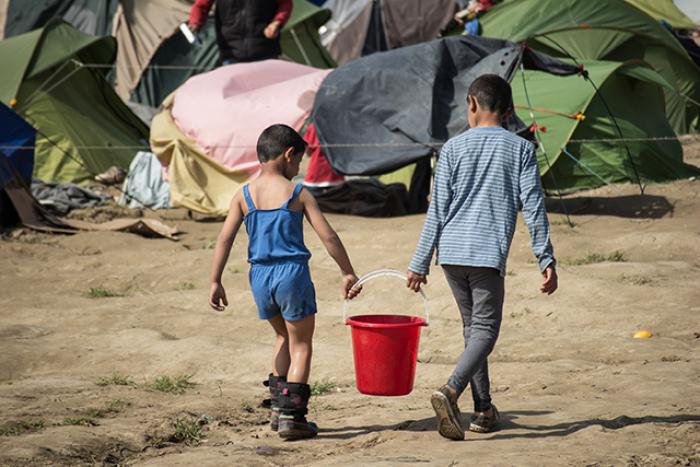
Conditions in detention and reception centres and camps remain difficult in some countries.Overcrowding, and access to clean water and sanitation remain an issue. This particularly affects unaccompanied children. 

The number of asylum applications remain significantly below pre-Covid-19 levels. This is likely to be due to pandemic-related emergency measures and the global drop in travel.

Access to asylum remains complicated. Applicants face difficulties such as backlogs, technical issues during remote interviews and a lack of legal support.

Some family reunification procedures have also been put on hold because of the pandemic.

Covid-19 shutdown measures combined with a lack of IT equipment hampered access to education.

In addition, some media report incidents of hate crime and hate speech targeting migrants and refugees.

This is the last in FRA’s current series of quarterly migration bulletins. It covers 1 October until 31 December 2020.

FRA is assessing how to provide such updates in the future.

FRA regularly collected data on migration since September 2015.

Access previous migration quarterly reports >