European Semester: The Autumn Package explained

The Autumn package represents the beginning of the 2019 European Semester cycle of economic and social policy coordination. 

Today, the Commission presents: 

  • A number of steps under the Stability and Growth Pact 

THE 2019 ANNUAL GROWTH SURVEY (AGS) 

The Annual Growth Survey (AGS) sets out the general economic and social priorities for the EU and offers policy guidance for the following year. It aims to encourage sustained economic and social convergence on the basis of the so-called “virtuous triangle” of boosting investment, pursuing structural reforms and ensuring responsible public finances. 

It also builds on the most recent data of the Autumn 2018 Economic Forecast and the messages emerging from the Alert Mechanism Report and the draft Joint Employment Report. 

What are the main priorities outlined in the 2019 Annual Growth Survey? 

The 2019 AGS comes in a context of sustained, but less dynamic economic growth in Europe. This provides an opportunity to implement the reforms needed to address pressing challenges, which is even more urgent given rising global uncertainty and possible internal risks. 

The AGS sets out priorities to guide national reform plans and complement efforts made at EU level to provide the conditions for inclusive and sustainable growth. These include: 

  • delivering high-quality investment and targeting investment gaps in research and innovation, in education, training and skills and infrastructure; 
  • focusing on reforms that increase productivity growth, inclusiveness and institutional quality; 
  • ensuring macro-financial stability and sound public finances. 

What economic progress has been made since last year? 

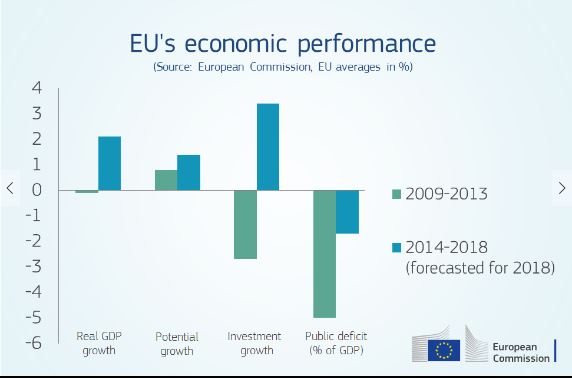
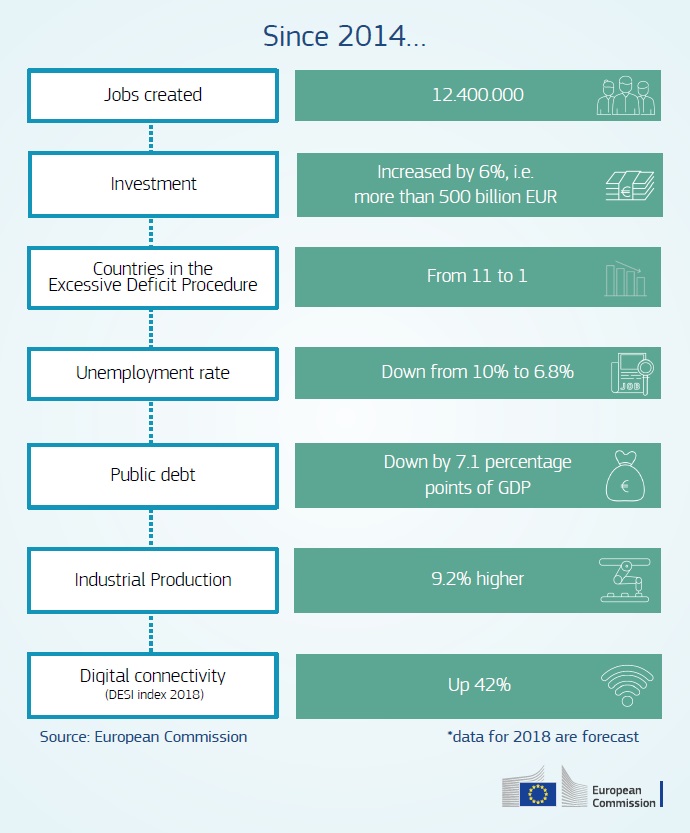
The EU and euro area economies have now been growing for 22 consecutive quarters. Despite a more uncertain environment, all Member States’ economies are forecast to continue growing, though at a slower pace, thanks to the strength of domestic consumption and investment. The number of people in employment has reached the highest level ever recorded, with 239 million people now employed in the EU. Significant progress has been made towards ensuring that Europe’s public finances are sound, sustainable and capable of absorbing future shocks. 2018 will be the first year where the aggregate euro area public deficit is below 1%. For the first time since 2007, investment is set to rise in all EU countries in 2019. As of November 2018, the Juncker Plan is set to trigger almost €360 billion in investments. Greece has successfully concluded its European Stability Mechanism (ESM) stability support programme, with its place at the heart of the euro area secured. 

Nevertheless, the latest forecast suggests that economic growth is projected to moderate and continues to face significant downside risks.
pic 2

pic 2

THE 2019 ALERT MECHANISM REPORT (AMR) 

The so-called “six-pack” legislation adopted in 2011 introduced a system to monitor broader economic developments, to detect early on problems such as credit and property bubbles, issues in external sustainability or falling competitiveness. The Macroeconomic Imbalance Procedure (MIP) is integrated in the European Semester and is kicked-off by an Alert Mechanism Report (AMR) which identifies Member States for which the Commission should undertake in-depth reviews to assess whether they are experiencing macroeconomic imbalances. The analysis in the AMR is based on the economic reading of a scoreboard of agreed indicators. 

What are the main findings of this Alert Mechanism Report? 

The 2019 AMR finds that the correction of macroeconomic imbalances in the EU, including the easing of some persisting challenges in the financial sector, is progressing on the back of sustained, but moderating, growth. 

However, challenges remain. Potential sources of risk are broadly the same as those identified in the 2018 AMR. Large current account surpluses persist in certain countries, while competitiveness developments have become less supportive of rebalancing. Private sector deleveraging has benefited from the economic expansion but remains uneven, with large stocks of debt not correcting with sufficient pace. Although decreasing, the level of non-performing loans is still high in some countries. At the same time, a number of countries display signs of possible overheating, mainly linked to fast-growing unit labour costs implying reduced cost competitiveness, and house price growth from already relatively elevated levels.  

Which Member States will be subject to an in-depth review (IDR)? 

On the basis of the analyses in the Alert Mechanism Report (AMR), it is proposed that 13 Member States should be covered by an in-depth review in 2019. As is customary in this procedure, these include each of the Member States identified as having imbalances in the previous round of the Macroeconomic Imbalances Procedure (MIP): Bulgaria, Croatia, Cyprus, France, Germany, Ireland, Italy, the Netherlands, Portugal, Spain, and Sweden. In addition to these Member States, Greece and Romania will also be subject to IDRs. The Commission will present the in-depth reviews as part of the Country Reports to be published in early 2019.  

THE DRAFT JOINT EMPLOYMENT REPORT 2019 

The Joint Employment Report (JER) is mandated by Article 148 of the Treaty on the Functioning of the European Union (TFEU). It provides an annual overview of the main employment and social developments in the EU. In addition, the Joint Employment Report 2019 monitors Member States’ performance in relation to the Social Scoreboard accompanying the European Pillar of Social Rights. The current draft version, presented by the Commission, will be discussed with the Employment Committee and the Social Protection Committee, with a view to final adoption by the Employment, Social Policy, Health and Consumer Affairs Council (EPSCO) in March 2019. 

What are the main findings of the draft Joint Employment Report (JER)? 

The economic recovery of recent years has been particularly job intensive. Unemployment levels are reaching historic lows. The number of people in employment has reached the highest level ever recorded, with 239 million people now employed in the EU. This corresponds to 12 million more people at work since the start of this Commission. On current trends, the EU is on course to meet its Europe 2020 target of a 75% employment rate by 2020. 

Particularly steady progress is being made in increasing employment rates of women and elderly workers. The share of people at-risk-of poverty or social exclusion decreased markedly in 2017, with more than five million people no longer experiencing poverty or social exclusion compared to 2016. The total number of people at risk of poverty or social exclusion has fallen below pre-crisis levels. In a context of improving labour markets and declining poverty, 13 out of the 14 headline indicators of the Social Scoreboard accompanying the European Pillar of Social Rights recorded an improvement over the last year, on average. 

However, not all Member States and groups within society are reaping the full benefits of the current positive economic environment. Unemployment remains unacceptably high in a number of Member States. Labour market integration remains difficult for specific groups, including the low-skilled workers, the youth, people with disabilities and people with a migrant background. 

How is the European Pillar of Social Rights reflected in the European Semester? 

The European Pillar of Social Rights, proclaimed in 2017, has become an essential compass of the European Semester since the 2018 cycle. The 20 principles embedded in the Pillar inform the analysis of the employment and social situation in Member States and forms the basis of policy recommendations directed towards them. The draft Joint Employment Report adopted today includes, for the second year, the findings of the Social Scoreboard, which was set up as an important monitoring tool to assess Member States’ performance vis-à-vis key dimensions of the Pillar. Member States’ performances are assessed along 14 headline indicators through a methodology agreed with the Council – with grades ranging from “critical situations” to “best performers”. This classification will also inform the more detailed analysis of Member States’ situation in the Country Reports, which will be published early in 2019. 

THE RECOMMENDATION ON THE ECONOMIC POLICY OF THE EURO AREA 

The euro area recommendation provides tailored advice to euro area Member States on issues relevant for the functioning of the euro area as a whole, such as policies related to correcting macro-economic imbalances, the euro area fiscal stance and the completion of the Economic and Monetary Union. It is published early in the European Semester, ahead of country-specific discussions, so that common challenges are discussed, agreed and then collectively reflected in country-specific actions. This year, the euro area recommendation has been streamlined to have a stronger focus on the key challenges at stake for the coming year. 

What is the 2019 euro area recommendation? 

The Commission recommendation consists of five parts: 

  1. Deepen the Single Market, improve the business environment, and pursue resilience-enhancing product and services market reforms. Reduce external debt and pursue reforms to boost productivity in euro area Member States with current account deficits and strengthen the conditions that support wage growth, respecting the role of social partners, and implement measures that foster investment in euro area Member States with large current account surpluses. 
  1. Rebuild fiscal buffers in euro area countries with high levels of public debt, support public and private investment and improve the quality and composition of public finances in all countries.  
  1. Shift taxes away from labour and strengthen education systems and investment in skills as well as the effectiveness and adequacy of active labour market policies and social protection systems  across the euro area. 
  1. Make the backstop for the Single Resolution Fund operational, set up a European Deposit Insurance Scheme and strengthen the European regulatory and supervisory framework. Promote an orderly deleveraging of large stocks of private debt. Swiftly reduce the level of non-performing loans in the euro area and prevent their build up, including by removing  debt bias in taxation. 
  1. Make swift progress on completing the Economic and Monetary Union, taking into account the Commission proposals, including those concerning the financial sector as well as the Reform Support Programme and the European Investment Stabilisation Function under the proposal for the 2021-2027 Multiannual Financial Framework. 

OPINIONS ON THE DRAFT BUDGETARY PLANS 

The Commission has also completed its assessment of euro area Members States’ Draft Budgetary Plans (DBP) compliance with the provisions of the Stability and Growth Pact (SGP) for 2019, taking into account its recent Autumn 2018 Economic Forecast and consultations with Member States. It has adopted Opinions for all 19 euro area Member States’ DBPs today. 

What are the findings? 

The Autumn 2018 Economic Forecast projects the aggregate euro area headline deficit, which has been on a continuous downward trend since 2010, to fall to 0.6% of GDP in 2018, but then to increase to 0.8% of GDP in 2019. For the first time since the creation of the euro, no euro area Member State is forecast to have a deficit above the 3% of GDP threshold in 2019. The euro area debt-to-GDP ratio is expected to continue its declining trend of recent years and to fall from around 87% in 2018 to around 85% in 2019. 

The number of Member States at or above their medium-term budgetary objectives is set to increase from seven to eight Member States, with Austria moving just above its medium-term budgetary objective in 2019. The aggregate structural deficit is expected to increase by 0.3% of potential GDP in 2019. It is, in particular, driven by a projected increase in Italy’s structural deficit by 1.2% of GDP. Expansionary fiscal policies expected in Member States with fiscal space, notably Germany and the Netherlands, also contribute to the change in the overall euro area figure. Member States continue to have very different fiscal positions in terms of debt and sustainability challenges. Due to the lack of fiscal adjustment in some highly-indebted Member States, fiscal policies are insufficiently differentiated, resulting in a slightly expansionary and pro-cyclical fiscal stance for the euro area as a whole. 

Preventive arm of the Stability and Growth Pact 

In the case of Italy, having assessed the revised DBP presented on 13 November 2018, the Commission confirms the existence of a particularly serious case of non-compliance with the Recommendation addressed to Italy by the Council on 13 July 2018. The Commission had already adopted an Opinion on 23 October 2018 identifying a particularly serious non-compliance in the initial DBP presented by Italy on 16 October 2018.

For ten countries – Germany, Ireland, Greece, Cyprus, Lithuania, Luxembourg, Malta, the Netherlands, Austria, and Finland –, the Draft Budgetary Plans are found to be compliant with the requirements for 2019 under the Stability and Growth Pact.

For three countries – Estonia, Latvia and Slovakia –, the Draft Budgetary Plans are found to be broadly compliant with the requirements for 2019 under the Stability and Growth Pact. For these countries, the plans might result in some deviation from the country’s medium-term budgetary objective, taking into account any allowances where relevant. 

For four countries – Belgium, France, Portugal, and Slovenia –, the Draft Budgetary Plans pose a risk of non-compliance with the requirements for 2019 under the Stability and Growth Pact. The Draft Budgetary Plans of these Member States might result in a significant deviation from the adjustment paths towards the respective medium-term budgetary objective. For Belgium, France, and Portugal non-compliance with the (transitional) debt reduction benchmark is also projected. 

Corrective arm of the Stability and Growth Pact (i.e. Excessive Deficit Procedure) 

Spain’s headline deficit is projected to fall below 3% next year and the country is set to exit the Excessive Deficit Procedure, which means that Spain would become subject to the preventive arm of the Pact as of next year. In this context, the DBP presented by Spain is found to be at risk of non-compliance with the Stability and Growth Pact in 2019. This is based on the Autumn 2018 Economic Forecast’s projection of a significant deviation from the required adjustment path towards the medium-term budgetary objective and non-compliance with the transitional debt reduction benchmark in 2019. 

STEPS UNDER THE STABILITY AND GROWTH PACT 

The Commission has also taken a number of steps under the Stability and Growth Pact: 

Italy 

For Italy, the Commission has carried out a new assessment of the prima facie lack of compliance with the debt criterion. At 131.2% of GDP in 2017, the equivalent of
€37,000 per inhabitant, Italy’s public debt exceeds the 60% of GDP reference value of the Treaty. This new assessment was necessary because Italy’s fiscal plans for 2019 represent a material change in the relevant factors analysed by the Commission last May. The analysis presented in this new report under Article 126(3) of the Treaty on the Functioning of the European Union includes the assessment of all relevant factors and notably: (i) the fact that macroeconomic conditions, despite recently intensified downside risks, cannot be argued to explain Italy’s large gaps to compliance with the debt reduction benchmark, given nominal GDP growth above 2% since 2016; (ii) the fact that the government plans imply a marked backtracking on past growth-enhancing structural reforms, in particular the past pension reforms; and above all (iii) the identified risk of significant deviation from the recommended adjustment path towards the medium-term budgetary objective in 2018 and the particularly serious non-compliance for 2019 with the recommendation addressed to Italy by the Council on 13 July 2018, based on both the government plans and the Commission 2018 autumn forecast. Overall, the analysis suggests that the debt criterion as defined in the Treaty and in Regulation (EC) No 1467/1997 should be considered as not complied with, and that a debt-based Excessive Deficit Procedure is thus warranted. 

Hungary 

For Hungary, the Commission established that no effective action was taken in response to the Council recommendation of June and proposes that the Council adopts a revised recommendation to Hungary to correct its significant deviation from the adjustment path towards the medium-term budgetary objective. In June 2018, the Council had issued a recommendation of an annual structural adjustment of 1% of GDP in 2018 to Hungary under the Significant Deviation Procedure (SDP). In light of developments since and following the lack of effective action by Hungary to correct its significant deviation, the Commission now proposes a revised recommendation of an annual structural adjustment of at least 1% of GDP in 2019. The public deficit has increased in Hungary from -1.6% in 2016 to -2.4% in 2018, and is forecast to remain slightly below -2% in the coming two years.

Romania 

For Romania, the Commission established that no effective action was taken in response to the Council recommendation of June and proposes that the Council adopts a revised recommendation to Romania to correct its significant deviation from the adjustment path towards the medium-term budgetary objective. In June 2018, the Council had issued a recommendation of an annual structural adjustment of 0.8% of GDP in both 2018 and 2019 to Romania under the SDP. In light of developments since and following the lack of effective action by Romania to correct its significant deviation, the Commission now proposes a revised recommendation of an annual structural adjustment of at least 1% of GDP in 2019. The public deficit has increased in Romania from -0.5% in 2015 to -2.9% in 2016 and is forecast to reach
-3.3% in 2018, -3.4% in 2019 and -4.7% in 2020: this is the highest deficit in the EU. 

What is a Significant Deviation Procedure? 

In addition to respecting the 3% of GDP deficit limit as part of the corrective arm of the Stability Growth Pact, Member States must comply with the requirements of the preventive arm of the Pact. The objectives of the preventive arm are to promote sound and sustainable public finances and to prevent excessive deficits and debts from occurring. To achieve this, the Significant Deviation Procedure was introduced as part of the 6-pack reform in 2011. Its purpose is to provide a warning to Member States when a significant deviation from the requirements of the Preventive Arm of the Pact is observed and to bring the Member State back to (or closer to) the fiscal position that would have been achieved if the deviation had not occurred. 

FIRST ENHANCED SURVEILLANCE REPORT FOR GREECE 

The Commission has also adopted the first Enhanced Surveillance Report for Greece, following the activation of the framework. 

The Commission has activated enhanced surveillance for Greece, effective as from the conclusion of the ESM programme on 20 August 2018. Enhanced surveillance provides a comprehensive framework for monitoring economic developments and the pursuit of policies needed to ensure a sustainable economic recovery. The report covers the latest economic and financial developments in Greece as well as an assessment of implementation of reform commitments given by Greece to the European partners at the June 2018 Eurogroup. The publication of the report follows the first post-programme mission to Greece which took place from 10 to 14 September 2018. 

What are the conclusions of the report? 

Greece has presented a draft budget which, on the basis of current projections, ensures compliance with its commitment to achieve a primary surplus of 3.5% of GDP. Progress with reforms in other areas is mixed and the authorities will need to accelerate implementation to meet their end-2018 objectives. 

How will the conclusions of this report impact the activation of the debt relief measures for Greece? 

The activation of policy-contingent debt measures, agreed as part of the significant package of debt measures agreed at the Eurogroup meeting of 22 June 2018, will be contingent on a positive assessment in the second report under the enhanced surveillance framework. This report will be published early next year. 

A positive enhanced surveillance report will enable the transfer back to Greece of the budgetary equivalent of income from national central banks’ holdings of Greek bonds (so-called SMP/ANFA profits) and the elimination of the step-up interest rate charged on European Financial Stability Facility (EFSF) loans. 

These measures will be activated in equal amounts potentially on a semi-annual basis, provided Greece fulfils its commitments. 

Given that the first set of specific commitments had a deadline of end-2018, the current report could only check progress on these measures and was not expected to lead to the activation of policy-contingent debt measures. This second report will assess implementation of commitment with a deadline of end-2018 and will be published early next year. 

BACKGROUND 

Press release on the European Semester Autumn Package 

Annual Growth Survey 2019 

Alert Mechanism Report 2019 

Euro area recommendation 2019 

Draft Joint Employment Report 2019 

Communication on the 2019 Draft Budgetary Plans of the euro area 

2019 Draft Budgetary Plans 

Article 126(3) report on Italy 

Enhanced Surveillance Report for Greece 

Autumn 2018 Economic Forecast 

Follow Vice-President Dombrovskis on Twitter: @VDombrovskis 

Follow Commissioner Moscovici on Twitter: @pierremoscovici 

Follow DG ECFIN on Twitter: @ecfin


Daily News 21 / 11 / 2018

COLLEGE MEETING: European Semester Autumn Package: Bolstering inclusive and sustainable growth

Vice-President Dombrovskis, Commissioner Thyssen and Commissioner Moscovici presented today the European Semester Autumn Package that represents the beginning of the 2019 European Semester cycle of economic and social policy coordination. The Commission has set out the EU’s economic and social priorities for 2019, presented Opinions on Draft Budgetary Plans and confirmed the existence of particularly serious non-compliance with the Stability and Growth Pact in the case of Italy. Greece has been integrated into the European Semester for the first time. The 2019 European Semester cycle of economic and social policy coordination begins against a backdrop of sustained but less dynamic growth in a climate of high uncertainty. A lot has been achieved since 2014 but more must be done to support inclusive and sustainable growth and job creation while enhancing the resilience of Member States’ economies. At EU level, this demands taking the decisions required to further strengthen the Economic and Monetary Union. At national level, there is a pressing need to use the current growth momentum to build up fiscal buffers and reduce debt. Investment and structural reforms need to focus even more on boosting productivity and growth potential. These actions will provide the conditions for sustained macro-financial stability and serve EU’s long-term competitiveness. This will, in turn, create the conditions for more and better jobs, greater social fairness and better living standards for Europeans. Today’s package is based on the Autumn 2018 Economic Forecast and builds on the priorities set out in President Juncker’s 2018 State of the Union address. The press release and memo are available online. (For more information: Christian Spahr Tel.: +32 229 50055; Christian Wigand Tel.: +32 229 62253; Annikky Lamp Tel.: +32 229 56151; Enda McNamara Tel.: +32 229 64976)


COLLEGE MEETING: The Commission makes its in-house governance clearer, simpler and more transparent

Today, the College adopted a set of targeted measures to make its in-house governance clearer, simpler and more transparent. This is an important step in ensuring the Commission is better equipped to tackle the challenges of today and tomorrow and also follows up on recommendations from the European Court of Auditors and the Commission’s Internal Audit Service. Under the reform, the Commission clarifies and formalises the mandate of the Corporate Management Board – an in-house structure which provides coordination, oversight, advice and strategic orientations on corporate management issues. Moreover, the IT governance landscape within the Commission will be simplified, as set out in the Commission’s Digital Strategy. The strategy sets a vision for the Commission to become a digitally transformed, user-focused and data-driven administration by 2022. Today’s measures also include strengthening the corporate risk management and its process. An update of the Charter of the Audit Progress Committee also tasks it with monitoring the Commission’s follow up to the European Court of Auditors’ observations on the EU consolidated accounts. The Commission has also today revised the administrative arrangements on co-operation and timely exchange of information between the European Commission and the European Anti-Fraud Office (OLAF). The new in-house measures adopted by the College today have immediate effect. The texts of the five documents are available online and more information on the European Commission’s Digital Strategy can be found here(For more information: Natasha Bertaud – Tel.: +32 229 67456; Kasia Kolanko – Tel.: +32 229 63444)


Commission welcomes agreement on foreign investment screening framework

The European Parliament, the Council and the Commission reached yesterday afternoon a political agreement on an EU framework for screening of foreign direct investment. The package agreed will ensure that the EU and its Member States are equipped to protect their essential interests while maintaining one of the most open investment regimes in the world. President of the European Commission, Jean-Claude Juncker said: “Europe must always defend its strategic interests and that is precisely what this new framework will help us to do. This is what I mean when I say that we are not naïve free traders.” Commissioner for Trade Cecilia Malmström said: “This is an important milestone in the process we initiated only a year ago to protect critical technology and infrastructure in Europe. In an increasingly interconnected and interdependent world, we need means to protect our collective security while keeping Europe open for business. I count on the European Parliament and Member States to swiftly approve the investment screening mechanisms agreed today.” The new European framework for screening of foreign direct investment creates a cooperation mechanism where Member States and the Commission will be able to exchange information and raise specific concerns; allows the Commission to issue opinions in cases concerning several Member States, or a project of interest to the whole EU; encourages sharing experience, best practices and information regarding investment trends. The new framework will not affect the Member States’ ability to maintain their existing review mechanisms. The two co-legislators have now to give the final greenlight to the proposal so that it can enter into force. For more information, see full press release. (For more information: Daniel Rosario – Tel.:+32 229 56185; Kinga Malinowska – Tel.:+32 229 51383)


Juncker Plan: Austrian small and medium businesses get access to fresh funding to innovate

On the occasion of the “Innovative Enterprise Vienna 2018” conference, organised by the Austrian Presidency of the Council, the European Investment Bank Group and the Austrian promotional bank Austria Wirtschaftsservice (aws) have agreed to extend an existing guarantee by up to €48 million, bringing it to up to €96 million, in order to support an additional 150 innovative small and medium businesses in the country. This agreement is backed both by the European Fund for Strategic Investments (EFSI), the heart of the Juncker Plan and Horizon 2020, the EU programme for Research and Innovation. Commissioner for Research, Science and Innovation, Carlos Moedas, said: “I welcome this new agreement supported by the Juncker Plan and Horizon 2020. It means fresh financing for Austrian innovative small and medium businesses – which is precisely what they need to launch new products, hire new staff and expand beyond their local markets.” By November 2018, the Investment Plan had already mobilised €360 billion of investment across Europe, including over €4 billion in Austria, and supported 850,000 small and medium businesses. A press release is available here. (For more information: Christian Spahr – Tel.: +32 229 50055; Sophie Dupin de Saint-Cyr – Tel.: +32 229 56169)


Commission welcomes agreements on safeguarding competition in aviation and on a modernised road toll system

Yesterday, the European Parliament and Council reached two provisional political agreements on legislative proposals from the Commission, in two crucial areas of European mobility. An agreement was reached on new EU rules to safeguard competition in aviation. This regulation will ensure that Europe remains a leader in international aviation, well connected to fast-growing markets. This is a concrete sign of a Europe that protects and that will take action whenever other non–EU carriers will benefit from practices that will put Europe’s interest and connectivity at risk.  With its ‘Aviation Strategy for Europe’ from December 2015, the Commission underlined the importance of this proposal and has now delivered. A second agreement was reached on the ‘European Electronic Toll Service’, a system that will make all the different electronic road toll systems interoperable across Europe. This will allow, once implemented, people to drive from Tallinn to Lisbon without the hassle of having to deal with different road toll systems. This will also simplify administration and reduce fraud. In addition to providing a better service to European users by making it possible to pay tolls in the whole EU with one contract and one on-board device, the system reduces the costs and allows for an easy collection of tolls. Furthermore, the European Electronic Toll Service will enable the application of the ‘user pays’ and ‘polluter pays’ principles and thus contribute to the Commission’s Climate objectives. Violeta Bulc, Commissioner for Transport, said: “I am proud to see that yesterday we achieved concrete results in two key areas that will enhance Europe’s leadership in mobility. The agreement on safeguarding competition in aviation ensures that aviation can continue to drive mobility, growth and job creation in the EU. While with the ‘European Electronic Toll Service’ the First Mobility Package is starting to bear fruit and the Commission paves the way for modern European electronic tolling rules, contributing to a seamless travel experience for our road users.” (For more information: Enrico Brivio – Tel.: +32 229 56172; Stephan Meder – Tel.: +32 229 1 39 17)

EU Nature Action Plan: revised guidance on managing protected Natura 2000 areas

As part of the EU Action Plan for Nature, People and the Economy the European Commission has published an updated guidance for Member States’ authorities, stakeholders and EU citizens on how to conserve and manage Natura 2000 network of protected areas. Karmenu Vella, EU Commissioner for Environment, Fisheries and Maritime Affairs, said: “With today’s updated guidance document we’re helping to ensure that EU nature laws deliver for nature, people and the economy. The sound management of the Natura 2000 sites is essential for the maintenance and enhancement of our European biodiversity, ecosystems and the services they provide on which some 4.4 million jobs in the EU are directly dependent. I trust that this document will be of great use for the management of Natura 2000 sites, helping to better reconcile nature protection with different economic activities for the broader benefit of society.” Natura 2000 established under the EU’s Birds Directive and Habitats Directive is a EU-wide network of over 27 500 terrestrial and marine sites covering more than 18 % of land area and is the centrepiece of the EU’s nature and biodiversity policy. While national and regional authorities are primarily responsible for the implementation of EU nature legislation, today’s guidanceprovides added clarity to help Member States to improve application of provisions around permitting procedures (Article 6 of the Habitats Directive). Through clear and accessible explanations, the Commission anticipates to reduce administrative burdens, streamline procedures across Member States, and enhance overall implementation on the ground for the benefit of nature, people and the economy. More information is available in the news item. (For more information: Enrico Brivio – Tel.: + 32 229 56172; Daniela Stoycheva – Tel.: +32 229 53664)


Mergers: Commission approves acquisition of Shire by Takeda, subject to conditions

The European Commission has approved under the EU Merger Regulation the acquisition of Shire by Takeda Pharmaceutical Company. The Commission’s investigation focused on treatments for inflammatory bowel disease (IBD), and, in particular, on biologic treatments for the disease, where Shire’s and Takeda’s activities overlap. Takeda already offers a biologic treatment for IBD, called Entyvio, which belongs to a class of biologic treatments called “anti-integrins”. Shire is currently developing a biologic treatment belonging to the same class of biologics. The Commission was concerned that the takeover, as originally notified, would lead to a loss of innovation and a reduction in potential future competition. To address the Commission’s competition concerns, Takeda offered to divest Shire’s pipeline product that is expected to compete with Entyvio, including the rights to its development, manufacturing and marketing, to a purchaser that would have an incentive to develop the drug. The commitments thus fully remove the overlap between Takeda’s and Shire’s activities on the market where the Commission had identified competition concerns. Therefore, the Commission concluded that the proposed transaction, as modified by the commitments, would no longer raise competition concerns. The decision is conditional upon full compliance with the commitments. Commissioner Margrethe Vestager, responsible for competition policy, said: “There are many diseases with only a limited number of effective and safe treatments. Inflammatory bowel disease is one such case. It is a lifelong condition with devastating effects on people’s lives. Therefore, it is essential that companies continue developing promising new products to treat it. We can today approve the merger between Shire and Takeda, but only subject to the divestment of the product that Shire is developing to treat the disease and which could have been lost through the merger. This will preserve innovation in this market and, importantly, increase the choice of treatments for patients.” The full press release is available online in EN, FR, DE. (For more information: Ricardo Cardoso – Tel.: +32 229 80100; Giulia Astuti – Tel.: +32 229 55344; Maria Tsoni – Tel.: +32 229 90526)

Commission’s Structural Reform Support Programme is deliveringon its objectives

The first annual monitoring report on the implementation of the Structural Reform Support Programme was released today. In 2017, 159 requests from 16 Member States were selected for funding under the programme. The 2017 annual monitoring report shows that the programme can significantly contribute to the efforts of the Member States’ authorities to identify and overcome structural weaknesses in the design and implementation of reforms. Valdis Dombrovskis, Vice-President for the Euro and Social Dialogue, also in charge of Financial Stability, Financial Services and Capital Markets Union, said: “The Annual Growth Survey, adopted by the College today, underlines that growth-enhancing reforms remain a key priority for the EU. Through the Structural Reform Support Programme, the Commission supports Member States’ reform initiatives while enabling them to share best practices and learn from each other’s experience.” The Structural Reform Support Programme entered into force in May 2017 and has a budget of €222.8 million until 2020. The programme is available to all EU Member States upon their request and provides tailor-made expertise on the practical aspects of reforms. The first monitoring report of the programme is available here. The programme is managed by the Structural Reform Support Service which supports Member States in the preparation, design and implementation of growth-enhancing reforms. Since 2015, the service has engaged, through the Structural Reform Support Programme or other sources, in almost 500 technical support projects in 25 EU Member States. An overview of the 3 years of the Structural Reform Support Service is available here. (For more information: Christian Spahr – Tel.: +32 229 50055; Annikky Lamp – Tel.: +32 229 56151)

ANNOUNCEMENTS

Commissioner Jourová on official visit to Lithuania

Commissioner for Justice, Consumers and Gender Equality Věra Jourová will be in Vilnius tomorrow and Friday, where she will meet Dalia Grybauskaitė, the President of Lithuania, Elvinas Jankevičius, the Minister of Justice, and Linas Linkevičius, the Minister of Foreign Affairs. On Thursday, the Commissioner will also deliver a speech on the future of Europe in the plenary debate at the national Parliament (Seimas). She will discuss a similar topic with the Leaders’ Club Conference. She will have a joint press conference with the Minister of Justice after their meeting. On Friday, Commissioner Jourová will participate in the Heads of Justice and Home Affairs (JHA) Agencies meeting and in view of the upcoming International day against violence against women on 25/11, she will give a press conference at the European Institute for Gender Equality (EIGE) focused on combating violence against women across the EU and Lithuania. The Commissioner will participate in a Citizens’ Dialogue at the Vilnius University, on the future of Europe, European Public Prosecutor, data protection, new deal for consumers, threat to elections, equality, and rule of law (live at 11:30). During her visit, the Commissioner will have meeting with civil society, including Lithuanian NGOs working with the justice, human rights, and equality fields. A press point will follow her meeting with Elvinas Jankevičius, the Minister of Justice at 12:00 on Thursday. The press conference on violence against women at the EIGE will be live streamed at 10:40 on Friday. (For more information: Christian Wigand– Tel.: +32 229 62253; Melanie Voin – Tel.: +32 229 58659)

Commissioner Avramopoulos in Bucharest, Romania

Commissioner for Migration, Home Affairs and Citizenship Dimitris Avramopoulos will be in Bucharest, Romania tomorrow, where he will meet Prime Minister Viorica Dăncilă, Interior Minister Carmen Dan and Minister Delegate for European AffairsGeorge Ciamba to discuss priorities in the field of migration and home affairs in view of Romania’s upcoming Presidency of the Council of the European Union. Commissioner Avramopoulos will also meet with Senate Speaker Călin Popescu Tăriceanu and Chamber of Deputies Speaker Liviu Dragnea. He will also exchange views with the joint European Affairs and Foreign Affairs Committees from the Senate and Chamber of Deputies as well as with the Joint Special Committee of the Chamber of Deputies and Senate for the coordination of parliamentary activities necessary for the preparation of the Council Presidency. Joint press statements with Interior Minister Dan and Prime Minister Dăncilă are scheduled tomorrow at 9.00h and 10.15h CET+1 respectively and will be available on EbS. (For more information: Natasha Bertaud – Tel.: +32 229 67456; Markus Lammert – Tel.: +32 229 80423)


Commissioner Andriukaitis at the 4th Conference on European Reference Networks

On 21-22 November the fourth Conference on European Reference Networks (ERNs) takes place in Brussels. The European Reference Networks are virtual networks involving healthcare providers across Europe with the aim to facilitate discussion on complex or rare diseases and conditions that require highly specialised treatment. The conference brings together more than 400 participants, such as the representatives of EU and national institutions, healthcare providers, medical professionals, and patients’ representatives to discuss the results achieved so far and the challenges ahead. Ahead of the conference Commissioner for Health and Food Safety, Vytenis Andriukaitis, said: “The European Reference Network system is already a success story: just over 18 months after its launch more than 250 patients have been diagnosed and have received a treatment thanks to their work. The Networks are starting to deliver concrete benefits but it needs yet to confront the challenges ahead, in particular the sustainability and integration into the national healthcare systems that can only be addressed through close cooperation between all players. We also need to continue to bridge the gap between research and clinical care and bring research results closer to the patients. The potential of ERNs for the future is immense in this respect. I am confident that the dedication and expertise of these Networks will lead to a sustainable, cross-border ecosystem of clinical and research activities in Europe.” The conference will be webstreamed here. (For more information: Anca Paduraru – Tel.: +32 229  91269; Aikaterini Apostola – Tel.: +32 229 87624)


Upcoming events of the European Commission (ex-Top News)


Speaking points by Commissioner Thyssen on the presentation of the European Semester Autumn Package

Ladies and gentlemen,

Europe is in a phase of solid economic growth and improving labour markets. Yet, faced with increasing uncertainty, we must not relax our reform efforts.

The positive trend of employment growth is continuing. Around 12 million jobs have been created since the start of the Juncker Commission.

In the second quarter of this year, 239 million persons were employed in the EU. Employment has never been so high in the EU. We are well on track to reach the Europe 2020 target of a 75% employment rate in 2020.

Also more and more people are participating in the labour market. The activity rate has reached a record high. We have now surpassed the activity rate of the United States.

The number of people at risk of poverty or social exclusion is now below pre-crisis levels. In 2017 alone, 5 million people exited from poverty or social exclusion, and the trend is set to continue this year.

Europe is also making progress on the implementation of the European Pillar of Social Rights.

  • We have recorded an improvement for 13 out of the 14 indicators of the social scoreboard over the last year, when looking at their average values for the EU as a whole.
  • Unemployment is at its lowest in ten years.
  • Youth unemployment continues do go down and is now below 15%.

Still, the economic recovery is not benefitting all citizens and countries in the same way.

  • First, household incomes have been growing more slowly than GDP. This means that the recovery has reached households only to some extent. It is crucial that the recent growth reaches everyone.
  • Second, we also see that real wages have been growing less than productivity on average in 2016 and 2017. This is a long-term trend, which needs to be reverted.
  • Third, the gender pay gap is still too high and declining too slowly. Although more and more women are employed and women are generally better qualified than men. And this brings an even wider pension gap.
  • The conditions are now in place for us to invest more in our societies, in our people, so that this recovery becomes permanent and benefits everyone, including the generations to come.

There are two key priorities.

  • First, to keep on investing in people’s skills. This is our most effective tool to equip people for the changing world of work and tackle one of the roots of inequality. Almost 60 million adults lack necessary literacy, numeracy and digital skills, and if we do not act now, these people risk falling further behind.   Ensuring access to quality and inclusive education and training, and creating a culture of lifelong learning, is key for young and adults alike to have successful careers. Two years ago I presented a comprehensive Skills Agenda for Europe that touches on these and other aspects. The Commission delivered on all actions proposed. The ball is now in the court of the Member States to continue the necessary reforms that make the EU more inclusive.
  • Second, to address the challenges of the new world of work. Technology brings new opportunities but also challenges in terms of precariousness and insecurity. The Commission has presented concrete proposals for all workers to have predictable and transparent working conditions and adequate social protection. We hope that these files will be concluded soon.


To achieve our objective of a more social and inclusive Europe, we must fully involve social partners and civil society. They are key to improving the design of reforms, increasing ownership among citizens and ultimately leading to better socio-economic results.

A well-functioning social dialogue is a key element of the European social market economy. It helps to strengthen social cohesion and reduces conflicts in society, for the benefit of workers, employers and governments.


The European Semester is becoming more and more social. With the European Pillar of Social Rights as a compass, the Semester is the key instrument to steer the process of social convergence every year. In the last cycle, a substantial part of Country Specific Recommendations focused on the Pillar.

Social issues have been at the core of our agenda from day one. And the European Semester process, which helps us to coordinate our economies, has never been as much focused on the social aspects as it is today. Our objective should be to have adequate and sustainable social systems that serve the interests of all generations. Now but also in the longer term.

The Commission is fully committed to supporting the Member States in implementing the social principles of the Pillar, also with financial support. We strongly advocate the use of EU funds to support the implementation of the Pillar.

Our proposal for the new European Social Fund Plus (ESF+) in the next budget provides more than 100 billion euro for social investments in our Member States.

As of this cycle, the Semester will help identify investment needs. The Member States will need to then put these funds to good use in the future. Thank you.


European Semester Autumn Package: Bolstering inclusive and sustainable growth

The 2019 European Semester cycle of economic and social policy coordination begins against a backdrop of sustained but less dynamic growth in a climate of high uncertainty. A lot has been achieved since 2014 but more must be done to support inclusive and sustainable growth and job creation while enhancing the resilience of Member States’ economies. At EU level, this demands taking the decisions required to further strengthen the Economic and Monetary Union. At national level, there is a pressing need to use the current growth momentum to build up fiscal buffers and reduce debt. Investment and structural reforms need to focus even more on boosting productivity and growth potential. These actions will provide the conditions for sustained macro-financial stability and serve EU’s long-term competitiveness. This will, in turn, create the conditions for more and better jobs, greater social fairness and better living standards for Europeans.

Today’s package is based on the Autumn 2018 Economic Forecast and builds on the priorities set out in President Juncker’s 2018 State of the Union address.

Valdis Dombrovskis, Vice-President for the Euro and Social Dialogue, also in charge of Financial Stability, Financial Services and Capital Markets Union said: “Europe is in good economic times, but rising risks indicate that this will not last forever. EU countries need well-targeted investments and renewed reform efforts to strengthen their growth fundamentals and increase productivity. On the budgetary policy side, it is time to reduce public debt levels and rebuild fiscal buffers. This will give us the room for manoeuver we’ll need when the next downturn comes. Now is also the time to make progress on deepening Europe’s Economic and Monetary Union.”   

Marianne Thyssen, Commissioner for Employment, Social Affairs, Skills and Labour Mobility, said: “The economic recovery of recent years has been particularly job-intensive and unemployment is reaching record lows. At the same time, more and more people are participating in the labour market. The activity rate has reached a record high and has even surpassed that of the USA. The conditions are now in place for us to invest more in our societies, in our people, so that this recovery becomes permanent and benefits everyone, including the generations to come.”

Pierre Moscovici, Commissioner for Economic and Financial Affairs, Taxation and Customs said: “The EU economy continues to grow at a healthy clip. Today’s policy advice from the Commission is about ensuring it stays strong and becomes more resilient – because in an increasingly uncertain global context, we cannot take anything for granted. A sustainably prosperous euro area needs not only sound public finances but also competitive economies and inclusive societies.”

Last year’s exceptionally favourable global economic situation and low interest rate environment helped to support growth, employment, debt reduction and investment in the EU and euro area. All Member States are forecast to continue growing, though at a slower pace, thanks to the strength of domestic consumption and investment. Barring major shocks, Europe should be able to sustain above-potential economic growth, robust job creation and falling unemployment. The public finances of euro area Member States have improved considerably and the aggregate euro area public deficit is now below 1%. However debt remains high in several countries. As the economy continues to grow, it is time to build up the fiscal buffers needed to cope with the next downturn and mitigate potential employment and social impacts.

2019 Annual Growth Survey

The Annual Growth Survey (AGS), which sets the general economic and social priorities for the upcoming year, calls on the EU and its Member States to take decisive and concerted policy action to deliver inclusive and sustainable growth. At national level, policy efforts should focus on delivering high-quality investment, and reforms that increase productivity growth, inclusiveness and institutional capacity, while continuing to ensure macro-financial stability and sound public finances. At EU level, the priorities are deepening the Single Market, completing the architecture of the Economic and Monetary Union (EMU) and advancing the principles set out in the European Pillar of Social Rights.

2019 Alert Mechanism Report

The Alert Mechanism Report (AMR), which serves as a screening device designed to detect the existence of macroeconomic imbalances, has identified 13 Member States to be subject to an in-depth review in 2019. These reviews will assess whether they are in fact experiencing macroeconomic imbalances. The Member States which were found to be experiencing imbalances in the previous round of the Macroeconomic Imbalances Procedure (MIP) will, by default, be covered by an in-depth review in 2019. These are: Bulgaria, Croatia, Cyprus, France, Germany, Ireland, Italy, the Netherlands, Portugal, Spain, and Sweden. Greece and Romania will also be subject to an in-depth review.

2019 Draft Joint Employment Report

The draft Joint Employment Report, which analyses the employment and social situation in Europe,shows continued job creation, decreasing unemployment and an improving social situation across the EU. The Report also includes the findings of the Social Scoreboard, which analyses the performances of the Member States in light of the principles of the European Pillar of Social Rights.

In the second quarter of 2018, 239 million people were in employment in the EU, the highest number that has ever been recorded. Around 12 million jobs have been created since the start of the Juncker Commission. The share of people at risk of poverty or social exclusion decreased markedly in 2017, with more than five million people exiting from poverty or social exclusion compared to the previous year. The total number of people at risk of poverty or social exclusion has fallen below pre-crisis levels.

However, the economic recovery is yet to reach all groups of society. The employment rate of older workers increased substantially over the last decade, but for the young, low-skilled and people with a migrant background, employability remains difficult in a number of Member States. The participation of women in the labour market continues to grow at a fast pace, but this has not yet been translated into a significant decrease in the gender pay gap and pension gap.

Household incomes are growing but are still below pre-crisis levels in some Member States. Real wage growth picked up in 2018, but it remains below productivity growth and below what could be expected given the positive labour market and economic performance. More generally, inequality and poverty remain sources of concern.

Recommendation on the economic policy of the euro area

The recommendation on the economic policy of the euro area, which sets out concrete measures which are critical to the functioning of the euro area, has been streamlined to have a stronger focus on key challenges. The recommendation calls for policies that support inclusive and sustainable growth, and improve resilience, rebalancing and convergence within the euro area. It recommends that reforms that increase productivity and growth potential, deepen the Single Market, improve the business environment, promote investment and improve the labour market should be prioritised.

The Commission recommends improving the quality and composition of public finances and the rebuilding of fiscal buffers to have more room for manoeuvre during the next downturn. Member States with current account deficits should seek to raise productivity and reduce external debt. Member States with current account surpluses should strengthen the conditions that support investment and wage growth.

The Commission recommends shifting taxes away from labour and strengthening education systems, investment in skills and the effectiveness and adequacy of active labour market policies and social protection systems. This is in line with the principles of the European Pillar of Social Rights.

The Commission also calls for swift progress on completing Europe’s Economic and Monetary Union in line with the Commission proposals, including the Reform Support Programme and the European Investment Stabilisation Function under the proposal for the 2021-2027 Multiannual Financial Framework.

The recommendation also calls for continued work on the Banking Union by making the backstop for the Single Resolution Fund operational and setting up a European Deposit Insurance Scheme. Financial integration should also be pursued by strengthening the European regulatory and supervisory architecture. Efforts to reduce non-performing loans should be continued and their build-up in the future prevented. Adoption of the November 2016 Banking Package by the end of 2018 remains crucial for the completion of the Banking Union. A more integrated financial sector – a completed Banking Union and a genuine Capital markets Union – will help strengthen the international role of the euro, making it more commensurate to the weight of the euro area in the world.

Opinions on the Draft Budgetary Plans of euro area Member States

The Commission has also adopted Opinions on whether the 2019 Draft Budgetary Plans (DBPs) of euro area Member States comply with the Stability and Growth Pact.

Preventive arm of the Stability and Growth Pact

In the case of Italy, having assessed the revised DBP presented on 13 November, the Commission confirms the existence of a particularly serious case of non-compliance with the Recommendation addressed to Italy by the Council on 13 July 2018. The Commission had already adopted an Opinion on 23 October 2018 identifying a particularly serious non-compliance in the initial DBP presented by Italy on 16 October 2018.

For ten Member States – Germany, Ireland, Greece, Cyprus, Lithuania, Luxembourg, Malta, Netherlands, Austria, and Finland –, the DBPs are found to be compliant with the Stability and Growth Pact in 2019.

For three Member States – Estonia, Latvia and Slovakia –, the DBPs are found to be broadly compliant with the Stability and Growth Pact in 2019. For these countries, the plans might result in some deviation from the country’s medium-term budgetary objective (MTO) or the adjustment path towards it.

For four Member States – Belgium, France, Portugal and Slovenia –, the DBPs pose a risk of non-compliance with the Stability and Growth Pact in 2019. The DBPs of these Member States might result in a significant deviation from the adjustment paths towards the respective medium-term budgetary objective.

Corrective arm of the Stability and Growth Pact (Excessive Deficit Procedure)

Spain’s headline deficit is projected to fall below 3% next year and the country is set to exit the Excessive Deficit Procedure, which means that Spain would become subject to the preventive arm of the Pact as of next year. In this context, the DBP presented by Spain is found to be at risk of non-compliance with the Stability and Growth Pact in 2019. This is based on the Autumn 2018 Economic Forecast’s projection of a significant deviation from the required adjustment path towards the medium-term budgetary objective and non-compliance with the transitional debt reduction benchmark in 2019.

Steps under the Stability and Growth Pact

The Commission has also taken a number of steps under the Stability and Growth Pact.

For Italy, the Commission has carried out a new assessment of the prima facie lack
of compliance with the debt criterion. At 131.2% of GDP in 2017, the equivalent of
€37,000 per inhabitant, Italy’s public debt exceeds the 60% of GDP reference value of the Treaty. This new assessment was necessary because Italy’s fiscal plans for 2019 represent a material change in the relevant factors analysed by the Commission last May. The analysis presented in this new report under Article 126(3) of the Treaty on the Functioning of the European Union includes the assessment of all relevant factors and notably: (i) the fact that macroeconomic conditions, despite recently intensified downside risks, cannot be argued to explain Italy’s large gaps to compliance with the debt reduction benchmark, given nominal GDP growth above 2% since 2016; (ii) the fact that the government plans imply a marked backtracking on past growth-enhancing structural reforms, in particular the past pension reforms; and above all (iii) the identified risk of significant deviation from the recommended adjustment path towards the medium-term budgetary objective in 2018 and the particularly serious non-compliance for 2019 with the recommendation addressed to Italy by the Council on 13 July 2018, based on both the government plans and the Commission 2018 autumn forecast. Overall, the analysis suggests that the debt criterion as defined in the Treaty and in Regulation (EC) No 1467/1997 should be considered as not complied with, and that a debt-based Excessive Deficit Procedure is thus warranted.

For Hungary, the Commission has established that no effective action was taken in response to the Council recommendation of June 2018 and proposes that the Council adopts a revised recommendation to Hungary to correct its significant deviation from the adjustment path towards the medium-term budgetary objective. In June 2018, the Council issued a recommendation of an annual structural adjustment of 1% of GDP in 2018 to Hungary under the Significant Deviation Procedure (SDP). In light of developments since and following the lack of effective action by Hungary to correct its significant deviation, the Commission now proposes a revised recommendation of an annual structural adjustment of at least 1% of GDP in 2019. The public deficit has increased in Hungary from -1.6% in 2016 to -2.4% in 2018, and is forecast to remain slightly below -2% in the coming two years.

For Romania, the Commission has established that no effective action was taken in response to the Council recommendation of June and proposes that the Council adopts a revised recommendation to Romania to correct its significant deviation from the adjustment path towards the medium-term budgetary objective. In June 2018, the Council issued a recommendation of an annual structural adjustment of 0.8% of GDP in both 2018 and 2019 to Romania under the Significant Deviation Procedure (SDP). In light of developments since and following the lack of effective action by Romania to correct its significant deviation, the Commission now proposes a revised recommendation of an annual structural adjustment of at least 1% of GDP in 2019. The public deficit has increased in Romania from -0.5% in 2015 to -2.9% in 2016 and is forecast to reach -3.3% in 2018, -3.4% in 2019 and -4.7% in 2020: this is the highest deficit in the EU.

Enhanced Surveillance Report for Greece

The Commission has adopted the first report for Greece under the enhanced surveillance framework that was put in place following the conclusion of the European Stability Mechanism stability support programme on 20 August 2018. The report concludes that the DBP for 2019 Greece has presented ensures compliance with its commitment to achieve a primary surplus of 3.5% of GDP. Progress with reforms in other areas is found to be mixed and the authorities will need to accelerate implementation to meet their objectives. The activation of policy-contingent debt measures, agreed as part of the significant package of debt measures agreed at the Eurogroup meeting of 22 June 2018, will be contingent on a positive assessment in the second report under the enhanced surveillance framework. This report will be published early next year.

What are the next steps?

The Commission invites the Council to discuss the package and endorse the guidance offered today. It looks forward to a fruitful debate with the European Parliament on the policy priorities for the EU and euro area, as well as to further engagement with social partners and stakeholders at all levels in the context of the European Semester.

FURTHER INFORMATION

Memo on the European Semester Autumn Package

Annual Growth Survey 2019

Alert Mechanism Report 2019

Euro area recommendation 2019

Draft Joint Employment Report 2019

Communication on the 2019 Draft Budgetary Plans of the euro area

2019 Draft Budgetary Plans

Article 126(3) report on Italy

Enhanced Surveillance Report for Greece

Autumn 2018 Economic Forecast

Follow Vice-President Dombrovskis on Twitter: @VDombrovskis

Follow Commissioner Moscovici on Twitter: @pierremoscovici

Follow DG ECFIN on Twitter: @ecfin


181/2018 : 21. November 2018 – Urteil des Gerichtshofs in der Rechtssache C-29/17

Roaming charges ended in the European Union on 15 June 2017. Europeans travelling within EU countries will ‘Roam Like at Home’ and pay domestic prices for roaming calls, SMS and data.  …

On 23 June 2016 citizens of the United Kingdom (UK) voted to leave the European Union (EU). On 29 March 2017 the UK formally notified the European Council of its intention to leave the EU by…

Over the past 20 years, the European Union has put in place some of the highest common asylum standards in the world. And in the past two years, European migration policy has advanced in leaps and…

‘Europe will not be made all at once, or according to a single plan.It will be built through concrete achievementswhich first create a de facto solidarity.’Robert Schuman9 May 1950On 25 March 2017,…

In response to the illegal annexation of Crimea and deliberate destabilisation of a neighbouring sovereign country, the EU has imposed restrictive measures against the Russian Federation.  …

Enlargement is the process whereby countries join the EU. Since it was founded in 1957, the EU has grown from 6 member countries to 28.Any European country that respects the principles of liberty,…