Statement by President Juncker at the joint press conference with Donald Tusk, President of the European Council ahead of the G20 summit

.

Mesdames et messieurs,

Nous sommes – Président Tusk et moi-même, très heureux d’être en Argentine aujourd’hui. L’Argentine pour nous n’est pas – comment dire – un pays neutre, mais un allié. Nous l’aimons d’autant plus que ce pays a dû et su traverser, ramener sur la période d’une décennie et demie, plusieurs crises qui auraient pu être vitales quant à ses chances de survie. L’Argentine, grâce au courage des Argentins, a su surmonter toutes les difficultés et les embûches qu’elle a trouvées sur son chemin.

Il y a dix ans, le G20 s’est réuni pour la toute première fois à Washington puisque nous pensions à l’époque – Européens, Américains, d’autres – qu’il fallait une action concertée pour que nous puissions répondre dans de bonnes conditions à la crise financière mondiale qui avait plongé l’Europe dans une des plus graves crises de l’après-guerre.

A l’époque, on s’est demandé si l’Europe serait à même de relever le défi. Nous constatons aujourd’hui qu’elle a su le faire puisque l’Europe a renoué avec la croissance et avec la création d’emploi. L’Europe a connu 22 trimestres de croissance consécutive et d’affilée, une croissance qui aujourd’hui s’étend aujourd’hui à tous les Etats membres de l’Union européenne. La croissance est de retour et elle est de retour partout en Europe.

Plus que 15 millions d’emplois ont été créés depuis le pire moment de la crise, je veux parler de l’année 2013. 239 millions d’emplois sont réservés aujourd’hui aux Européens. C’est le taux d’emploi le plus élevé que nous ayons connu en Europe et nous nous en félicitons d’autant plus que le chômage continue sa correction vers le bas, et d’autant plus que le chômage des jeunes – bien que trop élevé – connait des niveaux aujourd’hui non pas supportables, mais qui se comparent favorablement au niveau que nous avons connu au début de la crise d’ajustement.

Nous avons pu mettre fin à la panne d’investissement qui a marqué le début du mandat de la Commission. 360 milliards d’euros d’investissement supplémentaires ont été générés par le plan d’investissement qui à l’époque portait mon nom. Nous avons pu faire cela parce que nous avons mis en place un triangle vertueux: assainissement budgétaire, réformes structurelles, relance des investissements. Cela a été possible parce que le marché intérieur bien qu’incomplet, bien qu’inachevé fonctionne convenablement bien et parce que l’euro, deuxième monnaie de réserve mondiale, appuie sur un plan monétaire et plus largement économique, les efforts qui sont les nôtres.

We have learned one lesson during the last ten years and this is the principle that no one country, no one region can go it alone. We are, and we will do it during these G20 meetings, of the opinion that there is no alternative to multilateral cooperation. Putting into place this multilateral mechanism having in mind that no one can do on their own was in fact the basic reason which led to the putting into place of the G20. Multilateralism was what the G20 was made for. This case for multilateralism and working together has never been stronger than it is today.

We, as Europeans, do believe in an open and fair economy – that means trade. Trade with the rest of the world is more important than ever for Europe, supporting 36 million jobs across Europe, two thirds more than in 2000.  European exports support almost 20 million jobs outside the European Union, including 1 million jobs in the United States alone.

We have launched months ago a new alliance for sustainable investment and jobs with Africa to help boost trade between our two continents and create up to 10 million jobs in Africa in the next five years. Do not underestimate the dimension of our neighbourhood with Africa. Africa is becoming more and more important, and we will always be on the side of our African friends.

Of course we have to develop the rules we have adopted years ago. We are on our way to reform the World Trade Organisation. We are doing this in close cooperation with the United States of America. When it comes to climate change, we will repeat – President Tusk and myself – our commitment to stick to the agreement we have concluded years ago in Paris.

So thank you to the Argentinian government and its President with whom we had a meeting yesterday morning, for the way they are organising in the best conditions possible, this two days’ meeting.

Thank you.

Questions and Answers

Q1 Regarding the EU-U.S. discussions on trade and the non-imposition so far of tariffs on cars, do you expect to have direct talks with President Trump? And do you not fear a turn of events in this issue, particularly since the announcement of General Motors to close plants in the U.S.? And a second question: Since you had this very successful meeting in July with President Trump – successful because results are lasting until today which is quite a success with this President –, would you have advice to him and President Xi for their important meeting tomorrow?

President Juncker: Yes, I had a short meeting, an exchange of views with the U.S. President the other day, 11 November, in Paris. I have noted with – not happiness – but with a certain degree of satisfaction that nothing has changed between the U.S. and the European Union since our last meeting at the end of July in Washington. We will find in the course of the day and in the margins of the meeting an opportunity to reconfirm this mutual commitment that we have concluded back in July. We are discussing these issues with our American friends like a European Union, which is a strong one, which is the biggest internal market of the world. And I have good news for the American President because according to our commitments back in July, the exports of Liquefied Natural Gas from the U.S. to the European Union have increased by 52% and the imports on the European side of soybeans by 100%, which is clearly showing that we are sticking to our commitments. Am I the one who could give advice to the U.S. President and to the Chinese President? Yes. But I will do it when discussing with them.

Q2 These days, you also continue the negotiations on the Italian budget. You are going to meet Prime Minister Conte today. Do you think there is still the possibility to avoid the Excessive Deficit Procedure and what kind of effort do you think is necessary from the Italian side? An important cut on the deficit, and when I say important, I mean more than 0.2? What are you expecting?

President Juncker: I will have a meeting with Giuseppe Conte in the course of the day or tomorrow – I do not know exactly when it will happen. I had a constructive meeting with the Italian Prime Minister last Saturday in Brussels. We made some progress. We are not at war with Italy. I want Italy to be the Italy that Italy always was, inspiring Europe and not turning its back on Europe. The atmosphere is good, we are making progress and we should not dramatize this issue. We are with Italy if Italy is with us.


Remarks by President Donald Tusk before the G20 summit in Buenos Aires, Argentina

Roaming charges ended in the European Union on 15 June 2017. Europeans travelling within EU countries will ‘Roam Like at Home’ and pay domestic prices for roaming calls, SMS and data.  …

On 23 June 2016 citizens of the United Kingdom (UK) voted to leave the European Union (EU). On 29 March 2017 the UK formally notified the European Council of its intention to leave the EU by…

Over the past 20 years, the European Union has put in place some of the highest common asylum standards in the world. And in the past two years, European migration policy has advanced in leaps and…

‘Europe will not be made all at once, or according to a single plan.It will be built through concrete achievementswhich first create a de facto solidarity.’Robert Schuman9 May 1950On 25 March 2017,…

In response to the illegal annexation of Crimea and deliberate destabilisation of a neighbouring sovereign country, the EU has imposed restrictive measures against the Russian Federation.  …

Enlargement is the process whereby countries join the EU. Since it was founded in 1957, the EU has grown from 6 member countries to 28.Any European country that respects the principles of liberty,…


Remarks by President Donald Tusk before the G20 summit in Buenos Aires, Argentina

Roaming charges ended in the European Union on 15 June 2017. Europeans travelling within EU countries will ‘Roam Like at Home’ and pay domestic prices for roaming calls, SMS and data.  …

On 23 June 2016 citizens of the United Kingdom (UK) voted to leave the European Union (EU). On 29 March 2017 the UK formally notified the European Council of its intention to leave the EU by…

Over the past 20 years, the European Union has put in place some of the highest common asylum standards in the world. And in the past two years, European migration policy has advanced in leaps and…

‘Europe will not be made all at once, or according to a single plan.It will be built through concrete achievementswhich first create a de facto solidarity.’Robert Schuman9 May 1950On 25 March 2017,…

In response to the illegal annexation of Crimea and deliberate destabilisation of a neighbouring sovereign country, the EU has imposed restrictive measures against the Russian Federation.  …

Enlargement is the process whereby countries join the EU. Since it was founded in 1957, the EU has grown from 6 member countries to 28.Any European country that respects the principles of liberty,…


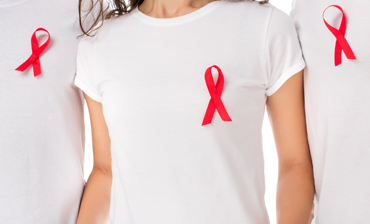
Ending the HIV epidemic: where does Europe stand?

The global targets set out by UNAIDS for 2020 are to diagnose 90% of all HIV-positive people, provide antiretroviral therapy for 90% of those diagnosed, and achieve viral suppression for 90% of those treated (known as 90-90-90 targets). In 2018, 52 of 55 countries completed the survey indicating the progress towards these targets in Europe and Central Asia.
 

Between “substantial progress” and “concerning”

Is Europe on track to end AIDS by 2020? Following analysis of the data provided by the 52 countries in 2018, the progress towards the 90-90-90 targets stands at 86%-91%-92% in the EU/EEA. This means that overall, countries in the EU/EEA are on track to reach the targets by 2020. Looking at the whole Region, however, a striking drop in the second stage of the continuum is apparent: across Europe and Central Asia, the figures show a significant gap in the amount of people who are diagnosed with HIV but not receiving treatment: 80%-64%-86%. The article provides results on the targets for each of the reporting countries.

The authors acknowledge “substantial progress” towards the 90-90-90 targets across Europe and Central Asia. However, among the estimated 2.1 million people living with HIV in Europe and Central Asia “only two out of five are estimated to be virally suppressed in 2018”. Furthermore, “the substantial drop-off between the percentages diagnosed and treated in the East sub-region is concerning since it enables preventable deaths, serious illness and onward transmission.”

The results give new insights into necessary steps in the regional or national HIV responses. As almost two-thirds of the 1.2 million people across the region with transmissible virus are diagnosed but only half of those are on treatment, “the biggest public health impact could be achieved through rapid and sustained scale up of treatment”, according to the authors. This is particularly true for countries in the east of the region where the outcome was 76%–46%–78%.

Policies that diversify and enhance the offer of HIV tests could help address the problem of late diagnosis across Europe, as outlined in the new ECDC guidance on HIV, hepatitis B and C testing. This would include testing for indicator conditions, during screenings for other sexually transmitted infections, in community-based settings, as self/home-testing and for partner notification.

The authors highlight that the 90–90–90 targets remain a “powerful tool to assess progress towards HIV elimination and drive standards in care” for people living with HIV. But these targets do not provide a comprehensive picture of the public health response to HIV. “Each ‘last 10 percent’ includes people especially marginalised from healthcare services.”

What are the 90-90-90 targets?

The so-called continuum of HIV care is a framework which allows countries to monitor the effectiveness of key areas in the response to the HIV epidemic along several stages, from diagnosis towards viral suppression. The overall aim is to that people living with HIV are diagnosed (early) and receive antiretroviral treatment (ART) which leads to viral suppression, i.e. the virus is no longer detectable in the blood. Such an undetectable viral load also means that HIV positive people on effective treatment do not transmit the virus.

Based on the findings of the ECDC Dublin Declaration report on the continuum in 2015, ECDC now monitors a four-stage continuum that is directly relevant in the European region. Stage 1 looks at the estimated number of all people living with HIV (PLHIV); stage 2 at the number of all PLHIV who have been diagnosed; stage 3 at the number on PLHIV who have been diagnosed and who are on ART; and stage 4 comprises the number of PLHIV on ART who are virally suppressed. In 2018, 34 of 55 countries provided data on all four continuum stages.


European Cinema Night: 34 EU cities offer free screenings of European films

Launched as part of the Creative Europe MEDIA programme, which has supported the European audiovisual sector for the past 27 years, the ‘European Cinema Night’ initiative aims to show how the EU not only contributes to the development of Europe’s creative and cultural industries, but also benefits our society as a whole. With some 50 free screenings programmed across the EU from 3 to 7 December, the objective of this European Commission initiative is to bring Europe closer to people while celebrating together the richness of European films.

Commissioner Mariya Gabriel, in charge of Digital Economy and Society, said: “Cinema is an essential part of our rich and diverse European culture and is contributing to reinforce bonds between people feeling the same passion and emotion on a movie. The European cinema nights are an occasion to show this diversity and to illustrate the importance of supporting a rich, free and diverse film production. With all the actions taken in favour of European cinema, the EU is present in the everyday life of citizens”.

Commissioner Tibor Navracsics, in charge of Education, Culture, Youth and Sport, added: “European films are part of our cultural heritage which we have been celebrating all year with the objective of making it accessible to everyone. In this spirit, the European cinema nights will show citizens how European policy is linked to their lives, to the emotions they feel at cinemas, and how by attending a local event they can be part of an experience shared across Europe.”

Each of the 34 cinemas taking part in the initiative will organise a special evening event where they will screen one of the 20 MEDIA-supported films. This list includes “Cold War”, “The Killing of a Sacred Deer”, “Girl”, and “Border”. The films have been chosen by local cinemas to allow them to adapt the programme to the interests and specifications of their diverse audiences. The local venues are all renowned cinemas, belonging to the Europa Cinemas network, co-ordinated by Creative Europe MEDIA and the TV broadcaster ARTE.

The screenings will be followed by a short debate where film lovers will have the opportunity to discuss the films with filmmakers and film critics. Representatives of the European Commission will also be present, to explain more about the MEDIA programme and its importance for shaping the European audiovisual landscape.

Background

Since 1991, the European Commission has shaped Europe’s audiovisual sector, contributing to is competitiveness and to cultural diversity in Europe, through the MEDIA Programme. One of its most substantial actions is providing financial support to the distribution of European films outside their country of production. Every year, on average over 400 films are made available to audiences in another European country with MEDIA’s help. In May 2018, the Commission proposed to increase the budget of the programme by almost 30% for the next EU long-term budget for 2021-2027.

The ‘European Cinema Night’ is a new initiative arising in the context of an outreach strategy focusing on audiences and aiming to enhance knowledge of the MEDIA Programme and the topics it covers, while fostering citizen outreach and participation. In addition, it helps to promote European audiovisual works across borders as well as cultural diversity. The initiative also complements the EUandME campaign, which uses a series of five short films focused on mobility, sustainability, skills and business, digital and rights to show how Europe makes a difference. 

For More Information

More info and Factsheet European Cinema Night

Link to interactive map with all the screenings and participating cinemas

Factsheet on MEDIA-Creative Europe in the 2021-2027 EU budget

Factsheet MEDIA Support to Documentaries

MEDIA Monitoring Report 2017

Fact sheet: Directory of European films on-line

Website of the European Year of Cultural Heritage