Council approves greater corporate transparency for big multinationals
The EU is taking measures to enhance corporate transparency of big multinational companies. Member states’ ambassadors today mandated the Portuguese presidency to engage in negotiations with the European Parliament for the swift adoption of the proposed directive on the disclosure of income tax information by certain undertakings and branches, commonly referred to as the public country-by-country reporting (CBCR) directive.
The directive requires multinational enterprises or standalone undertakings with a total consolidated revenue of more than €750 million in each of the last two consecutive financial years, whether headquartered in the EU or outside, to disclose publicly in a specific report the income tax they pay in each member state, together with other relevant tax-related information.
Banks are exempted from the present directive as they are obliged to disclose similar information under another directive.
In order to avoid disproportionate administrative burdens on the companies involved and to limit the disclosed information to what is absolutely necessary to enable effective public scrutiny, the directive provides for an complete and final list of information to be disclosed.
The reporting will have to take place within 12 months from the date of the balance sheet of the financial year in question. The directive sets out the conditions under which a company may obtain the deferral of such disclosure for a maximum of six years.
It also stipulates who bears the actual responsibility for ensuring compliance with the reporting obligation.
Member states will have two years to transpose the directive into national law.
Next steps
On the basis of the agreed negotiating mandate, the Portuguese presidency will explore with the European Parliament the possibility of an agreement for the swift adoption of the directive at second reading (“early second reading agreement”).
Background
The proposed directive, tabled in April 2016, is part of the Commission action plan on a fairer corporate tax system.
The European Parliament adopted its position at first reading on 27 March 2019.
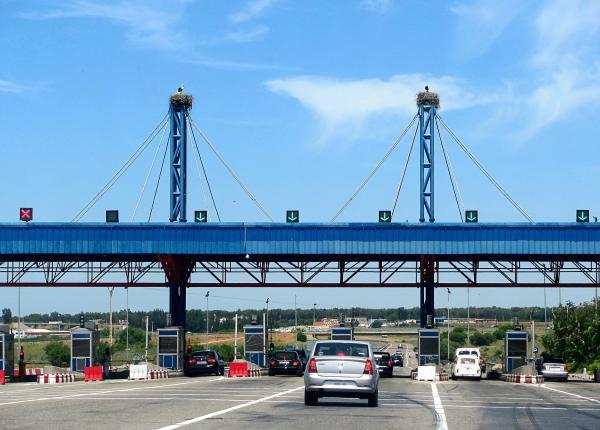
Maroc : signature d’un contrat de financement de 85 millions d’euros pour accélérer la digitalisation des infrastructures de transport autoroutières
La BEI et la sociétéSociété Nationale des Autoroutes du Maroc (ADM)annoncent la signature d’un contrat de financement de 85 millions d’euros (environ 925 millions de dirhams) pour accélérer la transformation digitale des infrastructures de transport autoroutières
Ce financement contribuera à améliorer la fluidité du trafic et la sécurité des utilisateurs par le développement des télépéages et des paiements numériques
Le déploiement d’un nouveau systèmede suivi et de gestion du trafic en temps réel permettra d’optimiser les conditions de circulation sur les 1800 km du réseau autoroutier
La Banque européenne d’investissement (BEI) et la Société Nationale des Autoroutes du Maroc (ADM), chargée de construire, exploiter et entretenir les autoroutes du Maroc, ont annoncé la conclusion d’un contrat de financement de 85 millions d’euros (environ 925 millions de dirhams) pour accélérer la digitalisation des infrastructures de transport autoroutières dans le pays. Ce projet contribuera à améliorer la fluidité du trafic à travers la digitalisation des systèmes de paiement et l’installation de systèmes de télépéage. Il contribuera à réduire les coûts et le temps de voyage et renforcera la sécurité des utilisateurs tout en offrant de nouveaux services personnalisables. Cette opération prévoit également le déploiement d’un système de suivi et de gestion du trafic qui donnera accès en temps réel aux conditions de circulation sur l’ensemble du réseau autoroutier.
Ce financement permet à ADM d’accélérer sa transformation digitale et de préparer la relance économique dans un contexte marqué par l’augmentation constante du nombre de véhicules en circulation. La modernisation et l’extension du système existant de télépéage permettra d’optimiser la collecte des redevances des utilisateurs. Ainsi, ces nouvelles infrastructures compenseront en partie la perte de liquidités causée par la crise sanitaire et permettront de réduire le nombre de fraudes au péage. Par ailleurs, cette opération aura un impact environnemental positif en contribuant à réduire la pollution générée par les arrêts au niveau des voies de péage manuelles.
Partenaire historique de la BEI au Maroc, ADM gère le deuxième plus grand réseau autoroutier d’Afrique, avec près de 1800 km de routes. Avec ce financement, la Banque soutient la mise en œuvre d’un programme d’investissement stratégique pour la digitalisation des opérations d’ADM favorisant une mobilité accrue des personnes, des marchandises et des services dans le pays. Cet appui aura un impact direct sur l’efficacité opérationnelle d’ADM, tant au niveau de la collecte des redevances que de l’empreinte environnementale des stations de péage. Au total plus de 6000 emplois devraient être créées durant la phase de mise en œuvre du projet.
Cet appui de la BEI fait partie de la réponse Covid-19 de la Banque et du programme Team Europe en soutien au secteur des transports, l’un des plus impactés par la crise sanitaire. En effet, le montant du prêt couvre à titre exceptionnel jusqu’à 83,6% du coût total du projet, en principe limité à 50% par les statuts de la Banque, et cela conformément à la mesure d’urgence opérationnelle prise en Avril 2020. Ce financement entre par ailleurs dans le cadre du mandat de prêt extérieur (ELM) de l’Union européenne pour la période 2021-2027.
Madame Claudia Wiedey, Ambassadrice de l’Union européenne au Maroc a ainsi déclaré : « Je suis ravie d’assister à la signature de ce projet entre la Société Nationale des Autoroutes du Maroc et la Banque européenne d’investissement. La transition verte devrait être la feuille de route pour la reprise post-covid19. La digitalisation des autoroutes répond à un des axes de cette transition. La numérisation, les transports propres et l’innovation au cœur des efforts de relance socio-économique, devraient ouvrir de nouvelles voies pour la création de sociétés résilientes après la pandémie tant au Maroc qu’au sein de l’UE. »
«Je suis très heureux d’annoncer ce nouveau financement avecla Société Nationale des Autoroutes du Marocavec laquelle nous avons un partenariat de grande qualité depuis plus de 25 ans. Ce projet a une importance stratégique pour le Maroc et les Marocains car il s’agit d’un vaste programme de modernisation et de renforcement des 1800 km du réseau autoroutier du pays » a déclaré Monsieur Ricardo Mourinho Félix, Vice-Président de la BEI responsable des financements au Maroc. Et d’ajouter : «Cette opération permettra d’améliorer la qualité de l’infrastructure autoroutière et la sécurité pour ses usagers.De surcroit, elle est en parfaite adéquation avec les priorités nationales du Maroc dans le domaine numérique et contribuera au développement économique comme à la création d’emplois ».
« La BEI est un partenaire de premier rang qui nous accompagne sur plusieurs projets d’investissement. D’ailleurs nous ne sommes pas surpris que la BEI ait choisi de nous accompagner également dans un domaine aussi stratégique qu’est la digitalisation pour améliorer la sécurité autoroutière et assurer la fluidité du trafic. Nous en sommes fiers ! » a déclaré Monsieur Anouar Benazzouz, Directeur Général d’ADM.
La Société Nationale des Autoroutes du Maroc (ADM) est le concessionnaire de l’Etat marocain chargé de la construction, l’exploitation et l’entretien des autoroutes du pays. ADM a réalisé, depuis sa création en 1989, un réseau autoroutier long de 1800 km, deuxième plus grand réseau d’autoroute en Afrique après l’Afrique du Sud.
Depuis 2016, ADM a entamé la mise en œuvre d’une stratégie de transformation globale, qui s’articule autour de deux axes prioritaires : la satisfaction du client et la performance financière. L’objectif étant de moderniser son activité d’exploitation pour faire d’ADM une entreprise performante, à la pointe de la technologie, tout en assurant la pérennité de l’entreprise en redressant ses indicateurs financiers et ses fondamentaux pour la mettre sur le chemin de la profitabilité.
EFSA website gets a makeover
You may have noticed that the EFSA website is looking a bit different. That’s because we have made some changes to improve the overall usability of the site and to freshen up the look and feel.
We have also reorganised some of the information to host changes deriving from the Transparency Regulation and so that the site complements the new OpenEFSA portal, which will be arriving very soon.
So what are the new features?
A friendlier, more responsive site that is easier to browse using mobile devices.
A revamped design, in line with EFSA’s corporate identity.
Improved security, stability and speed.
Enhanced accessibility (particularly for people with disabilities).
Further improvements, such as expanded language support, are in the pipeline and will come on stream over the coming weeks, so please stay tuned!
Sweden: European financing for central Stockholm connection hub makeover
EIB provides SEK 4,000m (approx. €368m) loan for the renovation of the Slussen area in central Stockholm.
Financing will support the renewal of the old locks, as well as the construction of an intermodal transport hub for buses and ferries, and new pedestrian and cycle paths.
The European Investment Bank (EIB) has signed a SEK 4 billion loan with the City of Stockholm to finance the renovation of the “Slussen” area in the city centre. The financing will be used for a complete makeover of the area named after the locks between Lake Mälaren and the Baltic Sea. The related works include not only the renewal of the 85-year old locks and the road bridges on top of the lock, but also the construction of a new bus terminal, which links to an intermodal transport hub called “Atrium”, which will connect buses, metros, regional trains and the Skärgård-ferries. Furthermore, the area will get new bus lanes and bicycle and pedestrian paths.
EIB Vice-President Thomas Östros, noted: “The European Investment Bank is very happy to support this project, whichwill further enable sustainable urban transport in Stockholm and also improves the climate resilience of key transport infrastructure in the city. It is a great example of how Europe can be important on a very local level, and a signal for cities in all of Europe that the EIB can make a difference when it comes to supporting sustainable urban renewal.”
Sofie Nilvall, Treasurer of Stockholm Stad, said: “The City of Stockholm greatly appreciates the opportunity to use loans made available by EIB in order to, in part, finance large infrastructure projects such as the new Slussen. To the City of Stockholm, it is a good complement to the City’s funding through the bond market.”
The lock and the road bridges on top need renewal after an 85-year service life, leading the City to design a new masterplan for the area. The new layout of the Slussen area aims to prioritise public transport, cyclists and pedestrians, and also enlarge the capacity of the main bus terminal. The works will also improve the transfer between urban transport and ferries, whereas the new lock will improve the water management for the Mälaren Lake. All in all, the makeover is expected to increase the attractiveness of the area for both businesses and visitors.
The project involves a full replacement of the critical water and transportation infrastructure, the works include:
i) Reconstruction and improvement of locks, including new discharge channels that increase the drainage capacity fivefold.
ii) Reconstruction of road bridges on top of the locks, adding bus lanes and pedestrian lanes.
iii) New underground bus terminal blasted into the rock, with a capacity of 40 bus platforms.
iv) Construction of an underground intermodal hub (the so-called Atrium), connecting metro, bus, regional rail and the ferries.
v) Construction of new cycling paths including a new bicycle bridge across the river.
vi) Establishment of new public spaces and foot paths as well as new spaces for shops and offices
Results of the December 2020 survey on credit terms and conditions in euro-denominated securities financing and over-the-counter derivatives markets (SESFOD)
3 March 2021
Overall credit terms and conditions unchanged but some divergence between price and non-price terms
Substantial decreases in financing rates/spreads for funding secured by all types of collateral except equities
Weaker demand for funding across all types of collateral except equities
Market-making activities increased in 2020 for both debt securities and derivatives owing to risk-taking and the growing importance of electronic trading platforms
Following significant changes in the previous three reporting periods, overall credit terms and conditions remained broadly unchanged over the September 2020 to November 2020 review period. At the same time, there was some divergence between price and non-price terms. Whereas price terms tightened slightly for all counterparties except banks and hedge funds, non-price terms eased on balance for all counterparty types. Respondents reported an easing in overall credit terms for each individual counterparty type. This was in line with the expectations expressed in the September 2020 survey. Looking ahead, a small net percentage of respondents expected overall terms to tighten over the December 2020 to February 2021 period.
Pressure from all counterparty types to obtain more favourable conditions increased, being most pronounced from hedge funds and non-financial corporates, while the provision of differential terms to most-favoured clients rose slightly over the reference period for almost all counterparty types but in particular for hedge funds.
Participants in the survey reported that the maximum amount of funding increased slightly or was unchanged on balance for many types of euro-denominated collateral. The maximum maturity of funding against euro-denominated collateral increased for most collateral types. Haircuts applied to euro-denominated collateral decreased for almost all types of collateral. Following the significant decreases reported in the previous SESFOD summary, respondents reported further substantial decreases in financing rates/spreads for funding secured by all types of collateral except equities. Demand for funding of all collateral types except equities continued to weaken. The liquidity of collateral improved for most collateral types.
Respondents also reported that initial margin requirements remained unchanged for almost all OTC derivatives except for credit derivatives referencing sovereigns. They reported very few changes for the maximum amount of exposure and maximum maturity of trades. Liquidity and trading deteriorated for commodity, foreign exchange and equity derivatives. However, a small net percentage of survey respondents reported an improvement in liquidity and trading for credit derivatives. Finally, the posting of non-standard collateral increased slightly.
The December 2020 survey included a number of special questions about market-making activities. Survey respondents reported that market-making activities increased for both debt securities and derivatives over the past year. Notable exceptions, for which market-making activities decreased, were asset-backed securities, high-yield corporate bonds and high-quality financial corporate bonds. Respondents reported willingness to take on risk and the growing importance of electronic trading platforms as the main drivers of changes and expected changes in market-making activities. Respondents expressed strong confidence in their ability to act as market-makers in times of stress for all asset classes. They reported willingness to take on risk as the main reason for banks’ ability to act as market-makers in times of stress.
The SESFOD is conducted four times a year and covers changes in credit terms and conditions over three-month reference periods ending in February, May, August and November. The December 2020 survey collected qualitative information on changes between September 2020 and November 2020. The results are based on responses from a panel of 26 large banks, comprising 14 euro area banks and 12 banks with head offices outside the euro area.
For media queries, please contactWilliam Lelieveldt, tel.: +49 69 1344 7316.