For detailed information on the session, please also see our newsletter.
All information regarding plenary, including speakers’ lists, can be found here.
David Sassoli, Ursula von der Leyen, Jacinda Ardern and Kamala Harris to mark International Women’s Day Celebration
EP President Sassoli, Commission President von der Leyen, Prime Minister of New Zealand Jacinda Ardern and US Vice-President Kamala Harris (the two latter via pre-recorded video message) will address MEPs during Parliament’s International Women’s Day celebration at 17.00.
At 11.00, Women’s Rights Committee Chair Evelyn Regner (S&D, Austria) will be live on Facebook to answer citizens’ questions about the current state of play on gender equality in the EU, and at 12.00, she will have a live Instagram exchange with Polish top model and activist Anja Rubik.
EP President David Sassoli will open the plenary session at around 17.30, after the International Women’s Day Celebration.
Carbon levy to raise global climate ambition
At around 17.30, Parliament will debate with Commissioner Gentiloni how to raise global climate ambition and prevent EU production from being moved to non-EU countries that have less strict greenhouse gas emissions rules (‘carbon leakage’). A carbon levy would be placed on imports of certain goods from outside the EU, if they come from countries that are not climate ambitious enough. The vote will take place on Wednesday.
Hold companies accountable for the harm they cause to people and planet
MEPs are expected to call for binding EU rules that set the standard for responsible business conduct and hold companies accountable and liable when they harm – or contribute to harming – human rights, the environment and good governance, in a debate with Commissioner Reynders from around 18.45. The vote will take place on Wednesday.
Better cooperation between national authorities on taxation of digital trading. MEPs will comment, from around 18.15, on new EU rules requiring member states to automatically exchange information on income generated by sellers on digital platforms. The vote will take place on Wednesday.
Equal employment opportunities for people with disabilities. Parliament will discuss a report calling for better workplace facilities and equal working conditions for persons with disabilities. The vote is scheduled for Wednesday.
.
Votes
Between 18.30 and 19.45, MEPs will vote on, among other things
the request to waive the immunity of Carles Puigdemont i Casamajó, Antoni Comín i Oliveres, Clara Ponsatí Obiols, Valter Flego and Nuno Melo.
The results will be announced on Tuesday morning at 9.00.
Bénin : des milliers d’entreprises bénéficieront du premier partenariat entre la BEI et Vital Finance Bénin
77 000 prêts, des financements en monnaie locale et des investissements à plus long terme vont être débloqués
4 millions d’euros de financements ciblent les femmes
Le concours de la BEI à l’appui de Vital Finance Bénin contribuera à combler le «chaînon manquant» entre les institutions de microfinance et les banques
Premier partenariat au Bénin au titre du programme de microfinance de 50 millions d’euros mis en place par la BEI pour l’Afrique de l’Ouest
Le tout premier prêt de la Banque européenne d’investissement (BEI) octroyé à Vital Finance Bénin, favorisera l’investissement des petites entreprises et permettra de soutenir des milliers d’emplois au Bénin. Le nouveau programme de financement annoncé aujourd’hui ciblera particulièrement l’appui aux femmes dans le pays. Les femmes devraient représenter 70 % des bénéficiaires finaux.
Il s’agit de la toute première coopération entre la BEI, qui est la principale banque publique internationale au monde détenue par les 27 États membres de l’Union européenne, et Vital Finance Bénin, Institution de Microfinance, le troisième plus grand fournisseur de micro-financements dans ce pays d’Afrique de l’Ouest.
« Vital Finance Bénin comprend les priorités des entreprises de notre pays en matière d’investissement et les difficultés financières auxquelles elles sont confrontées. La nouvelle coopération avec la Banque européenne d’investissement permettra à Vital Finance de continuer à se développer et à aider les entreprises du pays à créer des emplois. Avec l’ensemble de nos collaborateurs, nous espérons nous appuyer sur notre nouvelle relation avec la BEI pour améliorer l’accès aux financements au Bénin et aider les promoteurs de petites entreprises à renforcer leurs compétences professionnelles essentielles à leur réussite », a déclaré Mr Wakil ADJIBI, PDG de Vital Finance Bénin.
« Il est essentiel de garantir que les entreprises peuvent se développer, créer des emplois. La Banque européenne d’investissement s’engage à soutenir les entreprises privées en Afrique et nous nous réjouissons d’avoir conclu notre première opération avec Vital Finance Bénin, une institution de microfinance de premier rang. Le premier engagement de la BEI au Bénin dans le cadre de notre mécanisme de microfinance pour l’Afrique de l’Ouest appuiera des milliers de prêts, engendrera des investissements en monnaie locale et aidera à remédier au chaînon manquant en matière d’investissement entre les banques et les institutions de microfinance en apportant des prêts de taille intermédiaire », a déclaré Ambroise Fayolle, vice-président de la Banque Européenne d’Investissement.
« L’Union européenne s’engage à soutenir les investissements du secteur privé, vecteurs de transformation, qui consolident le développement durable au Bénin. Cette première coopération entre la BEI, qui est la banque de l’UE, et Vital Finance témoigne de l’engagement renforcé de l’équipe d’Europe (Team Europe) à faire en sorte que les partenaires africains puissent mieux relever les défis du développement durable sur le continent. Améliorer l’accès au financement des petites entreprises offrira de nouvelles possibilités aux femmes entrepreneurs et aux jeunes dans tout le pays », a indiqué Sylvia Hartleif, cheffe de la délégation de l’Union européenne à Cotonou.
Atténuation de l’impact économique et social du COVID-19 au Bénin
La nouvelle coopération de la BEI avec Vital Finance Bénin contribuera à améliorer l’accès au financement des entreprises les plus exposées aux impacts de la pandémie de COVID-19 et permettra la poursuite des prêts aux microentreprises.
Au Bénin et dans toute l’Afrique, les entreprises ont souffert de la fermeture des frontières, de la restriction des importations et de difficultés soudaines rencontrées par les marchés d’exportation.
Des investissements renforcés grâce à un financement en monnaie locale sans risques de change
Le nouvel appui de la BEI à Vital Finance Bénin sera octroyé entièrement en monnaie locale, soit un montant équivalent à 4 millions d’euros en francs CFA, et bénéficiera du soutien du programme de la BEI dédié à l’investissement d’impact.
Solution intermédiaire entre les institutions de microfinance et les banques en matière de financements
Ce nouveau partenariat permettra à Vital Finance Bénin d’octroyer des prêts d’un montant supérieur à ceux généralement mis à disposition par les institutions de microfinance et inférieur à ceux des banques locales. Il fera office de solution intermédiaire en matière d’investissement, la mésofinance, un « chaînon manquant » qui freine l’expansion des petites entreprises.
Partage d’expérience financière et renforcement des compétences professionnelles grâce à une assistance technique
Le nouvel appui de la BEI à la microfinance au Bénin s’accompagnera d’une assistance technique pour partager avec Vital Finance Bénin les meilleures pratiques de toute l’Afrique en matière de gestion des risques et de ressources humaines. Les entrepreneurs du Bénin profiteront également de formations spécifiques visant à améliorer leurs compétences professionnelles et leur planification financière.
Consolidation de l’appui de la BEI aux investissements du secteur privé en Afrique
L’année dernière, la BEI a fourni plus de 1,8 milliard d’EUR pour soutenir les investissements du secteur privé en Afrique, ce qui représente 60 % de son engagement global sur le continent.
Cette somme comprenait notamment un nouveau soutien de 500 millions d’euros destiné à aider les jeunes pousses africaines à se lancer dans les domaines du numérique, de l’agroalimentaire, de l’inclusion financière et des services de santé.
Les nouveaux partenariats établis par la BEI avec des entreprises, des banques et des organismes de microcrédit africains permettent d’offrir des financements spécialisés aux petits exploitants agricoles, de supprimer les coûts associés aux financements en monnaie locale qui freinent les investissements et d’aider les entreprises privées à investir dans l’adaptation aux effets des changements climatiques.
De nouveaux programmes de financement du secteur privé ont fait l’objet d’accords avec des banques et des partenaires du microcrédit locaux de premier plan. Ces programmes comprennent des dispositifs spécifiques destinés à réduire les inégalités entre les femmes et les hommes, à fournir des financements à long terme en monnaie locale et à offrir des produits financiers sur mesure pour le secteur de l’agroalimentaire.
VITAL FINANCE est une structure leader au Bénin, exerçant dans le domaine de la microfinance. Elle est une institution de financement direct des micro, petites et moyennes entreprises.
Créée en 1998, elle s’est constituée en 20 ans un réseau fort d’une vingtaine de points de services, opérant sur l’ensemble du territoire national.
Cette initiative de Monsieur Wakil Adjibi, promoteur et Administrateur Directeur Général est partie d’une étude qui a révélé l’énorme potentialité du marché et du secteur. Les besoins qui s’en exprimaient étaient en effet, loin d’être couverts par les structures qui opéraient déjà sur la place.
European Cooperation: Lithuania upgrades its back office system
European Cooperation: Lithuania upgrades its back office system
The State Patent Bureau of the Republic of Lithuania (SPB) has successfully upgraded its back office system to SP Back Office. The upgrade was completed on 18 February 2021. This was possible thanks to the close cooperation between the EUIPO and the SPB project teams and their partners.
The SPB is the first office to upgrade to SP Back Office V 3.0 and it paves the way for future upgrades in other intellectual property offices. In addition to an improved search engine and a more modern and user-friendly interface, this upgrade also brings important technical improvements to the existing system that will enable new functionalities and easier system maintenance.
This important milestone is the result of work carried out by the EUIPO and the SPB within the framework of the European Cooperation Projects. The EUIPO and its stakeholders are working together on eight major European Cooperation Projects, with the main aim of benefiting users across the EU by providing modern, state-of-the-art tools and services for EU IP offices.
Police and customs authorities worldwide are warning the public to be vigilant with their gift-giving after they have seized over €16 million worth of fake toys during the recent festive period.
Police and customs authorities worldwide are warning the public to be vigilant with their gift-giving after they have seized over €16 million worth of fake toys during the recent festive period.
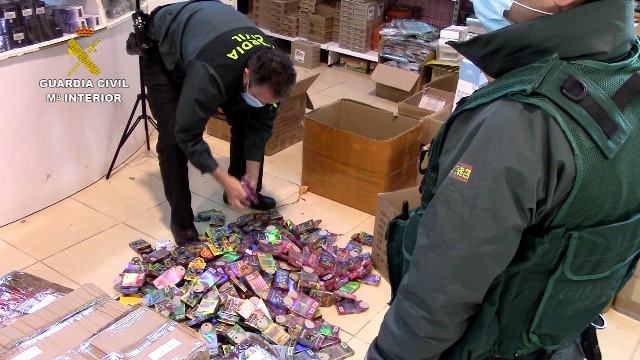
Close to 5 million counterfeit toys have been confiscated as a result of Operation LUDUS organised by Europol with the support of OLAF and the EUIPO.
Over 4 700 inspections were carried out across 24 countries between 19 October 2020 and 31 January 2021 in order to detect the illegal shipment and storage of counterfeit toys. So far, 11 fraudsters have been arrested, with investigations ongoing in a number of countries to dismantle the criminal networks putting child safety at risk. This is the first operation ever organised on such a scale targeting the sale of counterfeit toys.
Results of the operational phase
Close to 5 million toys seized for a total value exceeding €16 million;
4 768 inspections carried out;
44 127 samples tested in laboratories;
125 judicial cases opened;
11 individuals arrested so far.
Participating countries
Austria, Belgium, Bulgaria, Croatia, Cyprus, Czechia, Denmark, France, Greece, Hungary, Iceland, Ireland, Italy, Latvia, Luxembourg, Netherlands, Norway, Portugal, Romania, Slovak Republic, Slovenia, Spain, United Kingdom, United States.
Fake toys putting child safety at risk
Toy cars, board games and dolls from popular children TV shows feature among the most seized items.
The confiscated pieces were almost exact copies of the real products and were extremely hard to distinguish. However, in almost all of the cases, the seized toys posed a serious health risk for children. These fake toys had not been subjected to the rigorous safety tests required by law and had no warnings or advice on the packaging.
Examples include 2 800 dolls seized in Italy and 8 000 toy cars seized in Belgium which posed a choking hazard, more than 5 000 plastic toys seized in Spain which contained a toxic chemical that could damage children health and several other electronic devices confiscated in various countries which exceeded legal decibel limits for toys which could permanently damage a child’s hearing. A total of 1 175 toys destined for infants were also confiscated in Romania after failing to include essential information on the packaging to prevent a child getting injured, such as an age label, instructions for use and a list of materials they contain.
Commenting on this operation, Europol’s Executive Director Catherine de Bolle said: “This operation shows yet again that criminals will take advantage of any and every opportunity open to them to make a profit. During the festive period, criminals cash in on the surge in demand of certain toys by selling dangerous toys to unsuspecting shoppers. Thanks to Operation LUDUS, we have successfully taken out of circulation millions of toys which were not only unsafe but ripped off legitimate brands.”
Europol and its partners urge consumers to resist cheap offers that look too good to be true, particularly if certain toys are sold out in well-known retailers, as this could be a sign that they are fake, unsafe or of poor quality. It is just not worth the risk.
Europol’s involvement
Europol’s Intellectual Property Crime Coordinated Coalition (IPC3), co-funded by the EUIPO, was instrumental in the success of this operation:
It brought all the involved countries around one table and coordinated the operational activities across the globe;
It developed risk indicators which were shared with law enforcement and customs authorities to help them prioritise checks;
During the operational phase, it provided a platform for real-time information sharing and cross-checking of intelligence, creating a communication network involving both police and custom authorities.
Information collected and shared during the action will be processed and analysed to inform further hits against toy counterfeiters in Europe and beyond.
Cute, but deadly: law enforcement seize over €16 million worth of fake toys
Police and customs authorities worldwide are warning the public to be vigilant with their gift-giving after they have seized over €16 million worth of fake toys during the recent festive period.
Close to 5 million counterfeit toys have been confiscated as a result of Operation LUDUS organised by Europol with the support of OLAF and the EUIPO.
Over 4 700 inspections were carried out across 24 countries between 19 October 2020 and 31 January 2021 in order to detect the illegal shipment and storage of counterfeit toys. So far, 11 fraudsters have been arrested, with investigations ongoing in a number of countries to dismantle the criminal networks putting child safety at risk. This is the first operation ever organised on such a scale targeting the sale of counterfeit toys.
Results of the operational phase
Close to 5 million toys seized for a total value exceeding €16 million;
4 768 inspections carried out;
44 127 samples tested in laboratories;
125 judicial cases opened;
11 individuals arrested so far.
Participating countries
Austria, Belgium, Bulgaria, Croatia, Cyprus, Czechia, Denmark, France, Greece, Hungary, Iceland, Ireland, Italy, Latvia, Luxembourg, Netherlands, Norway, Portugal, Romania, Slovak Republic, Slovenia, Spain, United Kingdom, United States.
Fake toys putting child safety at risk
Toy cars, board games and dolls from popular children TV shows feature among the most seized items.
The confiscated pieces were almost exact copies of the real products and were extremely hard to distinguish. However, in almost all of the cases, the seized toys posed a serious health risk for children. These fake toys had not been subjected to the rigorous safety tests required by law and had no warnings or advice on the packaging.
Examples include 2 800 dolls seized in Italy and 8 000 toy cars seized in Belgium which posed a choking hazard, more than 5 000 plastic toys seized in Spain which contained a toxic chemical that could damage children health and several other electronic devices confiscated in various countries which exceeded legal decibel limits for toys which could permanently damage a child’s hearing. A total of 1 175 toys destined for infants were also confiscated in Romania after failing to include essential information on the packaging to prevent a child getting injured, such as an age label, instructions for use and a list of materials they contain.
Commenting on this operation, Europol’s Executive Director Catherine de Bolle said: “This operation shows yet again that criminals will take advantage of any and every opportunity open to them to make a profit. During the festive period, criminals cash in on the surge in demand of certain toys by selling dangerous toys to unsuspecting shoppers. Thanks to Operation LUDUS, we have successfully taken out of circulation millions of toys which were not only unsafe but ripped off legitimate brands.”
Europol and its partners urge consumers to resist cheap offers that look too good to be true, particularly if certain toys are sold out in well-known retailers, as this could be a sign that they are fake, unsafe or of poor quality. It is just not worth the risk.
Europol’s involvement
Europol’s Intellectual Property Crime Coordinated Coalition (IPC3), co-funded by the EUIPO, was instrumental in the success of this operation:
It brought all the involved countries around one table and coordinated the operational activities across the globe;
It developed risk indicators which were shared with law enforcement and customs authorities to help them prioritise checks;
During the operational phase, it provided a platform for real-time information sharing and cross-checking of intelligence, creating a communication network involving both police and custom authorities.
Information collected and shared during the action will be processed and analysed to inform further hits against toy counterfeiters in Europe and beyond.