Bolivia: EIB finances supply and sanitation projects that will benefit 200,000 people

  • European Investment Bank (EIB) provides USD 63.5m to finance “My Water V” programme of Bolivia’s Ministry of the Environment and Water
  • Agreement will improve access to drinking water in rural areas and help to combat climate change
  • Jobs: the different projects will provide employment for 12,000 people during the implementation phase

The European Investment Bank (EIB) is financing the construction of drinking water supply and wastewater treatment facilities in Bolivia. To this end, the EU bank today signed a USD 63.5m (EUR 54m) loan agreement with the country’s Development Planning Ministry in support of the “My Water V” programme. This will be matched by a further USD 77m from the Andean Development Corporation (CAF) to finance this project, which complements the bilateral aid in the water and sanitation sector that the European Union provides to the country via its delegation in the form of grants.

The funds made available by the EIB and CAF will enable the implementation of more than 600 small investment schemes that will provide over 200,000 people with access to drinking water and over 85,000 with better wastewater collection and treatment services. The majority of the beneficiaries live in small communities in isolated rural areas.

The EIB is providing this finance in the framework of the 2014-2020 lending mandate for Latin America, meaning that this agreement is covered by the EU budgetary guarantee. By supporting this project, the EU bank is contributing to achievement of the United Nations’ Sustainable Development Goals and to the fight against climate change, as the new sanitation and wastewater treatment networks will prevent the discharge of polluting effluents into rivers.

The EIB Vice-President responsible for the Bank’s operations in Latin America, Emma Navarro, said that this project “is a very revealing example of our priorities in Latin America: supporting climate action while financing projects with substantial social and economic benefits. With this operation, we are helping to ensure that water and sanitation networks are reaching many small communities that have never had access to these services. We are therefore delighted to sign an agreement that will help to improve the living conditions of thousands of Bolivian citizens while at the same time promoting efficient use of natural resources and fostering economic growth and job creation”.

The different schemes under this programme will be carried out over the next four years up to 2022 and their implementation will provide jobs for around 12,000 people. They will also create employment for local people once they are up and running. The final beneficiaries, the local communities that have asked the ministry to take part in the project, will be responsible for operating and maintaining the different facilities and managing the service to users.

The EU bank is the biggest multilateral lender for climate action in the world. It has set itself the goal of devoting at least 25% of its total financing to this objective, a commitment which rises to 35% of its activity outside the EU in 2020.

The EIB in Latin America

The EIB provides economic support for projects in Latin America by offering both long-term investment on favourable terms and the technical assistance needed to ensure that these projects deliver positive social, economic and environmental results. Since the EIB began operating in the region in 1993, it has provided total financing of around EUR 8.4bn in support of 117 projects in 14 countries.


Spain: Support for the rural economy – EIB, EIF and ICO sign an agreement with Grupo Cajamar to provide over EUR 1bn to SMEs and the self-employed

  • The EIB Group (formed by the EIB and EIF) are providing a EUR 610m guarantee for an SME securitisation. ICO is purchasing bonds totalling EUR 283m
  • Part of the EIB guarantee – a tranche of more than EUR 64m – is supported by the Investment Plan for Europe.
  • Some 15 000 companies with a total of over 100 000 employees will be able to benefit from financing on favourable terms under this agreement

The EIB Group, BCC-Grupo Cajamar and ICO are joining forces to ensure that SMEs working in rural areas and agri-food companies can access the credit they need to invest. With this goal in mind, the European Investment Fund (EIF) has provided a guarantee for a Cajamar securitisation (IM BCC Capital 1 Fondo de Titulización) for EUR 610m, EUR 325m of which will be backed by the European Investment Bank (EIB), part of which will be supported by the Investment Plan for Europe. ICO is contributing to this operation by purchasing EUR 283m of senior bonds. With this securitisation, leading light of the Spanish cooperative banking sector Grupo Cooperativo Cajamar will provide over EUR 1bn for the new investment projects of agri-food sector companies, SMEs and the self-employed operating in rural areas.

This is a very innovative operation for Spain, as it is the first cash securitisation from a Spanish entity to free up capital under the standard model, facilitating Grupo Cajamar’s resource management via the participation of the EIB, EIF, ICO and a private investor. This operation leads the way for other Spanish organisations to mobilise resources in a similar manner, with the aim of helping to generate new financing for the real economy to benefit the self-employed and SMEs, which lie at the heart of the Spanish economy.

It is also supported by the European Fund for Strategic Investments (EFSI), as EUR 64m of the total guarantee granted by the EIB is being provided under the Investment Plan for Europe (commonly known as the Juncker Plan). This increases the EIB Group’s capacity to finance investment projects that, in line with the Plan’s criteria, involve activities which by their structure or nature have a higher risk profile but which foster firms’ competitiveness and create jobs. In concrete terms, the EIB calculates that this agreement with Grupo Cajamar will enable the favourable conditions of its financing, in terms of both maturities and interest rates, to be passed on to some 15 000 SMEs with a total of over 100 000 employees.

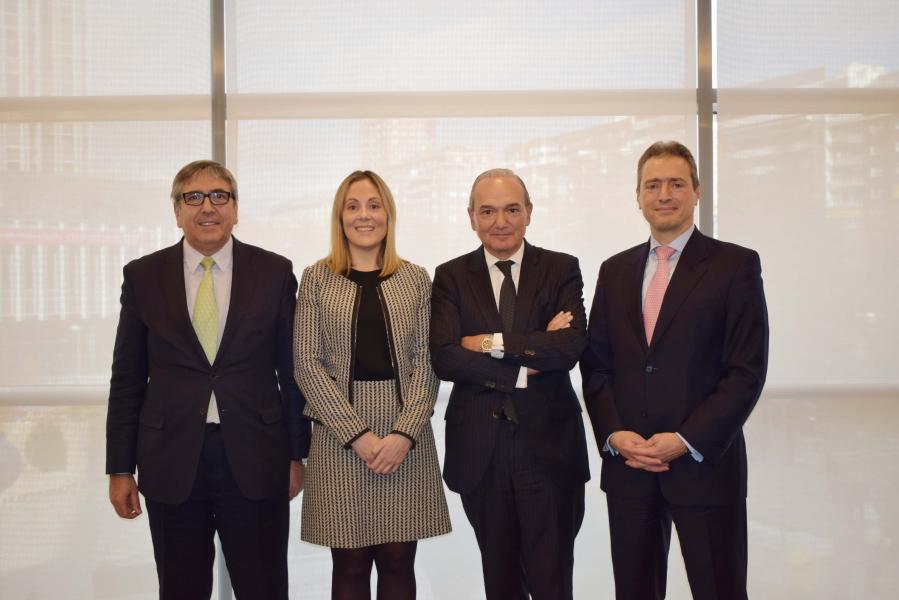
At the signing ceremony at Grupo Cajamar’s offices in Madrid, EU bank Vice-President Emma Navarro said: “The agreement signed with Cajamar enables the EIB Group to offer innovative financing, as this is a pioneering securitisation in Europe helping to optimise the resource management of a medium-sized finance company such as Cajamar. The agreement combines a joint participation of almost EUR 1bn of public and private investment with the aim of offering credit on favourable terms to businesses and the self-employed working in rural areas.”

EIF Chief Executive Pier Luigi Gilibert said: “Cajamar has undertaken to grant over EUR 1bn in new loans to SMEs, and we are very happy to support this steadfast ambition. Breaking down barriers to improve capital management and cut financing costs for the real economy is key to promoting growth. The EIF is very proud to partner with Cajamar to launch the first totally public securitisation transaction used by a leading bank to free up regulatory capital in Spain.”

Commissioner Phil Hogan, responsible for Agriculture and Rural Development, said: “With EUR 46 billion of additional investments mobilised in Spain, the Juncker Plan is already a success story in the country. This new agreement will bring EU support to small and medium businesses and entrepreneurs in rural areas, where a helping hand is much needed. The rural economy is a green goldmine and I’m glad that the Juncker Plan helps fulfil its potential.”

Chairman of BCC-Grupo Cajamar Luis Rodríguez thanked “the EIB, EIF, and ICO, as well as the private investor, for their support for this innovative SME securitisation, whose main objective is to continue providing assistance to strategic productive sectors, and in particular agri-food companies, SMEs and the self-employed. These groups receive special attention and dedication from us, while we are also raising our solvency and liquidity levels even further, comfortably meeting supervisory requirements.

ICO Chairman José Carlos García de Quevedo highlighted that “this is the first time that ICO has invested in a securitisation operation, thereby opening up a new avenue of cooperation with private banking, with a view to promoting the financing of the projects of SMEs and the self-employed. Operations such as the one signed today strengthen this public bank’s commitment to driving financing options favouring business growth and job creation.”

This operation was advised by Banco Santander, the management company for Fondo Intermoney Titulización. As all of the bond tranches have been sold and guaranteed, the risk has been entirely transferred to investors, thereby reducing Cajamar’s risk-weighted assets, with an estimated 36-bp improvement to its tier 1 capital (CET 1).


Spain: Support for the rural economy – EIB, EIF and ICO sign an agreement with Grupo Cajamar to provide over EUR 1bn to SMEs and the self-employed

  • The EIB Group (formed by the EIB and EIF) are providing a EUR 610m guarantee for an SME securitisation. ICO is purchasing bonds totalling EUR 283m
  • Part of the EIB guarantee – a tranche of more than EUR 64m – is supported by the Investment Plan for Europe.
  • Some 15 000 companies with a total of over 100 000 employees will be able to benefit from financing on favourable terms under this agreement

The EIB Group, BCC-Grupo Cajamar and ICO are joining forces to ensure that SMEs working in rural areas and agri-food companies can access the credit they need to invest. With this goal in mind, the European Investment Fund (EIF) has provided a guarantee for a Cajamar securitisation (IM BCC Capital 1 Fondo de Titulización) for EUR 610m, EUR 325m of which will be backed by the European Investment Bank (EIB), part of which will be supported by the Investment Plan for Europe. ICO is contributing to this operation by purchasing EUR 283m of senior bonds. With this securitisation, leading light of the Spanish cooperative banking sector Grupo Cooperativo Cajamar will provide over EUR 1bn for the new investment projects of agri-food sector companies, SMEs and the self-employed operating in rural areas.

This is a very innovative operation for Spain, as it is the first cash securitisation from a Spanish entity to free up capital under the standard model, facilitating Grupo Cajamar’s resource management via the participation of the EIB, EIF, ICO and a private investor. This operation leads the way for other Spanish organisations to mobilise resources in a similar manner, with the aim of helping to generate new financing for the real economy to benefit the self-employed and SMEs, which lie at the heart of the Spanish economy.

It is also supported by the European Fund for Strategic Investments (EFSI), as EUR 64m of the total guarantee granted by the EIB is being provided under the Investment Plan for Europe (commonly known as the Juncker Plan). This increases the EIB Group’s capacity to finance investment projects that, in line with the Plan’s criteria, involve activities which by their structure or nature have a higher risk profile but which foster firms’ competitiveness and create jobs. In concrete terms, the EIB calculates that this agreement with Grupo Cajamar will enable the favourable conditions of its financing, in terms of both maturities and interest rates, to be passed on to some 15 000 SMEs with a total of over 100 000 employees.

At the signing ceremony at Grupo Cajamar’s offices in Madrid, EU bank Vice-President Emma Navarro said: “The agreement signed with Cajamar enables the EIB Group to offer innovative financing, as this is a pioneering securitisation in Europe helping to optimise the resource management of a medium-sized finance company such as Cajamar. The agreement combines a joint participation of almost EUR 1bn of public and private investment with the aim of offering credit on favourable terms to businesses and the self-employed working in rural areas.”

EIF Chief Executive Pier Luigi Gilibert said: “Cajamar has undertaken to grant over EUR 1bn in new loans to SMEs, and we are very happy to support this steadfast ambition. Breaking down barriers to improve capital management and cut financing costs for the real economy is key to promoting growth. The EIF is very proud to partner with Cajamar to launch the first totally public securitisation transaction used by a leading bank to free up regulatory capital in Spain.”

Commissioner Phil Hogan, responsible for Agriculture and Rural Development, said: “With EUR 46 billion of additional investments mobilised in Spain, the Juncker Plan is already a success story in the country. This new agreement will bring EU support to small and medium businesses and entrepreneurs in rural areas, where a helping hand is much needed. The rural economy is a green goldmine and I’m glad that the Juncker Plan helps fulfil its potential.”

Chairman of BCC-Grupo Cajamar Luis Rodríguez thanked “the EIB, EIF, and ICO, as well as the private investor, for their support for this innovative SME securitisation, whose main objective is to continue providing assistance to strategic productive sectors, and in particular agri-food companies, SMEs and the self-employed. These groups receive special attention and dedication from us, while we are also raising our solvency and liquidity levels even further, comfortably meeting supervisory requirements.

ICO Chairman José Carlos García de Quevedo highlighted that “this is the first time that ICO has invested in a securitisation operation, thereby opening up a new avenue of cooperation with private banking, with a view to promoting the financing of the projects of SMEs and the self-employed. Operations such as the one signed today strengthen this public bank’s commitment to driving financing options favouring business growth and job creation.”

This operation was advised by Banco Santander, the management company for Fondo Intermoney Titulización. As all of the bond tranches have been sold and guaranteed, the risk has been entirely transferred to investors, thereby reducing Cajamar’s risk-weighted assets, with an estimated 36-bp improvement to its tier 1 capital (CET 1).


Bolivia: EIB finances supply and sanitation projects that will benefit 200,000 people

  • European Investment Bank (EIB) provides USD 63.5m to finance “My Water V” programme of Bolivia’s Ministry of the Environment and Water
  • Agreement will improve access to drinking water in rural areas and help to combat climate change
  • Jobs: the different projects will provide employment for 12,000 people during the implementation phase

The European Investment Bank (EIB) is financing the construction of drinking water supply and wastewater treatment facilities in Bolivia. To this end, the EU bank today signed a USD 63.5m (EUR 54m) loan agreement with the country’s Development Planning Ministry in support of the “My Water V” programme. This will be matched by a further USD 77m from the Andean Development Corporation (CAF) to finance this project, which complements the bilateral aid in the water and sanitation sector that the European Union provides to the country via its delegation in the form of grants.

The funds made available by the EIB and CAF will enable the implementation of more than 600 small investment schemes that will provide over 200,000 people with access to drinking water and over 85,000 with better wastewater collection and treatment services. The majority of the beneficiaries live in small communities in isolated rural areas.

The EIB is providing this finance in the framework of the 2014-2020 lending mandate for Latin America, meaning that this agreement is covered by the EU budgetary guarantee. By supporting this project, the EU bank is contributing to achievement of the United Nations’ Sustainable Development Goals and to the fight against climate change, as the new sanitation and wastewater treatment networks will prevent the discharge of polluting effluents into rivers.

The EIB Vice-President responsible for the Bank’s operations in Latin America, Emma Navarro, said that this project “is a very revealing example of our priorities in Latin America: supporting climate action while financing projects with substantial social and economic benefits. With this operation, we are helping to ensure that water and sanitation networks are reaching many small communities that have never had access to these services. We are therefore delighted to sign an agreement that will help to improve the living conditions of thousands of Bolivian citizens while at the same time promoting efficient use of natural resources and fostering economic growth and job creation”.

The different schemes under this programme will be carried out over the next four years up to 2022 and their implementation will provide jobs for around 12,000 people. They will also create employment for local people once they are up and running. The final beneficiaries, the local communities that have asked the ministry to take part in the project, will be responsible for operating and maintaining the different facilities and managing the service to users.

The EU bank is the biggest multilateral lender for climate action in the world. It has set itself the goal of devoting at least 25% of its total financing to this objective, a commitment which rises to 35% of its activity outside the EU in 2020.

The EIB in Latin America

The EIB provides economic support for projects in Latin America by offering both long-term investment on favourable terms and the technical assistance needed to ensure that these projects deliver positive social, economic and environmental results. Since the EIB began operating in the region in 1993, it has provided total financing of around EUR 8.4bn in support of 117 projects in 14 countries.


Roaming charges ended in the European Union on 15 June 2017. Europeans travelling within EU countries will ‘Roam Like at Home’ and pay domestic prices for roaming calls, SMS and data.  …

On 23 June 2016 citizens of the United Kingdom (UK) voted to leave the European Union (EU). On 29 March 2017 the UK formally notified the European Council of its intention to leave the EU by…

Over the past 20 years, the European Union has put in place some of the highest common asylum standards in the world. And in the past two years, European migration policy has advanced in leaps and…

‘Europe will not be made all at once, or according to a single plan.It will be built through concrete achievementswhich first create a de facto solidarity.’Robert Schuman9 May 1950On 25 March 2017,…

In response to the illegal annexation of Crimea and deliberate destabilisation of a neighbouring sovereign country, the EU has imposed restrictive measures against the Russian Federation.  …

Enlargement is the process whereby countries join the EU. Since it was founded in 1957, the EU has grown from 6 member countries to 28.Any European country that respects the principles of liberty,…