Article – Companies should be held accountable for their actions, say MEPs

On 8 March MEPs debated a report by the legal affairs committee on corporate accountability. The report calls on the European Commission to come up with a law obliging EU companies to address aspects of their value chains that could affect human rights (including social, trade union and labour rights), the environment (for example contribution to climate change) and good governance.

Doing the right thing does not give businesses a competitive advantage at the moment. The lack of a joint EU-wide approach on this matter could lead to a disadvantage for those companies that are proactive regarding social and environmental matters, the report said. The rules would apply to all large undertakings in the EU, as well as to publicly listed small and medium-sized enterprises and those that for example share “risky” supply chains with larger companies.

However, MEPs say the binding rules should also go beyond the EU’s borders, meaning that all companies that want to access the EU’s internal market, including those established outside the EU, would have to prove that they comply with due diligence obligations related to human rights and the environment.

In addition, the MEPs want the rights of stakeholders or victims in non-EU countries, who are particularly vulnerable, to be better protected. They likewise want a ban on importing products linked to severe human rights violations such as forced or child labour.

“The European Parliament has the chance this week to become a leader in responsible business conduct,” said report author Lara Wolters (S&D, the Netherlands) during the debate.

“For businesses, we’re creating a level playing field and legal clarity. For consumers, we’re ensuring fair products. For workers, we’re enhancing protection. For victims, we’re improving access to justice. And for the environment, we’re taking a step that is very long overdue.”

In February 2020, the Commission published a study which found that only one in three companies in the EU is currently taking some form of due diligence measures while 70% of European businesses support EU-wide due diligence rules.

MEPs are voting on the report on Wednesday 10 March.

Read more on how the EU trade policy helps to promote human rights and environmental standards



France : la BEI et le Département de Seine-et-Marne signent un nouveau contrat de financement pour les collèges

>@Shutterstock
©Shutterstock
  • Un apport de 140 millions d’euros de la BEI pour 19 établissements du département
  • L’application de normes environnementales plus élevées que celles de la réglementation actuelle pour la majorité de ces projets

La Banque européenne d’investissement accorde un prêt de 140 millions d’euros pour l’extension, la rénovation et la construction de 19 établissements du Département de Seine-et-Marne. L’opération comporte un volet environnemental significatif puisque plus de la moitié des projets seront réalisés selon des normes plus ambitieuses que la réglementation thermique actuelle.

Après la signature, en juillet 2015, d’un contrat de financement de 100 millions d’euros, le Département de Seine-et-Marne a décidé de mettre en place un nouveau contrat de financement pluriannuel avec la BEI, dans le cadre de la poursuite de son plan d’investissement pour les collèges.

Le Département de Seine et Marne est le département qui, après l’Essonne, connaît la plus importante croissance démographique en Île-de-France. Les établissements du premier cycle secondaire, dont le Département est en charge, enregistrent ainsi l’arrivée de plus de mille collégiens supplémentaires par an. Au-delà des capacités additionnelles nécessaires auxquelles répondent l’extension d’établissements existants et la construction de nouveaux collèges, les investissements du Département sont également guidés par les mises aux normes en termes d’accessibilité, le soutien à différents dispositifs pédagogiques à destination des élèves en difficulté, et l’amélioration de l’efficacité énergétique.

Parmi l’ensemble des projets figurant dans le plan du Département, la BEI en a retenu 19 dont le coût total éligible s’élève à 303 millions d’euros. Il s’agit dans le détail de 7 constructions de collèges, de 10 opérations d’extension et de rénovation lourde ou partielle de collèges existants, et de 2 opérations de rénovation d’autres infrastructures culturelles et éducatives existantes.

À la fin de la période de réalisation du projet, plus de 13 000 collégiens, soit plus de 15% de l’effectif scolarisé dans les collèges publics du département bénéficieront d’infrastructures neuves ou rénovées.

« L’investissement dans l’éducation figure parmi les premières priorités de la Banque européenne d’investissement, car ses retombées sur l’économie et nos sociétés sont inestimables, déclare Ambroise Fayolle, Vice-Président de la BEI. Nous sommes très fiers de la confiance que nous accorde le Département de Seine-et-Marne en nous permettant de l’accompagner pour la seconde fois dans la construction et la rénovation de ses équipements éducatifs. »

Pour Patrick Septiers, Président du Département de Seine-et-Marne, « cette politique d’investissement ambitieuse menée par le Département permet d’offrir aux collégiens et aux équipes éducatives un cadre de travail propice à l’épanouissement et à la réussite de chacun. Le Département a fait le choix de mener une politique de sectorisation efficiente et d’investir massivement pour construire de nouveaux collèges dans les secteurs marqués par un afflux démographique important et pour réhabiliter et entretenir les établissements existants. La signature de ce nouveau contrat avec la BEI nous garantit des conditions de financement optimales pour mener à bien nos investissements dans l’éducation. »

À propos du Département de Seine-et-Marne

Afin d’offrir des conditions d’enseignement de qualité aux plus de 82 000 collégiens de son territoire, le Département de Seine-et-Marne mène une politique éducative volontariste et ambitieuse, attentive aux besoins des élèves et des équipes pédagogique. Mailler le territoire en équipements structurants, mettre en place de nouveaux outils pédagogiques, assurer la sécurité des personnes sont autant de chantiers menés par la collectivité pour favoriser la qualité de vie au sein des 145 collèges seine-et-marnais (128 collèges publics et 17 collèges privés). Dans la continuité de sa politique de construction et de réhabilitation, le Département mène également une politique d’investissement forte pour assurer le renouvellement régulier du mobilier des collèges, pour rénover les infrastructures informatiques ou encore pour assurer la sécurité des collèges.


Seizure of €14 million worth of contraband cigarette leads to 13 arrests in Danish-Dutch sting

The timely exchange of intelligence via Europol between the Danish, Dutch and Polish investigators was essential in the success of the investigation carried in the framework of the European Multidisciplinary Platform Against Criminal Threats (EMPACT).

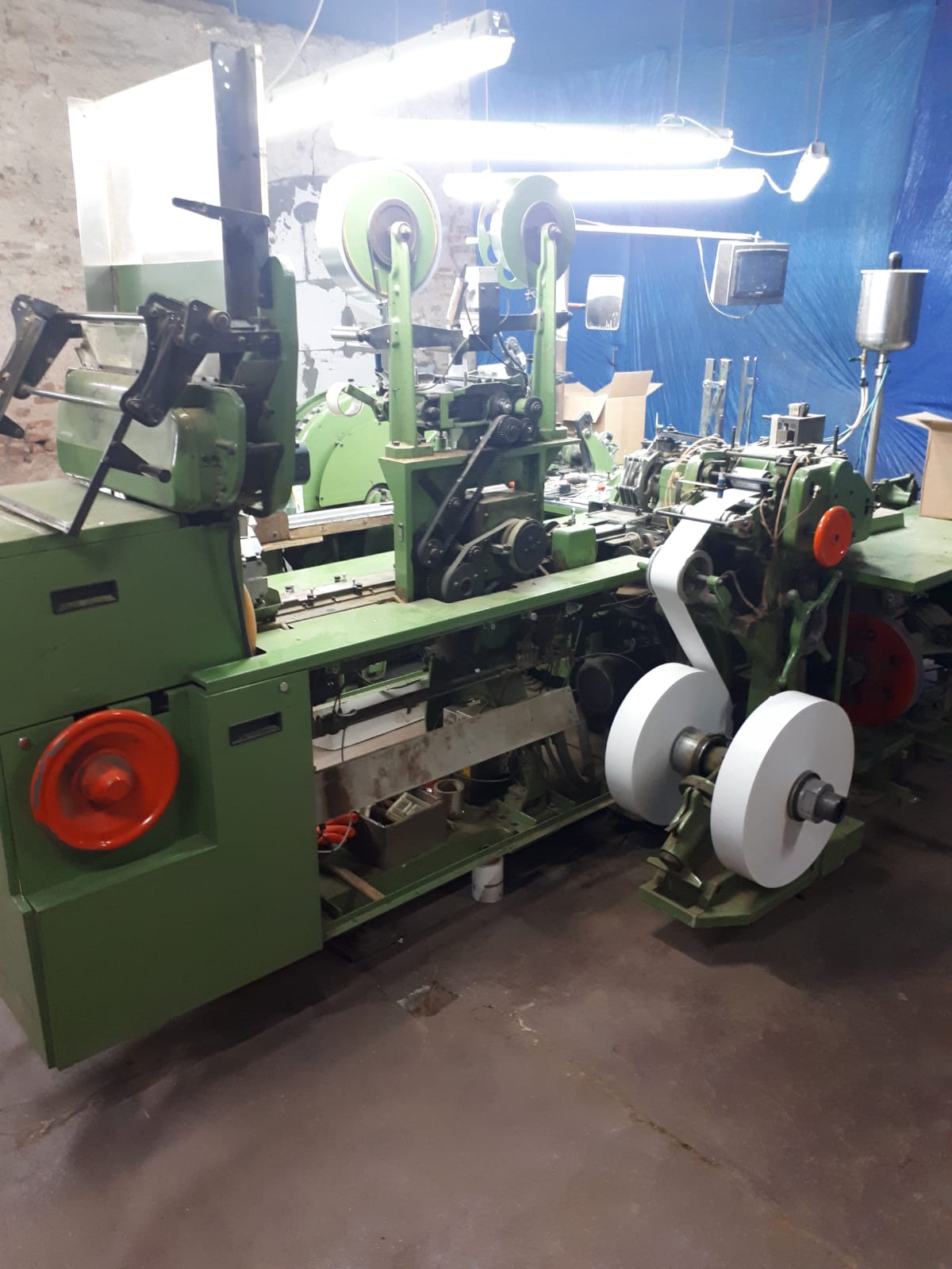
A first action took place on 2 March in Denmark which saw  illegal factory dismantled in the municipality of Vamdrup. This is the first case of an illegal factory being dismantled in the country. Thirteen individuals of Polish and Ukrainian nationality were arrested  and 11 million cigarettes seized, alongside 11 tonnes of raw tobacco and a full production line. Forensic analysis is still ongoing in order to quantify the factory’s exact production capacity, which is presumably of several million cigarettes per week. 

The value of the seized tobacco products on the illegal market in the United Kingdom is believed to be in the region of €13 million. 

The action in Denmark led to another one in the Netherlands that same week. Investigators of the Dutch Fiscal Information and Investigation Service (FIOD) searched the premises of a warehouse in Ospel. Eight pallets of contraband cigarettes stored in maritime containers were seized, worth close to €1 million in the destination market.  

The cigarettes produced in Denmark were sent to the Netherlands via lorries and remained there for a while, stored in maritime containers, before being shipped to the United Kingdom. 
 
Europol’s Analysis Project SMOKE supported this case by facilitating the exchange of information between the different countries involved and by analysing the operational data to identify the main targets. The investigation is still ongoing to try to find potential links to other European countries.

The following law enforcement authorities took part in this sting:

Denmark: Special Investigation West (Særlig Efterforskning Vest), National Police (Dansk Politi)
The Netherlands: Fiscal Information and Investigation Service (FIOD)
Poland: Border Guard (Straż Graniczna)


Press release – EU-wide survey shows Europeans support the Conference on the Future of Europe

The European Parliament and the European Commission are today releasing the first-ever Eurobarometer survey conducted jointly for the two institutions. The Special Eurobarometer survey on the Future of Europe was carried out between 22 October and 20 November 2020 in the 27 EU Member States.

The survey, released ahead of the signing of the Joint Declaration on the Conference on the Future of Europe, reveals that the vast majority (92%) across all Member States demand that citizens’ voices are ‘taken more into account in decisions relating to the future of Europe’.

The Conference on the Future of Europe aims to do precisely that: It will create a new public forum for an open, inclusive, transparent and structured debate with Europeans around the issues that matter to them and affect their everyday lives.

1. The Conference on the Future of Europe

Three-quarters of Europeans consider that the Conference on the Future of Europe will have a positive impact on democracy within the EU: 76% agree that it represents significant progress for democracy within the EU (25% ‘totally agree’ and 51% ‘tend to agree’), with a clear majority supporting this view in every EU Member State.

Respondents thought that people from all walks of life should be actively involved (51%); with 47% saying young people should have an important role; as well as national governments (42%) and academics, experts, intellectuals and scientists (40%).

Just over half of Europeans (51%) would like to get involved themselves, with Irish respondents being the most enthusiastic (81%) followed by Belgians (64%), Luxembourgers (63%) and Slovenians (63%).

2. Citizens’ Voice in the EU

While voting in European elections is clearly regarded (by 55% of respondents) as the most effective way of ensuring voices are heard by decision-makers at EU level, there is very strong support for EU citizens having a greater say in decisions relating to the future of Europe. Of the 92% believing that EU citizens’ voices should be taken more into account, 55% ‘totally agree’, 37% ‘tend to agree’. Only 6% disagree with the statement.

3. The Future of Europe

Six in ten Europeans agree that the Coronavirus crisis has made them reflect on the future of the European Union (19% ‘totally agree’ and 41% ‘tend to agree’) while 39% disagree with this (23% ‘tend to disagree’ and 16% ‘totally disagree’).

Respondents were asked to choose developments they wanted to see for the future of Europe: Having comparable living standards (35%) and stronger solidarity among Member States (30%) are the two developments most cited. Europeans also prioritise the development of a common health policy (25%) and comparable education standards (22%).

4. Assets and challenges

Europeans consider that the EU’s respect for democracy, human rights and the rule of law (32%) and its economic, industrial and trading power (30%) are its main assets. The EU’s respect for democracy, human rights and the rule of law is ranked as the most important (or joint most important) asset in 14 countries, and this viewpoint is especially prominent in Sweden where 58% see this as a key asset. The EU’s economic, industrial and trading power is ranked as the most important (or joint most important) asset in nine countries, led by Finland (45%) and Estonia (44%).

Climate change is clearly regarded as the main global challenge affecting the future of the EU, with 45% of Europeans selecting this as the main challenge. The second and third most mentioned issues, cited by similar proportions of Europeans, are terrorism (38%) and health-related risks (37%). Forced migration and displacement is the fourth most mentioned challenge, by just over a quarter of Europeans (27%).

Background

This Special Eurobarometer survey n° 500 “Future of Europe” (EB94.1) was carried out between 22 October and 20 November 2020 in the 27 EU Member States and was commissioned jointly by the European Commission and the European Parliament. The survey was conducted face-to-face and completed with online interviews where necessary as a result of the pandemic. Some 27,034 interviews were conducted in total.


Press release – Parliament names two of its buildings after Clara Campoamor and Sophie Scholl

A building located at Rue Montoyer 63 will be named after Clara CAMPOAMOR, a Spanish lawyer and politician, who worked to further women’s rights and combat discrimination on the grounds of gender. Her commitment contributed to enshrine women’s suffrage in the Spanish Constitution of 1931.

A building located at Rue Wiertz 30-50 will be named after Sophie SCHOLL, a German student and anti-Nazi political activist. She was a member of the White Rose group, a pacifist resistance group led by students at the University of Munich. She was detained for treason when she was found distributing anti-Nazi leaflets, sentenced to death and executed by guillotine.

The Bureau, comprising the President, Vice-Presidents and Quaestors, also decided to rename meeting room SPINELLI 1G2 after the late Manolis GLEZOS, a Greek politician and Member of the European Parliament from 1 July 2014 to 8 July 2015 and from 24 July 1984 to 25 January 1985. He was a major figure in the national resistance against fascism.