News story: Appointment to the board of the Environment Agency
Joanne Segars OBE has been appointed to the board of the Environment Agency by Environment Secretary, Andrea Leadsom.
The appointment will take effect from 1 March 2017 for three years.
Joanne is the Chief Executive of the Pensions and Lifetime Savings Association, having originally joined the organisation as Director of Policy. She is a board member of the Pensions Infrastructure Platform and Pensions Europe, with experience spent as Chair of both.
Joanne is also on the board of Pension Quality Mark Ltd. Joanne is a founding governor of the Pensions Policy Institute and sits on its council. She is also a Director of TUC Stakeholder Trustees Ltd.
Formally, Joanne was Chair of the Scheme Advisory Board for the Local Government Pension Scheme; a member of the Secretary of State’s Advisory Group on Stakeholder Pensions; and a board member of the Occupational Pensions Regulatory Authority.
Board members provide non-executive leadership challenge and support to the Environment Agency’s executive through regular board meetings, committees and groups. They also undertake individual lead roles on relevant issues and with local operational teams.
All appointments to the Environment Agency board are made on merit and political activity plays no part in the selection process. The appointment complies with the Code of Practice of the Commissioner for Public Appointments (which was superseded by the Ministerial Governance Code on Public Appointments in January 2017).
The Environment Agency is a Non-Departmental Public Body, set up under the Environment Act 1995 to take an integrated approach to environmental protection and enhancement in England. The Environment Agency has major responsibilities in flood management, water resources and quality, climate change, land quality, chemicals, pollution prevention and control, waste, conservation and biodiversity, fisheries conservation, air quality and navigation.
News story: Worm bait returns for trial period at Exmoor fishery
The Environment Agency is continuing conservation measures on its Watersmeet and Glenthorne Fishery for the coming season.
Restrictions have been in place on this popular Exmoor fishery since 2014 in response to disease problems affecting adult salmon and sea trout returning to the East Lyn to spawn. Recent monitoring also revealed reduced numbers of young salmon.
Anglers have been allowed to continue fishing for salmon and sea trout on a ‘catch and release’ basis throughout the season and have been limited to fishing with a fly or spinner only. The use of worms was traditionally allowed from 16 June. However, this method of fishing can be very effective and has been prohibited in recent years to limit the number of fish caught while stocks have been under pressure.
Following discussions with the Lyn Riparian Owners Association and local interest groups, worming is being allowed again on a trial basis this year from 16 June, subject to strict conditions.
Worms will only be allowed when fished on a single circle-patterned hook, no larger than Size 4. A circle hook increases the likelihood a fish is hooked in the jaw where it can be safely removed. This type of hook reduces the risk of ‘deep hooking’ which can sometimes occur when worming. It also reduces the chances of accidentally catching trout and salmon parr on this method.
All salmon and sea trout must still be released throughout the 2017 season, irrespective of the method used to catch them. As a further conservation measure, anglers will not be allowed to fish with worm at any time in Long Pool.
Mike Holland of the Environment Agency said:
We want fishermen to continue to enjoy their sport on the Watersmeet and Glenthorne Fishery, but at the same time ensure suitable measures are in place to safeguard migratory fish returning to the river to spawn.
By allowing only circle hooks to be used for worming we hope to maximise the survival chances of any salmon and sea trout caught and released by this method. We’ll review the success of this trial at the end of the season.
The brown trout fishery regulations remain unchanged. The full list of fishery regulations can be found printed on the reverse of the permits, purchasable from local agents.
Press release: Flood protection options being presented to Yate and Chipping Sodbury
The Environment Agency is holding a public consultation in Chipping Sodbury to explain how it plans to reduce flood risk to local homes and businesses.
The Environment Agency is keen for local people to share their views on its proposals and any experiences they have of local flooding.
The consultation will take place at the Town Hall on 1 March 2017 between 2.30pm and 7.30pm.
Fiona Geddes of the Environment Agency said:
This event is an ideal opportunity for people to study the flood alleviation options. There will be officers from the Environment Agency and South Gloucestershire Council on hand to explain the thinking behind each option and the steps people can take to prepare themselves against flooding.
We’d really like to hear the views of local residents and look forward to sharing ideas on how best to reduce flood risk in Yate and Chipping Sodbury.
The last major floods in Yate and Chipping Sodbury occurred in 1968. The Environment Agency estimates up to 100 homes and 40 businesses could be at risk of flooding from the River Frome and its tributaries. There’s a 1 per cent chance of serious flooding each year. The risk is expected to increase as a result of higher river flows and climate change.
Flood warnings are issued to low-lying properties in both communities. In Yate these include:
Bennetts Court
Station Road
Swan Field
Treeleaze
Orchard Close
Milton Road
Tyndale Avenue
Celestine Road
Blenheim Drive
Whitley Close
In Chipping Sodbury the part of the town most at risk is the Blanchards Farm area.
Flooding occurs because the River Frome has insufficient capacity. Improvements have been made over the years alongside new developments in the river corridor, but these haven’t kept pace with the growing flood risk. Surface water run-off from heavy rain has added to the flooding problem.
The Environment Agency has carried out a preliminary study that identifies 3 options: flood storage, river channel widening and property flood-proofing. As well as exploring each option separately, a combination of all 3 is also under consideration. This final, most expensive, combined option would increase the cost of the scheme to approximately £4 million. The cost of the individual options are £3.7 million, £300,000 and £100,000 respectively.
An earlier option that involved the construction of 1.8km of flood walls was rejected on the grounds of being too expensive (£10 million). It also raised sustainability concerns.
For a successful scheme to go ahead, any benefits must outweigh the costs. In addition to reducing flood risk to a significant number of homes and businesses, the final scheme should reduce flooding on 3 local roads (A432, B4569 and B4060) and prevent flood damages estimated at £10 million.
Flood storage schemes are an effective way of providing flood alleviation. The Environment Agency has built several in recent years. Examples include Tubbs Bottom, that reduces flood risk downstream of Yate and Bruton in Somerset. Schemes are also being considered for Taunton and Wrington near Bristol.
The Yate and Chipping Sodbury scheme is still in its early stages. The Environment Agency must carry out a more detailed study before selecting a preferred option. It is hoped a scheme could be in place by 2021, but that will depend on the Environment Agency securing the necessary funding from the Government and other sources.
Press release: Payback for illegal waste crimes
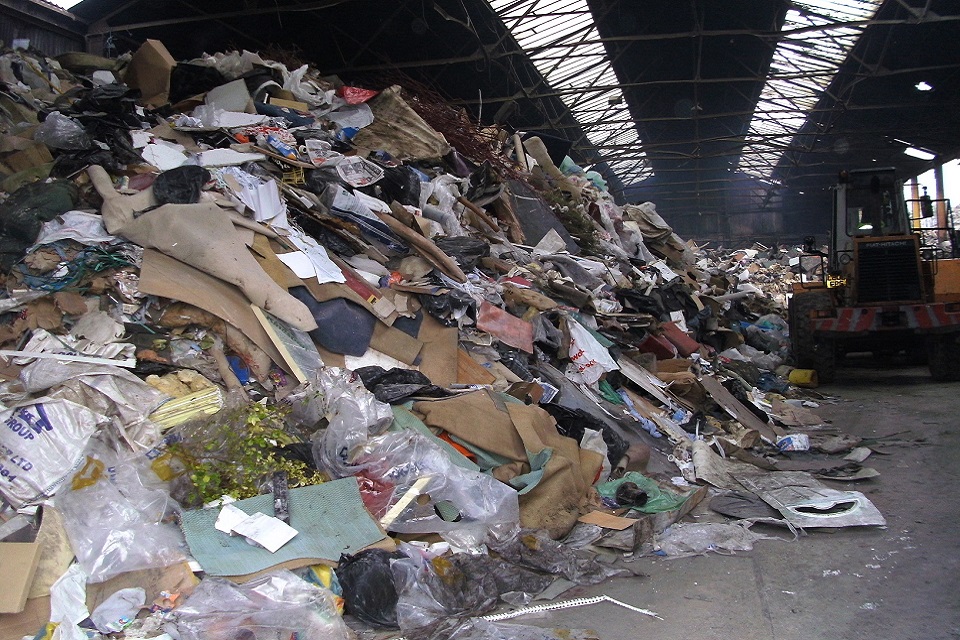
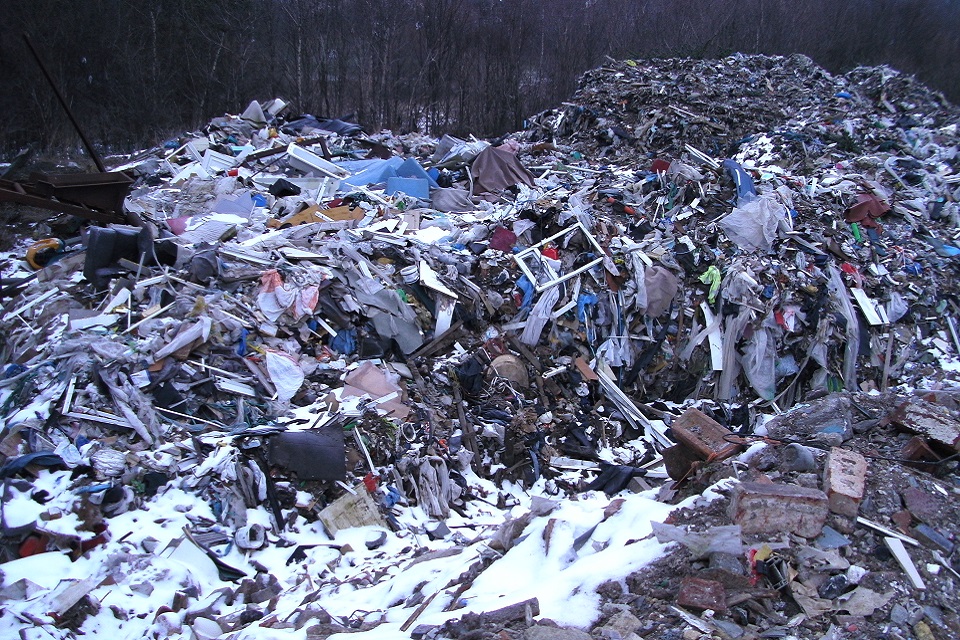
A skip hire boss has been found to have benefited from his illegal activity by almost £1million.
Raymond Shepherd could have to pay back £980,207 under the Proceeds of Crime Act – the agreed sum of his criminal activities – if he comes into future assets.
It’s a debt for life for the 61-year-old, of Rookhope in County Durham. He ran Albert Hill Skip Hire in Darlington and was jailed for 18 months when he appeared at Teesside Crown Court for sentence on December 12, 2013.
He was also disqualified from being a company director for 10 years.
He was convicted following two separate trials of operating a waste facility without a permit, depositing waste without a permit and failing to comply with a suspension notice.
Environment Agency officers then began proceedings to make him pay back a sum of money which reflected the gain from his criminal activities.
Court hearing
On Thursday 23 February, following a 4-day confiscation hearing at Teesside Crown Court under the Proceeds of Crime Act, Shepherd was given a confiscation order to pay back £14,000 of available assets.
He could face up to six months in prison if he fails to pay.
And if he comes into future assets he will have to pay back more of the near £1million agreed benefit sum.
Shepherd contested the application arguing that the activities at the sites were carried out lawfully.
The result comes on the back of a large-scale investigation by the Environment Agency, called Operation Bachelor, which started in 2008. It has also resulted in two other men receiving suspended prison sentences and Albert Hill Skip Hire Ltd being fined £100,000.
A previous Proceeds of Crime hearing in August 2015 in relation to the same investigation saw Shepherd’s son, Tony Shepherd, 41, of Winston, Darlington, ordered to pay back £350,000.
He was subsequently jailed for 3 years in May 2016 for failing to pay the sum. He still has to pay back the money, and potentially up to £1.2 million if he comes into future assets.
Debt ‘will follow’ Shepherd
Oliver Harmar, Area Director for the Environment Agency in the North East, said:
This is a debt that will follow Raymond Shepherd around for the rest of his life. It sends out a message to the industry that waste crime does not pay and not only will we hit people with court action but we’ll then hit them in the pocket.
Shepherd’s illegal waste operations were carried out in the interests of profit, unfortunately at the expense of the environment. Not to mention by not complying with regulations, he undermined legitimate businesses.
And the impact on the community must not be overlooked, including two major fires which took place at Dodsworth Street. The site is now cleared of waste.
It’s been an extensive and long-running investigation by our officers and shows just how seriously we take waste crime. We’ll continue to take action against those operating outside of the law and the regulations.
Long-running investigation
The Environment Agency worked closely with other organisations including Durham County Council, Darlington Borough Council, Durham Police, Durham and Darlington Fire and Rescue Service and the Health and Safety Executive during the long-running investigation.
The jurors at Raymond Shepherd’s trials heard how the company’s premises at Dodsworth Street were full with illegally-held waste.
Between July 2008 and May 2010 he and his company, Albert Hill Skip Hire Ltd, operated an illegal waste transfer station at Whessoe Road in Darlington.
He did the same at Dodsworth Street from July 2008 until the site got a permit in April 2009, but by November 2009 the first enforcement notice had been served on the company requiring that he operate legally within the terms of his notice.
In 2010 enforcement notices were served, in 2011 a suspension notice was served and in 2012 the permit was revoked. Investigations found the company had been depositing and storing waste on an access road, and cement-bound asbestos was also found on the site.
Following conviction, the waste carrier’s registration was revoked. The site is now clear of all waste.
Press release: Town’s flood gates to be replaced
Residents in Yarm are invited to a community drop-in this week to find out more about Environment Agency work to replace the flood gates in the town.
The project will start in April and is expected to be complete by June, taking around 12 weeks.
There are 30 flood gates along the flood defence in Yarm, and as part of the work some of the gates may be replaced and others may be removed and the flood wall bricked up, subject to further discussions with residents.
The work will start by replacing the flood gates along True Lover’s Walk riverside path, starting with flood gates at West Street and working towards Silver Street.
Residents are invited to find out more at a community event taking place at Yarm Town Hall on Friday 24 February. They can drop in any time between 3pm and 6pm.
Project Manager Neil Smith said:
The gates are being replaced because many of the existing flood gates are approaching the end of their usable life. To maintain the current standard of protection for the town it’s essential these gates are replaced.
By carrying out this work we will ensure the town continues to be protected from flooding from the River Tees in the future. I’d urge residents to come along to the event where they can find out more about the work we are carrying out in the town.
Work is also already underway to carry out improvements at the Boat Landing stage. Some wall coping stones and block paving have been repaired and new handrails will be put up along the waterside of the boat landing in May.
In addition, there will be restoration and repainting of the perimeter fence and replacement of benches and litter bins in the area.