Press release: Illegal fishing in Staffordshire costs 5 anglers almost £4,000

Paul Beckett, of St James Green in Cotes Hill, Stafford, and Dominic Reece, of Essex Drive in Kidsgrove, were caught fishing on the River Dove at Eaton Dovedale on 18 March 2017. Beckett was fined £660 and Reece £370 by North Staffordshire Magistrates on 24 July 2017. Both men were also ordered to pay costs of £127. Beckett, 62, the case against whom was proved in his absence as he did not attend court, was also ordered to pay a victim surcharge of £66. Reece, 30, who pleaded guilty, was ordered to pay a victim surcharge of £37.

Stuart Mitchell, 52, of Hillsprings Court in Rugeley, and John Hope, 27, of Moreton Street in Stoke-on-Trent, were caught fishing on the River Trent at Rugeley on 8 March 2017. Both men were fined £660 and ordered to pay costs of £127 and a victim surcharge of £66. As neither attended court, the cases against them were proven in their absence.

Chris Mitchell, 33, of Crossley Avenue in Wigan, was caught fishing at Rudyard Lake, Leek, on 19 February 2017. After pleading guilty he was fined £620 and ordered to pay costs of £127 and a victim surcharge of £62.

Andrew Eardley of the Environment Agency said:

Most anglers enjoying the sport fish legally, but there continues to be small number of anglers who fail to buy a fishing licence. These few are cheating their fellow anglers and the future of the sport.

An annual licence costs from just £30. It seems ridiculous that anglers risk significant fines and costs, a criminal conviction and the loss of their fishing equipment for such a small fee.

Money from fishing licence sales is invested in England’s fisheries and is used to fund a wide range of projects to improve facilities for anglers including protecting stocks from illegal fishing, pollution and disease; restoring fish stocks through re-stocking; eradicating invasive species; and fish habitat improvements. Licence money is also used to fund the Angling Trust to provide information about fishing and to encourage participation in the sport.

You need a valid Environment Agency fishing licence to fish for salmon, trout, freshwater fish, smelt or eel in England. Buying a rod licence is easy. A licence lasts 365 days from the day you buy it.

Anyone witnessing illegal fishing incidents in progress can report it directly to the Environment Agency hotline on 0800 80 70 60. Information on illegal fishing and environmental crime can also be reported anonymously to Crime stoppers on 0800 555 111.

Press release: £27million Northumberland flood scheme is complete

The final part of Morpeth’s £27million flood alleviation scheme is complete.

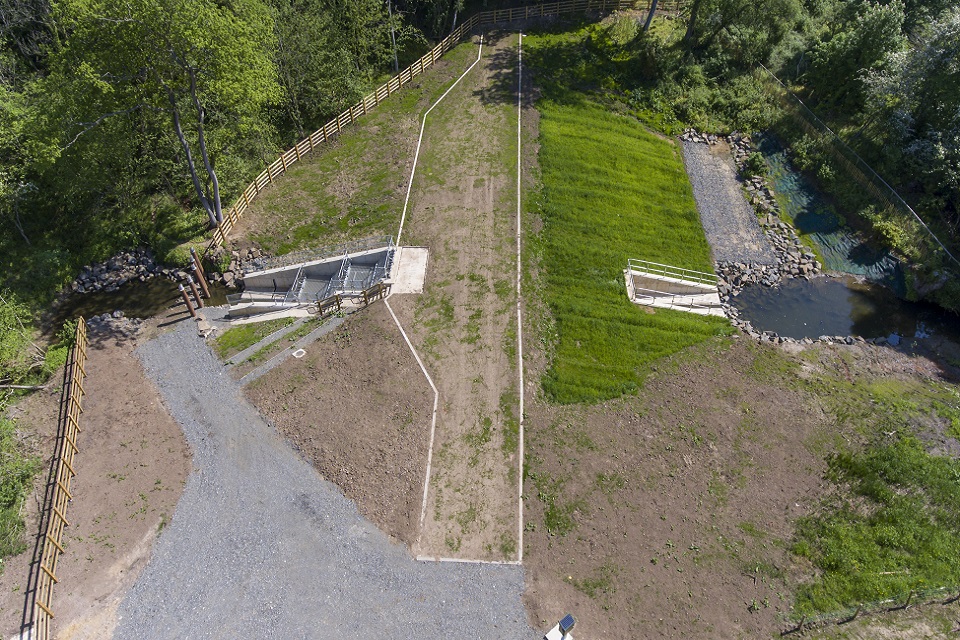
Work to construct Cotting Burn dam was the last piece of work on the multi-million pound joint Environment Agency and Northumberland County Council flood scheme.

A drop-in event to thank residents for their patience throughout the construction took place on Friday 21 July.

Cotting Burn dam has been renamed “The Hargreaves Dam” in memory of RFCC Chairman Jon Hargreaves, who sadly passed away in October last year.

The dam works alongside other flood protection measures to reduce flood risk to around 1,000 properties in Morpeth.

Image shows aerial shot of the Cotting Burn dam
Cotting Burn dam aerial image

New defences

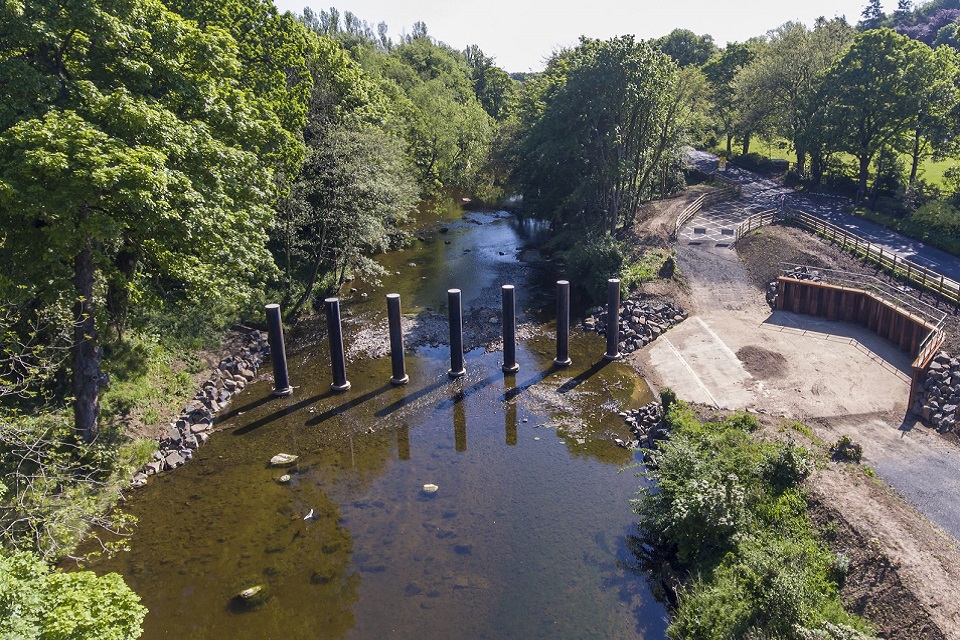
To reduce the risk of flooding from the River Wansbeck, in-town defences were completed first, followed by the large upstream storage area at Mitford, which has already operated to protect the community. This year, tree poles were installed into the river near to Lowford Bridge to prevent large debris from reaching the town centre.

The construction of the new dam and storage area, which reduces the risk of flooding from the Cotting Burn, was finished in May and it is now operational.

It reduces the volume of water flowing downstream in large events. The screen on the dam also prevents debris from Cotting Wood from reaching the culvert and causing blockages.

Image shows the Lowford tree poles
Tree poles in the River Wansbeck

Separate work by Northumberland County Council to address surface water flooding at several locations in the town is underway and scheduled for completion by March 2018 at a cost of £1m.

This is being financed through a government grant from the Environment Agency and county council funding.

Scheme is ‘biggest in the north east’

The Environment Agency’s Alan Cadas, Operations Manager in the North East, said:

The Morpeth flood scheme is the biggest in the North East and boasts one of the largest flood storage areas the Environment Agency has ever built.

But this work on the Cotting Burn is equally important and works together with the other features to ensure Morpeth is protected from both the burn and the River Wansbeck.

This has been a great partnership involving local residents, who have played, and continue to play, a vital role in the success of the scheme. It shows that by working together with others we can create long term solutions to reduce the risk of flooding in our communities.

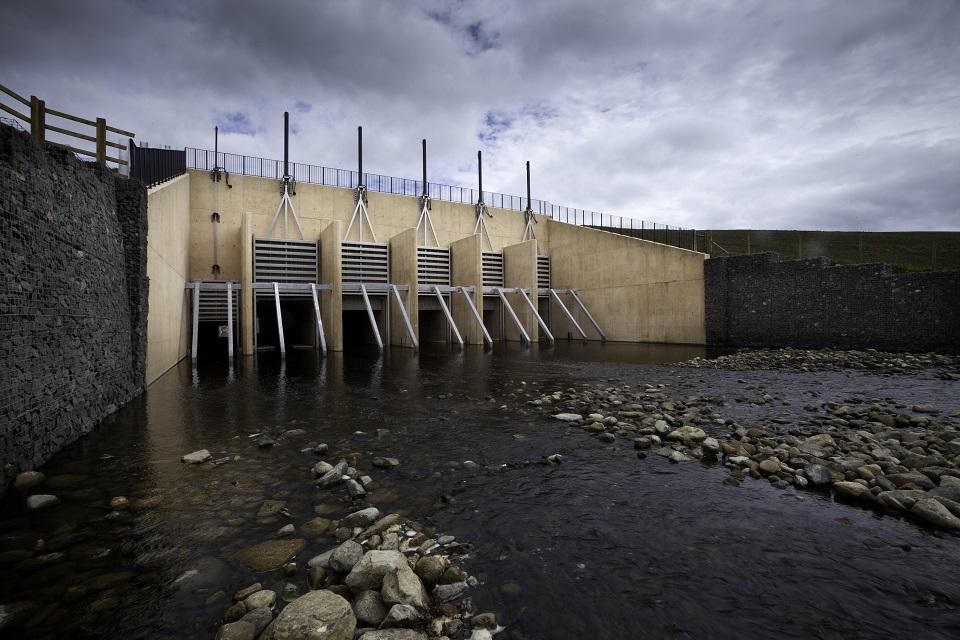
Image shows Mitford dam
The large dam at Mitford

Partnership project

Northumberland County Council has played a key role, contributing £12million, making it one of the first schemes of this scale to be jointly delivered by partners.

Councillor Glen Sanderson, Northumberland County Council’s Cabinet member for Environment and Local Services, said:

We’re delighted this major joint scheme to protect the people of Morpeth is now complete.

This was a great example of agencies working together on a hugely ambitious engineering project and the fact it has already been used more than proves its worth.

One of the cornerstones of the scheme has been the help and support of the local community, and their input and engagement has been absolutely invaluable throughout.

It’s important residents understand their flood risk and know what to do during a flood. For more information visit the gov.uk website


Press release: Anglers handed fines by court for fishing illegally in Telford

On 12 July 2017 at Telford Magistrates’ Court, Ronald Manbord of Coronation Road, Bilston, and Michael Lee of Princes End, Dawley Bank, Telford, were fined for fishing without a licence following a prosecution by the Environment Agency.

Manbord was fined £300, and Lee £250. Both men, who pleaded guilty, were also ordered to pay costs of £100 and a victim surcharge of £30.

Manbord, 57, was caught fishing without a licence on 17 October 2016 at Bayliss Pool in Telford. Lee, 37, was caught on 22 January 2017 fishing on the River Severn at Ironbridge.

Andrew Eardley from the Environment Agency said:

Most anglers enjoying the sport fish legally, but there continues to be a small number of anglers who fail to buy a fishing licence. These few are cheating their fellow anglers and the future of the sport.

An annual licence costs from just £30. It seems ridiculous that anglers risk significant fines and costs, a criminal conviction and the loss of their fishing equipment for such a small fee.

Money from fishing licence sales is invested in England’s fisheries and is used to fund a wide range of projects to improve facilities for anglers, including protecting stocks from illegal fishing, pollution and disease; restoring fish stocks through re-stocking; eradicating invasive species; and fish habitat improvements. Licence money is also used to fund the Angling Trust to provide information about fishing and to encourage participation in the sport.

You need a valid Environment Agency fishing licence to fish for salmon, trout, freshwater fish, smelt or eel in England. Buying a rod licence is easy and can be done online. A licence lasts 365 days from the day you buy it.

Anyone witnessing illegal fishing incidents in progress can report it directly to the Environment Agency hotline on 0800 80 70 60. Information on illegal fishing and environmental crime can also be reported anonymously to Crime stoppers on 0800 555 111.


News story: Ineos is granted environmental permit for exploratory borehole in South Yorkshire

The Environment Agency has granted an environmental permit to allow Ineos Upstream Ltd to drill an exploratory borehole at a site in South Yorkshire.

The ‘Standard Rules’ permit allows the company to carry out drilling and waste management to take core samples of the rock at Common Road, Harthill. It does not allow fracking.

Standard Rules permits include fixed rules and conditions that cover common, low-risk industrial activities including low-risk testing. They are issued to companies only after they demonstrate that they understand and can manage the risks to people and the environment.

If the firm wishes to carry out additional activities on the site in the future, such as full well testing or hydraulic fracturing, it must submit a bespoke permit application that is tailored to those activities.

A spokesperson for the Environment Agency said:

Our regulatory controls for onshore oil and gas are in place to protect people and the environment. Standard Rules permits are common across industry and maintain high levels of environmental protection. They do not allow companies to carry out fracking – this activity requires a bespoke permit application which would be subject to a site-specific environmental risk assessment and extensive public consultation.

As with all decisions on whether to issue environmental permits, we will assess a company’s proposals to ensure they meet strict requirements. If an activity poses an unacceptable risk to the environment, the activity will not be permitted.

A copy of the published permit can be found online at:
consult.environment-agency.gov.uk/psc/ineos-upstream-limited-exploration-sites.


Press release: Threatened native species finds safety in Lincolnshire

Efforts to protect the UK’s only native species of crayfish have seen almost 600 specimens moved to protected new homes in Lincolnshire.

The endangered white-clawed crayfish have been transferred to two secluded locations, chosen for their potential as safe havens.

Known as ‘Ark Sites’, the carefully selected refuges have all the characteristics needed for the crayfish to establish a thriving colony, including good-quality water, suitable habitat, and an isolated location.

Most importantly, they will be safe from the threat of their non-native counterparts, the North American Signal crayfish. This invasive species out-competes our own for food and habitat, and carries a fungal disease that devastates native populations.

Dr Chris Extence, Environment Agency team leader for Analysis and Reporting, said:

Bringing our native crayfish into the safety of an Ark Site is vital to protecting them from these threats, safeguarding their long-term survival and stability.

White-clawed crayfish are the only native species of crayfish in Britain. Although protected by law, numbers have declined dramatically in recent years and established populations are becoming increasingly vulnerable.

In Lincolnshire, the Upper Witham has long been a stronghold for native crayfish, but they are increasingly under threat from Signals. In total, 572 specimens were moved into two undisclosed locations in Lincolnshire two weeks ago: a limestone stream in the county’s south west and a chalk stream in the Wolds.

Dr Extence added:

In the case of the latter, this is the first time in many years that this Area of Outstanding Natural Beauty has been home to native crayfish.

A number of organisations, including the Environment Agency, Natural England, Lincolnshire Rivers Trust, Lincolnshire Wildlife Trust and Lincolnshire Chalk Stream Partnership, were involved in the two-day operation. Environment Agency specialists will now monitor the colonies in their new homes.

Dr Extence continued:

The use of Ark Sites is nationally-recognised best practice, and just one of the ways we can safeguard the future of the native crayfish.

A previous attempt at creating an Ark Site in Lincolnshire has been successful, with evidence of breeding – a strong sign of an established colony.